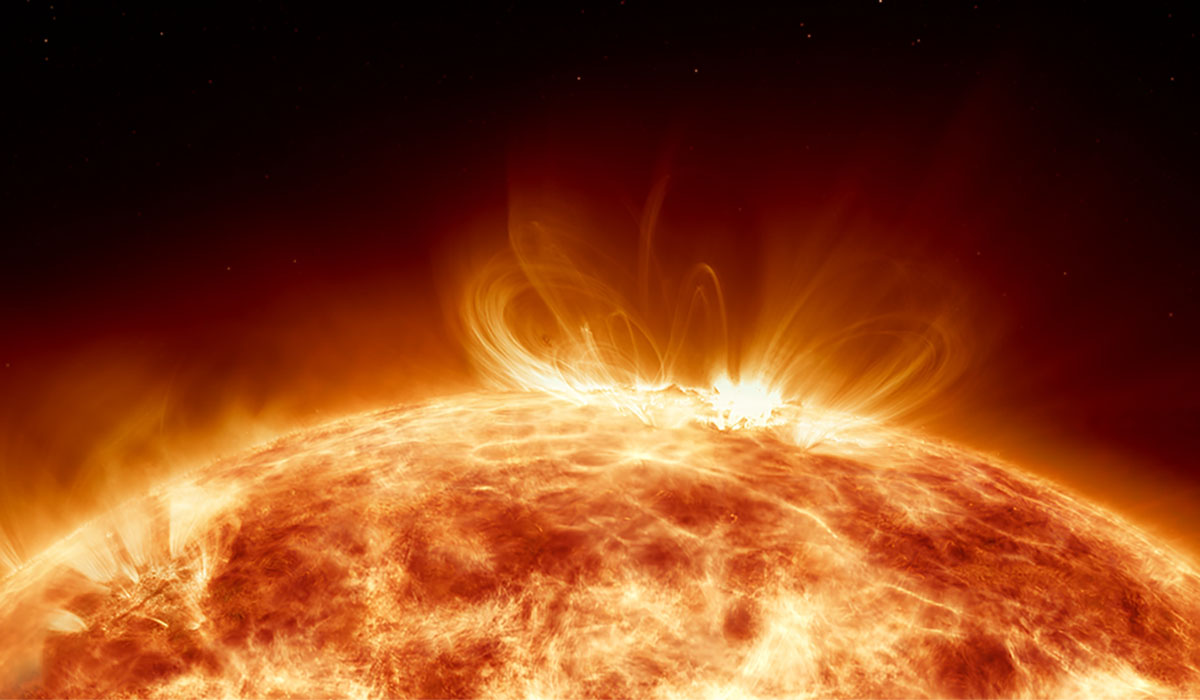
For generations, researchers at Los Alamos National Laboratory have sought to unlock the promise of fusion energy. The aim has been to reproduce, under controlled laboratory conditions, the same process that fuels the Sun and stars. Success would redefine how the world produces energy, and today’s progress rests heavily on scientific breakthroughs first realized at Los Alamos many years ago.
Some of the earliest advances in fusion science date back to the 1940s, during Project Y of the Manhattan Project—later known as Los Alamos National Laboratory. As researchers worked to build the first fission weapons, they also advanced a bold new concept: using a fission explosion to initiate fusion, creating a thermonuclear reaction of unprecedented power. That idea was validated in 1951, when Los Alamos scientists conducted an experiment that produced substantial fusion energy on Earth for the first time.

The next year, scientists further confirmed the viability of thermonuclear fusion and demonstrated the immense potential of fusion-based (thermonuclear) weapons. Just two years later, the B17 and B24 thermonuclear bombs were incorporated into the U.S. nuclear arsenal for an emergency capability, establishing fusion with fission as a permanent element of the nation’s nuclear deterrence strategy.
In this issue of National Security Science, you’ll explore the past, present, and future of fusion research as it relates to national security. A fusion timeline traces key advances at Los Alamos and beyond over the past 90 years, including the first demonstration of fusion in a laboratory setting, which Los Alamos scientists accomplished in 1958. For a deeper look at the Cold War era, read this profile of Harold Agnew, the Laboratory’s third director and a central figure in fusion research during the 1950s.
“Targeting the future of fusion” examines ongoing fusion research that enables scientists to recreate specific conditions needed to assess the nation’s nuclear stockpile. And later, you’ll also meet two Austrian researchers who have devoted their careers to advancing fusion science at the Los Alamos Neutron Science Center.
Readers seeking a more technical perspective should consult Volume 80 of Fusion Science and Technology, published by the American Nuclear Society in 2024. An overview appears here, and the full issue—composed entirely of articles by Los Alamos scientists—is available here. Together, these articles provide a comprehensive account of the Laboratory’s early contributions to fusion research.
As I approach 40 years of service at Los Alamos, fusion continues to inspire me. I hope this issue of National Security Science conveys the passion many of us here feel for this remarkable frontier of science. ★
In this issue
Leading the way for Weapons
Charlie Nakhleh brings decades of experience to Los Alamos’ top Weapons job.
Fusion flicks
For decades, Hollywood has used fusion to power its blockbusters.
From fusion science to science fiction
Los Alamos technology cameos in Star Trek.
When AI meets fusion
Large language models tackle challenges in inertial confinement fusion.
First in fusion
A Los Alamos researcher helps a teen set a world record.
An academic approach
A special issue of Fusion Science and Technology highlights early fusion research.
Fueling the future of fusion
Los Alamos scientists sharpen their understanding of the fusion fuel cycle.
Upgrades underway
Major maintenance and modernization begin at the Dual-Axis Radiographic Hydrodynamic Test facility.
Collaboration drives fusion innovation
Los Alamos partners with private companies to accelerate fusion energy.
Modeling the future of fusion
A project at Los Alamos National Laboratory envisions the systemic effects of a transformative technology.
Fusion from then to now
More than a century of research supports today’s fusion advances.
Targeting the future of fusion
At Los Alamos National Laboratory, breakthroughs in fusion research support national security.
The fusion fandom
Researchers are drawn to the field for many reasons.
Harold Agnew
Los Alamos’s third director remains a legend at the Laboratory today.
A mammoth career
Physicist Jeff Paisner’s 52 years in the nuclear security enterprise includes overseeing the early construction of the National Ignition Facility.
From Nevada to NIF and beyond
One of the world’s largest cranes makes its way around the country in support of national security.
The sound of fusion
For an Austrian couple working as physicists at Los Alamos National Laboratory, the hills are alive.