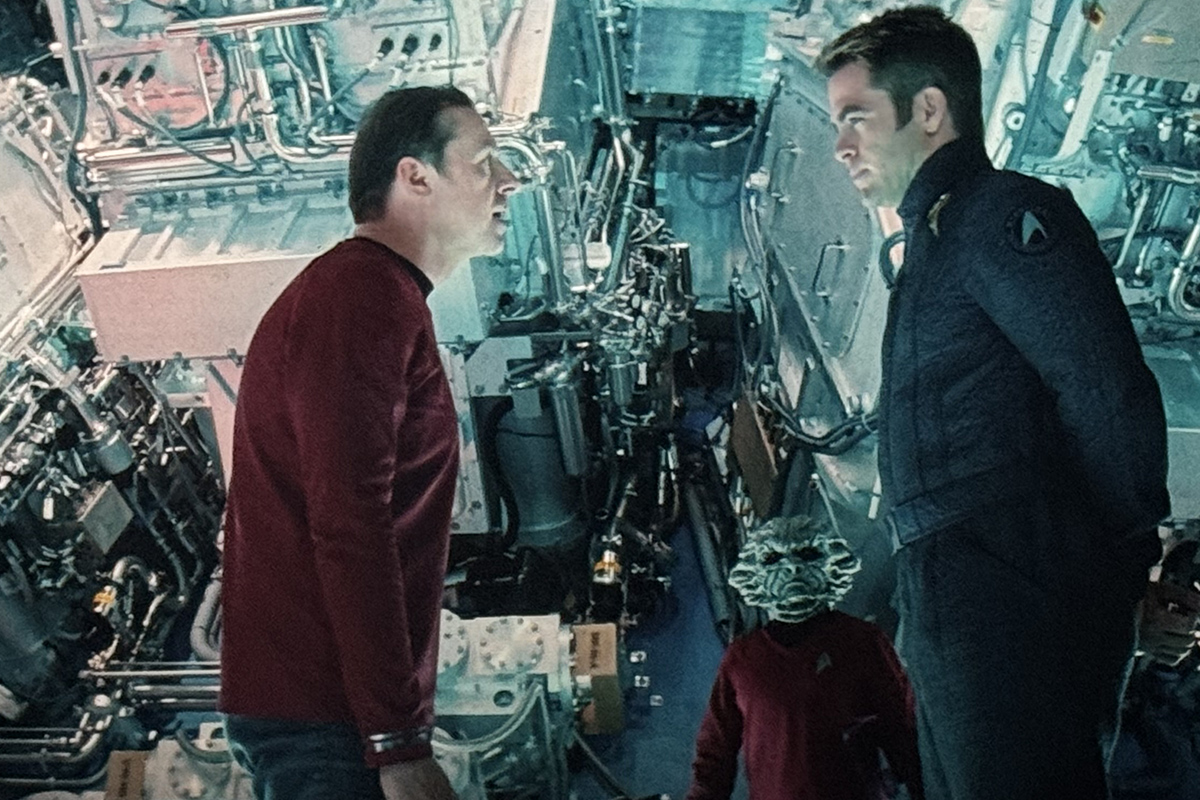
When Los Alamos National Laboratory physicist and fusion researcher Kevin Meaney plans a family movie night, he might choose the 2013 film Star Trek into the Darkness. What motivates his choice is not a love of Star Trek, science fiction, or old movies. Instead, he’s hoping to catch a glimpse of Los Alamos–designed technology on screen.
Several scenes in this Star Trek movie were shot at the National Ignition Facility (NIF), where Los Alamos scientists conduct fusion experiments. NIF, located at Lawrence Livermore National Laboratory, was used to represent the Starship Enterprise’s warp core drive, serving as a backdrop for several scenes. The film crew obtained Department of Energy permission to spend eight days shooting at NIF.
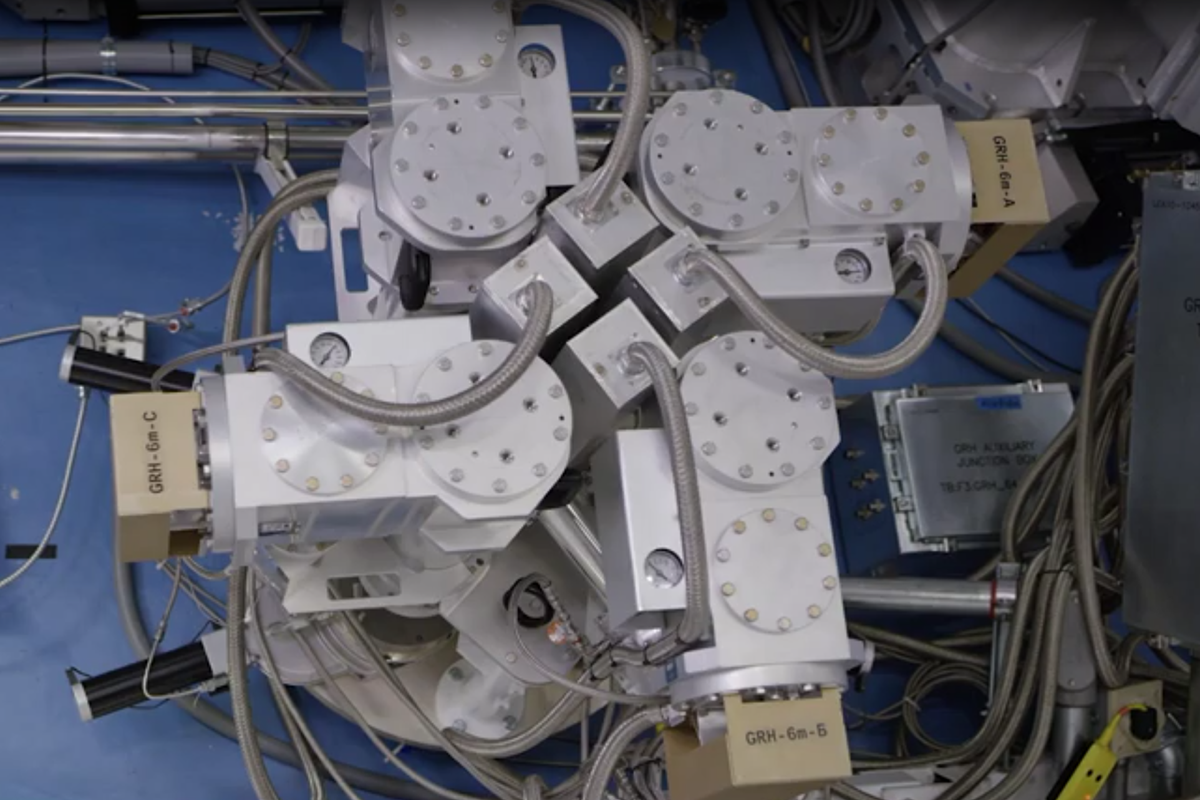
For Meaney and his Los Alamos colleagues, the best parts of the movie feature key diagnostic equipment in the background. “Los Alamos designed the gamma detectors that you can see in the target chamber in the movie,” says Meaney, noting that the Los Alamos–designed detector appears directly behind two main characters during one scene. “The movie studio spruced up the laser to make it look cool and added some LED lights to our detector to make it glow,” he adds.
Meaney explains that the Laboratory has a strong history of designing diagnostic equipment for NIF. Lab scientists first created the gamma reaction history diagnostic, which appears in the movie, and later refined it to develop the gas Cherenkov detector, which was fielded initially at the Omega Laser Facility in Rochester, New York, and then later moved to NIF.
Gamma diagnostics play a critical role in fusion experiments because gamma rays are produced at the exact moment a fusion reaction occurs. By measuring them, scientists can determine when fusion happened and how long the fusion burn lasted. At the same time, measuring neutrons, the main product of fusion, allows scientists to determine the amount of energy released in the fusion reaction, so both neutron and gamma diagnostics play a starring role in fusion research.
Neutrons were also key to a prank some of the actors in Star Trek into the Darkness played on fellow cast members, telling them they needed to apply a special protective cream while filming at NIF.
“They convinced me before I got there that there was this neutron cream you had to dot on your face to protect against all the neutrons that were flying around in the air,” said actor Benedict Cumberbatch. “And you know, who am I to question science?” Of course, NIF was not in operation during the filming and there was no danger from stray neutrons, but it’s a fun story for Los Alamos scientists to tell during movie night. ★
Learn how Star Trek inspired some Los Alamos employees to pursue careers in science.