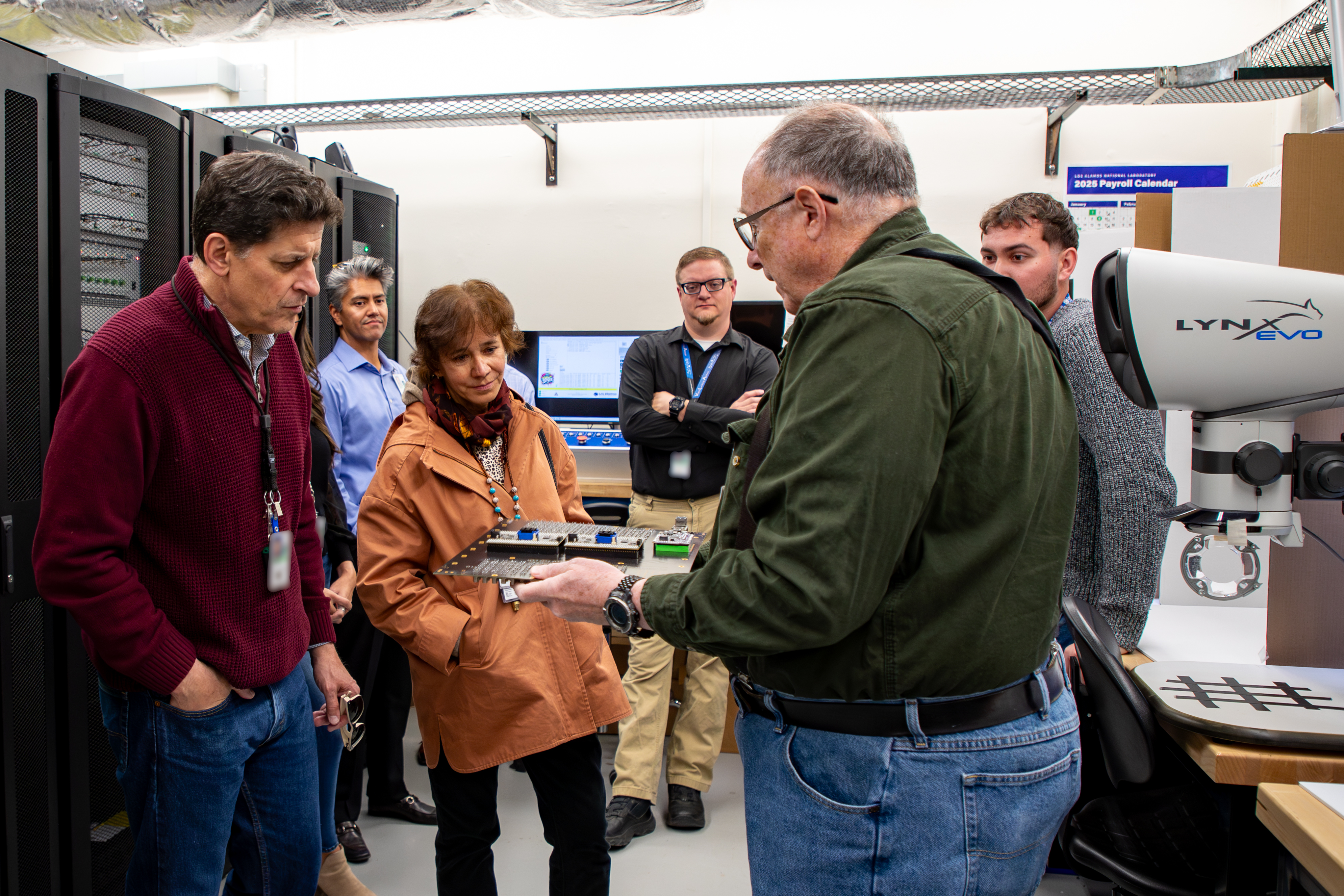
The National Nuclear Security Administration’s (NNSA’s) flagship radiography machine is getting an upgrade. From December 2025 to March 2026, the Dual-Axis Radiographic Hydrodynamic Test (DARHT) facility, located at Los Alamos National Laboratory, underwent the first round of projects that will modernize and maintain the aging accelerators used to capture images of mock weapons implosions and to conduct focused experiments on weapons materials and components.
“DARHT is the keystone facility in weapons certification,” says George Laity, who heads up the DARHT Capability Expansion (DCX) project office. “We need to ensure that DARHT is maintained, sustained, and modernized to meet that goal and future mission needs.”
Laity notes that during this period of upgrades, all DARHT experiments were halted. “Our plan is to do five to seven maintenance and replacement projects each year over several years,” he says. DARHT staff refer to this pause from their regular experiment schedule as “the DCX sustainment outage,” but it is far from rest and relaxation. During the recent outage, the facility buzzed with activity from multiple updates underway all at once.
Engineer Kyle Fiordalis, who leads one of the upgrades, says he is the same age as DARHT—27. In accelerator years, that’s middle-aged, but, although DARHT is aging, it faces growing expectations. Currently, the Laboratory conducts between six and eight major experiments at DARHT each year; however, NNSA is calling for an increase to more than ten experiments a year.
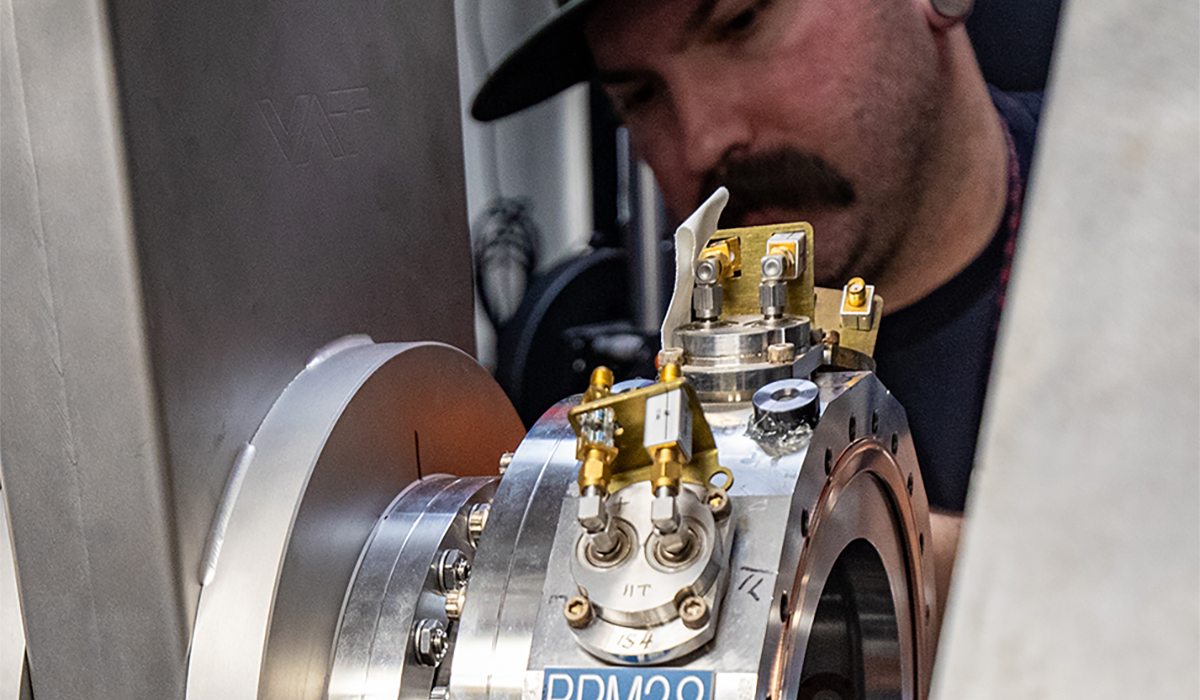
One of the biggest makeovers during the outage was a complete refresh of the DARHT Detection Chamber or DDC. “The DDC is the brain of DARHT,” says Fiordalis. “We replaced the electronics—basically doing brain surgery on some level,” he says.
Another project was the addition of a multi-pulse test line that scientists can use to conduct research and collect data without interrupting other experiments. “We are diverting the accelerator beam, actually bending the beam 90 degrees using a first-of-its-kind application of large, specially designed magnets,” says physicist Alex Press, who led this update. “This capability will allow multiple experiments to run when the beam isn’t being used for DARHT’s primary mission, hydrotests.”
Refurbishing an accelerator cell, moving equipment, installing more cameras, plus regular upkeep tasks were just some of the many activities that kept staff from several Lab divisions busy during the four-month maintenance and modernization period. “We’ve collaborated well across organizations and learned quite a bit about how to do things in a coordinated way,” Laity says. “Our strategy describes a decadal vision of all the improvements we want to make to DARHT, so this is just the first step.” ★