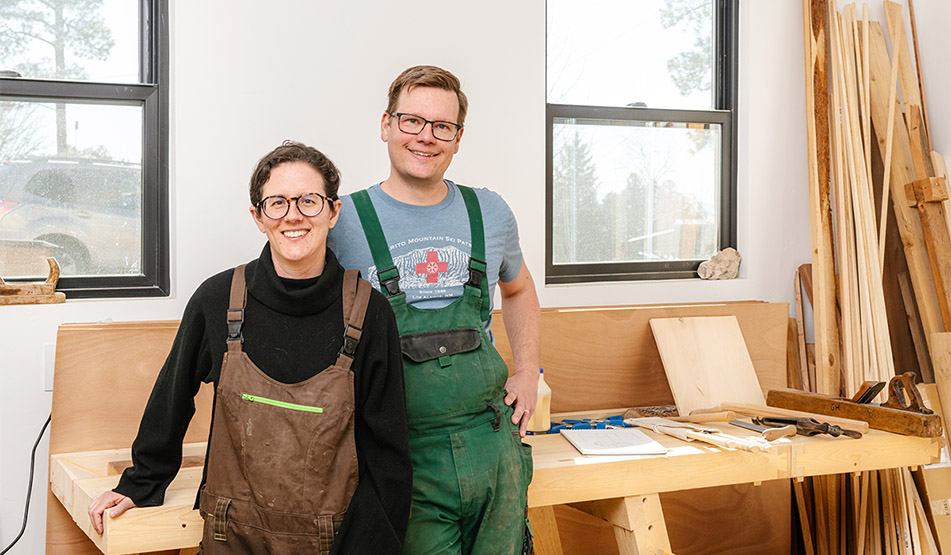
Nestled at the base of the Jemez Mountains in Los Alamos, New Mexico, is a modern home filled with German conversation and the aromas of traditional Austrian cooking. Inside, the walls display a mix of Southwestern art and physics awards—many physics awards.
The owners of the custom-built home are Hermann and Verena Geppert-Kleinrath, who both work in Los Alamos National Laboratory’s Physics division. Hermann specializes in diagnosing fusion ignition experiments, and Verena is a manager in the Dynamic Imaging and Radiography group.
At the end of their workdays, they pick up their two kids from school—often by bicycle—and return home to their two cats, Pico [the] Second and Alpha Burn. At the slightest hint of chill in the air, they light a fire and prepare a meal inspired by their Austrian roots: hearty dumplings, potato soup, or Viennese beef broth.
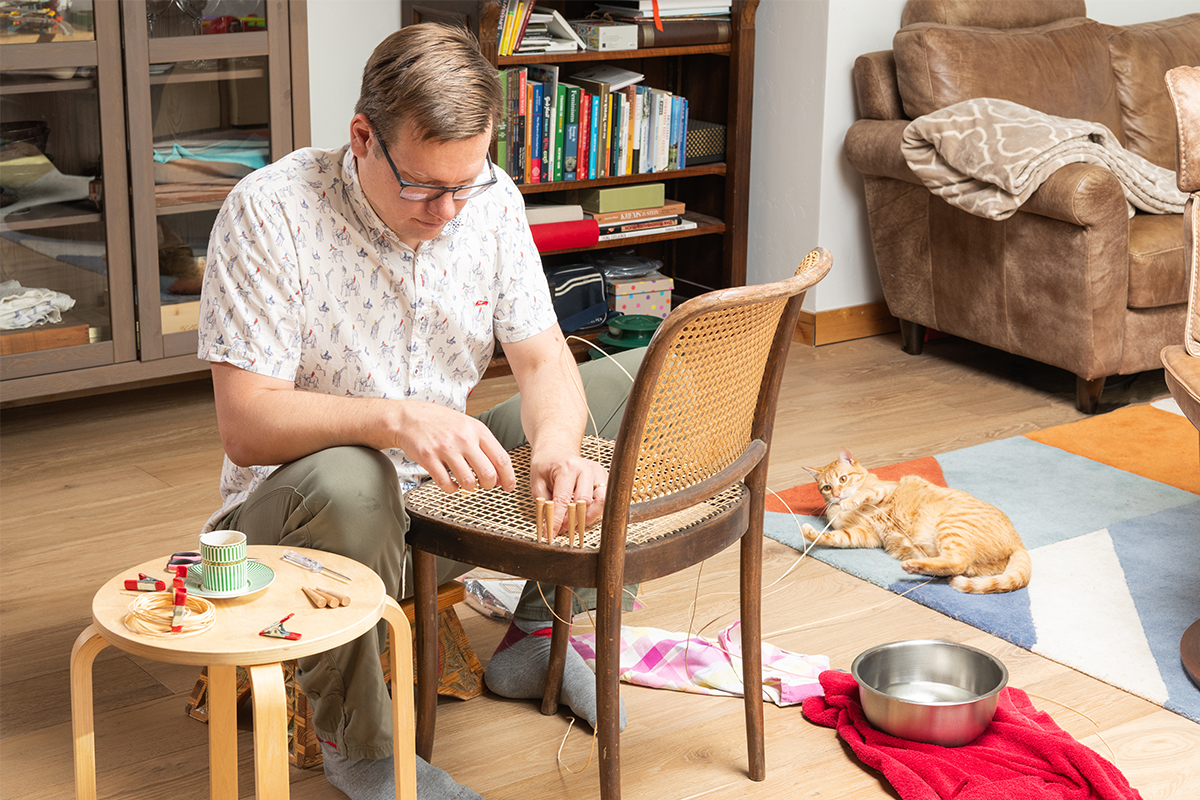
Cycling and cooking sustain their daily rhythms, but their list of hobbies is long and varied. They camp, hike, hunt, fish, row, build boats, practice woodworking, knit, 3D print, cross-country ski, downhill ski, repair furniture, sew, and occasionally fence. They even built their own teardrop camper and recently enrolled in a beginner pottery class.
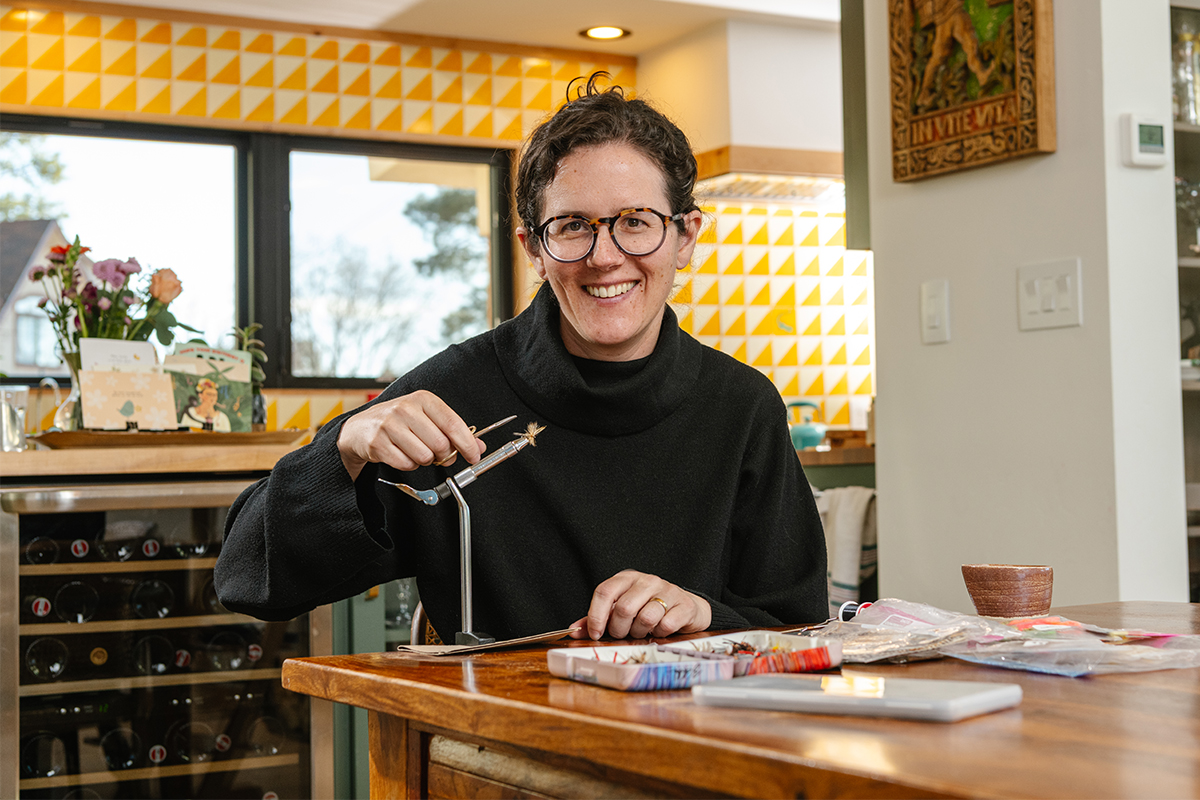
And the ping-pong table on their back patio? They are quick to clarify: table tennis isn’t a hobby—“it’s a lifestyle.”
Career development
Hermann and Verena met at the Vienna University of Technology, where they both studied physics. Verena came to the United States in 2011, first as a graduate student at Idaho State University before moving to Los Alamos in 2013. At the time, Hermann was finishing his studies in quantum physics. When he followed Verena to Los Alamos, his career took an unexpected turn.
That turn happened on the ski slopes of Pajarito Mountain, where Verena volunteered on ski patrol. Among her fellow patrollers were Lab physicists. Through those connections, Hermann was introduced to—and soon recruited by—a team studying fusion diagnostics.
Both Verena and Hermann have since built a career in inertial confinement fusion, developing advanced nuclear diagnostics to capture and interpret fusion data. Verena led the development and operation of the Neutron Imaging System (NIS) at the National Ignition Facility (NIF). NIS records hot spots and instabilities within a fusion reaction, providing critical insight into the limits of performance by analyzing the 3D shape of the implosion.
Hermann supports research at both NIF and the Omega Laser Facility at the University of Rochester. He leads the team operating the Gamma Reaction History diagnostic, an instrument that measures the fusion rate over time with unprecedented precision—down to picoseconds—offering detailed information about the timing of a reaction.
Hanging in the Geppert-Kleinrath’s home office are two Secretary of Energy Achievement Awards, recognizing their individual contributions to the “lasers, diagnostics, targets, and physics understanding” that led to the historic fusion ignition at NIF in August 2021.
“When the ignition shot happened, it was incredibly exciting,” Hermann says. “Just a day earlier, we were having lunch with one of our research students and talking about how long we’d been chasing fusion. It always seemed just out of reach. We thought we might never achieve it. The next day, we got word that it had happened.”
Verena notes that more than 1,000 scientists were named in the publication describing that first ignition shot—a testament to the complexity and collaboration behind the breakthrough. “Every one of those people working together is what made it happen,” she says. “They’re the brightest and best in the field. It was extremely cool to be part of.”
Beyond ignition
After contributing to one of the defining scientific milestones of their generation, the couple didn’t slow down. Outside of work, they built a home with a woodshop and in March 2025, moved in. Verena gestures to a small, rustic wooden spoon resting on the dining table. “This was my first woodworking project,” she says. “After that, I carved a small fox.”
Hermann traces his woodworking roots to childhood in Austria. “My grandfather told me carving is easy,” he recalls. “If you want to carve a fox, just cut away all the wood that’s not a fox.”
Now Hermann is fabricating two rowboats—his and hers—with plans to spend more time on nearby lakes. Verena is equally content along the shore, where she has cultivated a love of fly fishing.
Living in a small mountain town, they say, has enriched their lives with both community and adventure. “We found a really special community here,” Verena says. “It’s both science-minded and adventurous. We can work hard and live life to the max.” ★