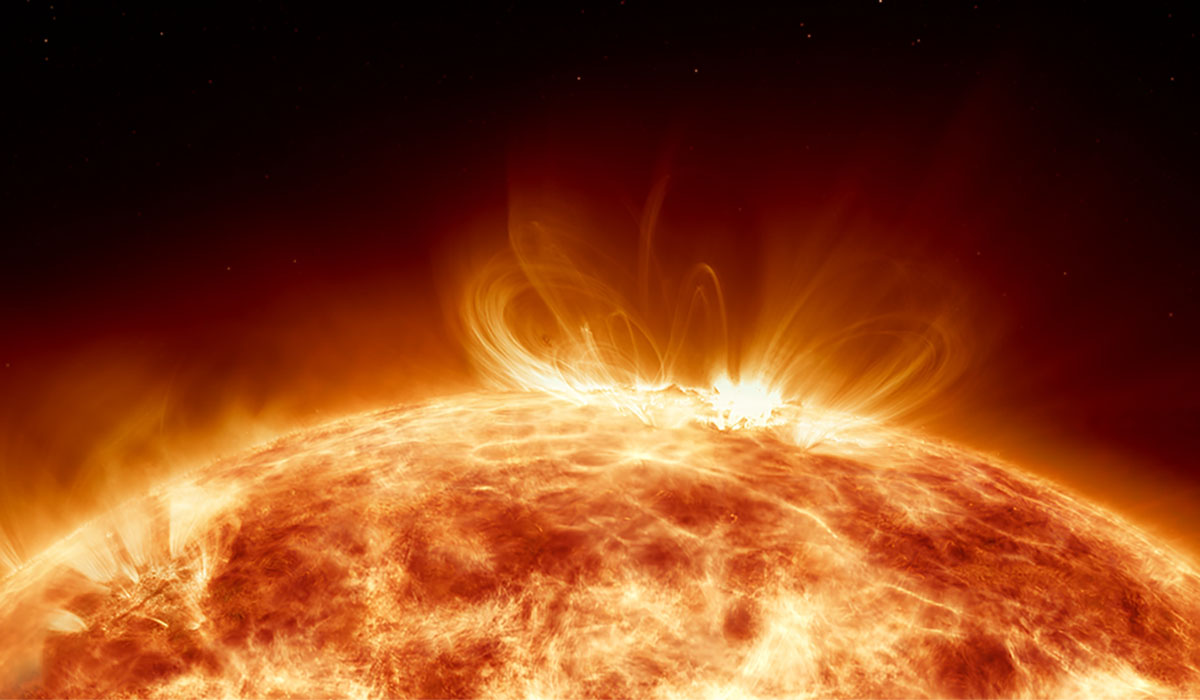
The fusion of atomic nuclei has been part of the universe since the universe was formed some 13.8 billion years ago. A few minutes after the Big Bang, hydrogen isotopes deuterium and tritium fused to produce the helium-4 that is found throughout the universe today, releasing an enormous amount of energy in the process—as much as 1067 joules, according to Los Alamos National Laboratory physicist Mark Chadwick.
Scientists have been interested in fusion since British astronomer Arthur Eddington proposed, in 1920, that the process might explain the makeup of stars. No sooner had Eddington proposed this theory than he speculated that fusion could one day be harnessed by mankind: “If, indeed, the sub-atomic energy in the stars is being freely used to maintain their great furnaces, it seems to bring a little nearer to fulfillment our dream of controlling this latent power for the well-being of the human race—or for its suicide,” he said.
Only some three decades after Eddington's proposal, scientists at Los Alamos National Laboratory would incorporate fusion into the design of the world's first thermonuclear weapons. Yet, the goal of using fusion to produce electrical power has proven elusive. More than 70 years after fusion was first used in weapons, no fusion reactor has demonstrated the mix of characteristics needed to make fusion power production both feasible and economical.
Today, at a time when private investment in fusion is reaching an all-time high and major projects such as the International Thermonuclear Experimental Reactor (ITER) are under construction, decades of advances—many of which have been made at or supported by research at Los Alamos—are helping bring the dream of fusion power closer than ever to reality.
Here, National Security Science traces fusion from its theoretical origins through its early use in weapon development and on to modern reactor research.

1905: Physicist Albert Einstein proposes the principle of mass-energy equivalence. Although French mathematician Henri Poincaré had previously described mass-energy equivalence in the context of electromagnetic energy, Einstein articulates the phenomenon as a general principle (part of his theory of special relativity), which he describes with the celebrated equation E = mc2.
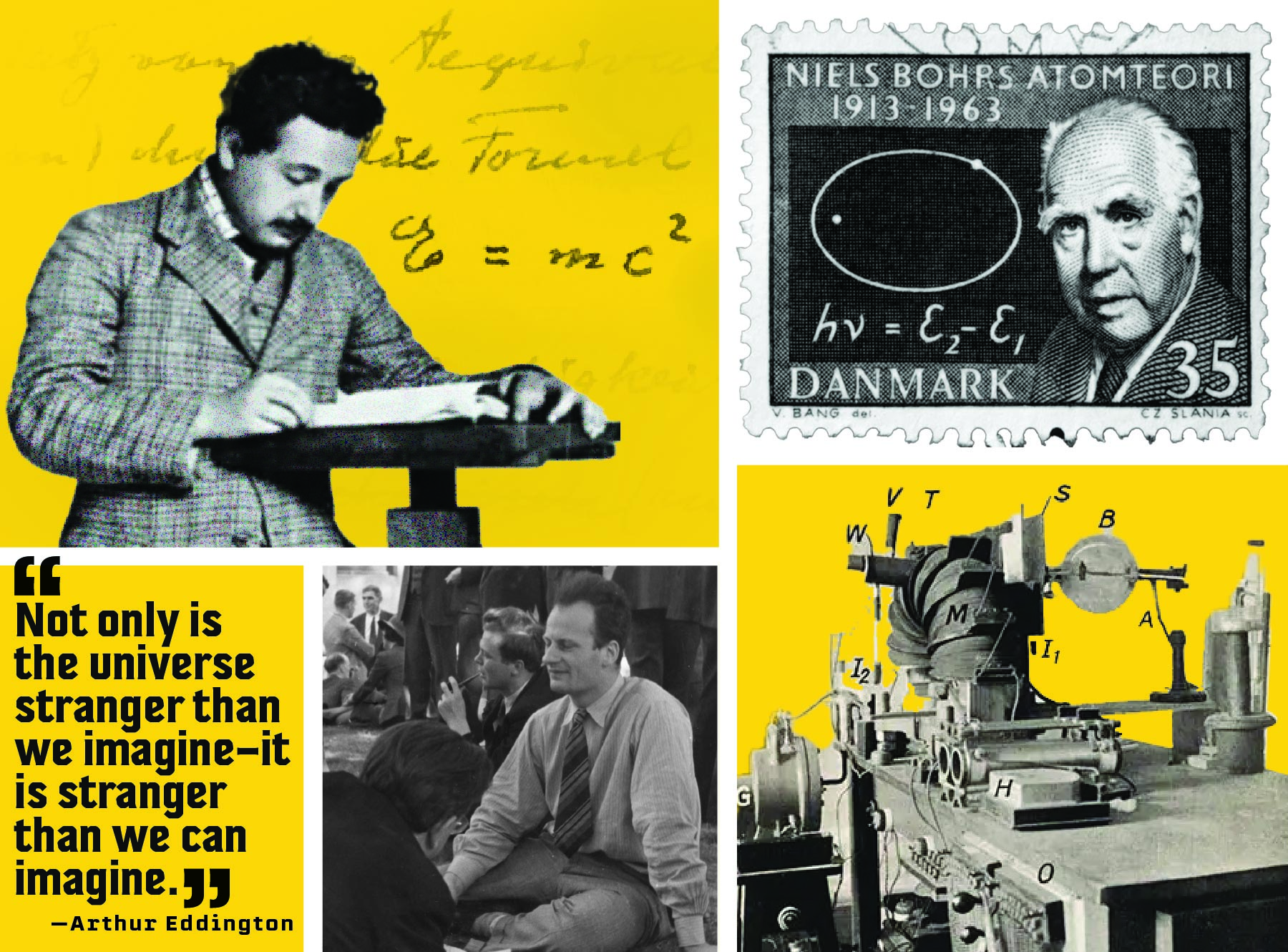

1911–1918: Physicist Niels Bohr develops and proposes his model of the atom, which builds on Ernest Rutherford’s discovery of the atomic nucleus. The Bohr model, which supplants the earlier “plum pudding” model proposed by J. J. Thomson, envisions the atom as a dense nucleus orbited by electrons. Although this model of the atom will be supplanted by more sophisticated quantum-theoretical models in the 1920s, Bohr’s work helps make possible Arthur Eddington’s explanation of the Sun’s mechanism.
1919: Chemist Francis Aston builds a mass spectrograph that is a significant improvement over earlier designs, enabling the accurate measurement of the weight of individual atoms and their isotopes. Drawing on Einstein’s theories, Aston’s measurements suggest that when lightweight elements such as hydrogen combine into heavier elements such as helium, mass is lost as a release of energy.

1920: Astronomer Arthur Eddington suggests that stars such as the Sun are powered not by gravitational contraction—as theorists had speculated for the better part of eight decades—but by the fusion of atomic nuclei. Eddington summarizes his position as follows: “The atoms of all the elements are built of hydrogen atoms bound together, and presumably have at one time been formed from hydrogen; the interior of a star seems as likely a place as any for the evolution to have occurred; whenever it did occur a great amount of energy must have been set free; in a star a vast quantity of energy is being set free which is hitherto unaccounted for.”
1928: Physicists Robert Atkinson and Fritz Houtermans build on the 1928 quantum tunneling work of physicist George Gamow to calculate the probability of proton-proton and light-nuclei fusion reactions inside stars. This work provides a quantitative theoretical description of the mechanism that Eddington proposed and constitutes the first calculation of the rate of fusion in stars, providing a mechanism by which fusion could conceivably occur even outside stars—perhaps even on Earth.

1934: In a series of experiments at Ernest Rutherford’s Cavendish Laboratory (at Cambridge University), physicist Mark Oliphant and other researchers bombard deuterium with accelerated deuterons, discovering helium-3 and tritium, which are created as products. Historians generally identify these experiments as the first-ever artificial fusion reactions.
1938: University of Michigan physicist Arthur Ruhlig publishes a paper in the Physical Review that includes the first observation of deuterium-tritium fusion reactions and remarks about the efficacy of these reactions. The paper receives little attention, but it is read by physicist Emil Konopinski, who later brings its concepts to key nuclear weapon development discussions during the Manhattan Project—the World War II–era effort to build the first nuclear weapons. (In 2024, scientists from Los Alamos and Duke University repeated Ruhlig’s pioneering experiment with advanced detectors, finding that the observed deuterium-tritium fusion rates agreed with calculations in modern simulation codes.)
1938–39: Physicist Hans Bethe publishes a series of papers explaining how hydrogen turns into helium inside stars via a process called the proton-proton chain (for stars whose mass is similar to or less than that of the Sun) or the carbon-nitrogen-oxygen chain (for hotter, more massive stars). This research provides an important theoretical basis for future advances and increases scientists’ confidence that controlled, sustained fusion can be achieved on Earth. In 1967, Bethe will be awarded the Nobel Prize in Physics in recognition of this work.

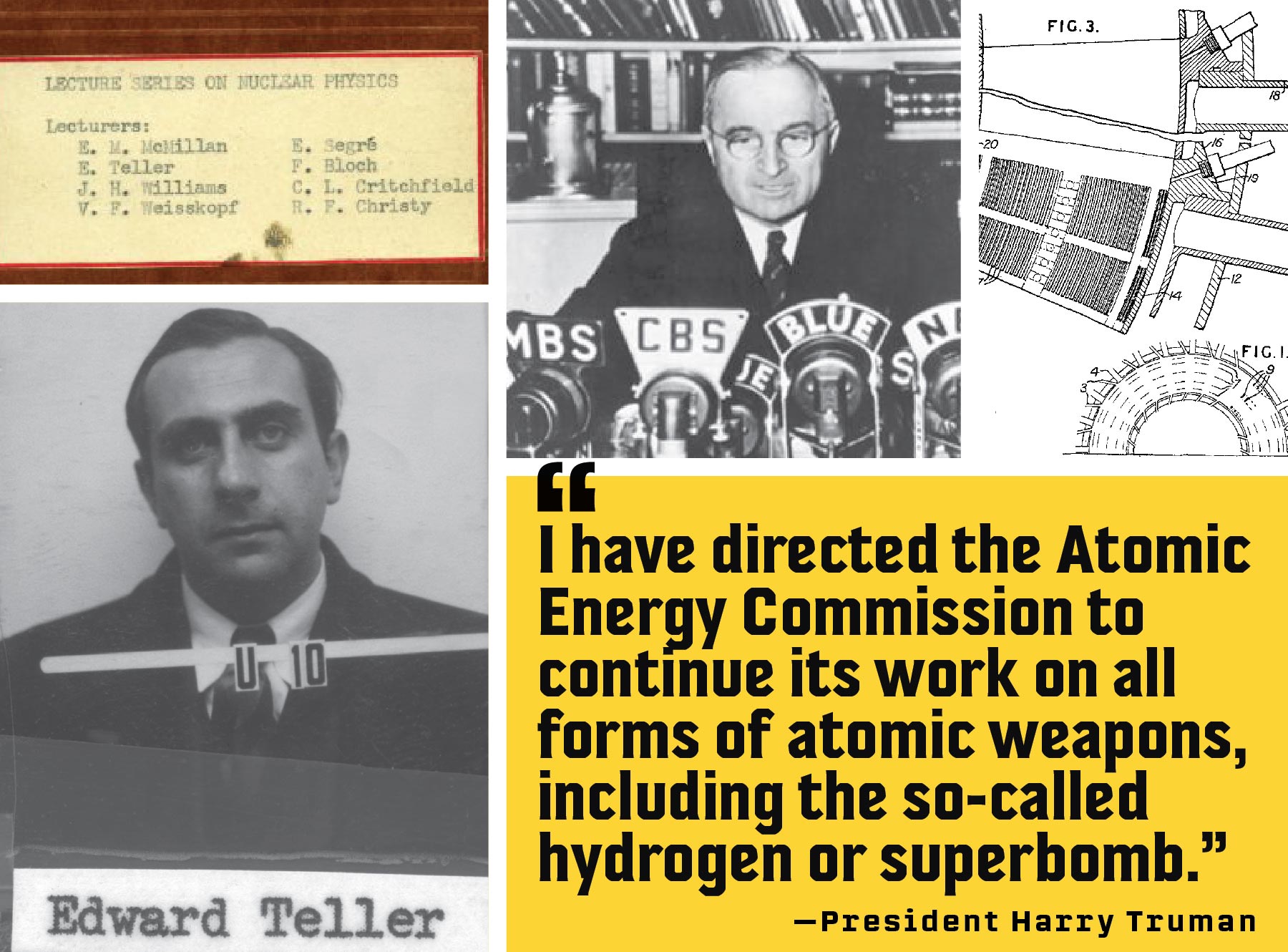
1942: At the University of California, Berkeley, physicist J. Robert Oppenheimer brings together a group of elite scientists (including Hans Bethe, John Van Vleck, Edward Teller, Felix Bloch, Richard Tolman, and Emil Konopinski) to study the feasibility of developing a nuclear weapon. Although the discussion centers on designs that would rely on fission—that is, the splitting, rather than fusing, of atomic nuclei—physicist Teller draws on Bethe’s work to further propose developing a “super bomb” that harnesses fission to drive a fusion reaction. Bethe is skeptical of this proposal’s feasibility, however.
1943–44: Teller arrives at Los Alamos—the center of the Manhattan Project—in spring 1943. Following the Berkeley study’s conclusions, the Manhattan Project focuses on fission-weapon development. However, despite making important contributions to the fission program, Teller becomes preoccupied by calculations related to his “super bomb” concept. In mid-1944, Oppenheimer appoints Teller the leader of a new group that will focus exclusively on fusion research.
1945: At Los Alamos, British physicist Egon Bretscher measures the deuterium-tritium fusion cross section at relatively low energies, identifying a strong “resonance” that shows deuterium-tritium fusion to be much more probable at weapon-relevant energies than deuterium-deuterium fusion. This work helps enable the later use of the deuterium-tritium reaction in nuclear weapon design, although tritium is too expensive and difficult to produce at the time to be incorporated at scale into weapons. (Decades later, Los Alamos physicist Mark Chadwick will name the phenomenon of deuterium-tritium resonance the “Bretscher state” in Bretscher’s honor.)
1946: The first patent of a fusion reactor is filed. British physicists George Paget Thomson and Moses Blackman propose a toroidal solenoid device that would confine a deuterium plasma and rely on the so-called “pinch” concept, with a strong current run through the plasma to produce self-pinching magnetic forces and confine the plasma. Thomson and Blackman are unable to secure funding to build their reactor, although it is now known that the design would have been unworkable regardless.
1946: During a historic conference at Los Alamos, Teller presents the results of his wartime fusion research. Laboratory scientists agree that deuterium-deuterium fusion is the most promising path forward (in part because tritium is thought too difficult to attain in quantity). However, the technical barriers to designing a fusion weapon remain high, and the limited computational techniques of the time mean that key design questions are unanswered. Going forward, Los Alamos’ thermonuclear program will focus on limited laboratory experiments, expanded theoretical studies, and research into the possible uses of tritium in a weapon.
1947: In Cambridge, Manhattan Project veteran James L. Tuck helps physicist George Paget Thomson build a prototype pinch reactor, which uses magnets to pinch a plasma and confine it. In 1950, Tuck will return to Los Alamos and continue to conduct fusion research.

1950: The term “fusion” begins to appear in scientific publications as a description of the process that is the opposite of fission.
1950: In January, in response to the Soviet Union’s first successful detonation of a fission device, President Harry Truman directs the Atomic Energy Commission to prioritize and accelerate its thermonuclear weapon research and development. The Laboratory adopts a six-day work week to achieve this goal. However, in October-November, calculations on the ENIAC (Electronic Numerical Integrator and Computer) machine suggest that Teller’s proposed “classical Super” design won’t work.
1950: Soviet physicists Andrei Sakharov and Igor Tamm propose the tokamak concept, which involves confining a plasma inside a toroidal (donut-shaped) device. The first tokamak isn’t constructed until the late 1950s.
1950–51: Mathematician Stanislaw Ulam proposes an idea that Teller greatly improves upon to help make the design of a thermonuclear weapon possible.
1951: On May 8, the United States conducts an experiment that marks the first instance of human-created “fusion burn,” or a self-sustaining series of fusion reactions inside a hot, dense region of fuel.
1951: On May 25, a Los Alamos experiment evaluates the “boosting” principle, which involves using a small quantity of fusion fuel to generate neutrons that substantially boost the rate of a fission reaction. The experiment is a major breakthrough for nuclear weapon design.
1952: The United States conducts the first demonstration of a true thermonuclear device, which is designed at Los Alamos based on the Teller-Ulam design.
1952: The United States launches Project Sherwood—a classified effort at Princeton University, Los Alamos, and Lawrence Livermore National Laboratory to develop several different types of fusion reactors.
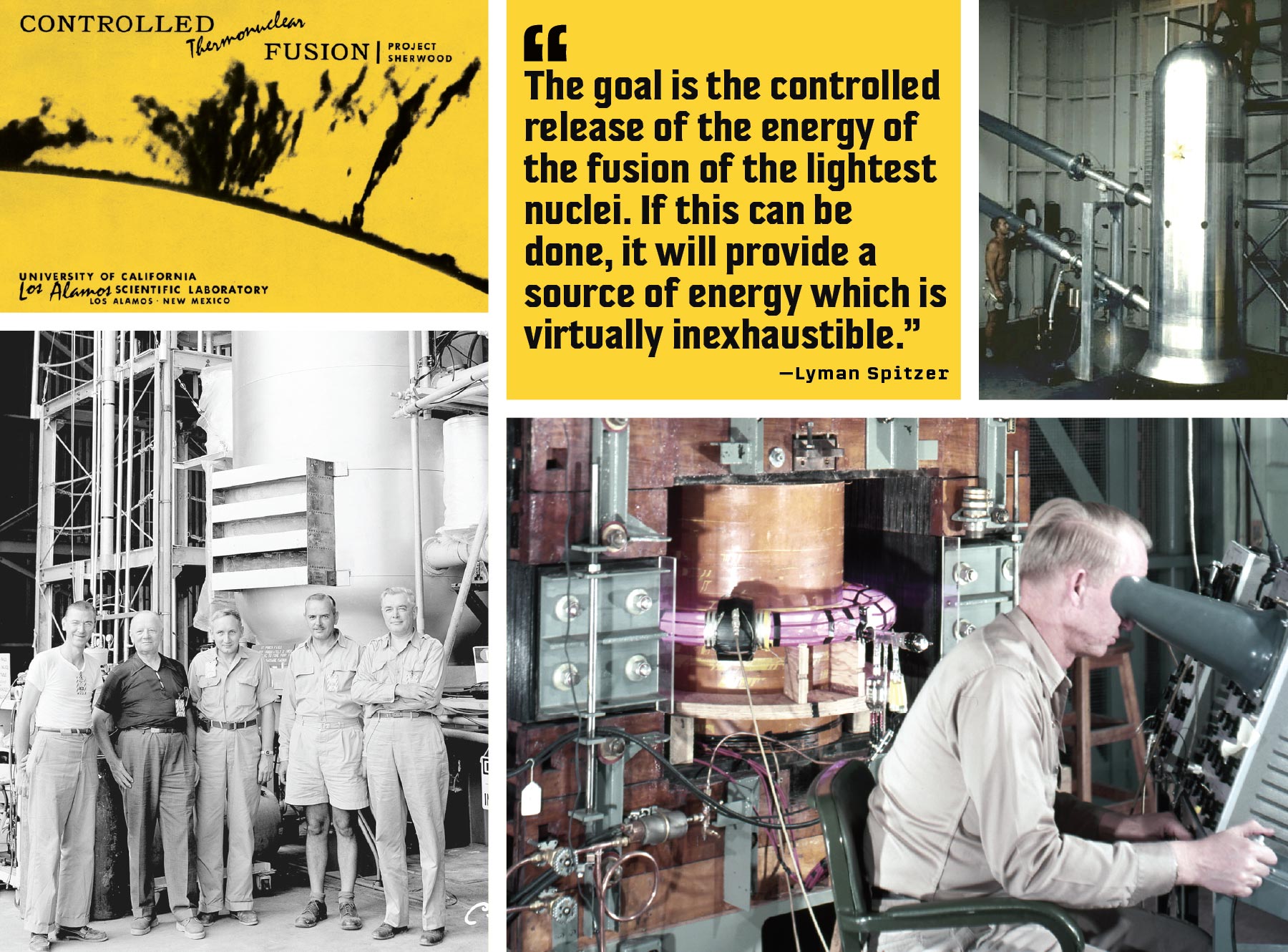
1952–53: At Los Alamos, as a part of Project Sherwood, James Tuck builds the Perhapsatron—a prototype Z-pinch reactor, which uses an electric current to magnetically “pinch” a plasma along its Z axis. The prototype is unsuccessful: Instabilities in the plasma consistently cause the plasma to disperse.
1953: At Princeton University, physicist Lyman Spitzer builds the first-ever stellarator, which he calls the Model A. Stellarators become the leading fusion reactor design in the United States—a status that they will retain for the better part of two decades until tokamaks prove more effective.
1954: Los Alamos scientists conduct a thermonuclear experiment that uses, for the first time, “dry” (rather than liquid) fusion fuel.
1956: An airborne thermonuclear exercise is carried out by the United States.
1957: The Zero Energy Thermonuclear Assembly, or ZETA, machine is completed in the United Kingdom. ZETA is the largest-ever pinch-type device, and in early 1958, researchers will claim that the device has successfully achieved fusion. A subsequent review will determine that this conclusion is erroneous and that instabilities in the plasma are responsible for the runaway neutrons that researchers interpret as evidence of fusion.
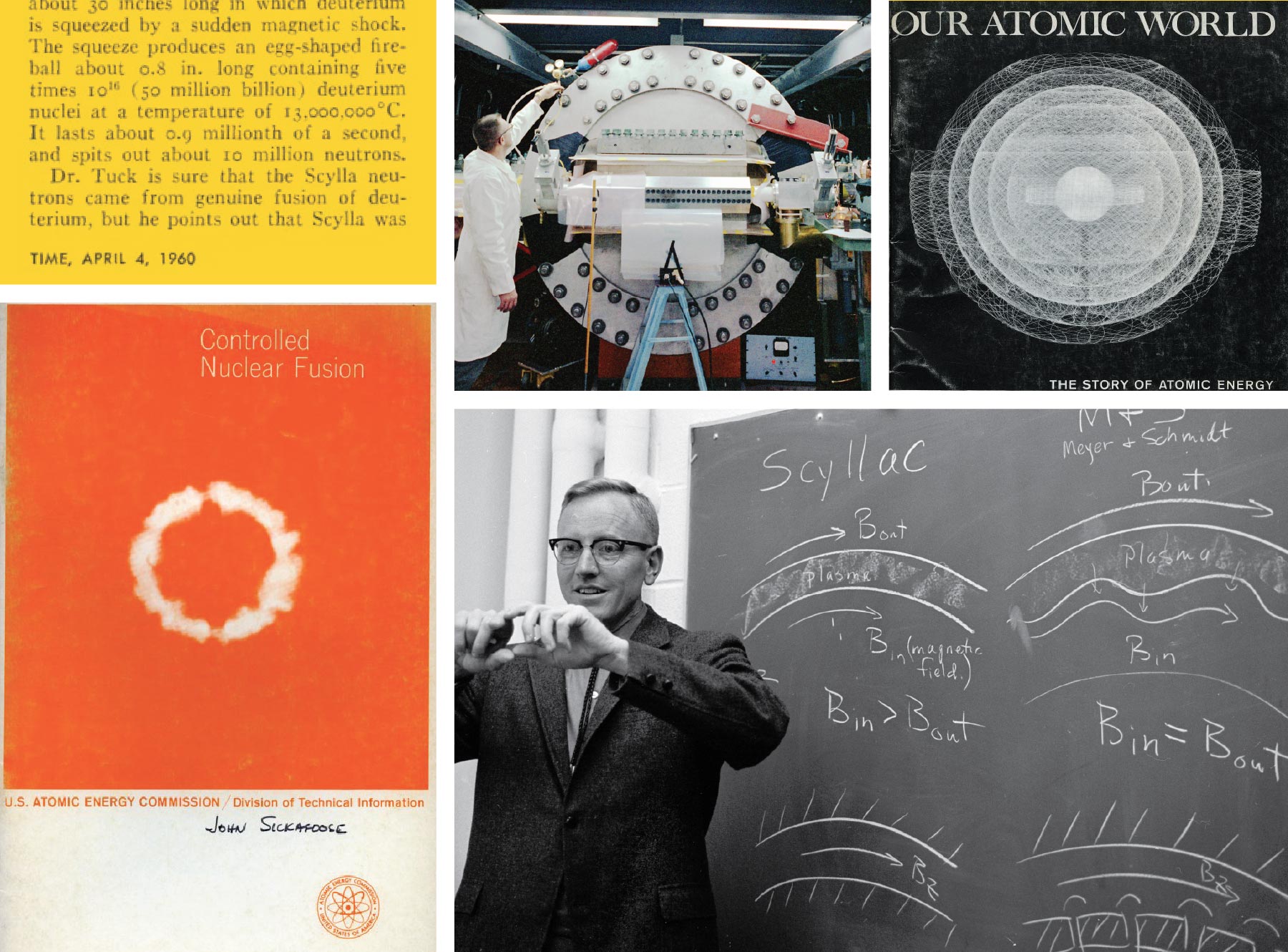
1958: Scientists at Los Alamos achieve controlled thermonuclear fusion reactions in a laboratory setting—a world first. The Laboratory’s Scylla I machine employs a “theta pinch” approach that differs from the earlier Z pinch method by using a very short, intense pulse of current to pinch a plasma. Analysis of the neutrons, protons, and tritons produced during experiments on the machine suggest that its plasmas reach about 15 million degrees Celsius and that deuterium-deuterium fusion occurs. However, the machine is unable to sustain a fusion reaction for more than a few microseconds. Subsequent Scylla-type devices (Scyllas II-IV, 1959–63) at Los Alamos, which are funded by the Sherwood program, will attempt to expand confinement time.
1958: At the second United Nations International Conference on the Peaceful Uses of Atomic Energy in Geneva, Switzerland—better known as Atoms for Peace—the United States, United Kingdom, and Soviet Union give presentations on their respective fusion research programs, making much formerly classified research known to the public. The disclosures make clear that researchers around the world are struggling with similar problems related to plasma instabilities and confinement times.

Mid-1960s: Stellarators, pinch machines, and mirror machines continue to suffer from plasma instabilities and other shortcomings. Fusion research stalls.
1968: In a major diplomatic achievement, five British scientists visit the Kurchatov Institute—home of the Soviet Union’s nuclear weapon program—to evaluate the T-3 tokamak, which Soviet researchers claim produces far greater temperatures and plasma confinement times than had been achieved with other kinds of reactors. The British team’s work validates the Soviet researchers’ claims. In 1969, the British team publishes the results of its evaluation in Nature, and tokamaks quickly become the dominant magnetic-confinement reactor configuration in the international fusion community.
1968: Brookhaven National Laboratory leads the development and publication of the first Evaluated Nuclear Data File (ENDF), with Los Alamos and other U.S. national laboratories playing a supporting role. ENDF is a standardized evaluated nuclear data library used worldwide for modeling, simulation, and analyzing nuclear processes. Over subsequent decades, ENDF has continued to evolve, with Los Alamos contributing important benchmarks and fusion‑related nuclear data to support today’s deuterium-tritium fusion simulations.
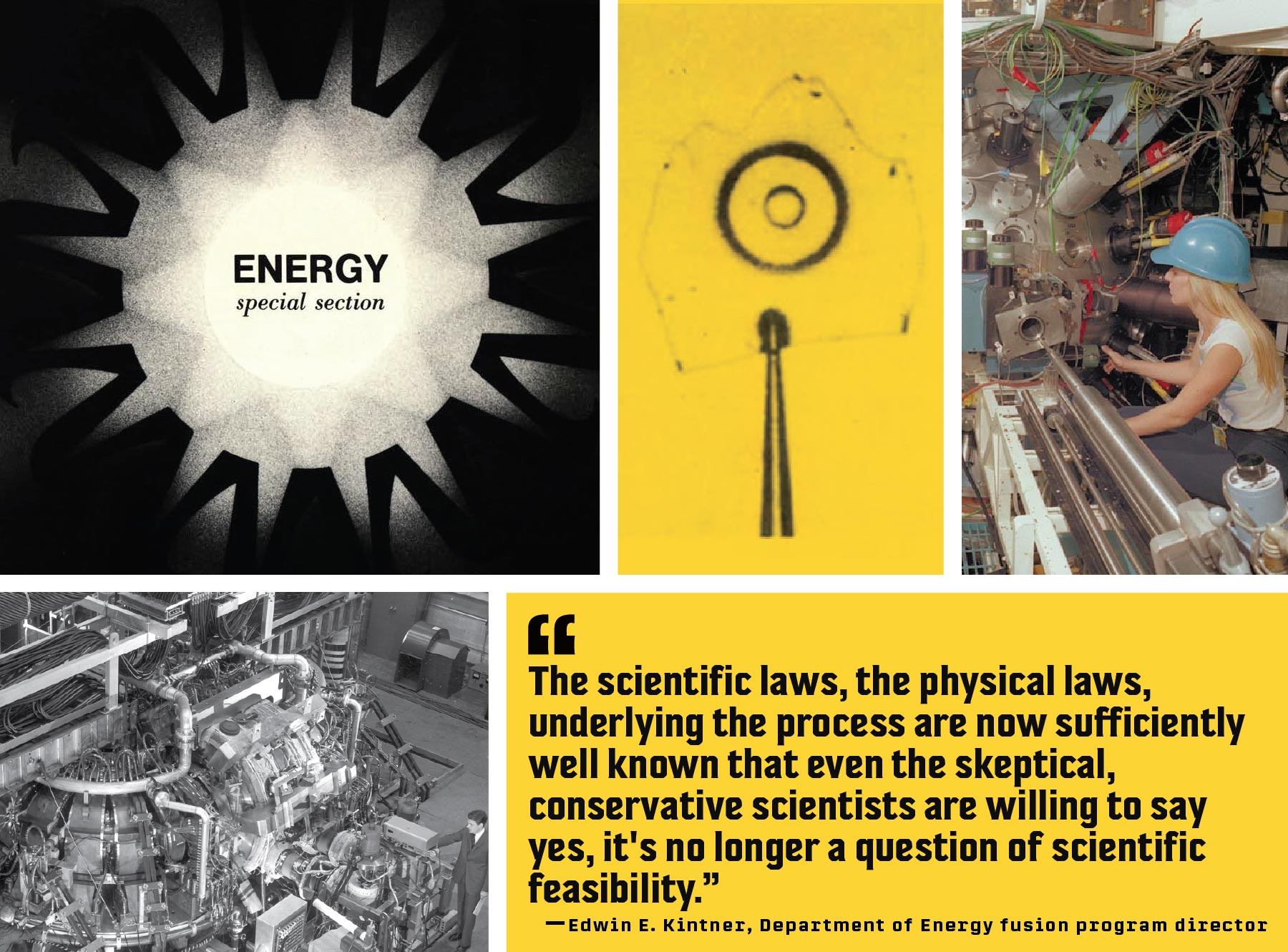

1970: Princeton Plasma Physics Laboratory finishes converting its Model C stellarator into the Symmetric Tokamak, the first tokamak in the United States, underscoring the new American research focus on tokamaks. Results from the Symmetric Tokamak are on par with those of Russian tokamaks.
1972: Physicist John Nuckolls and other researchers at Livermore publish a paper in Nature that proposes using lasers to initiate fusion by compressing very small capsules of hydrogen fuel. The suggestion constitutes the basis of inertial confinement fusion (ICF) and is the culmination of more than a decade of classified research at Livermore. ICF becomes a central fusion research area.
1974: KMS Fusion achieves a fusion reaction via ICF—the first-ever instance of laser-induced fusion. Months later, in December, Livermore’s Janus laser will also be used to achieve fusion.
Mid-1970s: At Sandia National Laboratory (today’s Sandia National Laboratories) in Albuquerque, New Mexico, researchers develop early pulsed-power accelerators such as the Electron Beam Fusion Accelerator, which attempts to use powerful electron beams to achieve ICF. Over the coming decades, Sandia’s pulsed-power fusion program will attempt to use other particles—including protons and light ions—to achieve ICF. This research will lead to the creation of Sandia’s Z machine in the mid-1990s and will also support the design of accelerator facilities such as Scorpius, which is being assembled today at the Nevada National Security Sites in Nevada.
1977: Livermore completes its Shiva laser. With its 20 beams, the laser is an early precursor to Livermore’s National Ignition Facility (NIF)—a seminal facility that will enter operation in 2009.
1977: Los Alamos decommissions its Scyllac machine, a theta-pinch device that was built in the 1960s as a successor to the earlier Scylla series of machines. Scyllac never achieved its goal of achieving burning-plasma conditions, but it did provide valuable plasma-physics data.

Early 1980s: Los Alamos begins operating the Antares carbon dioxide laser—an ICF facility that advances understanding of laser-driven implosions. Among other things, Antares’ multi-beam, long-wavelength system demonstrates the limits of carbon dioxide lasers in ICF, helping guide the design of future ICF facilities toward shorter-wavelength lasers.
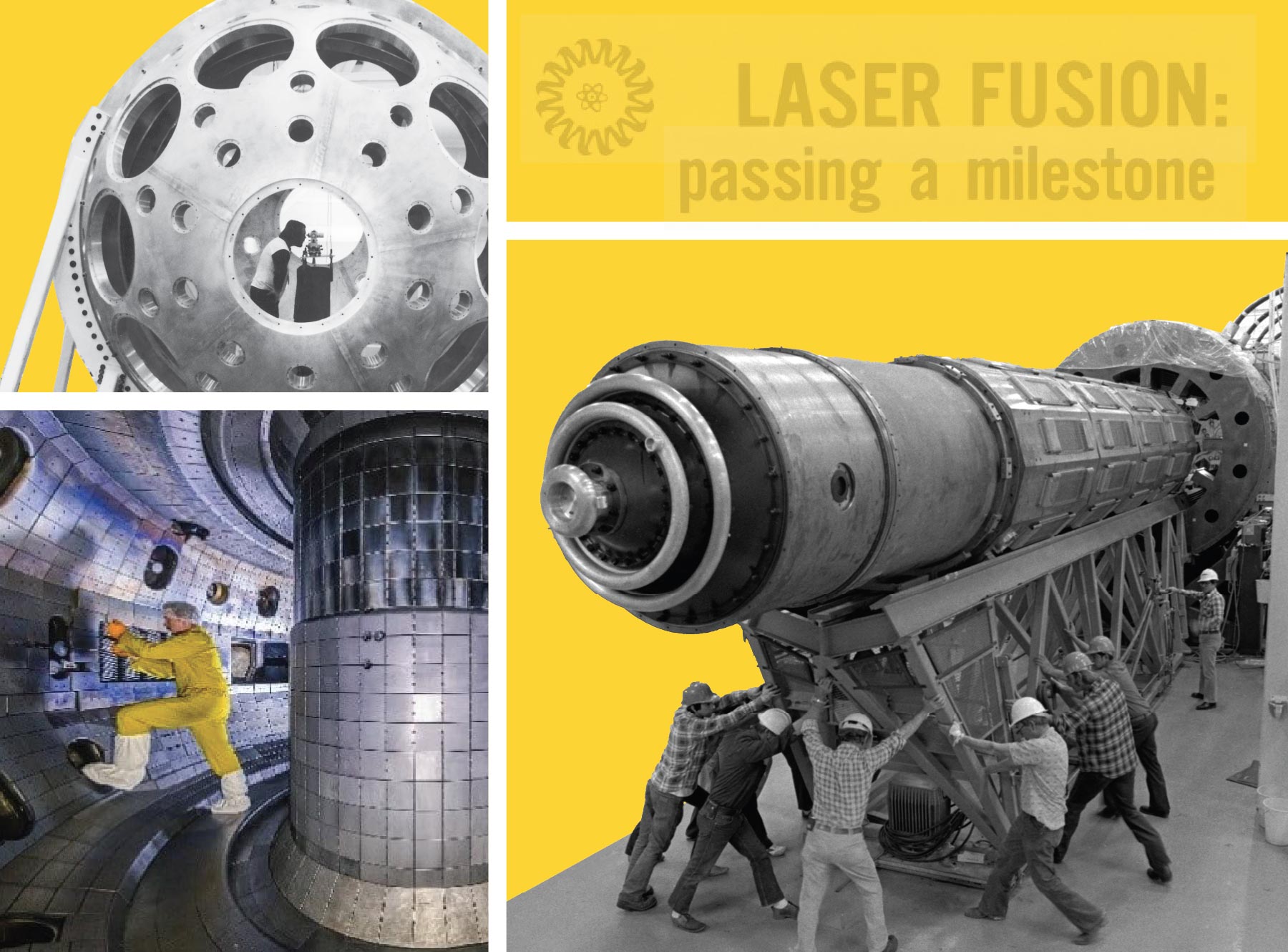
1980–1985: The Tokamak Fusion Test Reactor, or TFTR (at Princeton University, 1982); Joint European Torus, or JET (United Kingdom, 1983;) and Japan Torus-60, or JT-60 (Japan, 1985) enter operation. All three large-scale tokamaks fail to achieve their most ambitious performance targets: None achieves scientific breakeven, or the point at which as much energy is produced by the reactor as is supplied to it. However, the reactors do attain significant advances in plasma confinement time and energy density, among other achievements.
1982: At the Axially Symmetric Divertor Experiment (ASDEX) in Germany, researchers discover high-confinement mode, or H-mode—a phenomenon by which, above certain heating power levels, particle and energy confinement is approximately doubled. This discovery will prove important to future tokamak reactor designs, such as the International Thermonuclear Experimental Reactor, or ITER, which will take H-mode as its baseline operating regime when it begins experimental operations in the 2030s.
1982: Los Alamos commissions the Tritium Systems Test Assembly, a large-scale experimental facility created to demonstrate the fuel cycle needed to sustain a working tokamak fusion reactor. Until its closure in 2001, the facility will provide valuable data about the fusion fuel cycle.
1984: Livermore completes its Nova laser—the first of a series of ICF lasers intended to achieve fusion ignition (where the energy produced by the fusion reaction exceeds the energy supplied to the fuel). Nova will operate until 1999, and although it won’t achieve ignition, it will provide key experimental data that supports development of NIF, where fusion ignition will be achieved.
1986: The DIII-D tokamak in San Diego, California, operated by General Atomics for the U.S. Department of Energy, becomes a cornerstone of U.S. fusion research. By pioneering advanced plasma control and confinement techniques, DIII-D provides key physics and operational insights for ITER and other prospective fusion power plants.
1987: Conceptual planning begins in Vienna for ITER. The project emerges as a symbol of international scientific diplomacy, with the United States, various European countries, the Soviet Union, and Japan leading the project. Over the next two decades, China, South Korea, and India will also become partners on ITER.
Late 1980s: At Los Alamos, the Trident laser is commissioned to conduct ICF and high-energy-density physics research. Over the coming years, Trident will become a key laser-plasma capability that complements the Laboratory’s historical magnetic-fusion research, supporting both fusion energy and weapons science. Trident will be decommissioned in 2017.
Late 1980s–1990s: Using a Van de Graaf generator, Los Alamos physicists Nelson Jarmie and Ronald E. Brown make the most-precise-ever measurements of deuterium-deuterium and deuterium-tritium reaction cross sections. These measurements become benchmark data for low-energy fusion reactions and are widely used around the world.
1989: Chemists Martin Fleischmann and Stanley Pons announce the purported discovery of a fusion process that occurs at near room temperature. The process, which is labeled “cold fusion” by the press, quickly becomes a media phenomenon. However, attempts to validate Fleischmann and Pons’s results are unsuccessful, and the discovery is soon discredited.

1991: JET conducts experiments using a mix of equal parts deuterium and tritium fuel—a world first.
1993–1995: At TFTR, researchers conduct an experimental campaign using a 50-50 mix of deuterium and tritium, proving that deuterium-tritium operation in a large tokamak reactor is feasible. In 1994, TFTR sets a then-world record for fusion reactor power output, producing a one-second burst of 10.7 million watts.
1995: The 60-beam Omega Laser is commissioned at the University of Rochester’s Laboratory for Laser Energetics in New York and becomes a key ICF testbed. National‑laboratory teams—including Los Alamos—use Omega to study target designs, implosion stability, and fusion physics, providing data that inform later experiments at NIF.
1996: Sandia converts its Particle Beam Fusion Accelerator II into the Z Pulsed Power Facility, or Z machine. Similar to predecessor Z pinch machines built in the 1950s, the Z machine runs an electric current through a plasma to create magnetic fields that “pinch” the plasma. The Z machine is the world’s most powerful pulsed-power facility, releasing up to 22 megajoules of energy in around 100 nanoseconds and producing extreme temperatures, pressures, and radiation similar to those found inside stars and nuclear explosions. This capability provides valuable data that supports fusion, high-energy-density physics, and national security research.
1997: JET sets a record for the closest approach to scientific breakeven (the point at which the energy put into heating a fusion fuel equals the energy produced by the fusion reaction within the plasma). Breakeven is represented as a fusion gain factor, or Q, of 1; JET achieves a Q of .67. For reactors that rely on magnetic confinement, this record still stands. This and other achievements at JET provide critical information for ITER’s design.
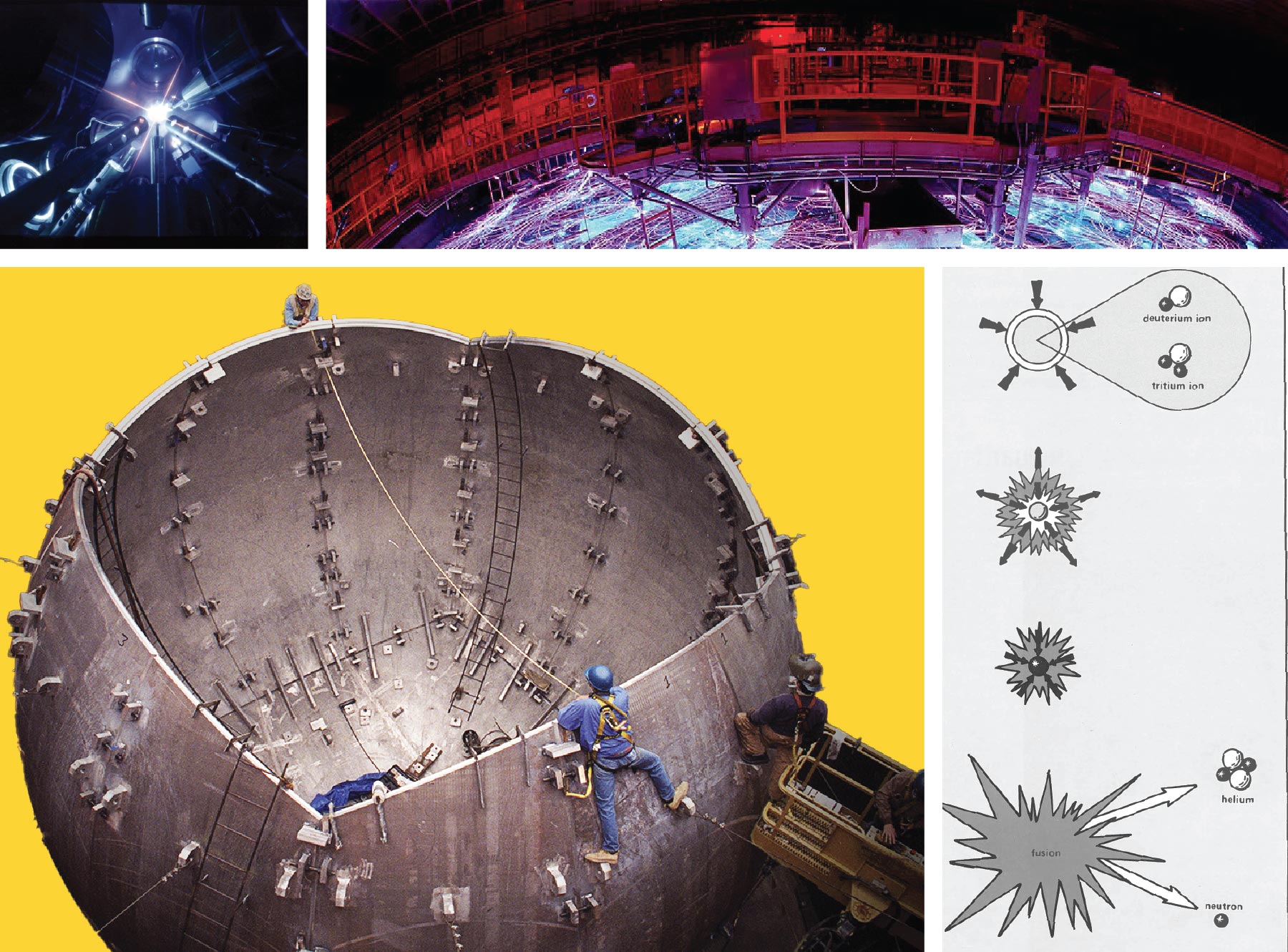
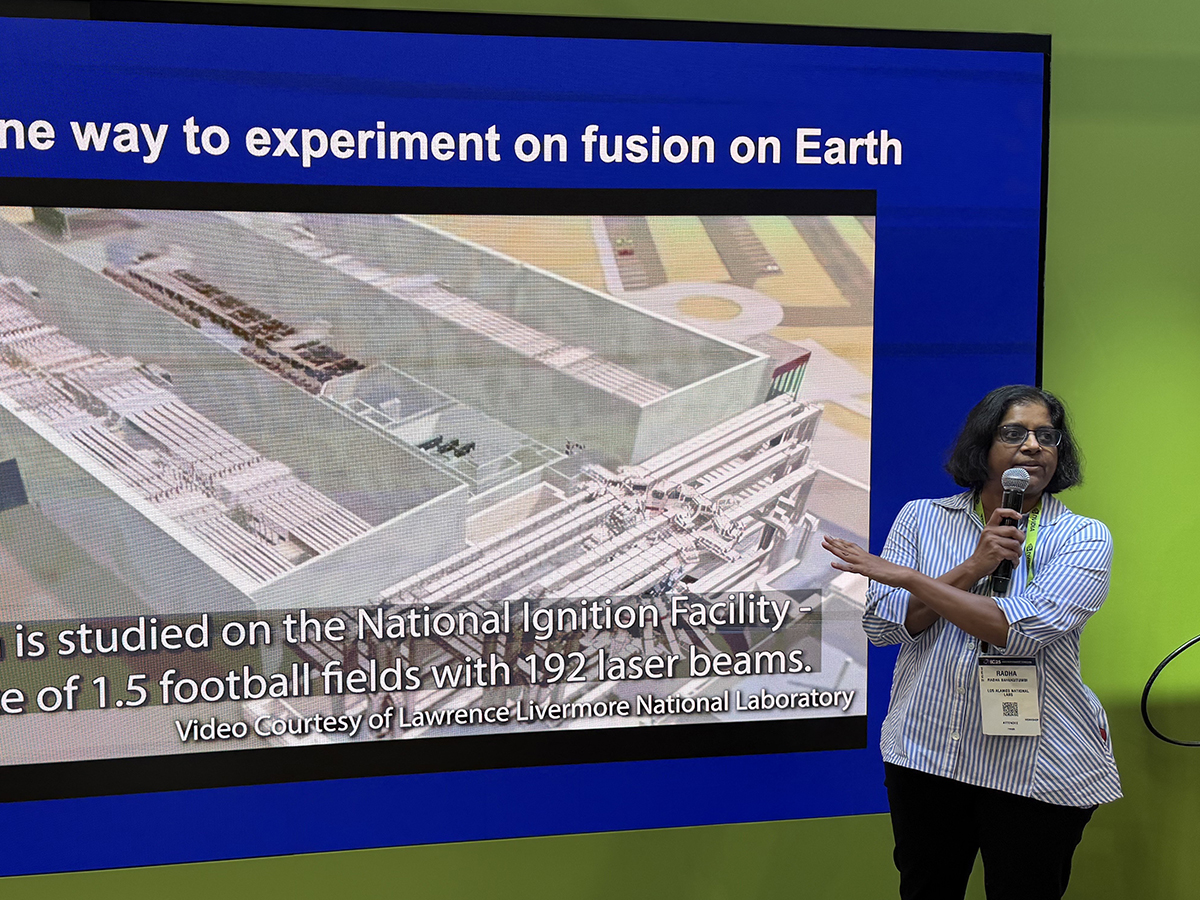
1997: At Livermore, ground is broken on NIF. Comprising 192 lasers trained on a 2 millimeter target, the facility will become the first place in the world to achieve fusion ignition. The facility also conducts important research to ensure the safety, reliability, and effectiveness of U.S. nuclear weapons.
1998: Japan’s JT-60 achieves an extrapolated breakeven of 1.25, the current world record. Extrapolated breakeven differs from scientific breakeven in reflecting the expected performance of the machine if it were running on deuterium-tritium fuel (rather than on hydrogen or deuterium fuels, which are cheaper to work with and easier to handle; for this reason, they are used more often in reactor research).
1998: Tri Alpha Energy launches in California, becoming one of the first of a new generation of private companies that seeks to develop a fusion power reactor.

2000s: xRAGE (Radiation Adaptive Grid Eulerian), a Los Alamos radiation-hydrodynamics code, becomes a key tool for modeling ICF experiments. xRAGE plays a crucial role in understanding how radiation transport, shocks, and thermonuclear burn unfold in ICF capsules, helping predict how extreme conditions drive fusion implosions.
2001: NIF’s main infrastructure is completed. Work begins on assembling and qualifying the facility’s lasers.
2003: Sandia’s Z machine produces a fusion reaction for the first time, suggesting that Z pinch devices could be a way to achieve controlled thermonuclear fusion.
2006: The ITER Agreement is signed by the European Union, China, India, Japan, Russia, South Korea, and the United States, clearing the way for reactor construction to begin at ITER’s site outside Cadarache, France.
2008: South Korea’s KSTAR (Korea Superconducting Tokamak Advanced Research) begins operation, demonstrating long‑duration, high‑temperature plasma control with superconducting magnets. Results achieved at KSTAR support ITER.
2009: NIF’s 192 lasers are fired simultaneously for the first time. In June, full-scale experiments begin at the facility.

2010: The first concrete is poured as part of ITER’s construction.
2010: Los Alamos launches the Plasma Liner Experiment (PLX), which explores magneto-inertial fusion concepts that are a “hybrid” between magnetic confinement and ICF techniques. PLX is designed to use converging supersonic plasma jets to study compression relevant to future fusion reactor concepts.
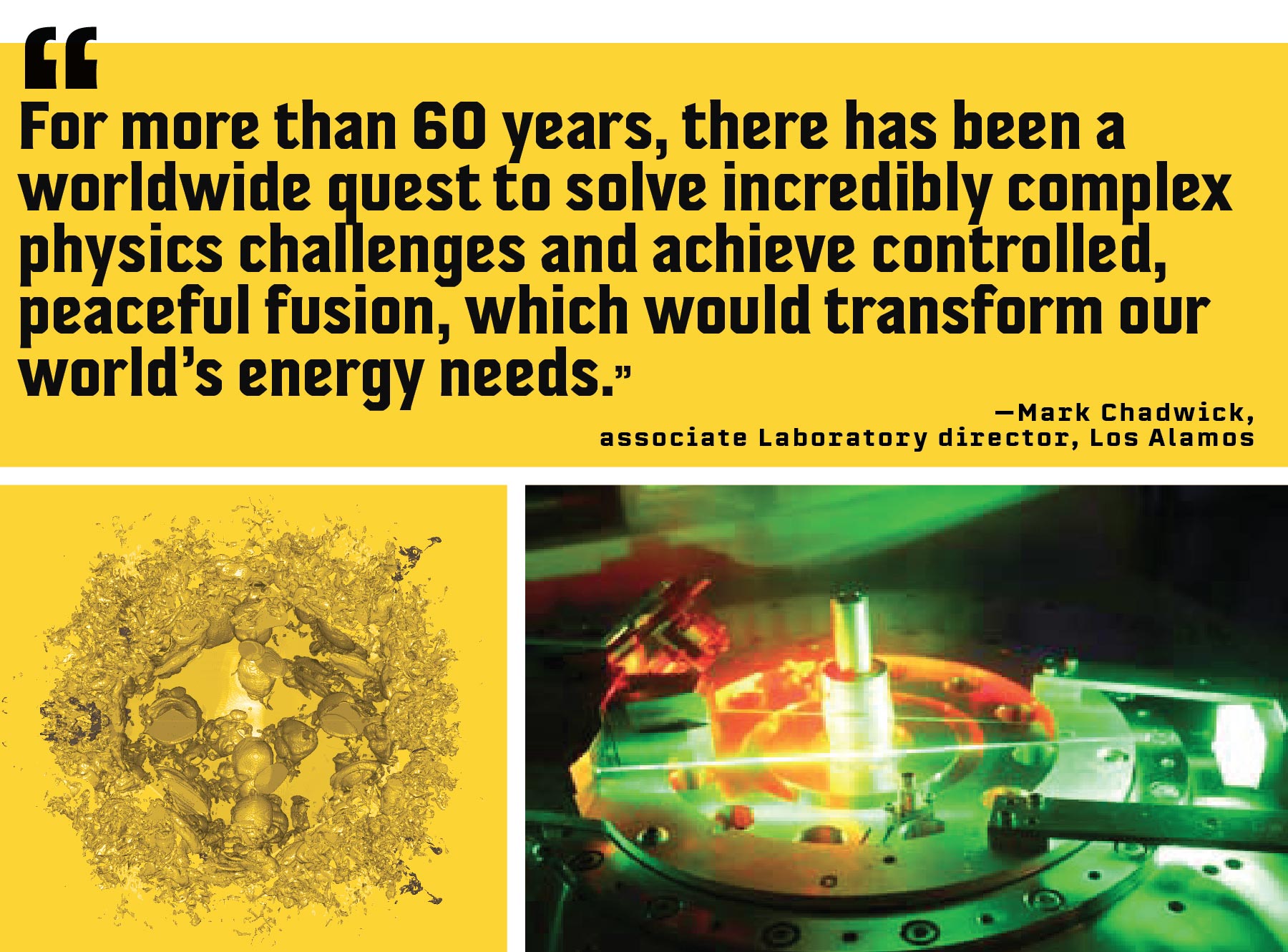
2010s: Los Alamos establishes a dedicated program to design and fabricate double-shell ICF capsules for experiments at NIF. Double-shell targets consist of an outer shell that is driven into an inner shell by x-rays, compressing the deuterium-tritium gas inside the inner shell in a way that could achieve more stable and robust fuel compression. Today, ongoing modeling and double-shell experiments at NIF point toward the possible future use of these targets in shots that could produce fusion ignition.
2013–14: MagLIF experiments on Sandia’s Z machine produce promising results. MagLIF, which stands for magnetized liner inertial fusion, is an ICF-like technique developed at Sandia that preheats hydrogen fuel inside a metal liner with a laser and then compresses the fuel with a powerful magnetic field. Using deuterium fuel, researchers produce a tgrillion fusion neutrons, suggesting that the MagLIF technique could be a viable path to achieving controlled fusion reactions.
2015: In Greifswald, Germany, the Wendelstein 7-X stellarator is completed. The machine, which is the world’s largest stellarator, is partially supported by an American consortium that includes Princeton University, Oak Ridge National Laboratory, and Los Alamos. In the intervening years, the stellarator has seen several upgrades and demonstrated steadily longer plasma confinement times, aiming eventually to achieve a total of up to 30 minutes of continuous plasma discharge and to show that stellarators are well suited to continuous operation.
2015–2020: Private fusion companies such as Commonwealth Fusion Systems, General Fusion, Helion, Tokamak Energy, Zap Energy, and others raise increasingly large amounts of money to pursue the development of diverse fusion reactor concepts.
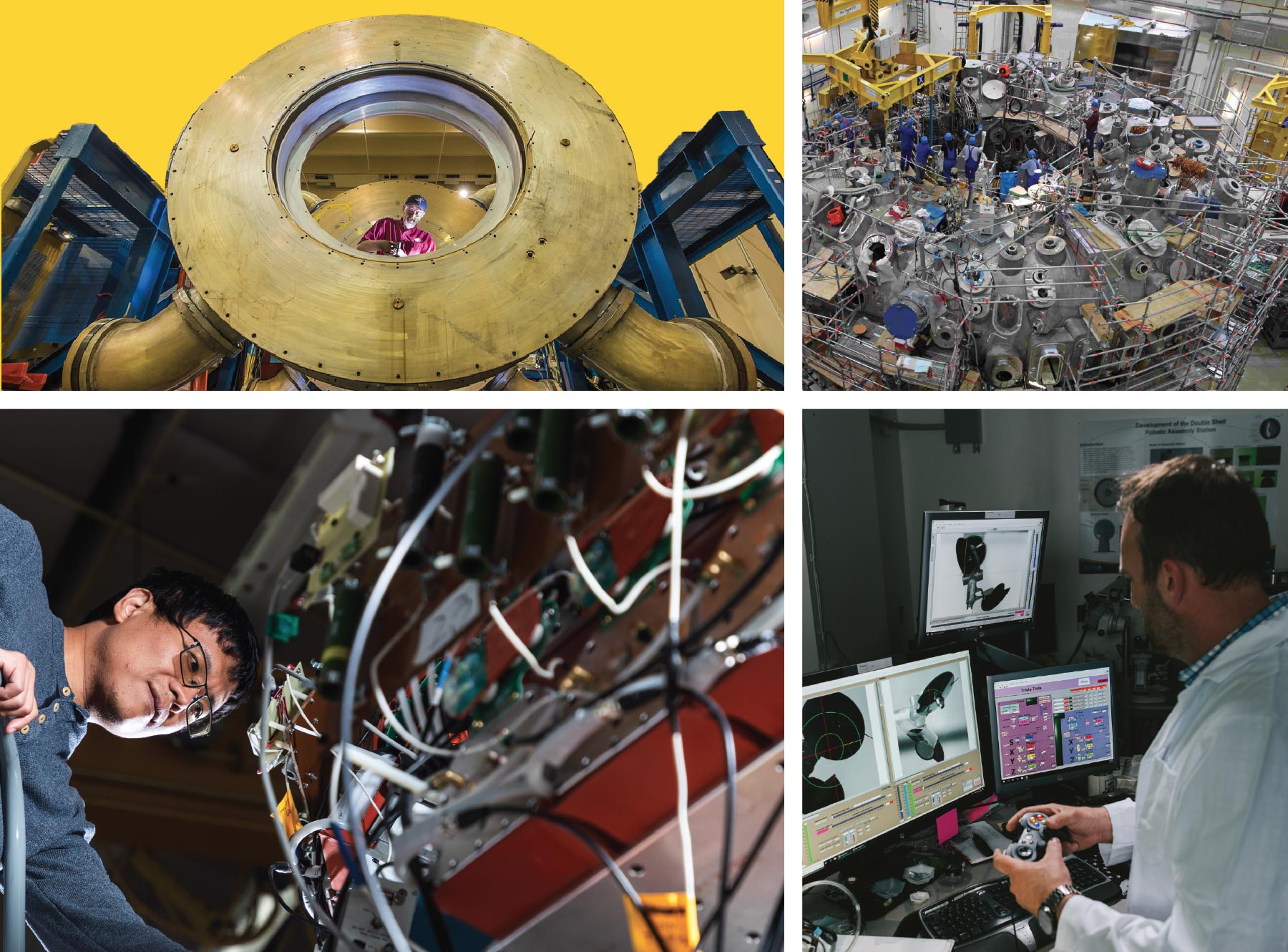

2020: ITER begins the assembly of its main tokamak components. The reactor is slated to begin experimental operations in 2034.
2022: At NIF, on December 5, fusion ignition is achieved, with 3.88 megajoules of energy produced out of the 2.05 megajoules delivered to the target. This achievement, which is hailed internationally as a breakthrough, will be repeated and surpassed several times at NIF in the coming years.
2023: JET, which has been reconfigured to address questions relevant to ITER’s design, attains the current world record for energy output from a magnetic-confinement fusion reactor. Using 0.2 milligrams of fuel, JET produces more than 69 megajoules of heat over 5 seconds, surpassing the facility’s previous 2021 world record (69 megajoules of energy could power an average American household for approximately 15 hours). The results boost hopes for ITER’s success.
2025: The WEST (Tungsten Environment in Steady-State Tokamak) reactor in France (formerly known as Tore Supra) sets the current world record for plasma confinement time in a tokamak, sustaining a 50-million-degree-Celsius plasma for 22 minutes and 17 seconds. This is an increase of approximately 25 percent over the previous record, which was set by China’s Experimental Advanced Superconducting Tokamak (EAST). The achievements at WEST and EAST are important steps toward confining plasmas on timescales relevant to commercial fusion energy production.
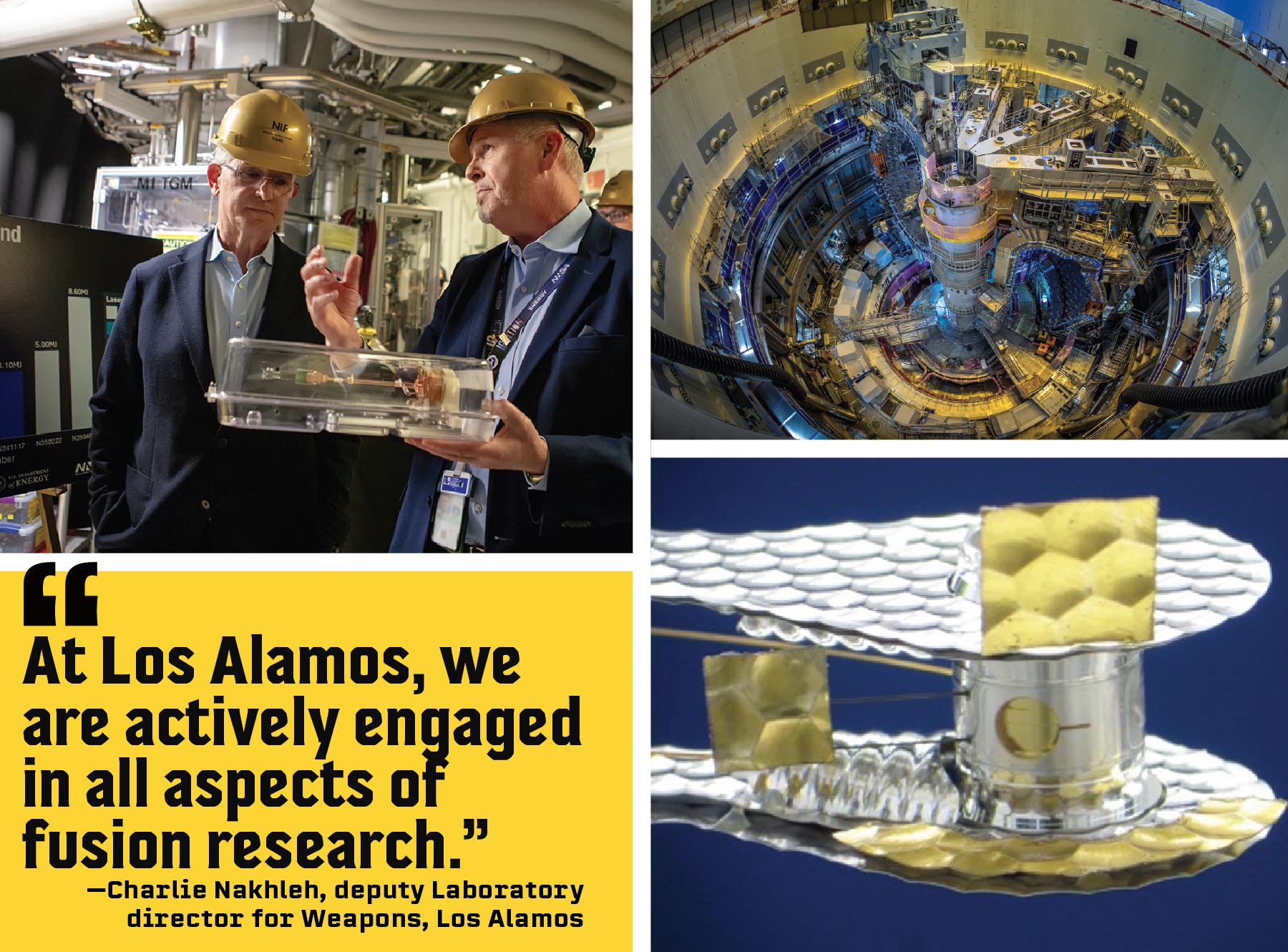
2025: At NIF, a Los Alamos team achieves fusion ignition using a novel hohlraum (which contains the fusion fuel) called THOR (Thinned Hohlraum Optimization for Radflow). THOR contains windows around its equator that allow high-energy x-rays to escape and be used for national security–related experiments, among other applications. ★
Jill Gibson contributed to this timeline.