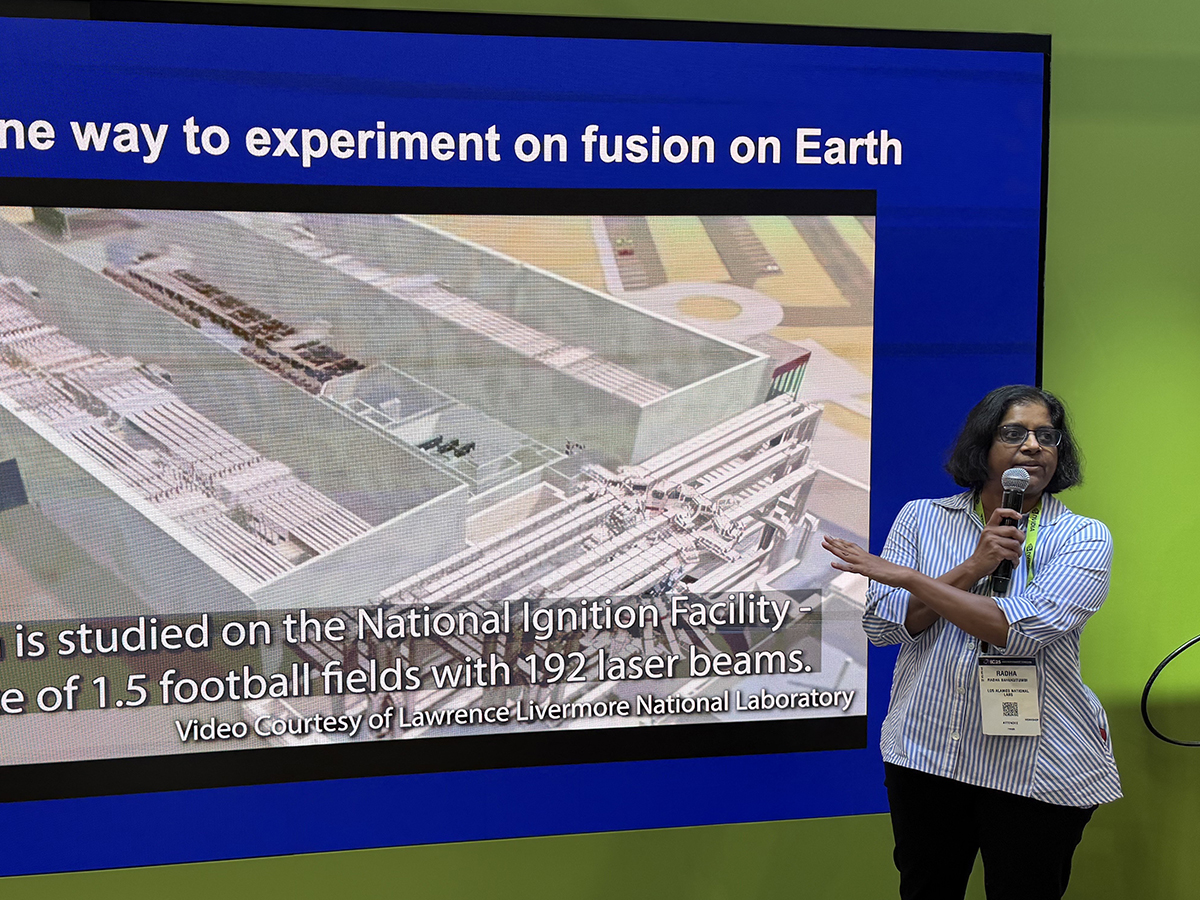
Private companies around the world are racing to develop commercial fusion power reactors, building on advances such as the 2022 achievement of fusion ignition at the National Ignition Facility at Lawrence Livermore National Laboratory. But although the development of fusion power reactors could bring prosperity—perhaps even ushering in an era of electricity that is “too cheap to meter,” as Atomic Energy Commission Chair Lewis Strauss famously put it—the technology could bring new dangers, too.
“Fusion energy is qualitatively different from fission energy in its resource needs and security considerations,” says Chris Danly, a scientist at Los Alamos National Laboratory. “Even though we don’t know yet exactly what a fusion power plant would look like, we should start thinking about the implications now.”
For example, if fusion power reactors are developed and become widespread, energy abundance could result and international conflict over resources might diminish. On the other hand, fusion technologies and fuels aren’t covered by current safeguards regimes, which focus on fissile materials such as uranium and plutonium. That fact could lead to new proliferation risks.
Danly is leading a project that aims to help characterize the opportunities and risks that fusion power presents. To do this, he is developing an add-on to Pacific Northwest National Laboratory’s Global Change Analysis Model (GCAM). GCAM allows users to envision, on a hundred-year timescale, how changes in factors such as population, income, or technology cost can affect crop production, energy demand, water use, and more in regions around the world.
By developing an add-on to GCAM that will allow researchers to explore the possible effects of fusion power on linked energy-economic-political systems, Danly is advancing the GCAM framework to model scenarios in a way that informs funding decisions, supports contingency planning, and bolsters threat reduction in the United States.
For instance, the add-on could help researchers and decision-makers understand what would happen if the United States developed fusion power first, or, conversely, if another country—China, for example—did. The effects of other factors, such as the ease or expense of constructing different proposed types of fusion reactors, could also be incorporated into the GCAM add-on to model both risks and opportunities for the United States and the international community.
“Nuclear nonproliferation and global-security issues are a consideration for fusion technology, and they’re things that Los Alamos has a lot of experience in,” Danly says. The Laboratory’s experience with modeling large-scale phenomena, such as the spread of conflict or disease, can support this research. Likewise, Los Alamos’ experience in fusion research, which dates to the Manhattan Project in the 1940s, means that Laboratory researchers can impartially evaluate the possible success or failure of private fusion projects, informing Danly’s work in turn.
“Los Alamos has been working on fusion since its inception, and we have historical experience with looking at nuclear technologies and how they change the world,” Danly says. “Our ability to step back and look at the big picture is significant.”
Danly’s own experience reflects the breadth of the Laboratory’s fusion research and development. Having spent the past 10 years researching a specific ion temperature–measurement technique, Danly’s shift to examining the large-scale effects of fusion energy allows him to reconcile a longstanding interest in international relations with his nuclear physics expertise.
“With this project, I’ve gone from studying one specific plasma variable measurement to really trying to look at the whole world,” Danly says. “That’s the kind of thing you can do at Los Alamos.” ★