For a few trillionths of a second in June 2025, a tiny capsule of fusion fuel—a mix of deuterium and tritium gases—just 2 millimeters across, burned at nearly 260 million degrees Fahrenheit—about 10 times hotter than the core of the sun. “During this brief time frame, our experiment was the hottest point in the solar system,” says physicist Ryan Lester, who was among the Los Alamos National Laboratory scientists who conducted the experiment at the National Ignition Facility (NIF) at Lawrence Livermore National Laboratory in California.
Lester’s work often involves inertial confinement fusion experiments at NIF where, in 2022, scientists at Livermore first achieved ignition—when a fusion experiment produces more energy than delivered to start the reaction. In addition to being extremely hot, ignition represents a crucial step forward in using fusion for national security research, harnessing fusion energy for commercial power, and understanding the process that fuels the Sun and stars.
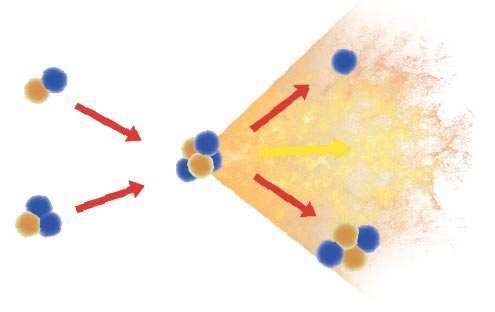
The fact that fusion research is occurring at the nation’s nuclear weapons laboratories is not coincidence. Although Los Alamos scientists pursue the basic physics knowledge and energy applications of fusion, national security is at the heart of their work. That’s because understanding fusion enhances scientists’ ability to design, certify, and assess the nation’s nuclear deterrent, which currently consists of six thermonuclear weapons.
Nuclear weapons: a primer
Fusion plays a powerful role in the design and operation of modern thermonuclear weapons, in which a fission reaction triggers a fusion reaction. In the first stage, high explosives compress fissile material (usually plutonium) to start a fission reaction that releases x-rays. The x-rays compress and heat the secondary stage, which contains the fusion fuel, causing it to ignite. A fireball hotter than the center of the Sun forms nearly instantly, releasing kilotons of energy.
Of the six thermonuclear weapons systems in the active nuclear stockpile, Los Alamos is responsible for four systems (the B61 bomb and the W76, W78, and W88 warheads); Livermore is responsible for two (the W80 and W87). Los Alamos and Livermore are also developing future systems, including the forthcoming W93, which will be carried on submarine-launched ballistic missiles. A third institution, Sandia National Laboratories, supports all active and future weapons.
“I see fusion research as a way to serve my country,” Lester says. “We are working on national security challenges and ensuring the safety of our deterrent. Along the way, we’re also building the foundations for fusion energy and deepening our understanding of astrophysical phenomena like how the stars work and how radiation moves through extreme environments. Both are invaluable byproducts of that work.”
Diving into diagnostics
Los Alamos National Laboratory and fusion have a history. “Los Alamos is the birthplace of multiple fusion breakthroughs,” says Mark Chadwick, the Lab’s associate director for simulation, computing, and theory. “The Lab’s extensive legacy in fusion research has paved the way for the recent ignition achievement and other scientific success.”
Many of the first advances took place in the 1940s during Project Y of the Manhattan Project (at what would later become Los Alamos National Laboratory). In 1951, Los Alamos scientists conducted an experiment that marked the first human-created fusion reaction.
“That experiment was only the second time deuterium-tritium fusion has occurred in the universe—the first being during the first few minutes after the Big Bang, when primordial nucleosynthesis produced most of the universe’s helium,” says physicist Kevin Meaney. “Today, at NIF, we recreate those fusion conditions nearly every week—on a very small scale.”
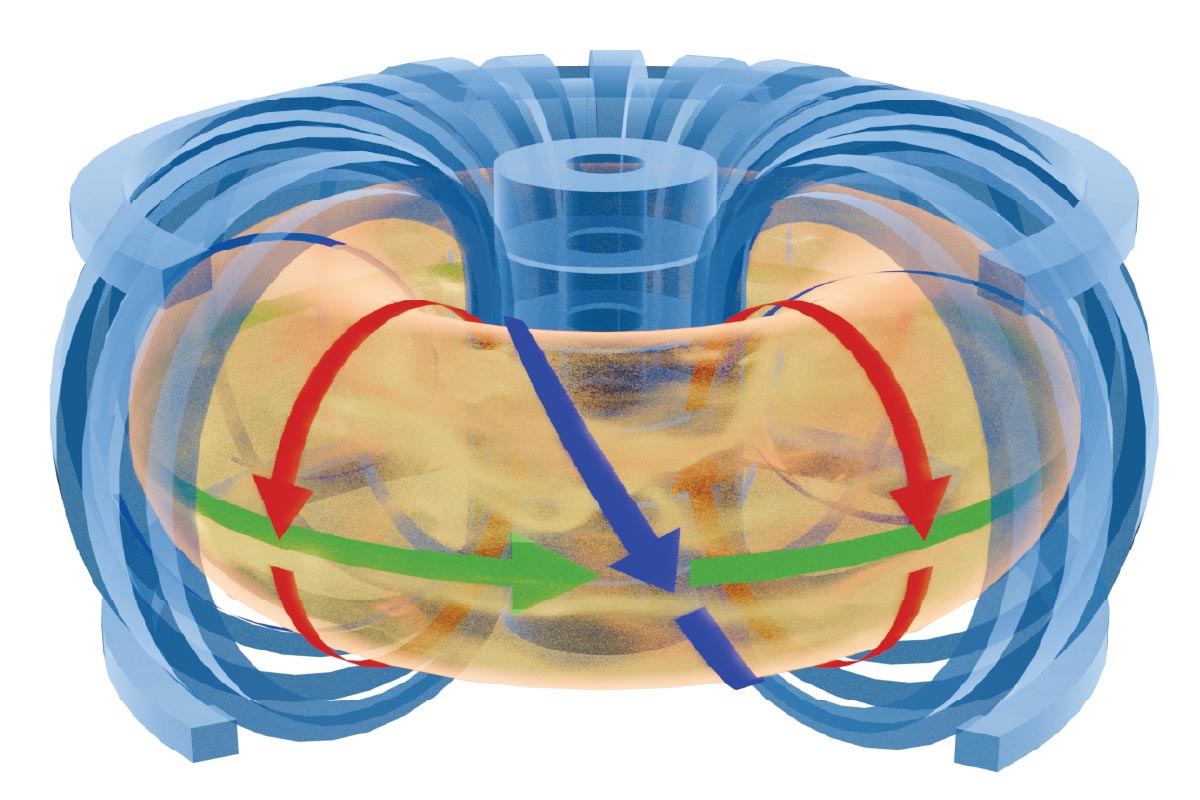
Meaney points out that ever since that first fusion demonstration, largely as part of its weapons work, the Laboratory has worked tirelessly to improve fusion diagnostics—the tools and techniques that allow scientists to see, measure, and understand what’s happening during a fusion experiment. “Los Alamos has been a leader in building fusion diagnostic methods and interpreting data,” he says.
Over the years, Los Alamos researchers have designed systems that serve as the eyes and ears of current fusion experiments. “We built the fastest radiation detector in the world and are now studying gamma ray reaction history, neutron imaging, and how fusion fuel burns,” Meaney says.
In 2022, Meaney and his colleagues used Los Alamos–developed diagnostics to measure the first achievement of fusion ignition in a laboratory setting. Today, the Los Alamos team is applying those methods to answer further questions. This suite of specialized diagnostic techniques makes precise measurements of processes that take place incredibly quickly, such as neutron production.
“Once a fusion fuel capsule compresses, implodes, and ignites, we can study what physics phenomena dominate during the reaction,” Meaney says. Using a variety of diagnostic approaches, he can identify when sustained fusion reactions that release significant energy (fusion burn) start, how the fuel burns, how long the burn lasts, and what disrupts it. “Since we can now reach ignition, we can test our fundamental understanding of the science taking place,” he explains. Meaney stresses the sophistication of the diagnostic systems he uses. “We are measuring phenomena that take place in 40 picoseconds,” he says, adding that a blink of an eye is about 10 billion times longer than 40 picoseconds. “These are screaming timescales,” he says.
Opening a window
Meaney’s measurements provide data that Los Alamos scientists feed into computer codes to produce computational simulations of fusion processes. One such code is the Laboratory’s state-of-the-art hydrodynamics computer code, xRAGE (Radiation Adaptive Grid Eulerian). This code allows scientists to make 3D simulations of what happens when a fusion fuel capsule compresses and implodes.
Los Alamos physicist Brian Haines, who made significant contributions to the development of xRAGE, notes the important role this code plays in fusion research. “The xRAGE code is one of the most advanced fusion modeling tools and has demonstrated unprecedented successes at predicting the outcome of fusion experiments,” Haines says, adding that one of the Lab’s major contributions to fusion research is providing leadership in computational modeling.
Recently, Los Alamos scientists used xRAGE to help design a new fusion ignition platform that produces an extreme x-ray output. The first application of this new platform took place in the summer of 2025 at NIF.
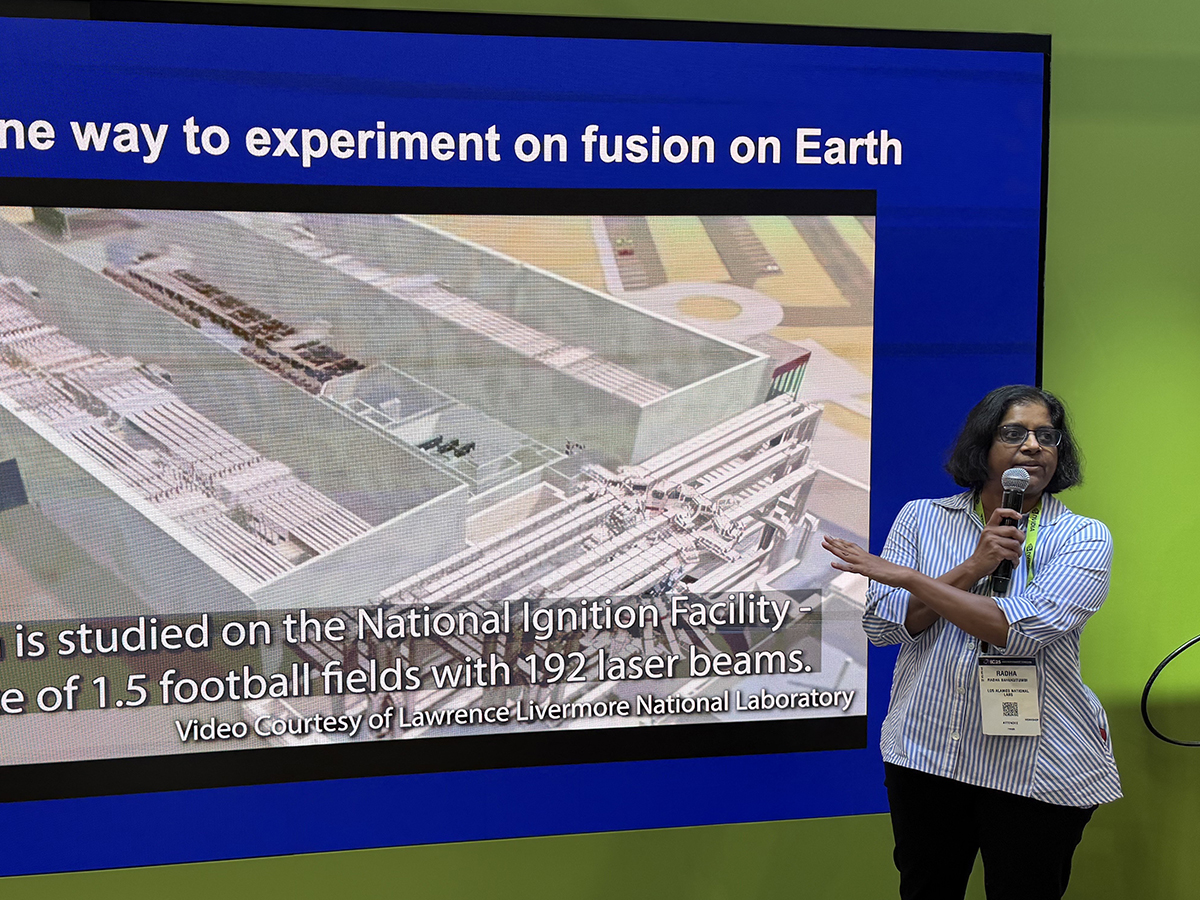
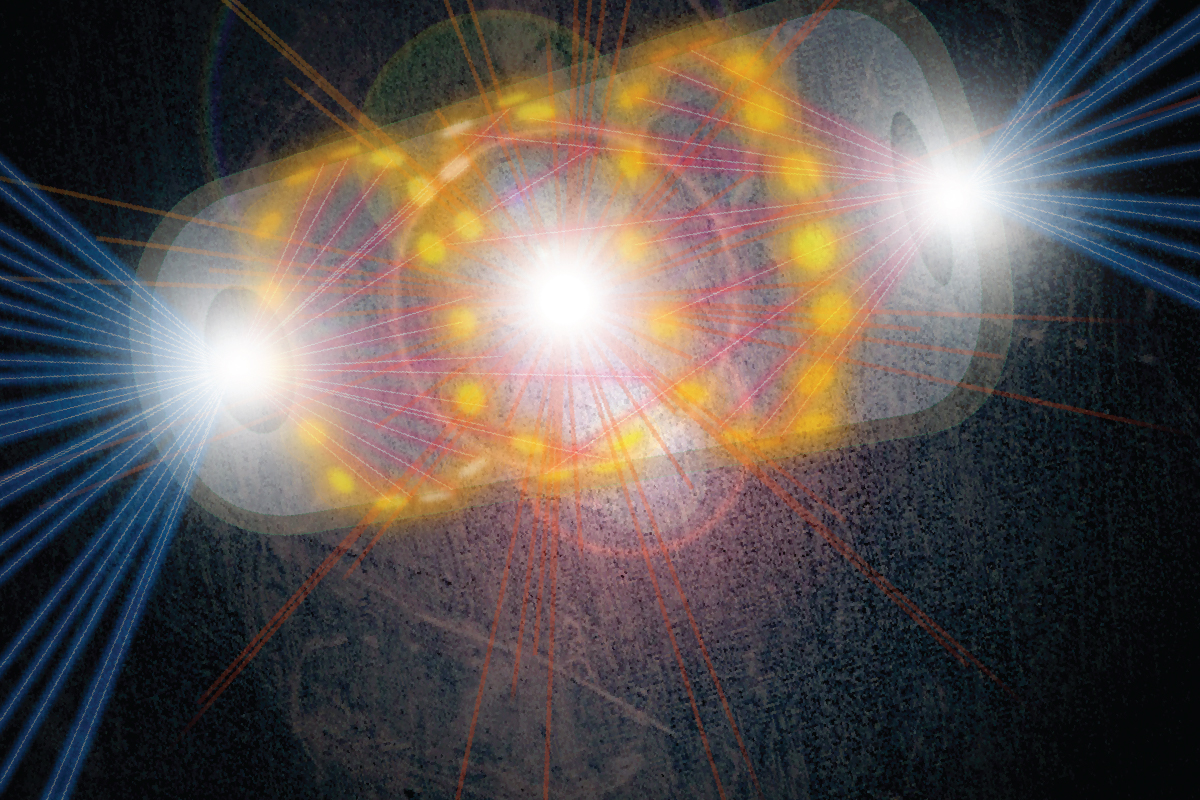
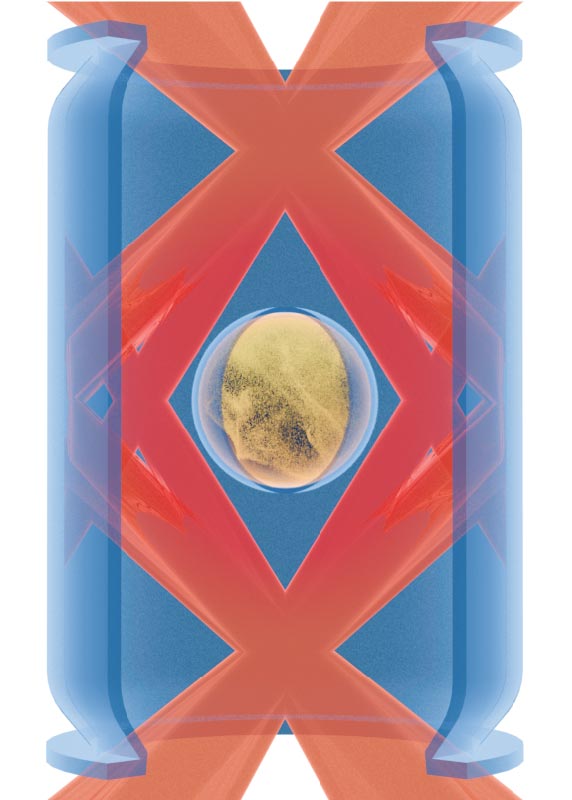
In a standard NIF fusion experiment, lasers are fired into a gold-coated cylinder called a hohlraum, which is just a few millimeters long and wide. The hohlraum holds a tiny capsule of fusion fuel. When NIF’s lasers hit the inner walls of the hohlraum, they create a uniform bath of x-rays that drives the symmetrical implosion of the inner capsule, resulting in fusion ignition.
For this new platform, Los Alamos scientists designed a hohlraum with windows—openings that allow the higher energy x-rays to escape. They named the new approach THOR: Thinned Hohlraum Optimization for Radflow. The goal is to use those escaping x-rays to bombard test materials to study radiation flow and absorption under extreme temperatures, pressures, and densities.
Lester says some of his colleagues thought ignition would be impossible to achieve with the added windows, but THOR proved them wrong. “It worked the first time—precisely matching our simulations,” he says. “Being able to reach ignition with the THOR platform allows us to study how radiation flows and evolves through the THOR windows,” Lester adds, noting that the platform has national security applications. “The platform also offers a way to learn how stars work, how radiation moves in materials, and lets scientists explore stellar opacities.”
Meaney, meanwhile, says he is looking forward to combining the Lab’s diagnostic techniques with the THOR platform. “THOR is using ignition to access states of matter that we haven’t been able to reach before,” he says. “It will help us learn about astrophysics, materials science, and many other areas. I’m excited.”
Lester says his goal now is to modify the windows to allow even more radiation to exit the hohlraum, paving the way for more focused, repeatable physics experiments. Some of Lester’s colleagues are still skeptical, but Lester is determined to prove them wrong. “Los Alamos has a history of rising to hard challenges. Why not add another layer of doing the impossible?” he says with a laugh.
With THOR, we’ve moved from figuring out how to achieve ignition to exploring the applications of ignition,” Lester says. “THOR is the next step.”
Targeting success
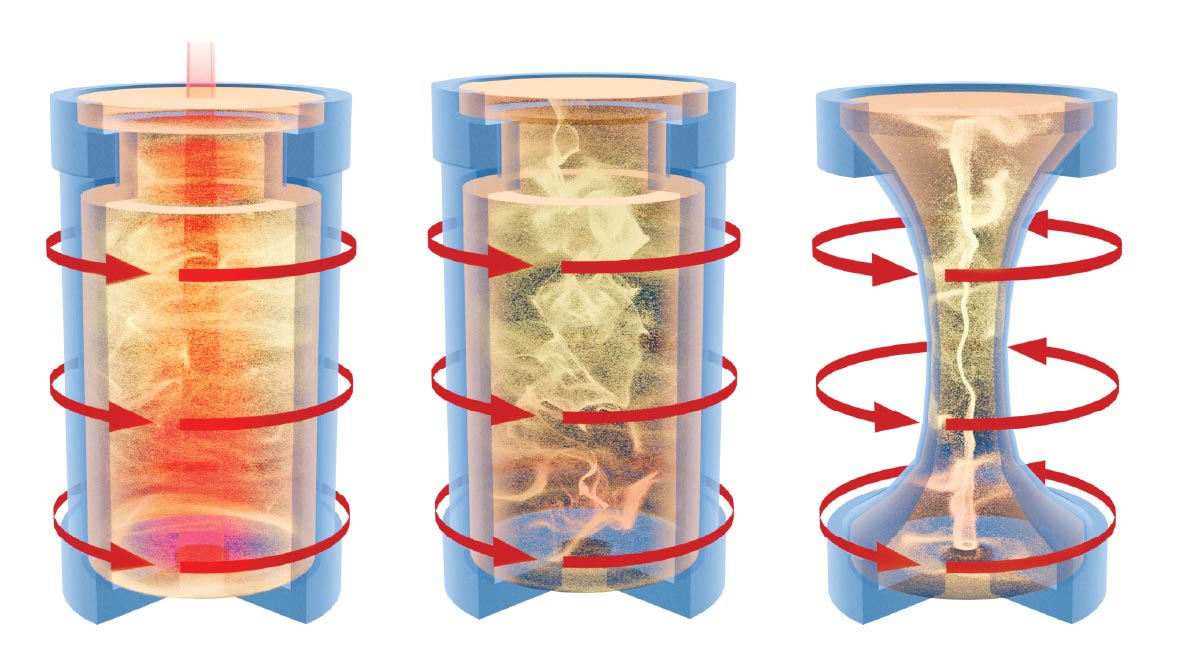
While THOR experiments strive to make the most of achieving ignition, Los Alamos scientists working on a different series of fusion experiments say ignition is not entirely necessary for their success. During these experiments, the NIF lasers shoot energy into a double-shell target, which is designed and built at Los Alamos. As in other NIF experiments, these targets consist of a fuel capsule inside a hohlraum. The difference is that double-shell targets have two nested layers: an outer shell made up of two hemispheres surrounding an inner shell filled with deuterium and tritium—the fusion fuel. Technicians place the target inside the hohlraum, which captures the laser energy and converts it into x-rays that compress and heat the target. The outer shell delivers energy inward, and the inner shell compresses the fuel, creating an implosion and generating neutron yield. This double-shell construction allows scientists to study unique aspects of the interactions of materials inside the target as it compresses and burns.
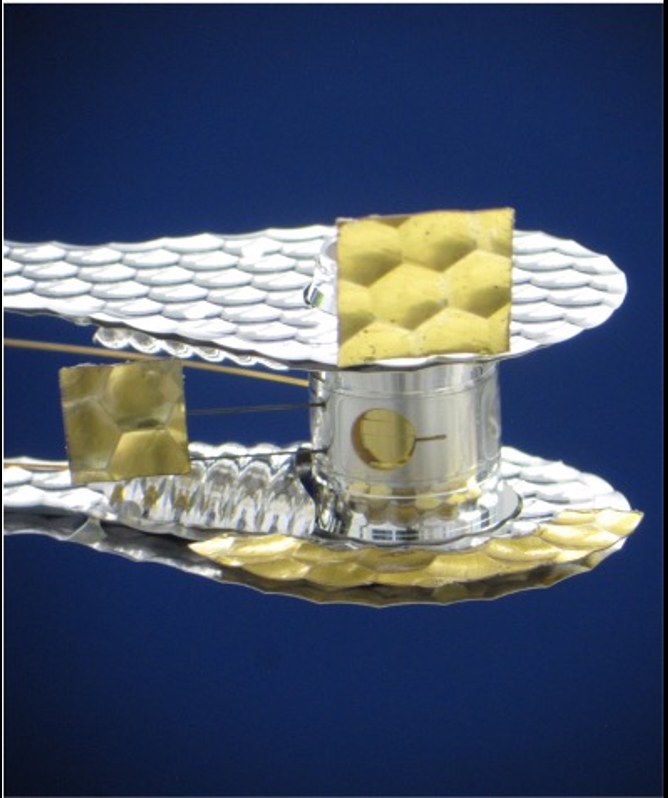
“In less than two years of double-shell experiments, we have increased the yield by more than a factor of 30,” says physicist Sasikumar Palaniyappan, noting this increase indicates that the experiment has created a successful fusion reaction. The double-shell design also enables what physicists call volume burn, in which the fuel can ignite and burn more uniformly throughout the capsule. Additionally, the double-shell targets allow scientists to analyze implosion dynamics and study how different shell materials interact with burning plasmas.
The higher neutron yields that scientists achieve with these experiments allow them to detect and measure radioactive isotopes created by fusion neutrons interacting with surrounding material. This is known as radiochemistry, and it opens the door for scientists to study a condition called mix. Mix is an interaction between the shell and the fusion fuel that can decrease an experiment’s overall yield or successful volume burn—or even both.
When it comes to double shells, little things matter—extremely little things. Physicist Eric Loomis, who leads the double-shell project, says much of the team’s recent success comes down to the way the double-shell target is constructed. “Target fabrication makes or breaks a double shell,” he says, adding that refining the targets has increased the yield and produced better data. Using the xRAGE code, scientists and engineers identified ways to improve the target design.
For the engineers and technicians building these targets, success is a matter of microns—approximately 1.4 microns. Keep in mind that the average human hair is about 70 microns wide. Engineer Nikolaus Christiansen says he and his coworker Sam Stringfield have decreased the gap in the joint between the two hemispheres that make up the outer shell of the target from 1.4 microns to roughly 340 nanometers. How small is a nanometer? DNA, the basic building block of life, is about 2 nanometers wide.
Christiansen says to achieve this miniscule gap, they build targets with the assistance of a sophisticated robot. They’ve also added a thin layer of gold at the outer shell joint. “The difference between 1 micron and 250 nanometers doesn’t sound like much, but it is when it comes to our world,” Christiansen says, joking that Stringfield has learned to hold his breath when building targets.
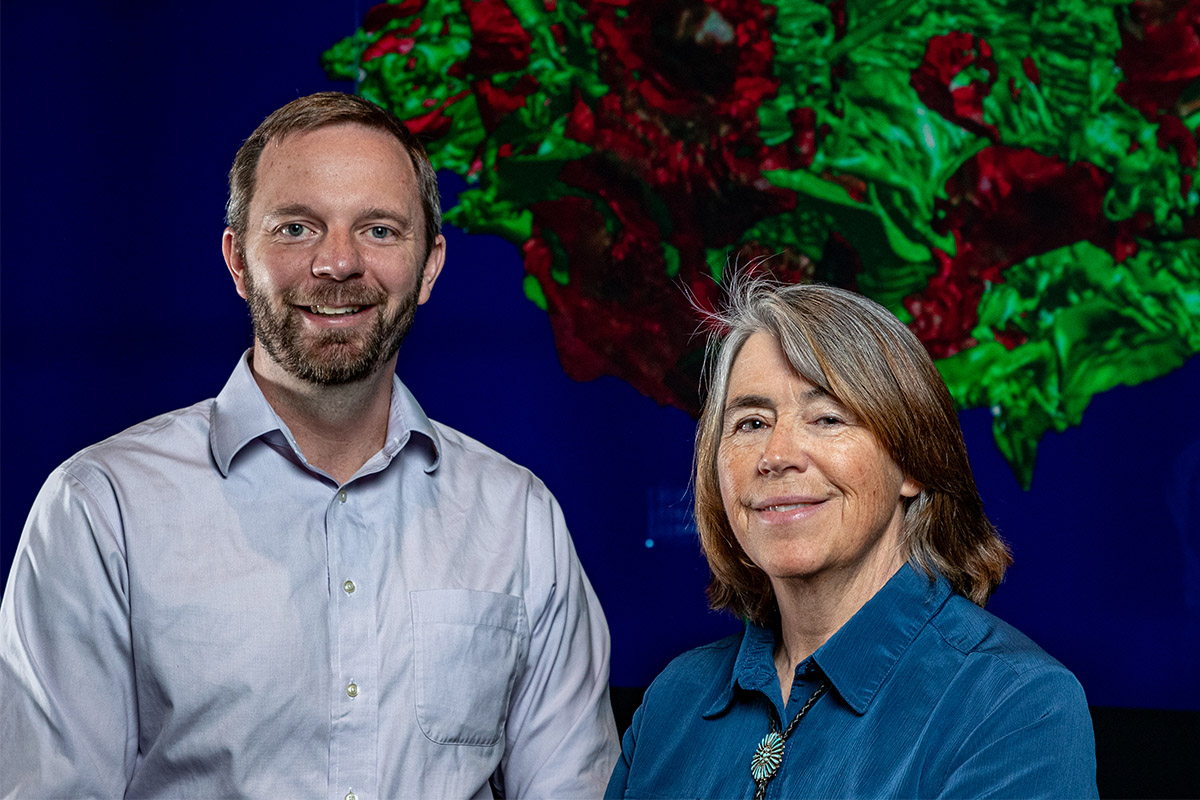
Stringfield laughs and points to a sign on the wall that reads, “Target Fabrication: where physicists’ dreams become reality.” He says, “It’s satisfying to see the engineering improvements we are making have led to higher yield and better results.”
Forging forward with fusion
As Los Alamos physicists move into the next phases of fusion research, they are grounded in the Laboratory’s primary mission: nuclear deterrence. “The better we are at the science, the more informed we are about weapons applications, which can enable better decisions about future pathways,” says physicist Ann Satsangi, who co-directs the Laboratory’s inertial confinement fusion program. “We’re building on decades of expertise in fusion research, and we have a significant role to play.”
Physicist John Kline, who has spent most of his career working in fusion research at Los Alamos, agrees with Satsangi. “We are a fusion lab,” Kline says. “It started here.” ★