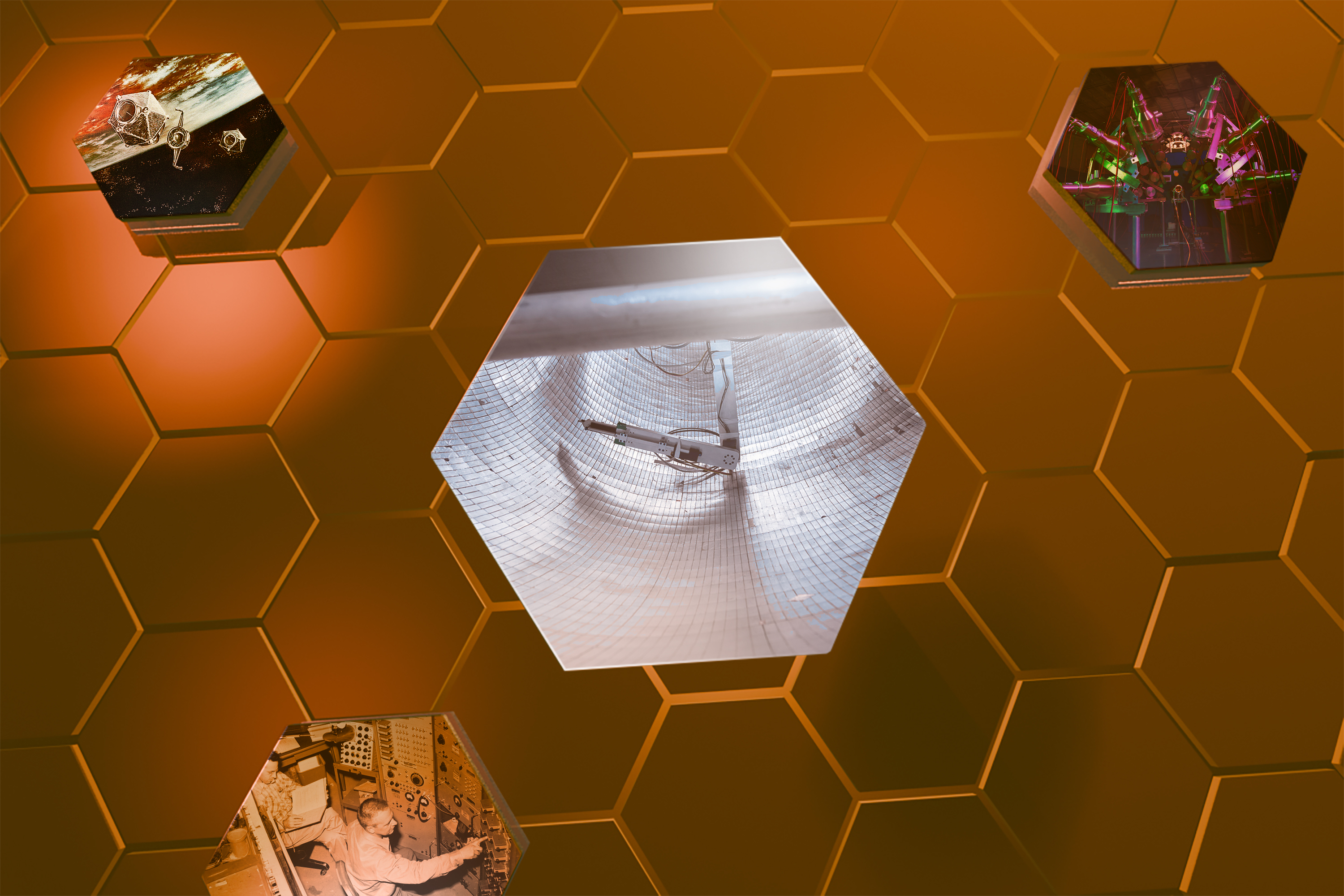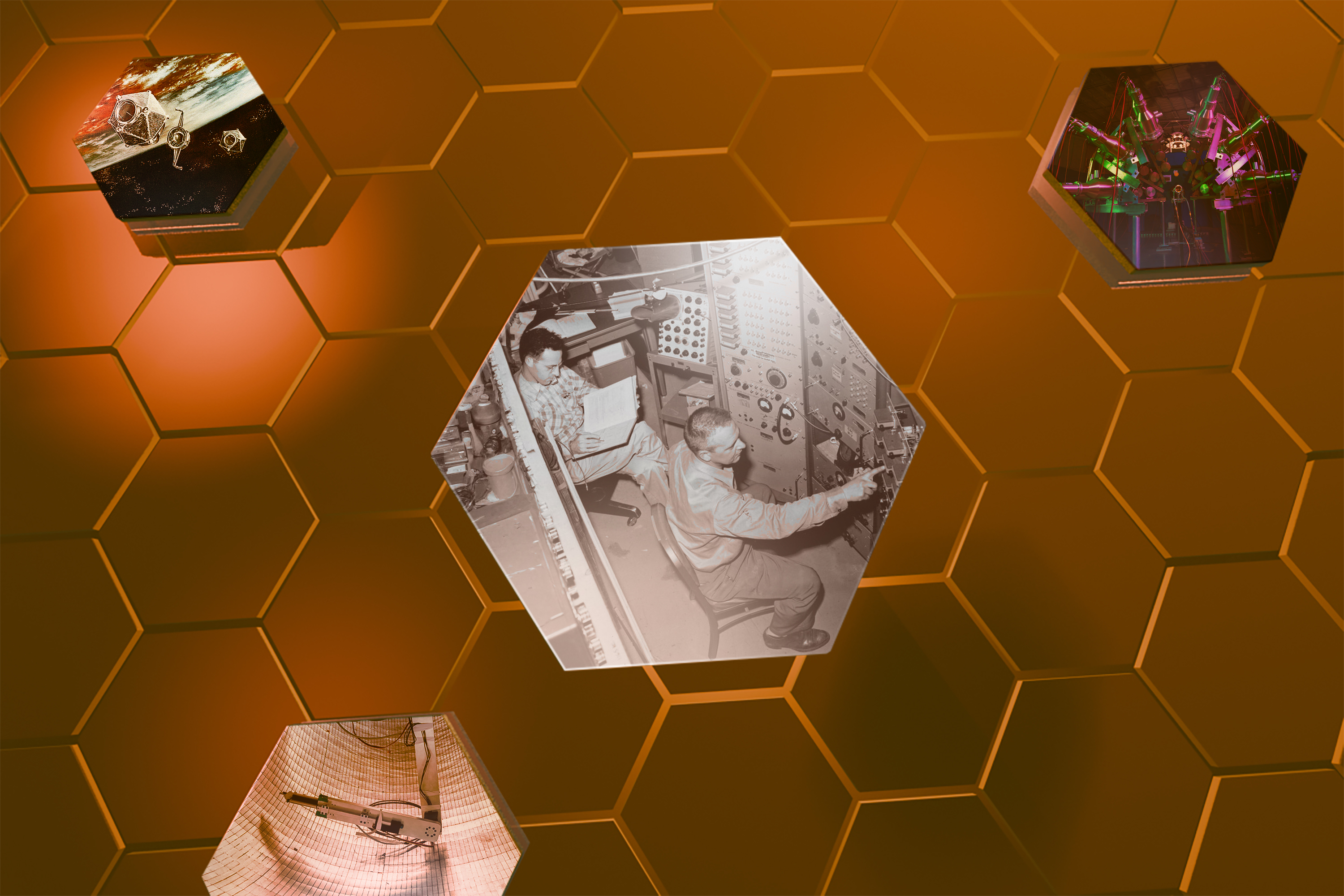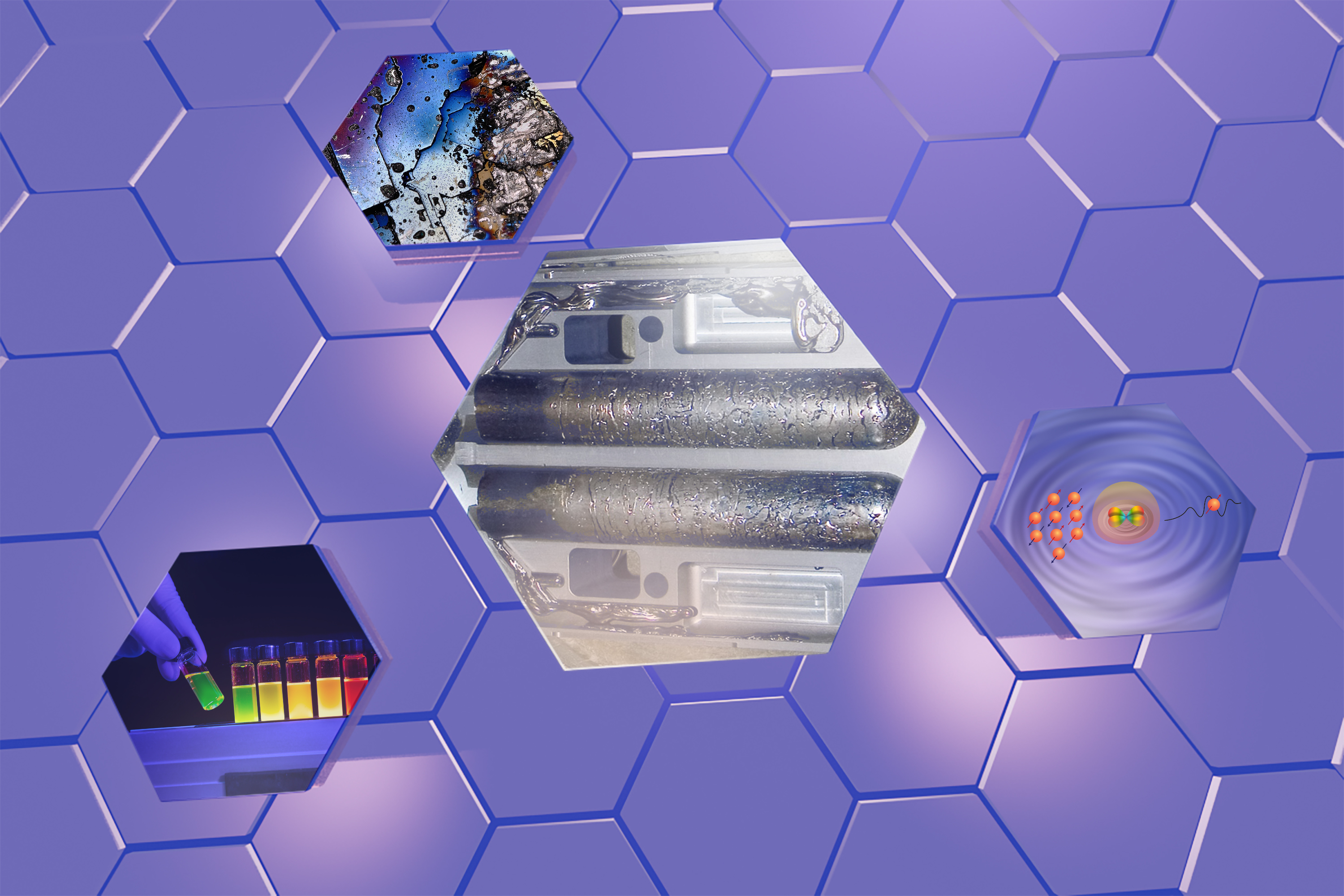
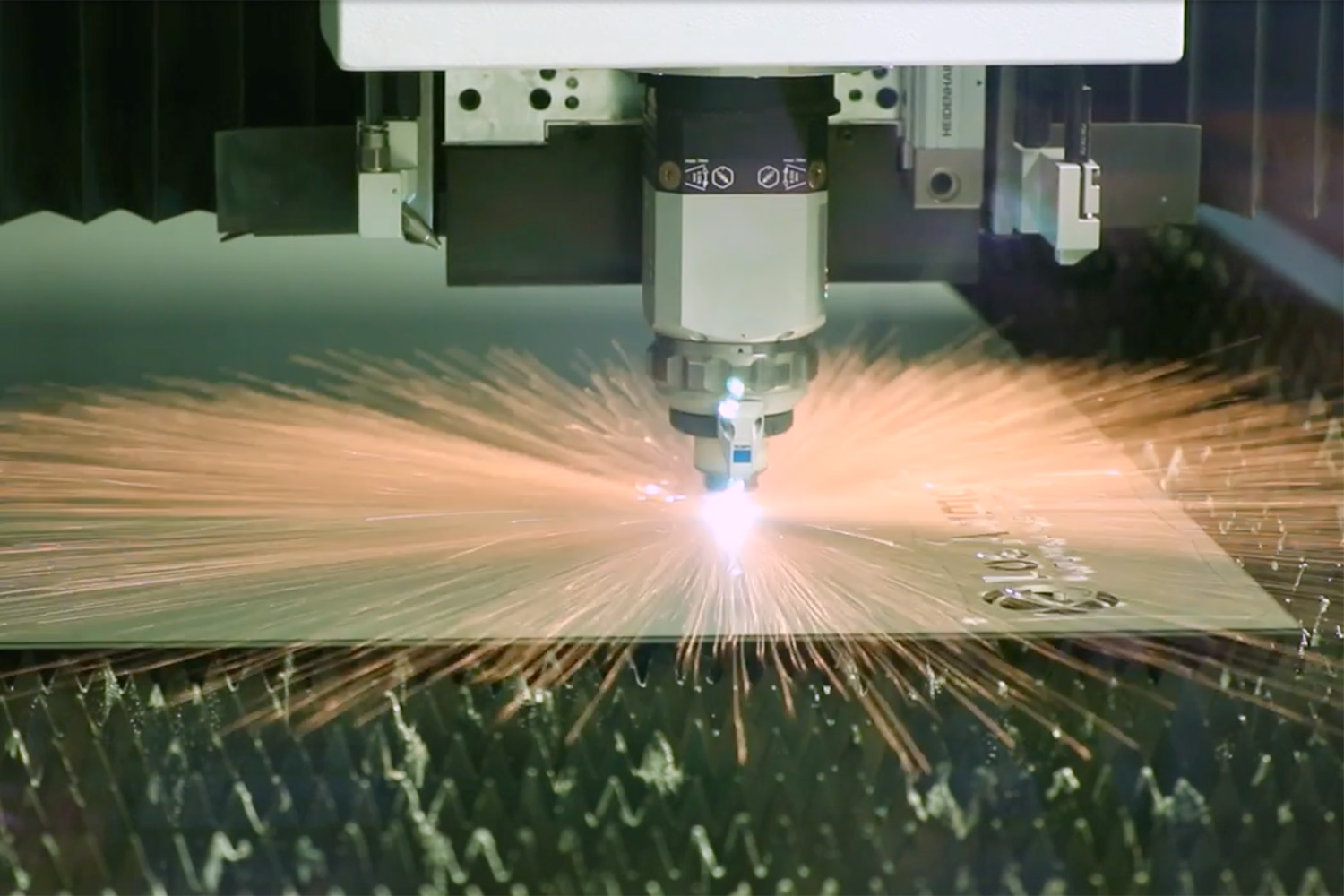
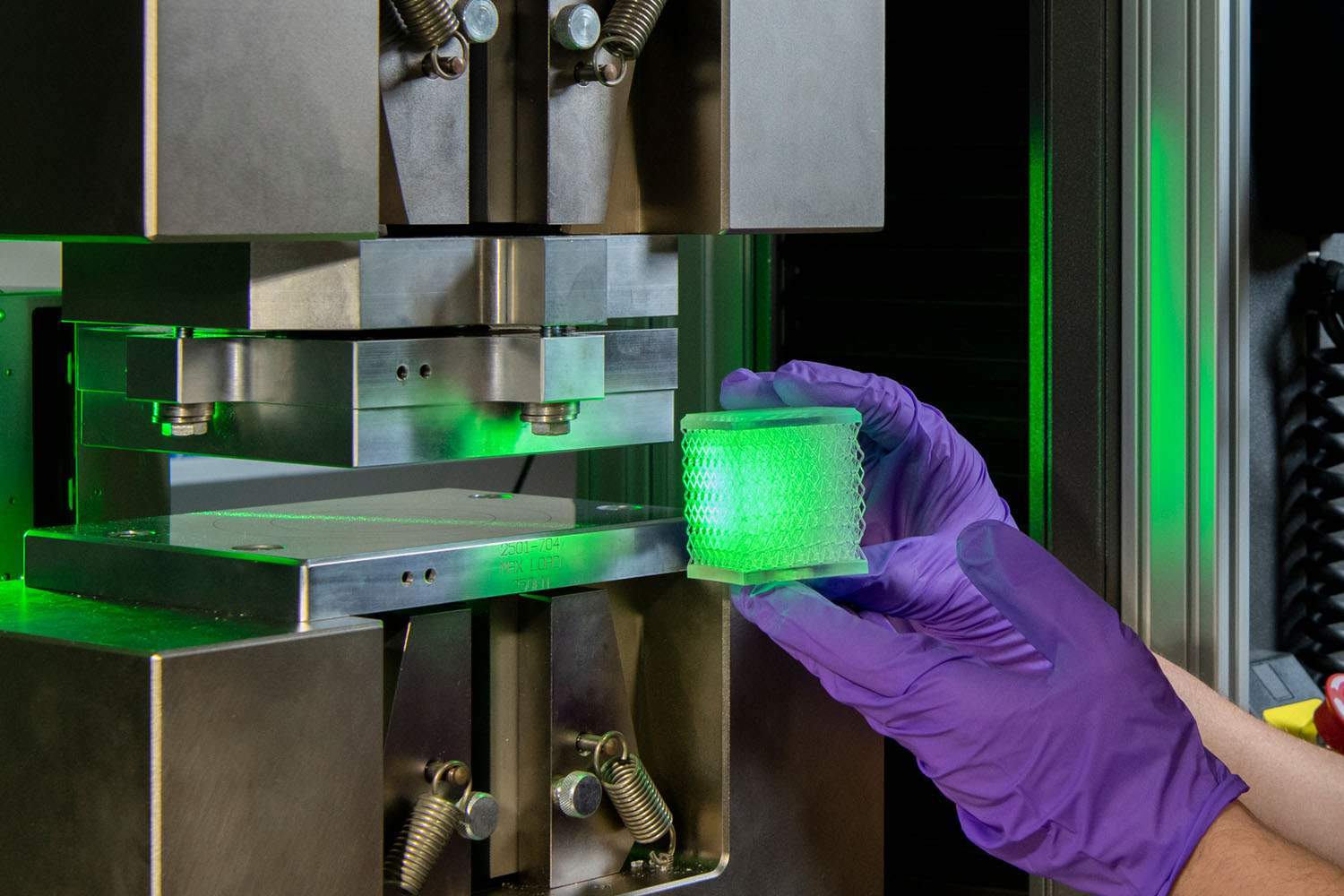
A robotic arm inside a glovebox deftly removes surface impurities from a plutonium part, while in another facility, a high-output laser cutter slices inch-thick metal with micron-precision. 3D printers create parts out of glass and ceramics, while ion beam etchers imprint intricate designs smaller than the width of a human hair. All this technology is working toward a single mission: ensuring the effectiveness of America’s nuclear deterrent through nuclear weapons design, certification, and component manufacturing. Across Los Alamos, scientists and engineers develop and deploy advanced manufacturing methods to achieve excellence not only in what gets made, but in how it gets made.
From prototype to production, manufacturing at Los Alamos is a scientific discipline in its own right.
From prototype to production, manufacturing at Los Alamos is a scientific discipline in its own right. As the Laboratory that conceived the nation’s most complex deterrence systems, Los Alamos also invented the materials, processes, and production methods required to build them. Manufacturing here has always been more than fabrication. Even in the 1940s—when custom parts were shaped and tooled by hand—manufacturing was a deliberate fusion of science, engineering, and national security. Through alloy development, explosives formulation, and manufacturing science, Lab researchers have been linking materials behavior to performance, transforming theory into deterrence for more than 80 years.
Manufacturing under pressure
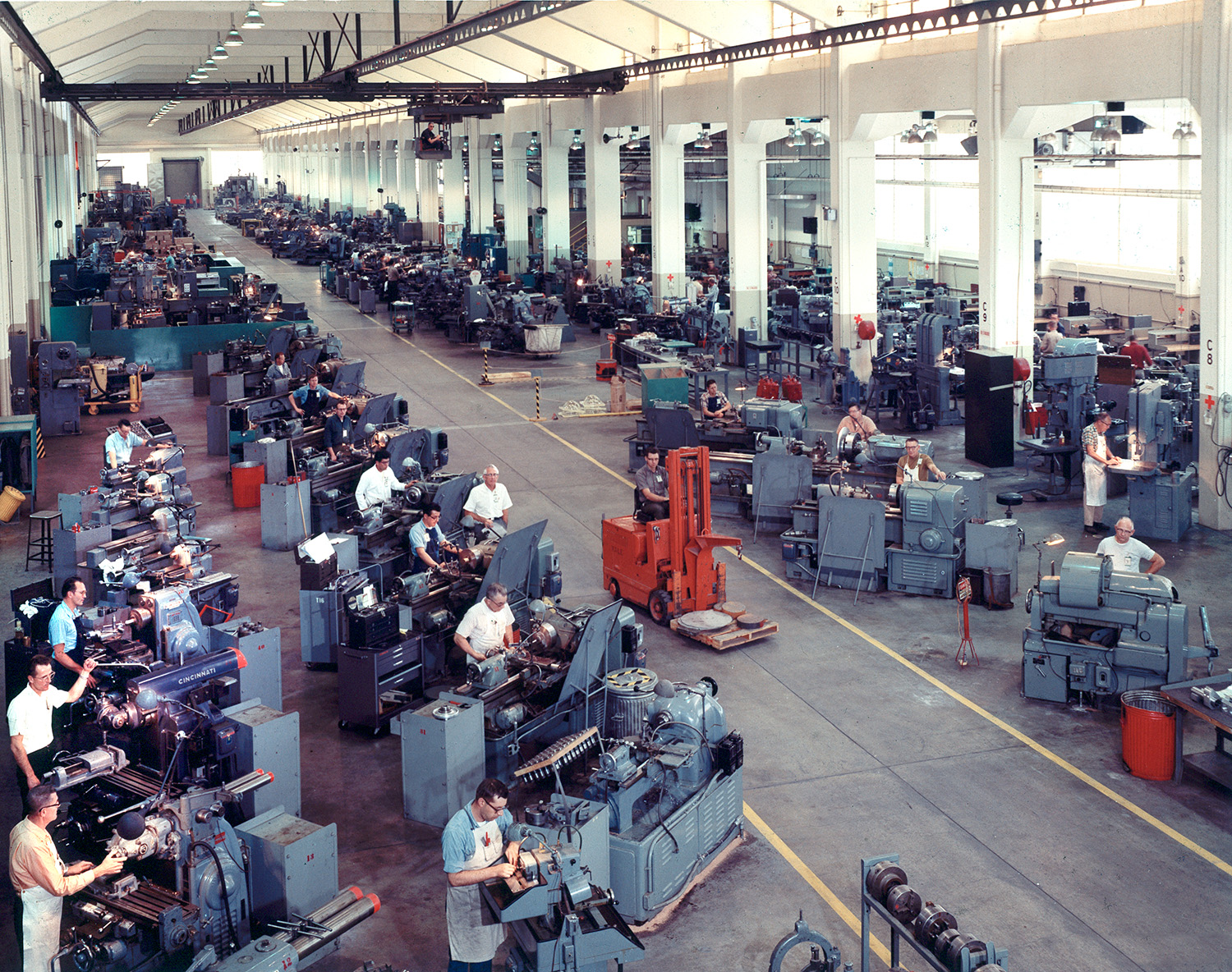
The original mission of wartime Los Alamos was to invent and produce the world’s first atomic weapons, and to do it fast, with no playbook and no prior industry. Nuclear fission had been discovered just a few years earlier, yet Lab scientists and engineers now needed to master two fissile materials: plutonium and uranium. The task was not only to quickly come up with designs that would work, but also to build them repeatedly, reliably, and safely. Scientists and machinists worked hand in hand, pioneering complex processes under wartime pressure. Chemists purified the metals, machinists worked them into the right shapes, and physicists controlled the fission, all with exquisite precision.
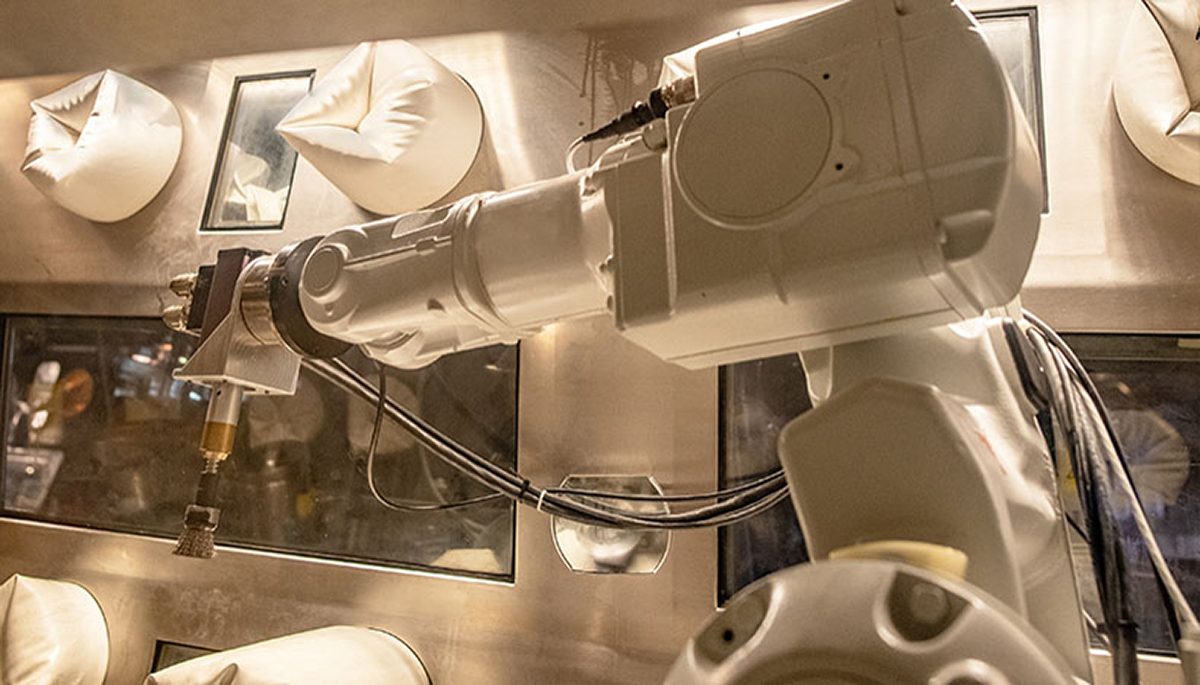
The Lab’s mission hinged on the taming of plutonium, a human-made metal that resisted domestication at every turn. As well as being highly radioactive, plutonium is brittle at room temperature and ductile at elevated temperatures, meaning freshly made parts would change density and crack as they cooled. Plutonium was so difficult and dangerous to work with that a whole new field of metallurgy was established for it. First, scientists needed to stabilize plutonium into a workable alloy that would retain the necessary nuclear properties while holding its shape, so a slew of alloy candidates were evaluated. Then, they had to melt, cast, and precision-machine the metal into exacting forms, so new fabrication and joining techniques were developed. At the same time, to conserve every gram of the scarce, human-made element, new purification and recovery processes were also pioneered.
Meanwhile, uranium use was also pushing new science. Scientists and engineers had to separate uranium isotopes—and they had to do it at industrial scale and within a compressed timeline. Because isotopes are chemically identical and differ only slightly in mass, conventional chemistry wouldn’t work. Instead, new physical separation methods were developed, each of which came with a cost that threatened to outweigh its usefulness: enormous electricity demands, the need to handle highly corrosive chemicals, and the construction of sprawling, purpose-built facilities.
Other manufacturing efforts, beyond fissile material production, were also vital to success. Precise high-explosive components for the nuclear assemblies—detonators, firing systems, custom diagnostic electronics, and the high-explosives themselves—were all developed and fabricated at Los Alamos. Many still are.
Manufacturing comes of age
After the war, manufacturing at Los Alamos matured from wartime improvisation into an integrated scientific discipline to tackle increasingly complex national security challenges and to power national-scale production. A variety of additional plutonium and uranium alloys were developed during this time, each with tailored properties for specific nuclear applications, and manufacturing methods evolved too.
Traditional casting of uranium involved melting the metal, pouring it into graphite molds, then machining the cooled part into its final form. It was slow and labor intensive. In the late 1940s, wrought processing—mechanical shaping through rolling, extruding, and forging—came into play and became the preferred method because it offered higher throughput and fidelity. But wrought processing isn’t very versatile, so, in the early 2000s, Los Alamos metallurgists reimagined uranium casting again. Aiming to improve manufacturing agility, they developed a new method called direct casting. Enabled by vastly improved graphite molds—themselves a manufacturing feat—direct casting produces near-final shape components, drastically cutting post-casting machining time. It’s more agile because now, if the design for a particular piece needs to change, it’s done by changing the mold, rather than an entire tooling suite.
High explosives too have been diversified and specialized. For example, in the 1950s, Los Alamos invented a plastic-bonded conventional high explosive called PBX 9501, which was safer for handling and transportation compared to previous generations of explosives. By binding explosive powder with a synthetic polymer, the explosive material was made less sensitive to physical shocks and temperature fluctuation, making it easier to machine without compromising performance. In the 1960s, Los Alamos formulated PBX 9502, the first insensitive high explosive to be developed for nuclear weapons. The motivation again was safety—“insensitive” high explosives need very particular initiation conditions and won’t accidentally detonate in cases of fire, impact, or bullet strike.
Manufacturing remains mission-critical science.
Underpinning the development of novel materials is a deep understanding of how they behave under extreme conditions. At Los Alamos, dynamic experiments expose metals and explosives to high pressures and temperatures, revealing how they respond. The resulting data enable rapid iteration of new parts. Key to this integration of data and design is the Lab’s in-house prototype fabrication capability. Thousands of prototype components are designed, built, evaluated, and refined each year, tightly coupling experiment and production to shorten timelines and reduce risks.
Modern manufacturing
Manufacturing remains mission-critical science. As the Lab modernizes the nation’s nuclear stockpile, it is once again reinventing how manufacturing is done, leveraging advanced technologies at every turn. Automation, such as robotic arms in gloveboxes, reduces worker exposure to hazards. Additive manufacturing, including advanced 3D printing, enables intricate geometries that were previously impossible. Lasers and real-time metrology are integrated into machining processes, boosting precision and efficiency.

Scientists at Los Alamos use high-performance computing to run simulations grounded in physics, mathematics, and decades of experimental research, integrating vast amounts of data to predict materials performance and guide design. Experiments, models, and simulations are developed and interpreted in tandem, with researchers continuously refining each. Emerging artificial intelligence tools, coupled with these computational capabilities, can accelerate this process—helping scientists design new metal alloys, develop chemical separation methods, identify promising explosive molecules, and detect defects in production processes so they can be evaluated and controlled.
Today manufacturing is no longer downstream of design; it is embedded in the process from the outset, accelerating results while reducing uncertainty. For more than 80 years, the Lab’s enduring strength has been not only its ability to imagine what must be built—but also to invent how to build it. As national security demands evolve, that fusion of materials science, experimentation, and production will remain essential.
People also ask:
- How are nuclear weapons made today? Modern nuclear weapons components are manufactured using high-precision engineering and specialized materials, primarily focusing on plutonium, uranium, and sophisticated explosives. Manufacturing these complex devices involves specialized and highly shielded facilities and many advanced technologies.
- What role does Los Alamos play in maintaining and advancing the U.S. nuclear stockpile? Los Alamos National Laboratory is a central hub for the science and manufacturing that modernize the U.S. nuclear deterrent. The Lab designs, produces, and certifies key components—especially plutonium pits—while developing the materials, processes, and technologies required to build them. It also conducts experiments and simulations to assess aging weapons and guide life extension programs.