Since its founding in 1943 as a wartime effort and part of the Manhattan Project, Los Alamos National Laboratory has led the world in scientific and engineering discovery. From splitting the atom to modeling the cosmos, science at Los Alamos has shaped how we understand and secure the world we live in.
Los Alamos discoveries have redefined what’s possible across disciplines and decades for over 80 years. Our enduring reputation is rooted in the Laboratory’s excellence across scientific fields—an intentional cross-disciplinary approach that supports our national security mission and strengthens vital national capabilities. It also pushes the boundaries of human understanding across the sciences. Behind every milestone lies the deep integration of theory, experiment, and simulation that Los Alamos is known for.
The Laboratory’s modern scientific and engineering work is organized into six key capability pillars; although the pillars are comparatively new, the historical work highlighted in this issue of 1663 addresses five of these pillars—Complex Natural and Engineered Systems, Information Science and Technology, Materials for the Future, Nuclear and Particle Futures, Science of Signatures,—and it all ultimately supports the vital sixth pillar—Weapons Systems—through comprehensive collaboration and decades of compiled expertise.
“For more than eight decades, bringing theory, experiment, and simulation together has been the hallmark of Los Alamos science—and it’s still how we deliver the capabilities the nation relies on.”
—Thom Mason, Laboratory Director
Nuclear and Particle Futures: Charting the Frontiers of the Atomic World
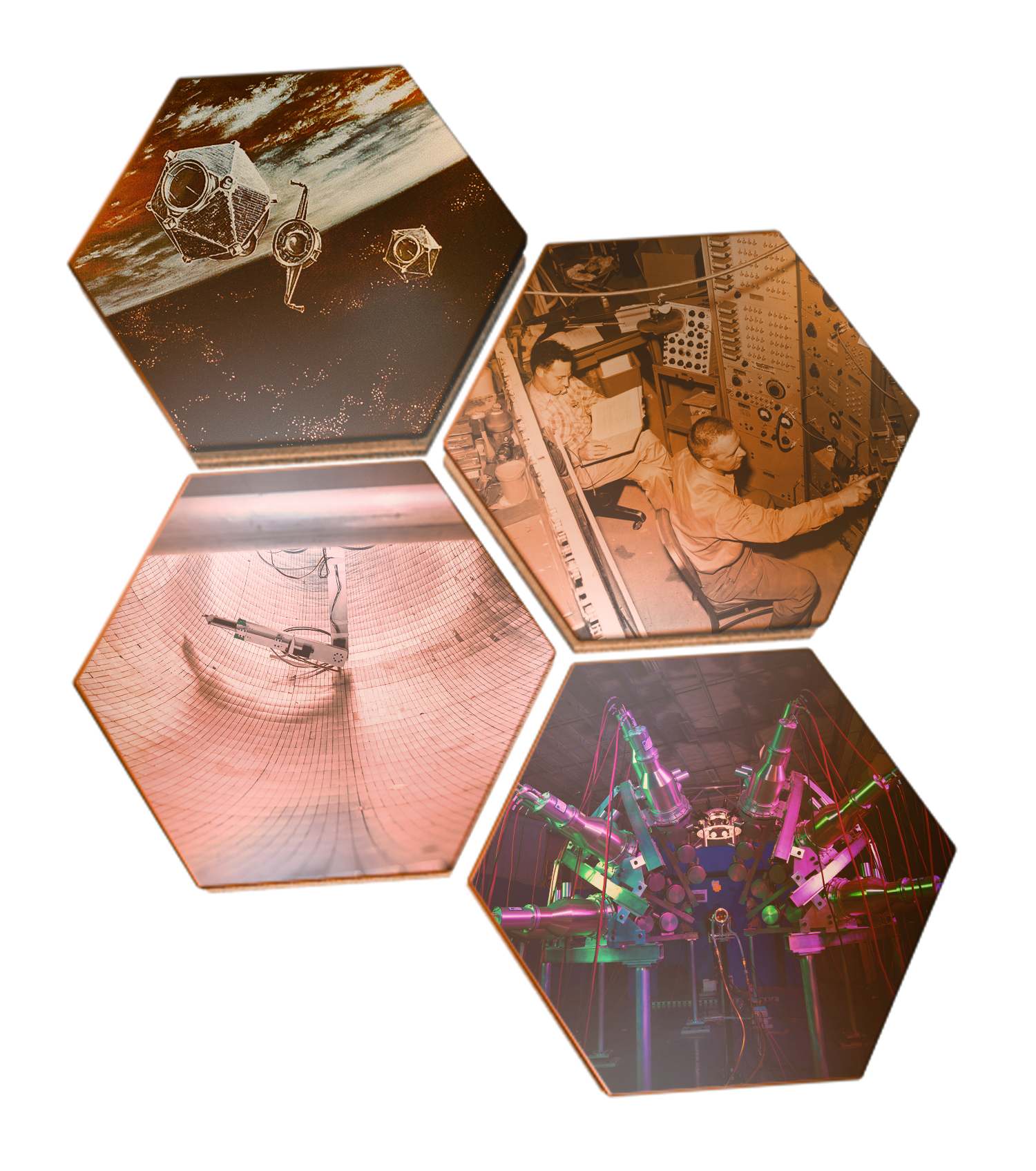
Los Alamos is the nation’s premier nuclear science laboratory. Since pioneering the first nuclear weapons and reactors, Laboratory scientists have remained at the forefront of exploring and engineering nuclear phenomena, from the heart of the atom to the far reaches of the universe.
By integrating theory, experiment, and simulation, the Laboratory continues to advance humanity’s understanding of nuclear, particle, and cosmic phenomena. Breakthroughs include precise neutron lifetime measurements—key to understanding the matter-antimatter asymmetry question—and the Nobel Prize–winning discovery of the neutrino. Los Alamos leads the field of applied nuclear science, from nuclear safeguards and data files to the discovery of new elements and the exploitation of fusion.
Unlocking the Power of the Stars
Information Science and Technology: Powering Predictive Discovery

The ability to predict physical phenomena at scale relies on the fusion of skill, data, and computational power—a fusion Los Alamos has mastered since the time when ‘computers’ were people, doing complex calculations by hand.
The Laboratory leads advancements in computing, algorithms, and information science that enable predictive modeling of complex systems. Landmark contributions include the invention of the Monte Carlo method, pioneering work in fluid dynamics and materials modeling, and foundational research in chaos theory—beginning with nonlinear wave equations that revealed surprising complexity in simple systems. The Laboratory also revolutionized how science is shared by launching the world’s first open-access preprint server, which endures today. From simulating early weapons designs to training the latest artificial intelligence systems, Los Alamos continues to push the boundaries of computational science, developing cutting-edge algorithms and architectures to model everything from turbulence to tumors.
“Our strength lies in uniting bold ideas and technical creativity into a single engine of innovation—powering breakthroughs that expand human understanding and address national priorities.”
—Pat Fitch, Deputy Laboratory Director for Science Technology & Engineering
Materials for the Future: Controlling Performance at Every Scale
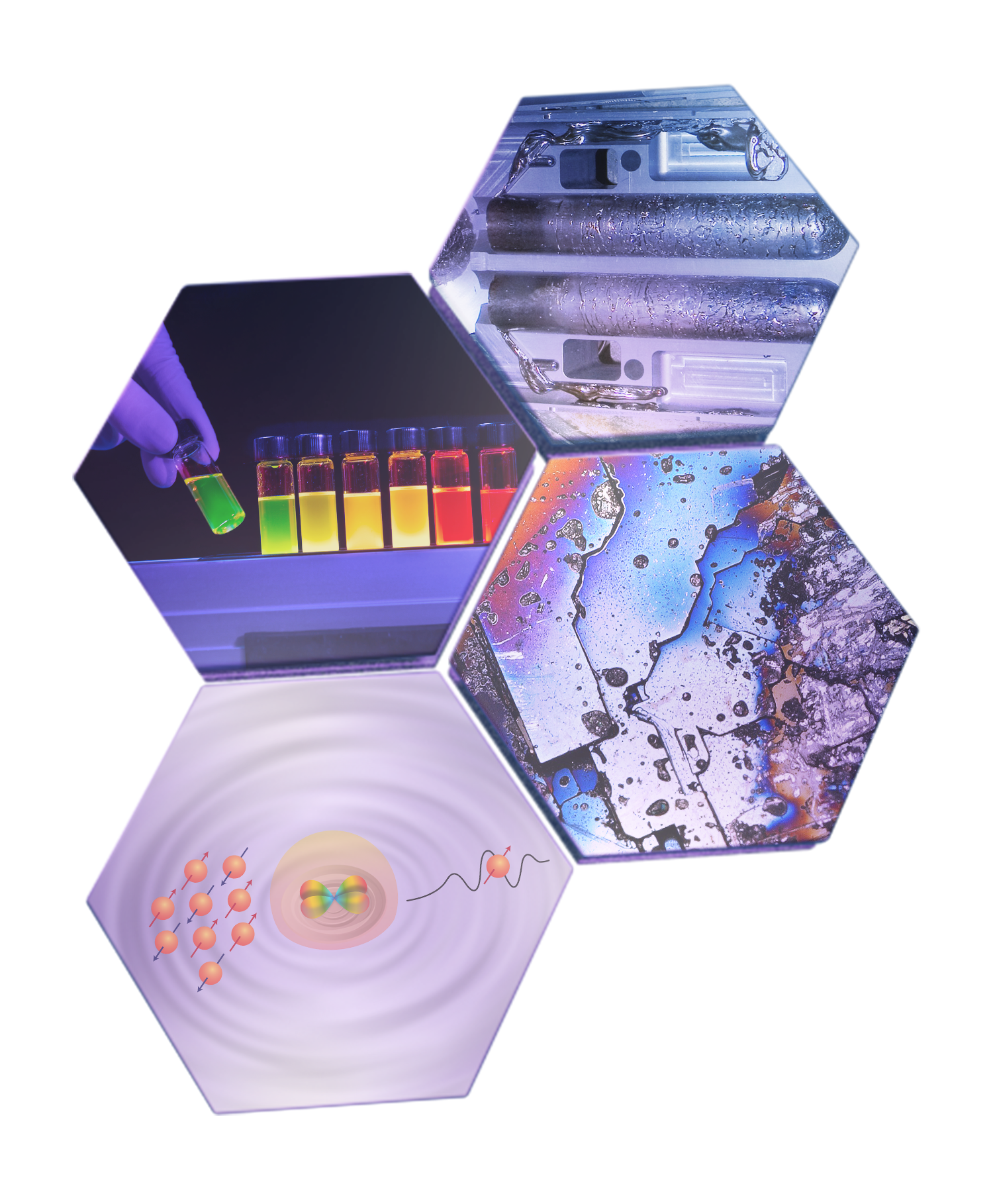
Materials science at Los Alamos is rooted in predicting, controlling, and refining materials’ performance. The Lab’s materials science expertise underpins its ability to certify the nation’s nuclear stockpile and address other scientific national security challenges.
From Manhattan Project–era work pioneering plutonium metallurgy to today’s pursuit of quantum nanomaterials, Los Alamos has consistently led the field of advanced materials for basic and applied science. From prototype to production, Los Alamos scientists design alloys and compounds that deliver predictable performance in extreme environments. Examples include specialized plutonium alloys, plastic-bonded explosives, and nanomaterials with tailorable optical and electronic properties. Los Alamos helped launch the field of nanomaterials, enabling technologies like quantum dot displays, advanced sensors, and metamaterials to control light and sound. At Los Alamos, quantum behavior is not only observed but engineered, and Lab research on quantum-dominated materials is laying the foundation for future quantum hardware.
Engineering Function from the Bottom Up
Science of Signatures: Seeing the Unseen
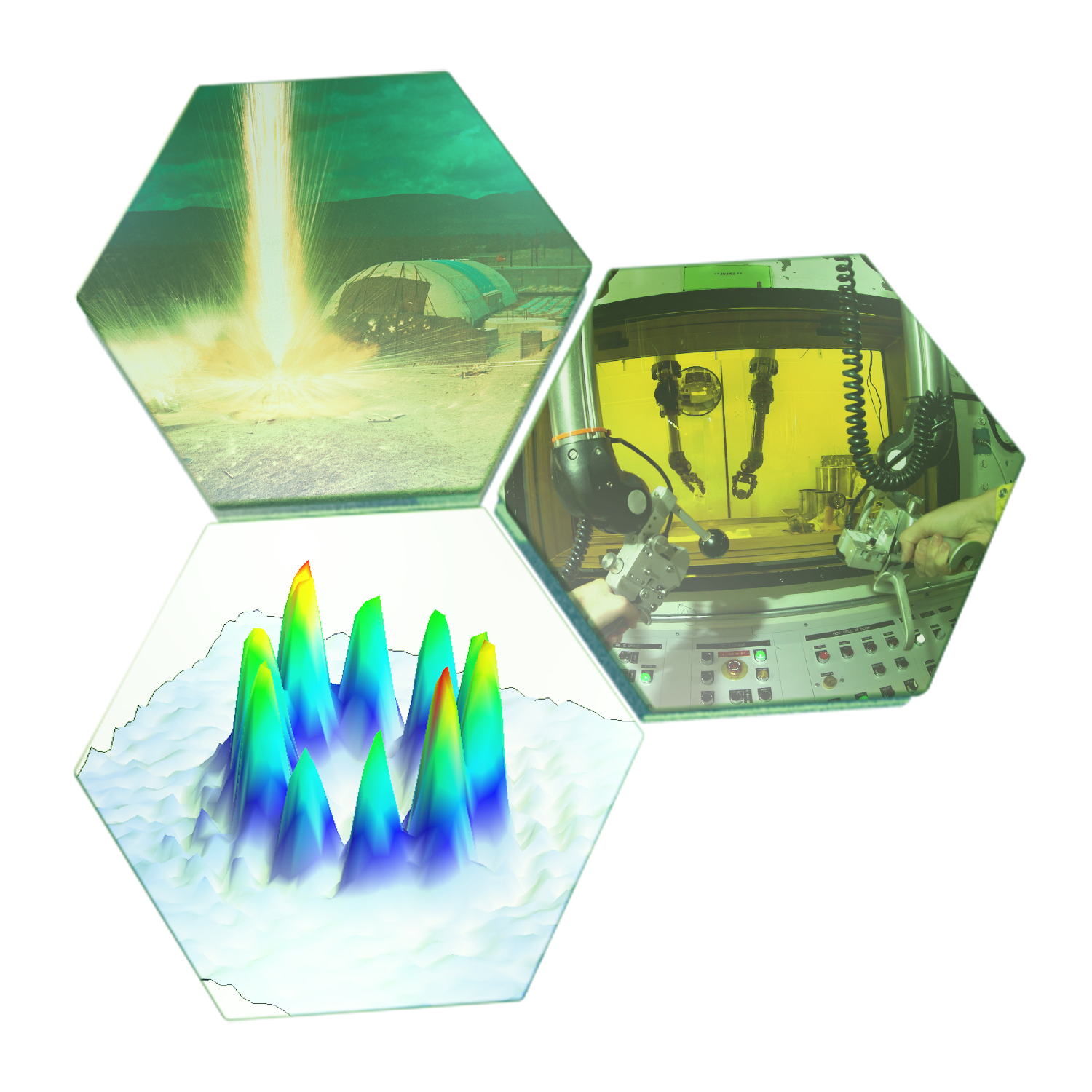
Detecting, identifying, and assessing threats begins with recognizing the unique signals they produce—their signatures. Los Alamos studies threat signatures across all domains, whether nuclear, chemical, biological, environmental, or astrophysical.
Indeed, Los Alamos pioneered the science of signatures. From imaging tools developed during the Manhattan Project, like high-speed photography and flash radiography, to more recent inventions like proton radiography and quantum cryptography, Lab scientists and engineers have revolutionized the detection and measurement of a multitude of signatures. Standout areas in which Los Alamos leads are isotope production for medical diagnostics and biomedical research, imaging of extreme processes and novel materials, and quantum sensing to detect otherwise invisible signals.
Imaging at the Speed of Science
“We want to celebrate the numerous remarkable breakthroughs made by our researchers in nuclear science, materials science, computing and algorithms, quantum science, life science, space—the list goes on—and how they complement, and in many cases, support, weapons accomplishments over the years.”
—Mark Chadwick: Associate Laboratory Director for Simulation, Computation & Theory
Complex Natural and Engineered Systems: From Proteins to Planets
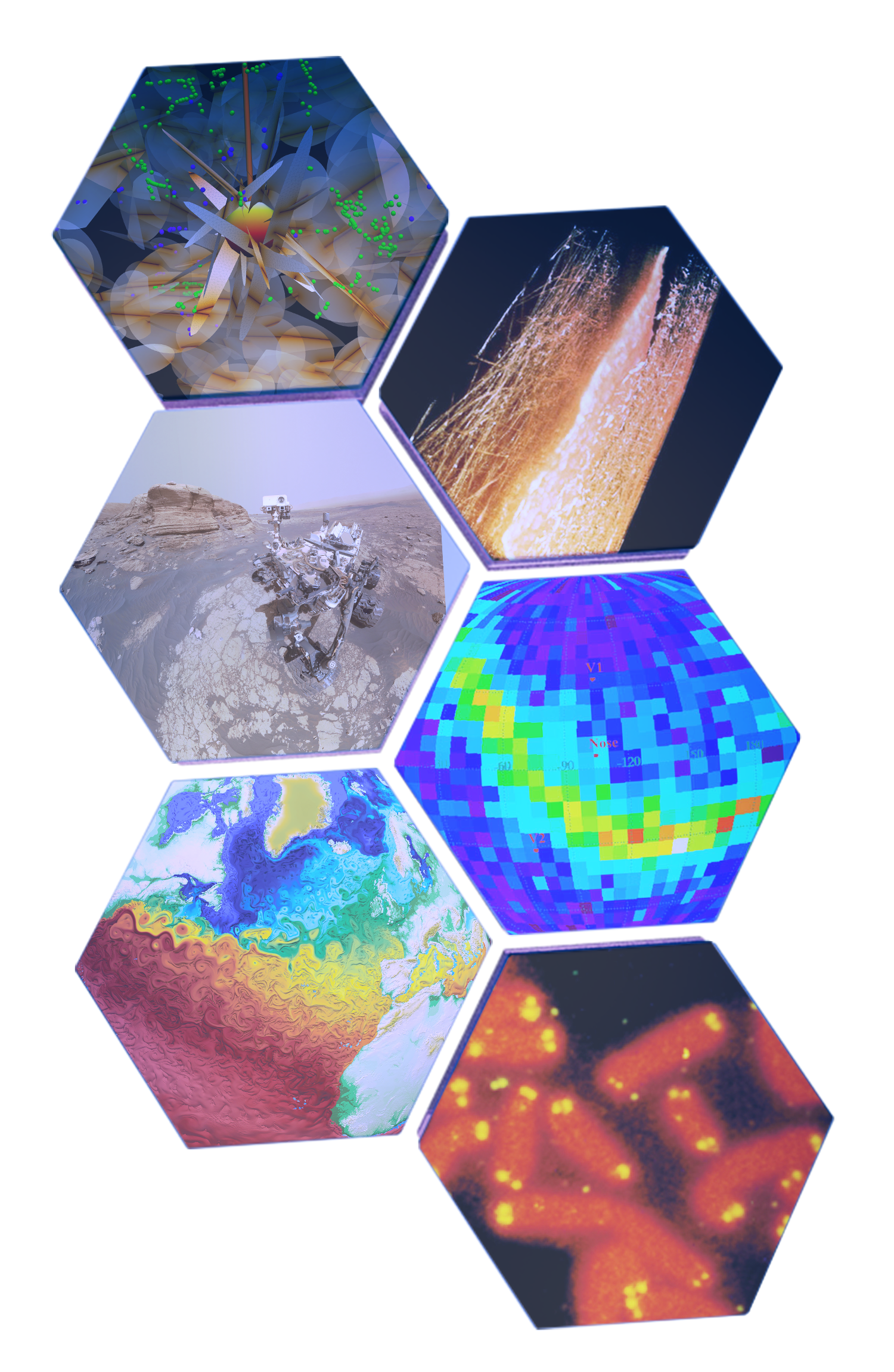
Complex systems—whether natural or artificial—rarely behave as expected. Los Alamos scientists and engineers study how systems’ components interact, adapt, and evolve to produce emergent behavior.
Los Alamos has transformed the study of complex natural systems, like forest fires and permafrost, as well as complex engineered systems, like energy grids and nuclear weapons. The invention of the flow cytometer revolutionized biology by enabling detailed single-cell analysis, and combined with early genomic research at the Lab, helped lay the groundwork for the Human Genome Project. Los Alamos–made sensors travel aboard satellites and spacecraft, mapping lunar hydrogen, studying the surface of Mars, and exploring the edges of our solar system. The whole is often greater than the sum of its parts and the Lab therefore takes an integrative and comprehensive approach to addressing the nation’s most complex scientific challenges.
“A lot of effort goes into knowledge transfer at Los Alamos; But our motivation for this project was inspiration transfer.”
—Bill Priedhorsky: Physicist and Laboratory Fellow
A Legacy of Discovery, A Future of Innovation
Discovery does not occur in a single moment, but along a continuum. At Los Alamos, discovery means pushing boundaries further, asking deeper questions, and building knowledge that transforms the world.
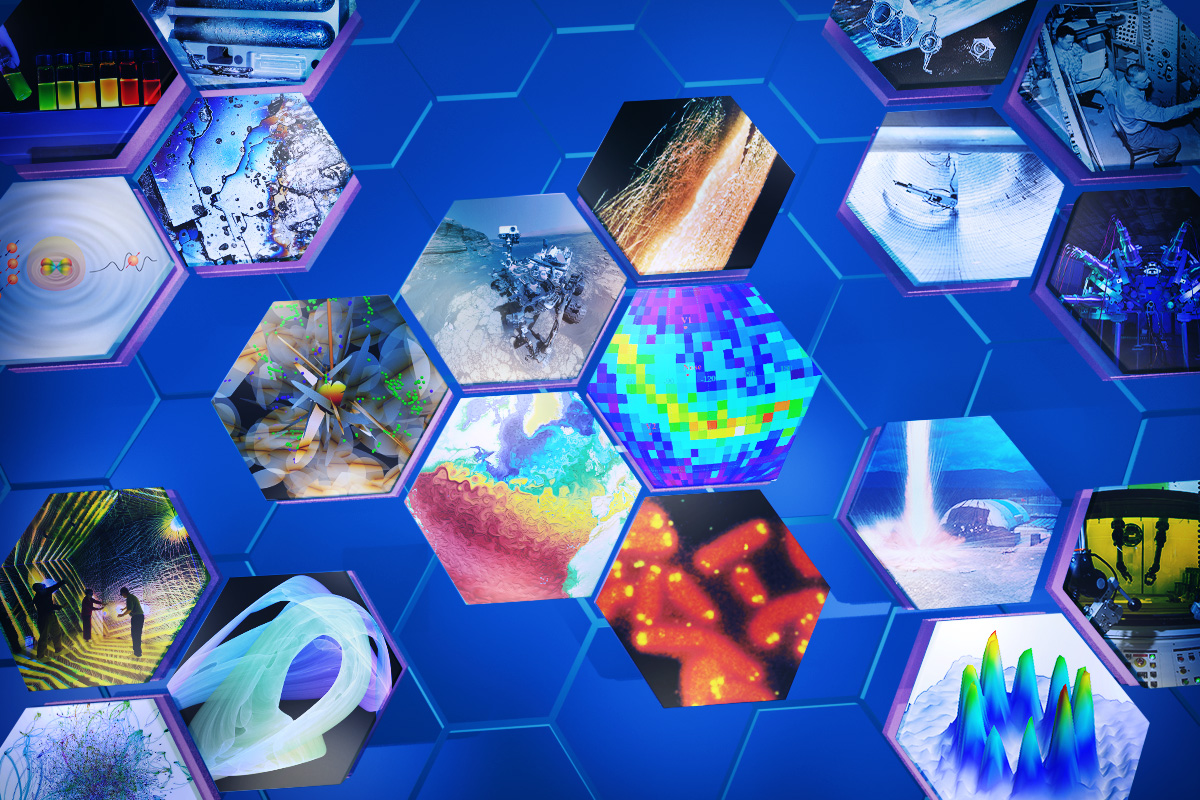
Throughout its history, the Laboratory has been at the forefront of scientific discovery, driving progress that has helped humanity understand the world and meet the critical needs of the nation. From quarks to quasars, from machines to metamaterials, Los Alamos discoveries reflect the fusion of science and security, driving innovation and shaping the future.
This special issue of 1663 accompanies the 80+ Years of Science and Engineering Discoveries project, celebrating some of the Lab’s most notable achievements.