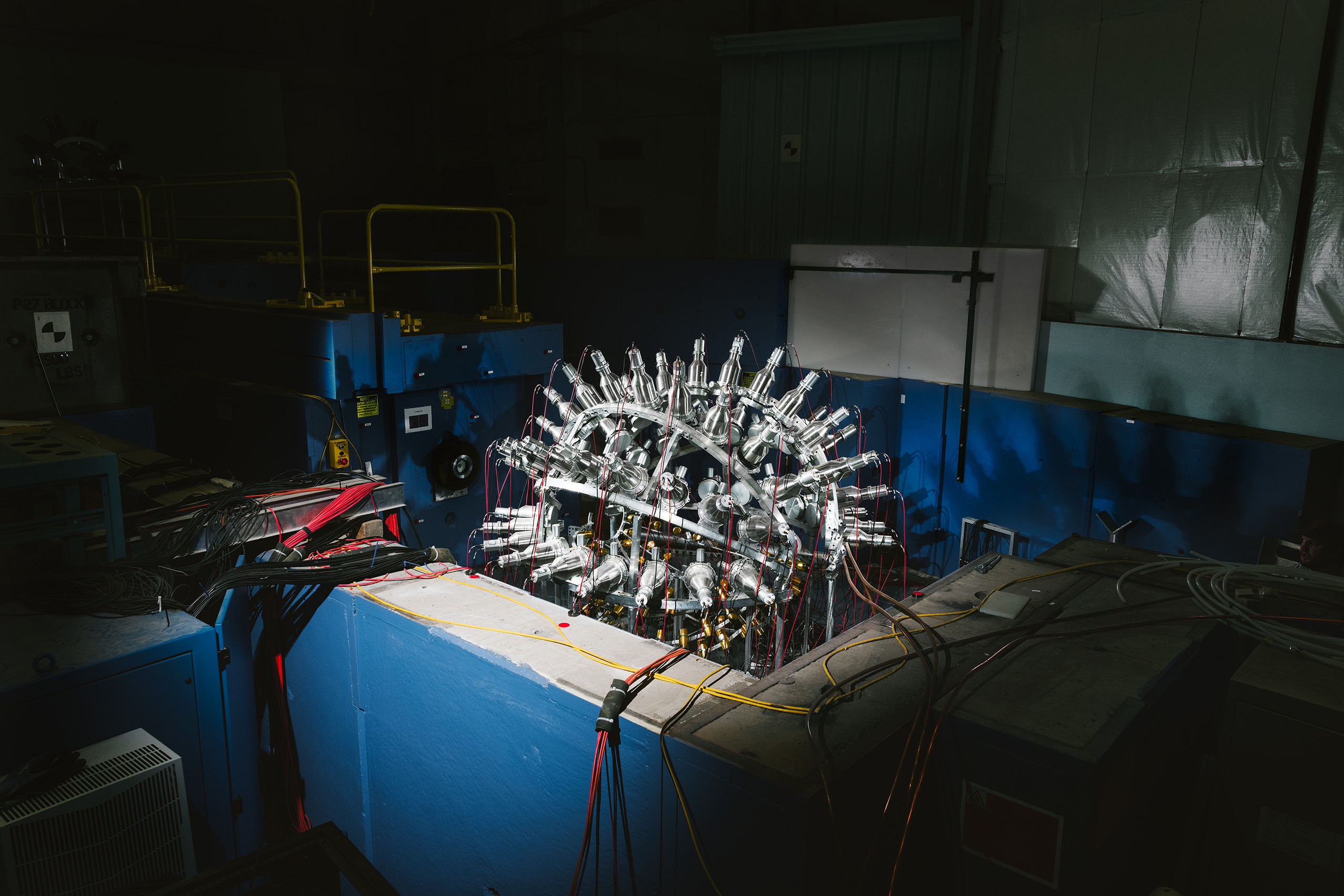
The WNR provides neutron and proton beams, and detector arrays for basic, applied, industrial, and defense-related research.
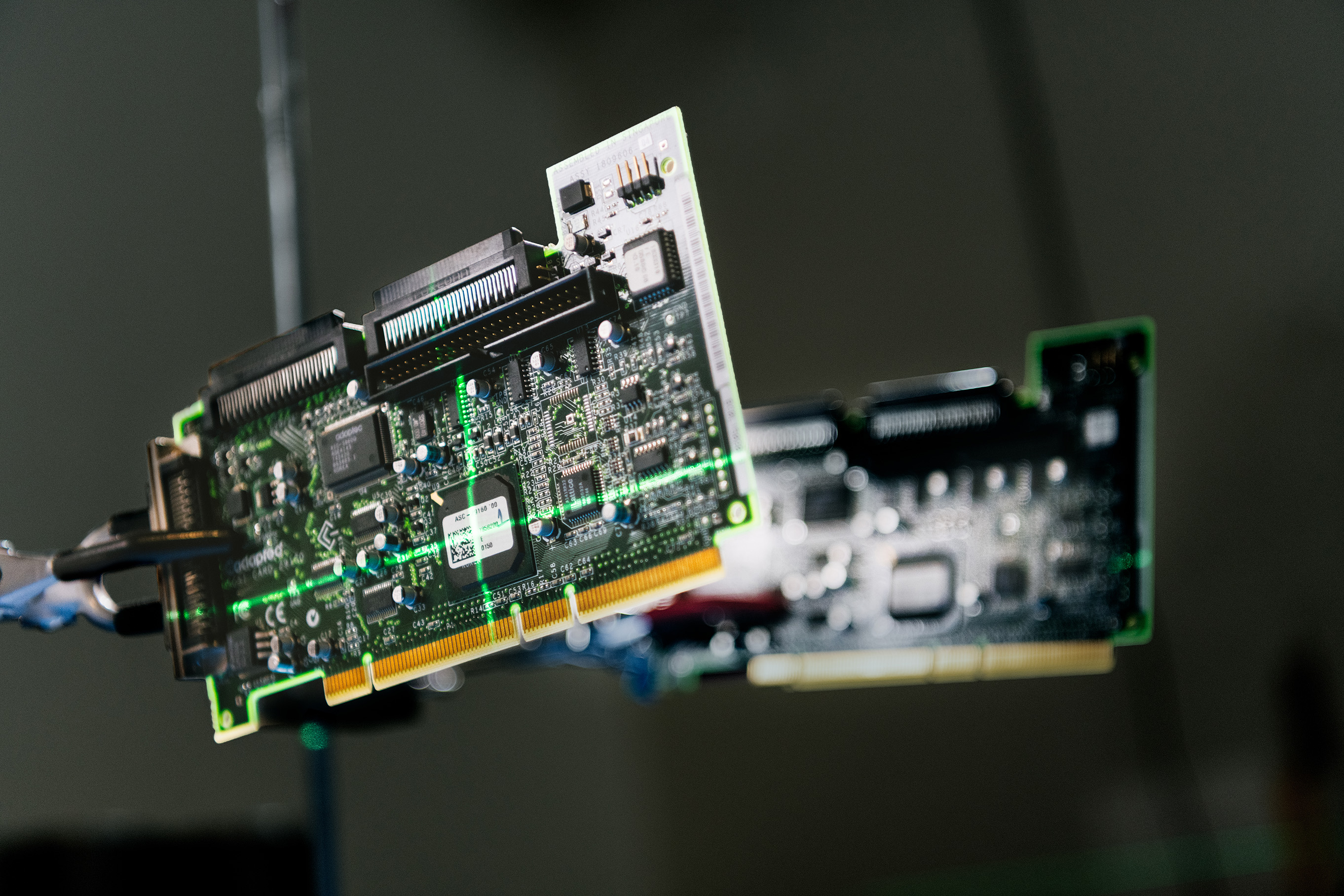
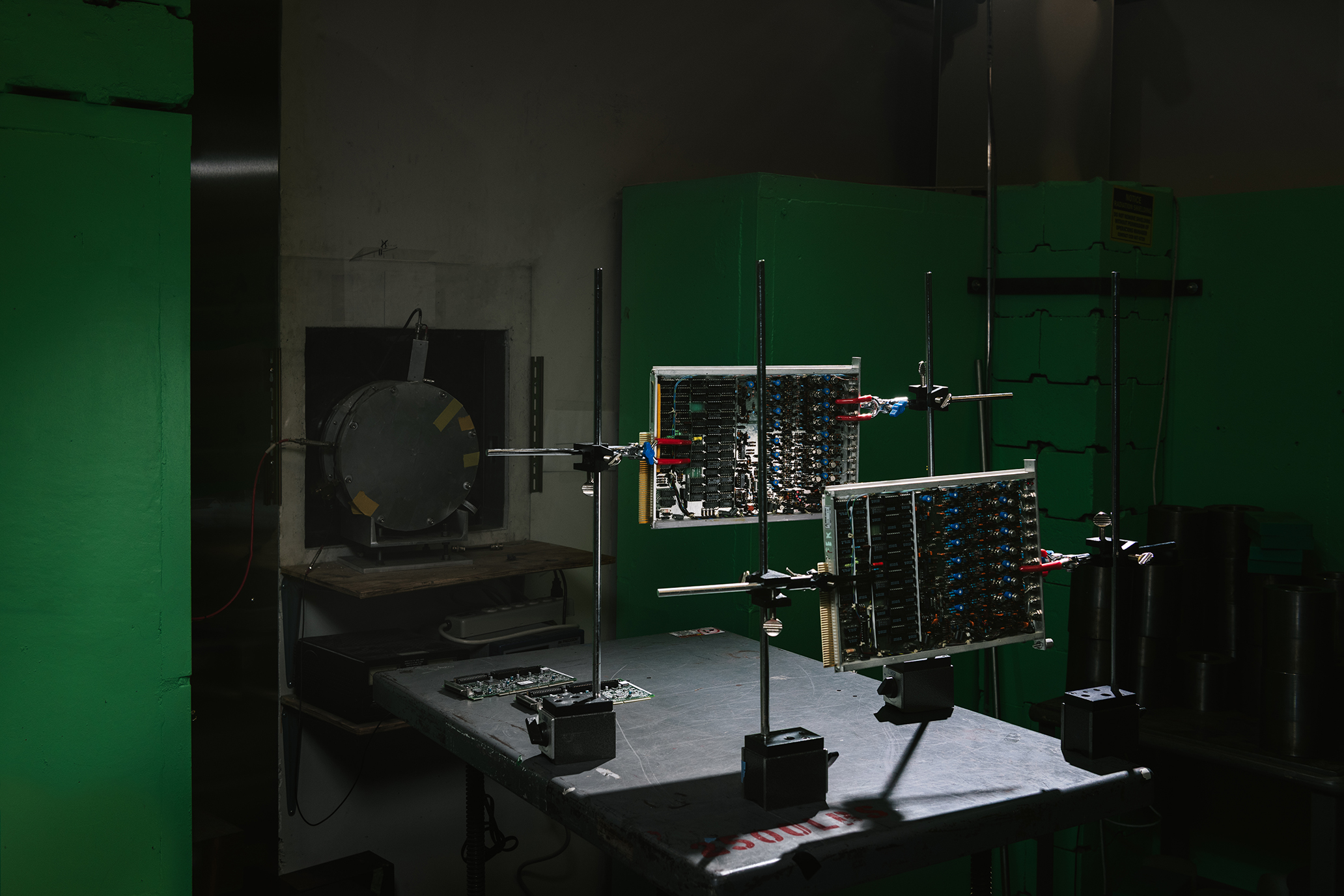
The high-energy neutron source at the Neutron and Nuclear Science (WNR) Facility provides a capability for accelerated neutron testing of semiconductor devices. This testing matters because researchers see neutrons as a major threat to semiconductor devices at aircraft altitudes and below.
The shape of the neutron spectrum produced at WNR is very similar to the spectrum of neutrons produced in the atmosphere by cosmic rays, but it is more than five orders of magnitude more intense.
The Weapons Neutron Research (WNR) Facility consists of a high-energy "white" neutron source (Target 4) with six flight paths and a proton reaction area (Target 2).
The neutron beams produced at the WNR Target 4 complement those produced at the Lujan Center because they are of much higher energy and have shorter pulse widths. The 800-MeV proton beam from the LANSCE linear accelerator (LINAC) drives the neutron sources.
Since 1992, many companies, continue to use the high-energy neutron source at WNR to study various failure modes caused by neutron radiation. The ultimate goal of this research will be to find ways to overcome the effects of incoming galactic and solar cosmic-ray-induced neutrons.
Studying Failure Caused by Neutron Radiation
Since 1992, many companies continue to use the high-energy neutron source at WNR to study various failure modes caused by neutron radiation.
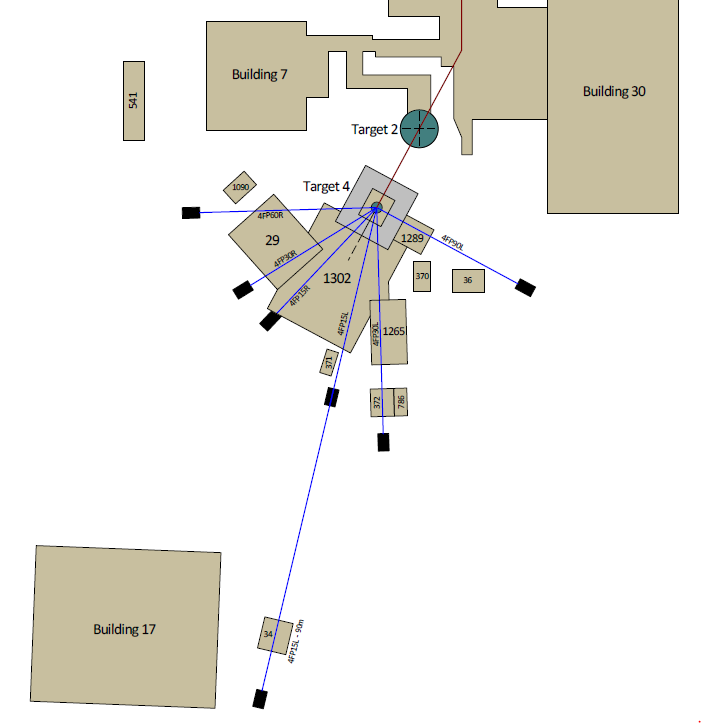
Each flight path’s name identifies the target and the direction of the flight path (FP) with respect to the proton beam. For example, 4FP15R is a FP (flight path) that starts at Target 4 and is 15 degrees to the right (15R) of the incoming proton beam. The beams are transmitted at three different vertical levels: Target 4, Target 2, and Lujan Center (Target 1).
A schematic drawing of the Target-2 and Target-4 flight paths.
Target 2
Target 2 is used for proton irradiations and hosts the high-flux Lead Slowing-Down Spectrometer (LSDS) which is used for measuring neutron reaction cross sections with ultra-small samples.
Samples are typically exposed to the 800-MeV proton beam directly from the LINAC, or beam that has been compressed in time from the Proton Storage Ring (PSR). Although the total beam current is limited by the shielding in Target 2, the PSR beam provides significantly more peak intensity than the direct beam from the accelerator. Experiments include proton irradiation of detector materials for the MaRIE project, the Large Hadron Collider, and space radiation environment studies.
For cases with sufficient justification, beam energies as low as 113MeV are possible.
Neutron beams with energies ranging from approximately 0.1MeV to greater than 600MeV are produced in Target 4. The neutron production target at Target 4 is a bare unmoderated tungsten cylinder that is bombarded by the 800-MeV pulsed proton beam from the LINAC and produces neutrons via spallation reactions. Because the proton beam is pulsed, researchers can use time-of-flight (TOF) techniques to determine the neutrons’ energy.
Researchers can easily change the proton beam’s time structure to optimize a particular experiment.
Target 4 operates with a proton beam current of approximately 1.5 μA, 1.8 sec between pulses and approximately 14,000 pulses/sec. Target 4 is the most intense high-energy neutron source in the world and has six flight paths instrumented for a variety of measurements. With the completion of planned accelerator radio-frequency generator upgrades, the beam current to Target 4 will be increased by a factor of 2.5 to provide beam currents up to 5 μA.
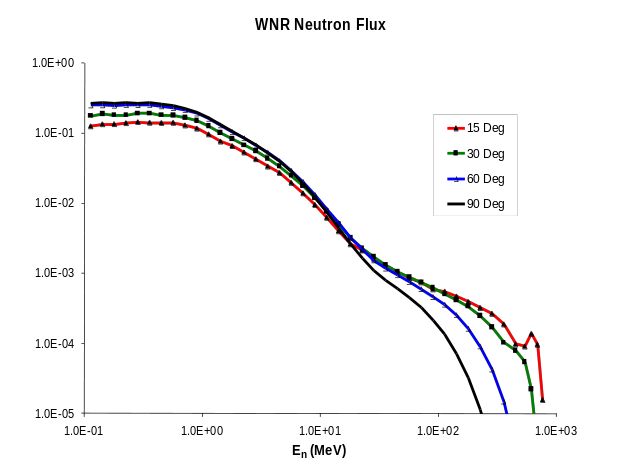
The calculated neutron spectra for various flight paths at Target 4.
As seen in this plot, the most forward angle flight paths at 15 degrees have the most intensity at high energy and somewhat lower intensity at lower neutron energy. The more backward angle flight paths at 90 degrees have significantly lower intensity at high energy and more intensity at lower energies. The flight paths at 30 and 60 degrees fit between those extremes. The shape of the neutron spectrum at the different flight path angles must be considered when choosing a flight path for a particular experiment.
4FP15L or CoGNACuses neutrons produced at a 15-degree angle to the incident proton beam from the spallation source. 15L is unique among the flight paths because it has two experimental locations available at distances of 22m and 90m from the spallation target. A rectangular shutter offers variable openings, enabling researchers to choose flux intensity based on experimental requirements. The beam shape can be changed by inserting collimator inserts into the neutron beam tube. A 2-meter-deep pit is located below the raised floor of a 22-meter experimental location, reducing the room-return neutron background for experiments. This flight path is primarily used for CoGNAC experiments (22m) and neutron detector development and calibration (90m).
4FP15R offers the hardest neutron spectrum available at WNR, with neutron energies extending to 800MeV. The neutron beam size is adjustable up to 5 cm by 5 cm square. Present research efforts include precision measurements of neutron-induced charged particle reactions using the Low-Energy NZ (LENZ) instrument on stable and radioactive samples. Applications are nuclear reaction studies, nuclear astrophysics, radiochemical diagnostics, and materials for next-generation nuclear reactors.
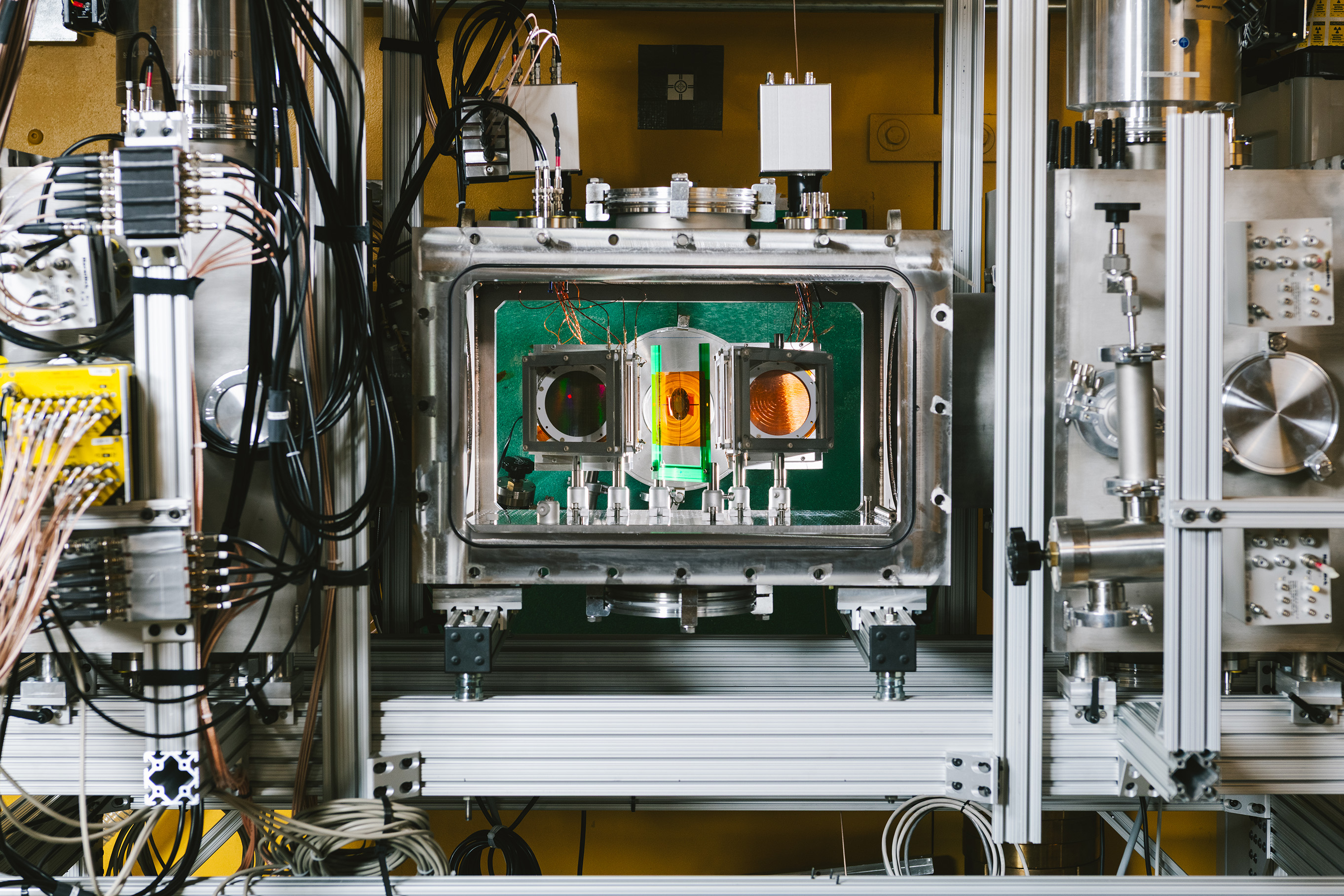
4FP30L or ICE-I (Irradiation of Chips and Electronics) is located at a 30-degree flight path. At this angle, the shape of the neutron spectrum here is similar to that of neutrons produced in the atmosphere by cosmic rays. However, the neutron flux available at ICE-I is a million times higher. This large flux enables testing of semiconductor devices at greatly accelerated rates.
4FP30R or ICE-II, is built like ICE-I and is also used to test semiconductor devices at greatly accelerated rates. lCE-II offers slightly higher neutron flux as compared with ICE-I due to shorter flight path length. Companies from around the world use this neutron source to characterize components and study various failure modes caused by neutron radiation.
4FP60R Unique high-energy neutron imaging has been developed to penetrate dense, thick objects for defense program needs. Both radiography and computed tomography (CT) are used to visualize internal features of a variety of objects. The neutron beam's field of view ranges from 30cm by 20cm to 2.5 cm in diameter. Imaging detector systems include fast (nanosecond) time-of-flight gated cameras that provide neutron energy selection within the available energy range of 0.1 to 400MeV and large flat-panel arrays that cover the full field of view.
4FP90L offers the softest spectrum of all WNR flight paths and is primarily used for-fission cross-section measurements. The length of the flight path is approximately 7-15 meters. Instruments used here have included fission chambers.