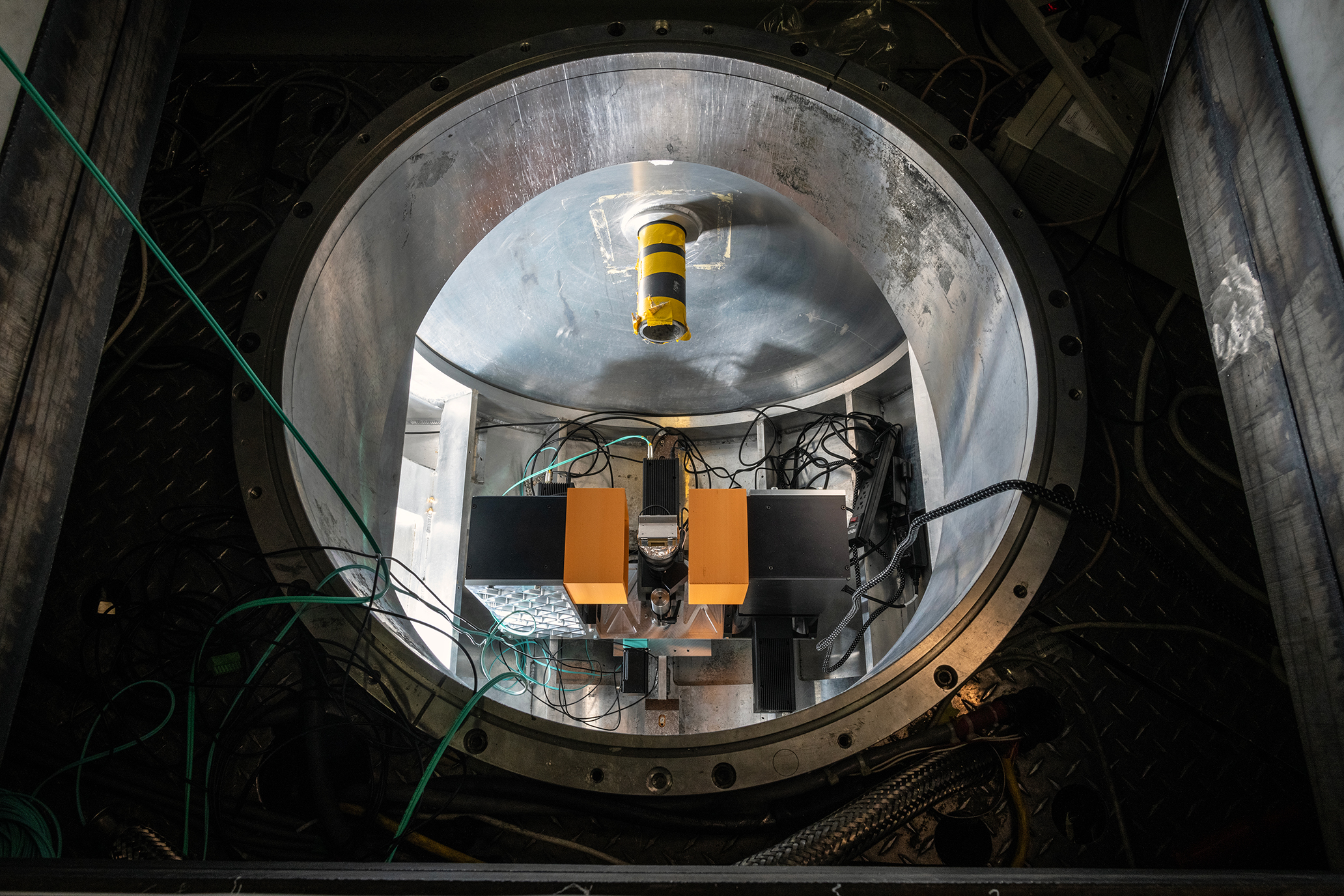
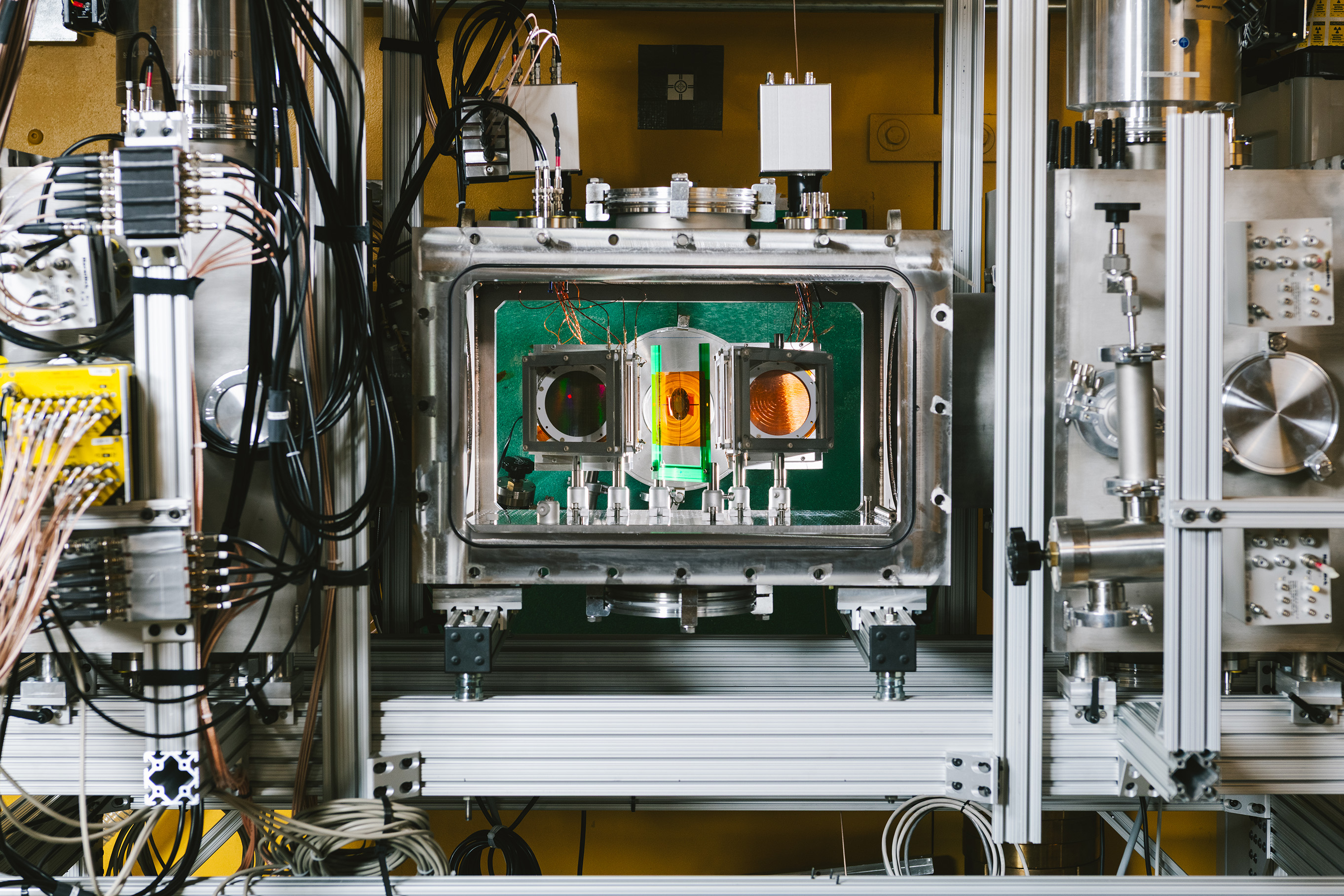
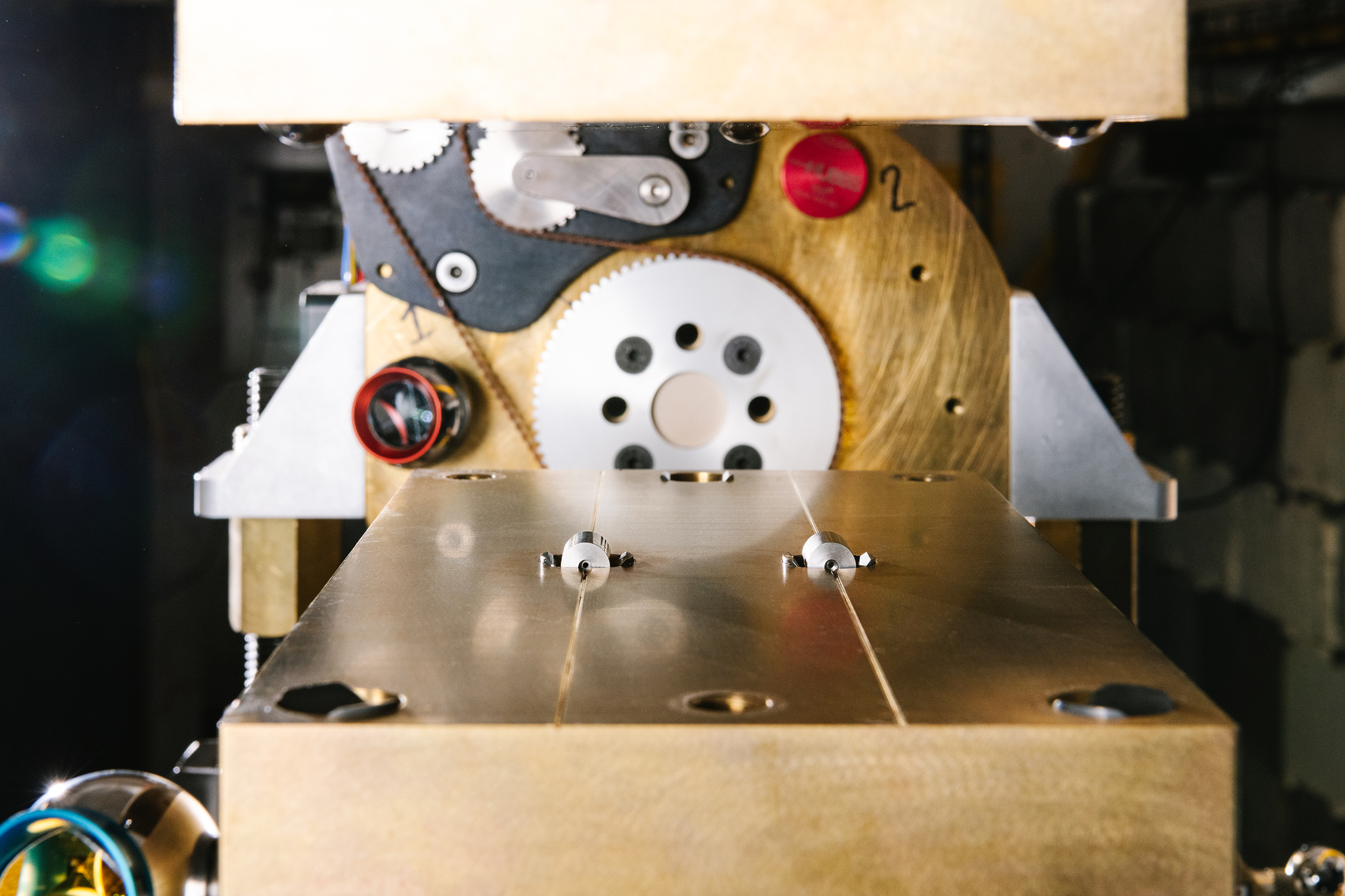
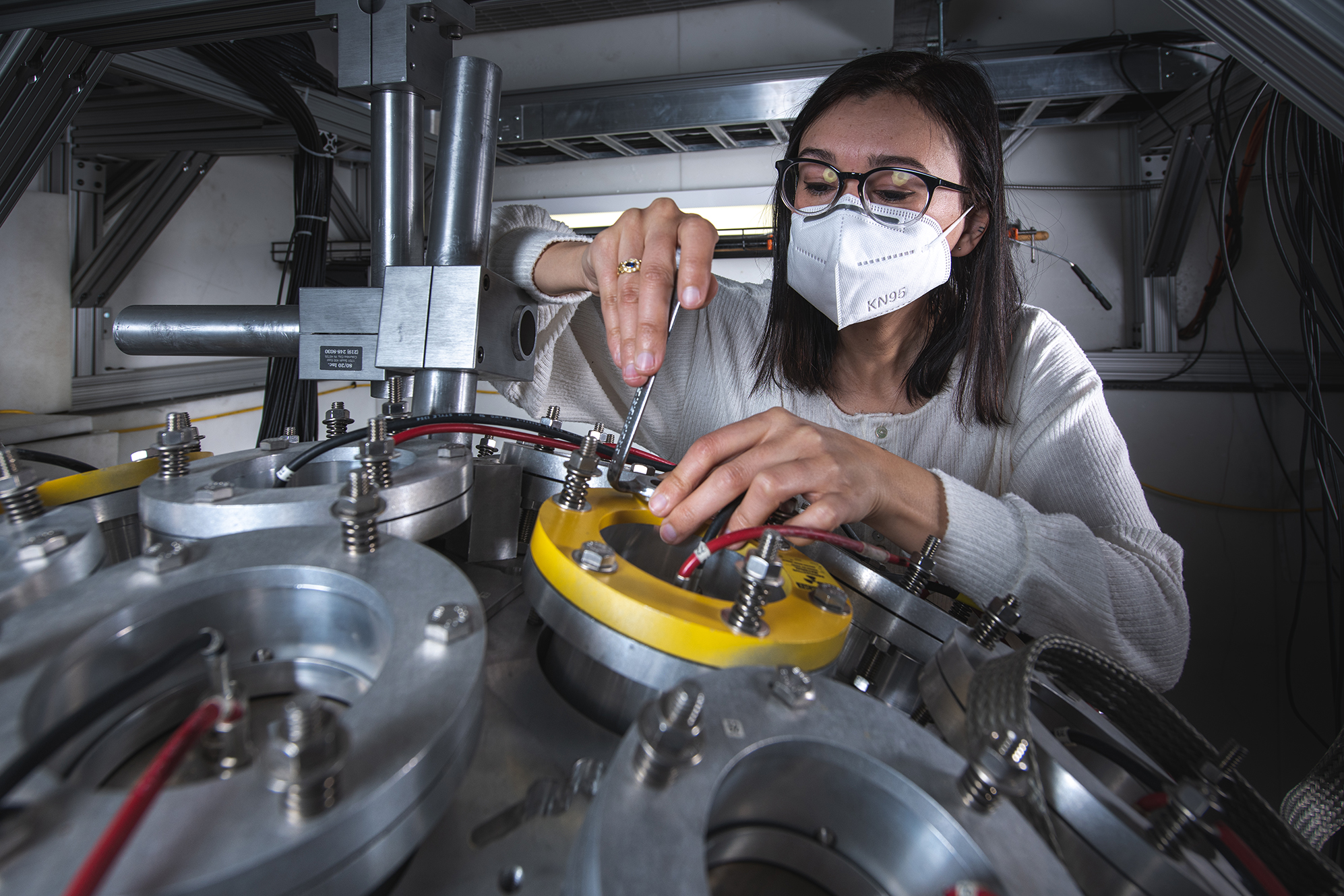
The Lujan Center is one of five user facilities supported by the LANSCE accelerator, which is stewarded by NNSA.
The Lujan Center instruments operate in time-of-flight mode, receiving neutrons from a highly optimized tungsten spallation target. Four moderators provide epi-thermal, thermal and cold neutrons to specialized beamlines. The facility operates for a total of 3,000 hours per year. The scientific community recognizes Lujan Center scientists for their leadership and innovation in neutron scattering.
These instruments provide capability for basic and applied neutron science by exploiting the unique characteristics of these intense beams of moderated pulsed neutrons for academia, national security, and industry.
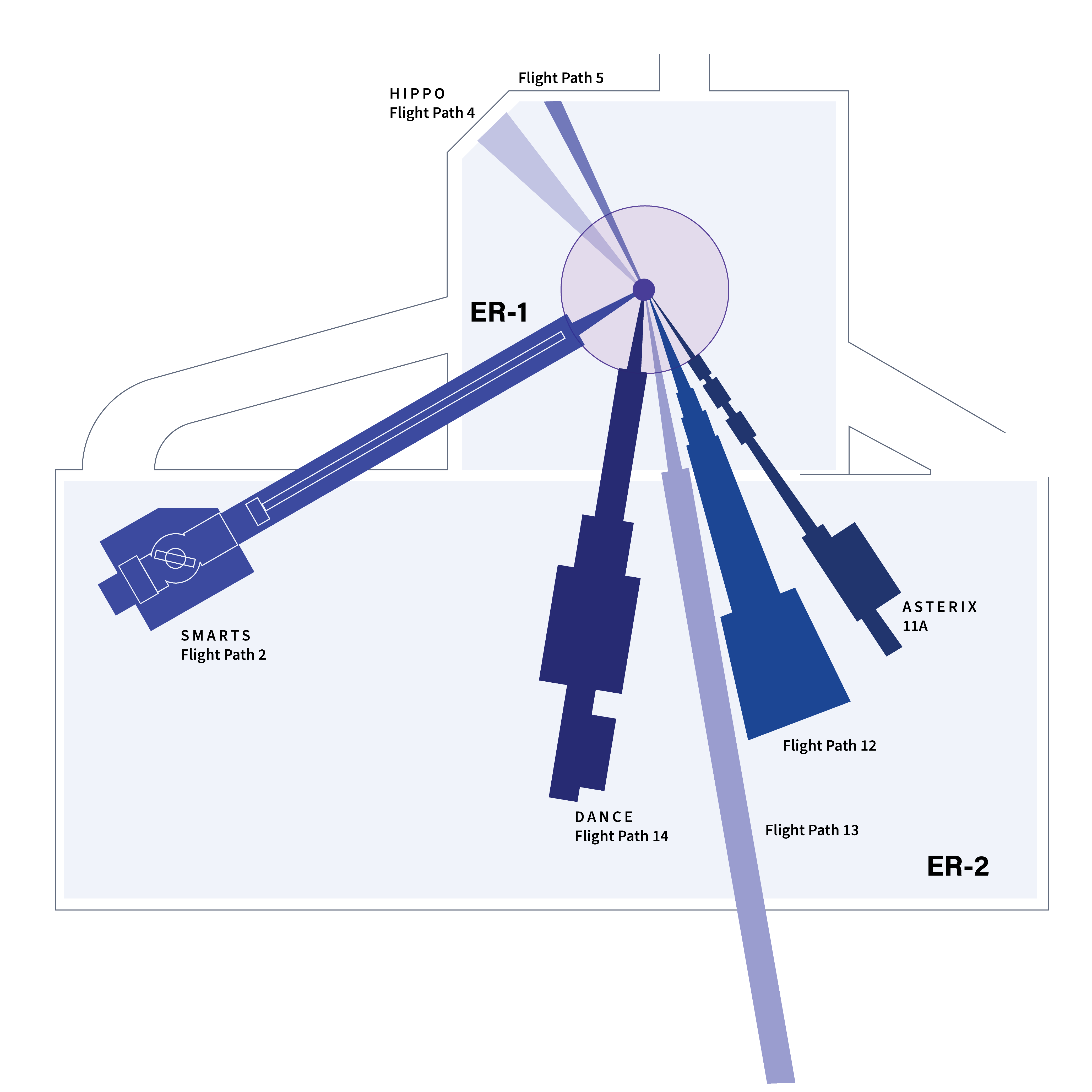
Instrument Suite
At the core of the Lujan Center is a 20-Hz spallation neutron target and the LANSCE proton accelerator, which operates at an energy of 800 MeV with typical beam currents of 100 – 125 µA.
The Lujan Center's tungsten spallation target provides a high peak flux with a broad wavelength bandwidth per frame. Two liquid hydrogen moderators provide high intensity cold neutron beams ideally suited for nuclear physics, reflectometry, inelastic scattering, and small angle scattering.
Water moderators provide thermal neutrons for neutron imaging, nuclear physics and diffraction beamlines. In addition, because of its low repetition rate, long wavelength neutrons can be used without significant frame overlap allowing the collection of data over a broad range of time constants and length scales, ideally suited for total scattering and diffraction studies.
The Lujan Center offers access to a large variety of specialized, sample environments, including:
- low temperatures down to 40mK
- magnetic fields up to 7 T
- high temperature furnaces up to 2400° C
- uniaxial stress (F_max=250 kN), fluid, and anvil cell pressure capabilities (30 GPa-2000 K)