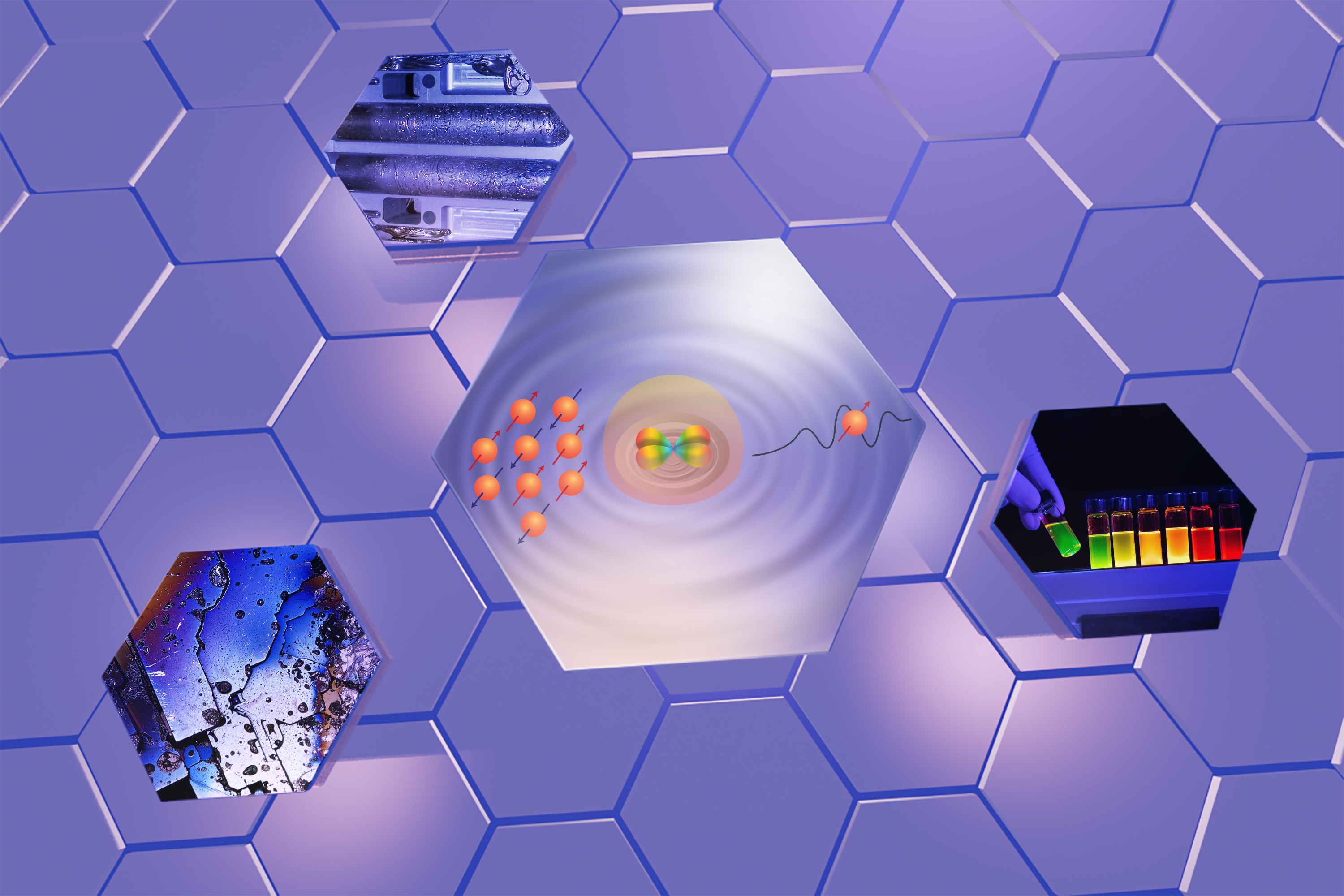
When water gets cold enough, it freezes solid because its atomic motion has nearly stopped. But when it gets hot, the water molecules move quickly, turning it into a gas. Helium, on the other hand, behaves very differently. The most common isotope of helium, He-4, stays a gas at extremely cold temperatures, and doesn’t become a liquid until −268.9 °C. Then, at just a few degrees colder, −271.1 °C, it undergoes a phase transition into something completely bizarre: a superfluid. Instead of undergoing random motion, the atoms in superfluid helium start moving together in a coordinated way—a macroscopic quantum state. This state eliminates inner friction, allowing fluid helium to climb out of a glass container or remain motionless within if the container is spun.
The fact that helium is a liquid at such low temperatures makes it not only fascinating to study in its own right, but also useful as a research tool. When liquid helium is used to cool metals and other materials to ultra-low temperatures, the atoms in those materials can also behave strangely: their electrons start to move in coordinated, or correlated, ways, resulting in quantum mechanical phenomena such as superconductivity.
“Cooling materials down to near-absolute zero allows a clearer view of the microscopic properties.”
“Cooling materials down to near-absolute zero removes thermal excitations and allows a clearer view of the microscopic properties and the behavior of the electrons,” says Filip Ronning, Director of the Los Alamos Institute for Materials Science.
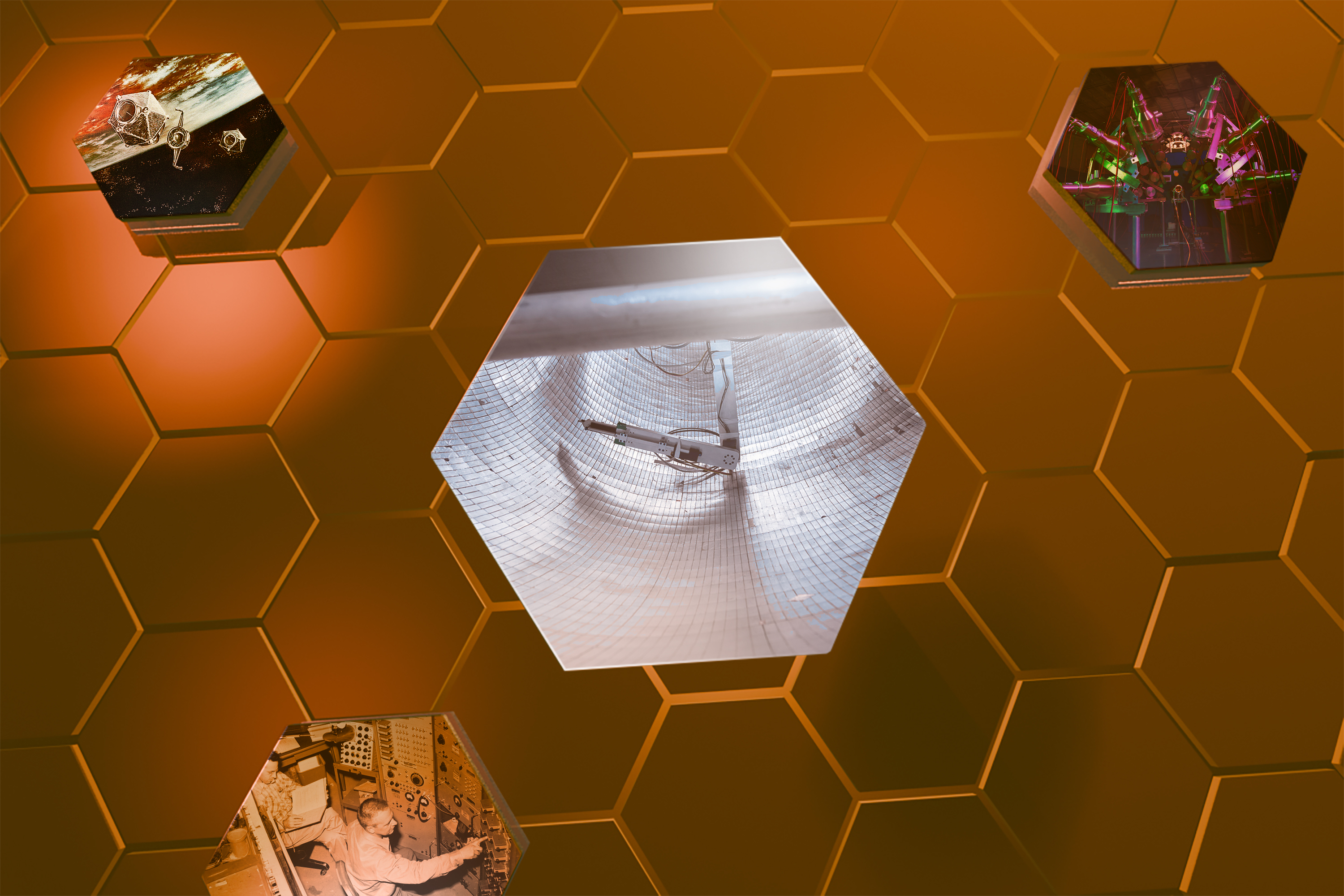
Since the Manhattan Project, scientists at Los Alamos National Laboratory have studied the behavior of materials at cryogenic temperatures, typically below −150 °C. Throughout the past eight decades, Los Alamos contributed to the development of the field of low-temperature physics and made discoveries about distinct materials. Today, Lab researchers continue to play an important role in the study of quantum effects and in the development of new materials that exhibit those effects, called quantum materials.
Cold, colder, coldest
In the late 19th century, scientists began experimenting with liquefying gases, starting in 1877 when European physicists made a few droplets of liquid oxygen by cooling oxygen gas within a flask under high pressure. Helium, a highly stable and unreactive gas, was the trickiest to liquefy. Helium-4 (He-4), which is naturally abundant in Earth’s atmosphere, was first liquefied in 1908 by Dutch physicist Heike Kamerlingh Onnes. Later, Onnes used helium itself as an agent to cool mercury for an experiment in which he discovered the phenomenon of superconductivity. Unlike familiar materials whose structures restrict the flow of electricity and result in energy being lost as heat (e.g., a computer battery gets hot), a superconducting material can carry electricity without any energy loss at all. Onnes won the 1913 Nobel Prize in physics for liquefying helium and discovering superconductivity. Upon further cooling, superfluidity was discovered in He-4 in 1938.
After Onnes’s discovery, scientists worldwide began to use helium and other cooled gasses to study materials at low temperatures. In 1945, towards the end of the Manhattan Project, Los Alamos scientists who had cryogenic expertise formed the Metal Physics group to study the unusual physical properties of plutonium at low temperatures. As part of their work on fusion, Lab researchers examined the low-temperature thermodynamic and transport properties of all helium and hydrogen isotopes.
These fusion experiments used the hydrogen isotope tritium, which decays into a rare helium isotope, He-3, giving the team unique access to that far less-abundant isotope. Scientists questioned whether the lighter He-3 isotope, which has one less neutron than He-4, was possible to liquefy. In 1948, Los Alamos’s Stephen Sydoriak, Edward Grilly, and Edward Hammel proved He-3 could in fact be liquified below −270 °C, just 3.15 °C above absolute zero.
(In the 1970s, He-3 was also demonstrated to be a quantum superfluid, just like He-4, for which three Americans earned the 1996 Nobel Prize).

The ability to liquify both isotopes of helium was game-changing. In the 1960s, scientists developed a device called a dilution refrigerator that uses a mixture of He-3 and He-4 to produce even colder temperatures, approaching −273.1 °C (0.05 Kelvin)—enabling ultra-low-temperature studies that today allow scientists to thoroughly understand materials from a quantum mechanical perspective.
Electrons are key
In school, students are taught that atoms have a nucleus made of protons and neutrons with electrons orbiting around it. For many of us, that image remains in our minds, but the more deeply people have studied materials, the more they have come to understand the extraordinarily complex and dynamic role electrons play in the properties of matter. Unlike the tidy model, some electrons stay close to their nucleus, some hang out in the outer orbitals and can bond covalently to other atoms to form a molecule, and some are de-localized from any nucleus, enabling the flow of electricity among atoms. The nature of electrons is what makes some materials conductors and others insulators.
Cryogenic experiments—using liquid helium as well as liquid nitrogen—helped scientists learn more about unusual phenomena in materials. Ultra-low-temperature studies showed the world that electrons don’t always behave as independent particles, and in some materials, their strong interactions with each other lead to strange, correlated behaviors in which the electrons dance in unison like a wave, conducting electricity without any resistance: this is superconductivity.
“The ability to liquify both isotopes of helium was game-changing.”
Building on their early studies of plutonium, Los Alamos scientists used cryogenics to explore questions such as how many plutonium electrons are de-localized and how they are impacted by vibrational excitations. Scientists also began examining all the lanthanides and actinides, the elements most relevant to the materials being used at the Lab.
In the 1970s, Los Alamos scientists applied their expertise in low-temperature physics to the worldwide search for new superconducting materials and to developing superconductivity-based power transmission and energy-storage strategies. Superconductors hold vast potential for a multitude of uses, but known superconductors only did their magic when supercooled with liquid helium, which is hard to come by. If new materials could be found that were superconducting at higher temperatures (“higher” meaning about −196.1 °C, the temperature at which vastly abundant nitrogen liquefies), they could be used for many more applications.
Better yet, the long-sought-after room-temperature superconductor, a holy grail of materials science, would not require cooling at all. For example, normal power lines can lose about 5 percent of electricity during transmission, but superconducting ones could be close to 100 percent efficient. Some superconductors even expel magnetic fields, making them float above strong magnets—which could lead to fast, power-efficient levitating trains.
Massive electrons
Although a room-temperature superconductor has not yet been found, hundreds of superconducting materials have been discovered at a range of temperatures, and some are now being used in MRI machines, particle accelerators, and fusion research. Along the way, scientists have thoroughly investigated the atomic characteristics of materials and what happens when they transition from normal metal behavior to strange metal behavior to the emergence of properties like exotic magnetism and superconductivity—leading to fields of study that to this day pose fundamental questions at the forefront of science.
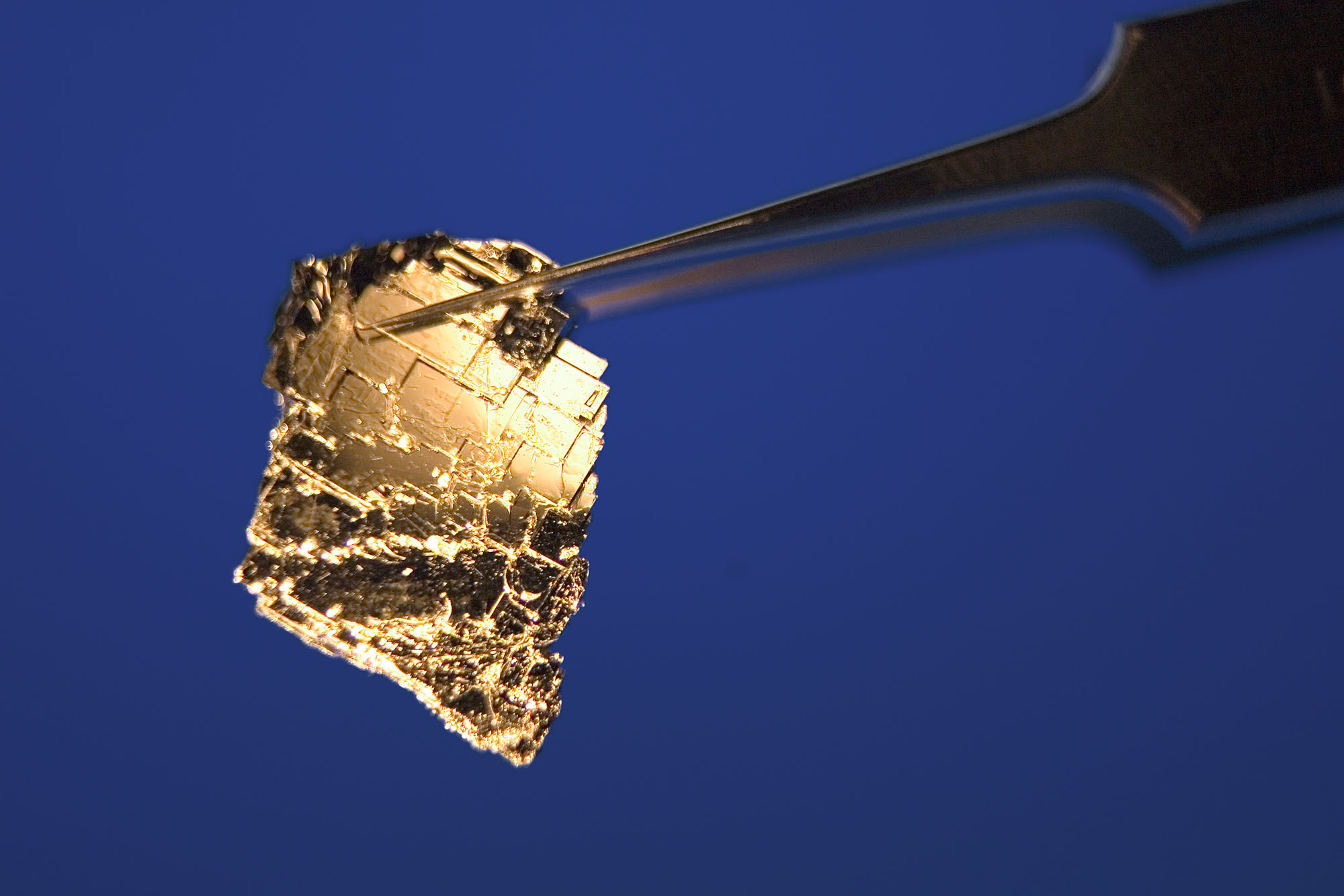
In the mid-1980s, scientists at Los Alamos discovered that superconductivity in certain uranium-based materials was connected to an unusual new phenomenon: electrons that behave as if they have enormous mass. These electrons are not actually heavier than other electrons, but the interactions between them make them appear to have larger mass, because they move about a thousand times slower in certain materials. This characteristic is caused by a nonclassical state of correlation between the electrons called quantum entanglement. This work laid the foundation for a whole new subfield, now called unconventional superconductivity, which studies superconductivity in unexpected materials like copper oxides.
“It’s rather clear that quantum materials will play a role in future technologies.”
In 1993, Los Alamos added another capability to this field when it became home to the National High Magnetic Field Laboratory’s Pulsed Field Facility, which operates high-field electromagnets that are used to study the dynamics of electrons to understand how they move, behave, and interact.
Making the materials of the future
Today, chemists, materials scientists, and physicists at Los Alamos are using their combined expertise to create new quantum materials and to understand how those materials work at the atomic level. First, the scientists grow novel material crystals by slightly changing the chemistry of a known quantum material. Next, various tests can be done, from studying the sample’s thermodynamics to determining its electronic and magnetic properties. Spectroscopic measurements are used to get microscopic information about the material’s electronic and magnetic structure under various conditions, and scanning tunneling microscopy or magnetic field measurements can help reveal the behavior of the material’s electrons.
With this research, Los Alamos scientists are gaining a comprehensive understanding of which chemistries and structures are associated with a particular material behavior. For instance, in recent years, Lab scientists elucidated that phase transitions in plutonium are driven by strongly correlated electrons, which impact the structural properties of the metal. Ultimately, the knowledge Los Alamos scientists gain will enable the design of materials with specific characteristics to deliver novel functionality.
“It’s rather clear that quantum materials will play a role in future technologies, such as quantum computing, neuromorphic computing, or novel detectors of low-energy particles like dark matter and neutrinos,” says Ronning.
Just as the silicon transistor revolutionized computing in ways that could not be imagined at the time, quantum materials with new functionalities have the potential to revolutionize computation again. The quantum computers of tomorrow will use these materials to solve problems at a scale, speed, and scope that is currently incomprehensible.
People Also Ask:
- What is superconductivity? Superconductivity is a quantum phenomenon in which certain materials conduct electricity with zero resistance. This property means that superconductors do not lose energy like other materials. High-temperature superconducting materials, which are still being researched, could potentially lead to nearly 100-percent-efficient power lines or to levitating trains.
- What is a quantum computer? While a regular computer uses bits that are always either 0 or 1, a quantum computer uses qubits (quantum bits) that can exist in a superposition of two logical states, i.e., be 0 and 1 at the same time. Qubits become linked together, or entangled, so they can explore many possibilities simultaneously.