A few hours after the sun set on November 12, 2025, physicist Michael Henderson drove from his home in Los Alamos, New Mexico, toward the darker skies of Valles Caldera National Preserve an hour west. The night before, the Northern Lights had lit up New Mexico in a rare display of green and red. Henderson, a space scientist at Los Alamos National Laboratory, had seen none of it. That night, space-weather forecasters predicted an aurora that would rival that first brilliant show. Only it never materialized. “Kind of a dud,” Henderson says, unsurprised but no less disappointed. “Space weather is a fantastically complex system. We just aren’t very good at predicting it.”
Aurora chasing may be a hobbyist’s pursuit, but the same physics that make the night sky dance can also shut down the world’s communications and navigation systems. Henderson focuses his work on the national and—increasingly—economic security implications of space. As a sector, space is growing faster than global gross domestic product. Last year, the global space economy topped five hundred billion dollars and is expected to approach one trillion within a decade. From banking and navigation to weather forecasting and farming, nearly every major industry depends on one or more of the 15,000 satellites now squeezed into Earth’s crowded orbit. A single severe solar storm could cripple a huge percentage of those satellites and the essential services they enable. Despite all this, the world lacks a reliable warning system for space storms.
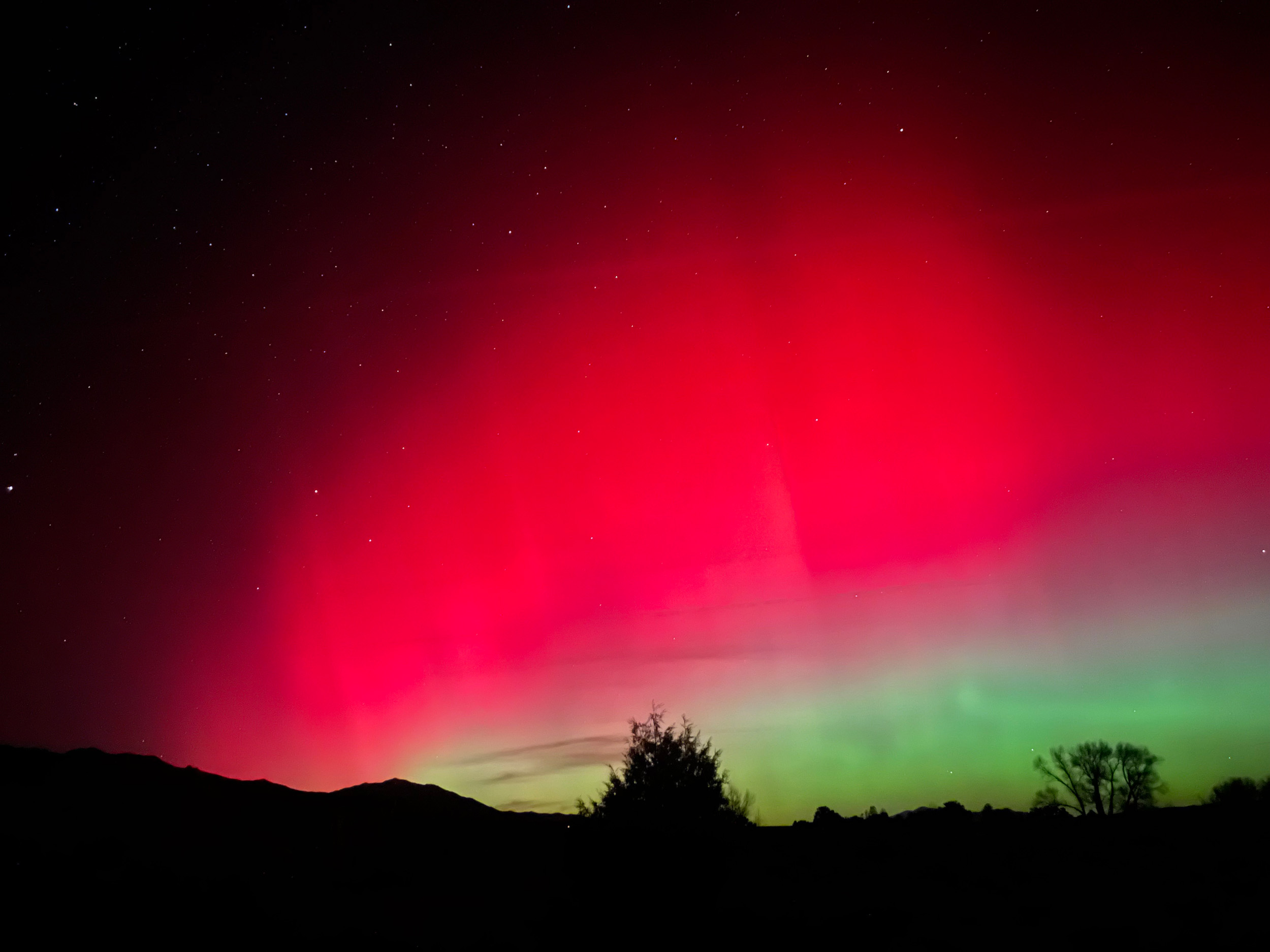
The aurora is just the visible part of space weather. When bursts of radiation and charged particles from the sun strike Earth’s magnetic field, they set off electrical currents and magnetic disturbances that ripple through near-Earth space. Sometimes, those energetic particles bombard satellites. Occasionally, their effects reach the ground and disrupt electrical circuits, like the Carrington Event did when it set telegraph stations ablaze in 1859.
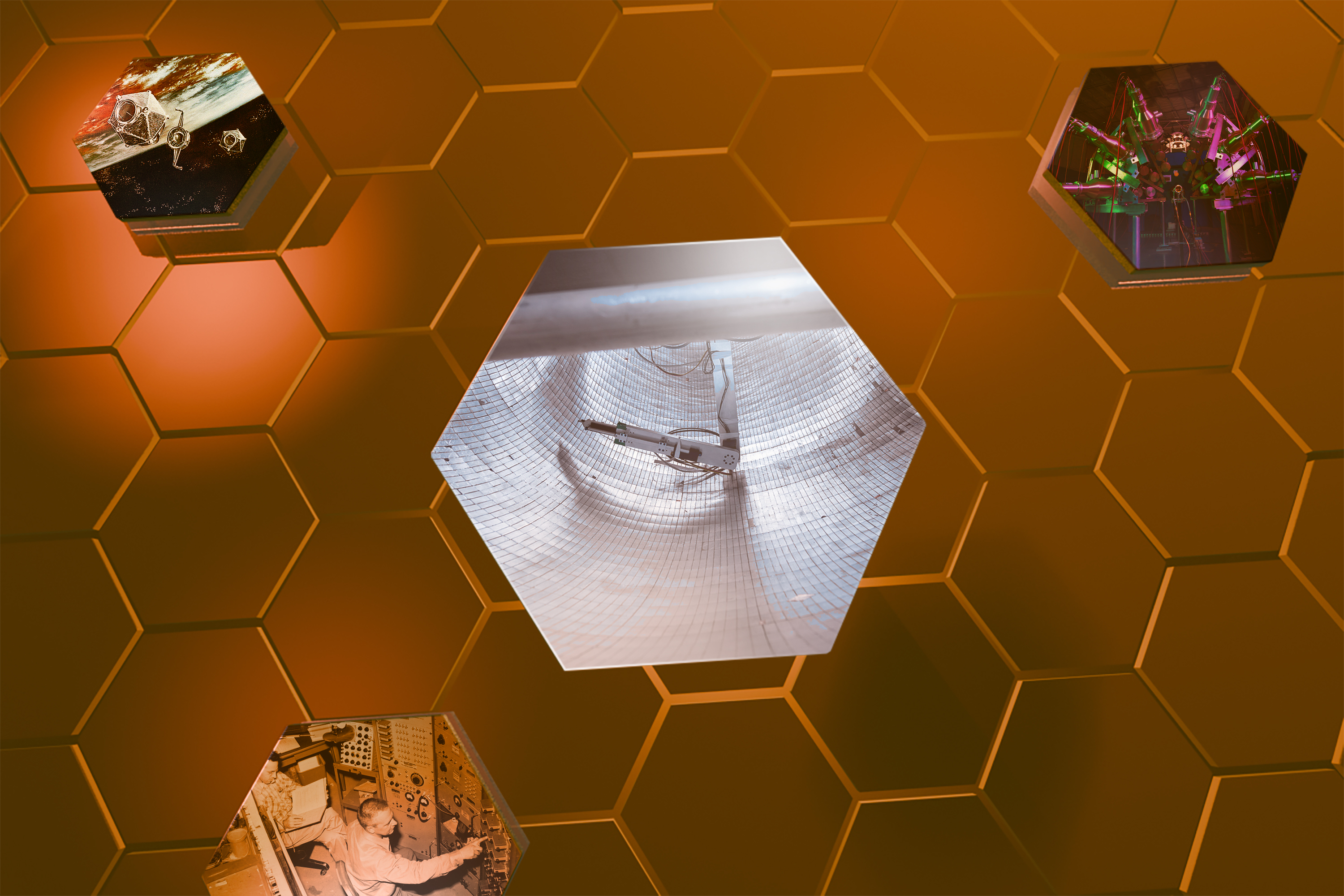
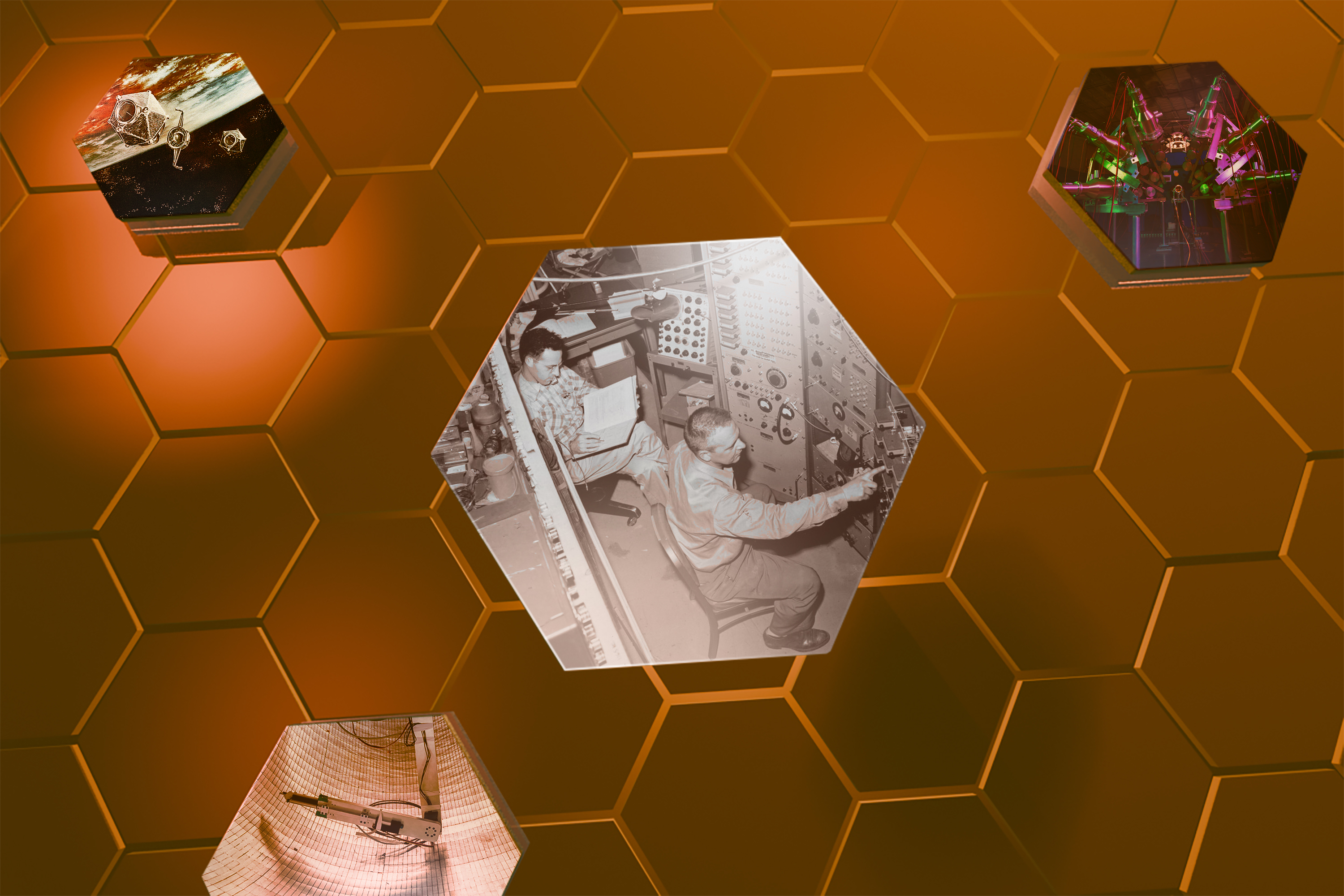
Many of the early insights into how space weather works came from the Vela satellites, which were launched into orbit in the early 1960s. The Velas carried Los Alamos–designed instruments to detect gamma rays, neutrons, and x-rays. Those instruments collected data continuously. In 1965, Los Alamos scientists dug into data from the satellites’ electron and ion detectors and uncovered a feature in Earth’s magnetic field that scientists didn’t even know to look for.
“Space weather is a fantastically complex system. We just aren’t very good at predicting it.”
Earth’s molten iron core generates a magnetic field—a giant, tilted dipole—that shields the planet from solar radiation. The sun’s hot outer atmosphere sends out a continuous stream of charged particles called the solar wind, and when that wind strikes Earth’s magnetic field, it blows the field into a long tail on the planet’s nightside. In the 1960s, when the Vela satellites crossed this magnetotail near the geomagnetic equatorial plane, they detected a pronounced peak in energetic electrons. In the center of the tail, where Earth’s stretched magnetic field lines flatten and weaken, the Vela instruments revealed a dense sheet of plasma where charged particles collect: the plasma sheet, through which most of Earth’s space weather flows.
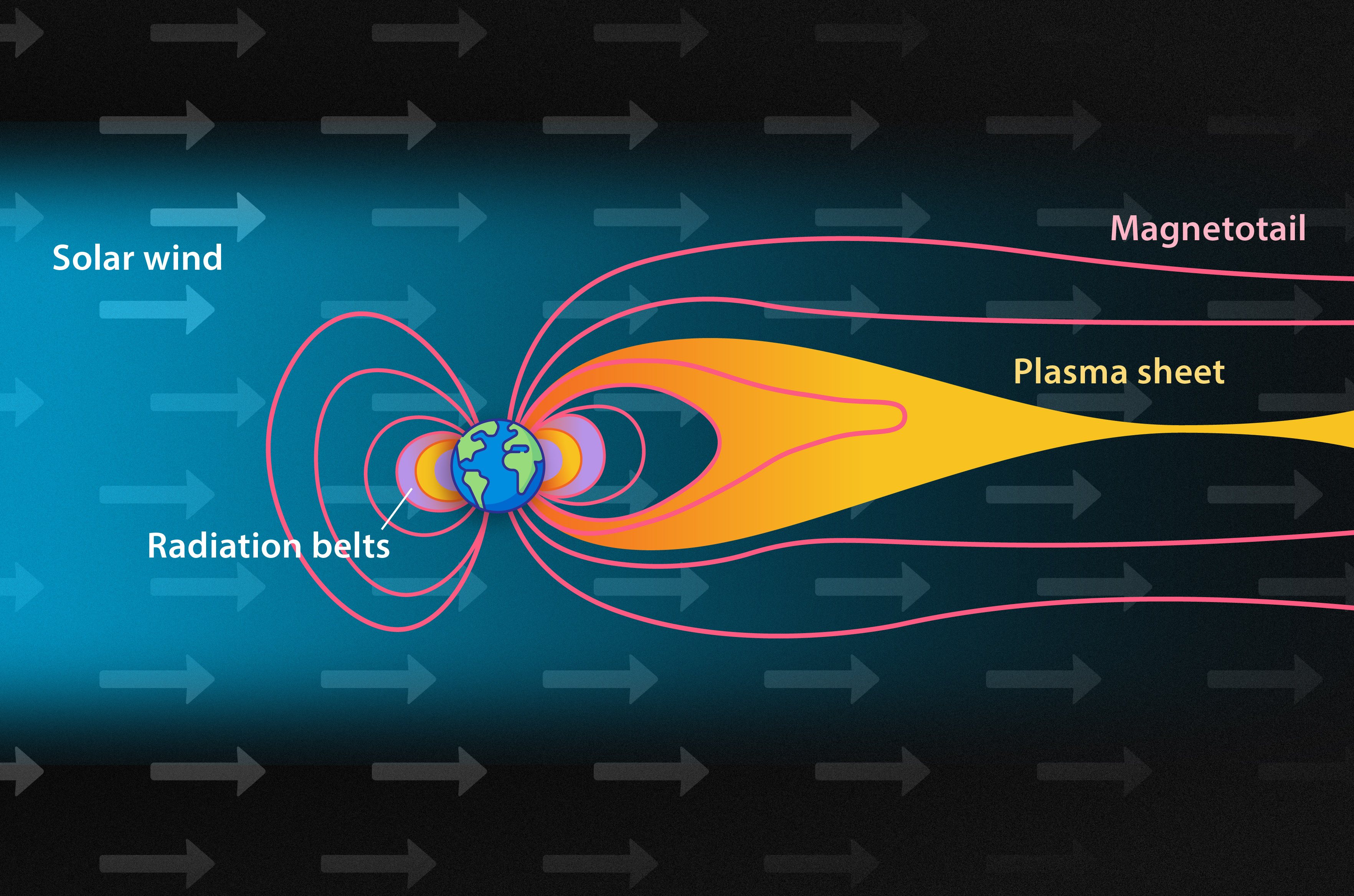
Over the coming years, Los Alamos scientists dug deeper into the plasma sheet. In the mid-1970s, Lab scientist Ed Hones and others found that the plasma sheet thickens and thins during magnetic substorms. In this way, it acts as a reservoir of stored energy. When magnetic field lines in the tail reconnect, they fling charged particles earthward, where they collide with the upper atmosphere and ignite the aurora. This mechanism not only explained the lights Henderson chased in November but also space storms capable of disrupting communications and damaging satellites. “Space scientists had turned the magnetosphere into the largest plasma physics laboratory in the universe—for our instruments, it’s just a few hours’ flight away,” Henderson says. He notes that work in this natural plasma laboratory has contributed to many other areas of research involving plasma, including fusion-energy efforts here on Earth.
By the early 2010s, Los Alamos’s space-science program reached across the solar system. It had built instruments for missions that studied the solar wind, probed the outer heliosphere, and even detected water plumes on a distant moon of Saturn. But closer to home, Lab scientists had turned their attention to another dynamic region of near-Earth space: the Van Allen belts, two radiation belts that arc between about 600 and 26,000 miles above the planet. For decades, satellites passing through or near these belts had suffered mysterious failures during geomagnetic disturbances: communications outages, unexpected charging events, even the total loss of spacecraft. Nobody understood why. Some believed the damage came from electrons that drifted slowly inward from the outer magnetosphere and gained energy as they approached Earth; others suspected more complex, local acceleration processes right inside the belts.
“Space scientists had turned the magnetosphere into the largest plasma physics laboratory in the universe.”
To find out what caused these failures, NASA launched two spacecraft called the Van Allen Probes directly into the belts in 2013. Onboard were Los Alamos–built electron spectrometers. Using high-resolution electron measurements, scientists found that solar storms dump excess energy into the magnetosphere, which in turn triggers the local acceleration of electrons right inside the belts. Within a few hours, local electrons can reach energies high enough to punch through satellite electronics like tiny missiles, crippling a spacecraft. “Geomagnetic storms can supercharge the radiation,” Henderson says.
Los Alamos’s discovery and extensive research on the radiation belts gave rise to ongoing Lab efforts like Radiation Belt Remediation, one of Henderson’s primary projects. The idea is that maybe the electrons in the radiation belts can be removed before they reach energies that make them lethal projectiles. Normally, charged particles “drizzle” slowly out of the belts into Earth’s atmosphere, shedding energy as they collide with air molecules. But after a major nuclear event in near space, high-energy particles can persist in the belts for years, making it nearly impossible to rebuild space infrastructure. “If someone ever created an artificial radiation belt, we’d want to get rid of it as fast as possible so we could start to rebuild,” Henderson says. One way to do this, he believes, is to generate electromagnetic waves or deploy antennas in orbit that nudge particles downward faster, clearing the danger from the belts.
But implementing a viable remediation scheme has proved incredibly challenging, and there remains much work to be done on the natural systems, including predicting when large geomagnetic storms will develop. “We can see a solar eruption and say, ‘something big might hit in two or three days—or maybe not.’ We need to do better than that,” Henderson says. “Every one of these advances, and dozens more, is another step in the right direction. But we’re not there—not yet.”
People Also Ask
- What causes space storms? Or the Northern Lights? Space storms are triggered when bursts of radiation and charged particles from the sun—often from coronal mass ejections or solar flares—strike Earth’s magnetic field. These interactions disturb the magnetosphere, accelerate charged particles, and can disrupt satellites, communications, and power grids. They also produce the aurora borealis, or the Northern Lights.
- Are radiation storms dangerous to satellites, and can we protect them? Severe radiation storms can disrupt or even destroy many satellites in space, posing a severe threat to myriad industries on Earth—everything from banking and communications to farming. Researchers at Los Alamos are developing radiation-belt remediation techniques to remove dangerous electrons from orbit before they damage spacecraft. Although promising, these methods remain experimental, and predicting when extreme storms will occur is still a major scientific challenge.