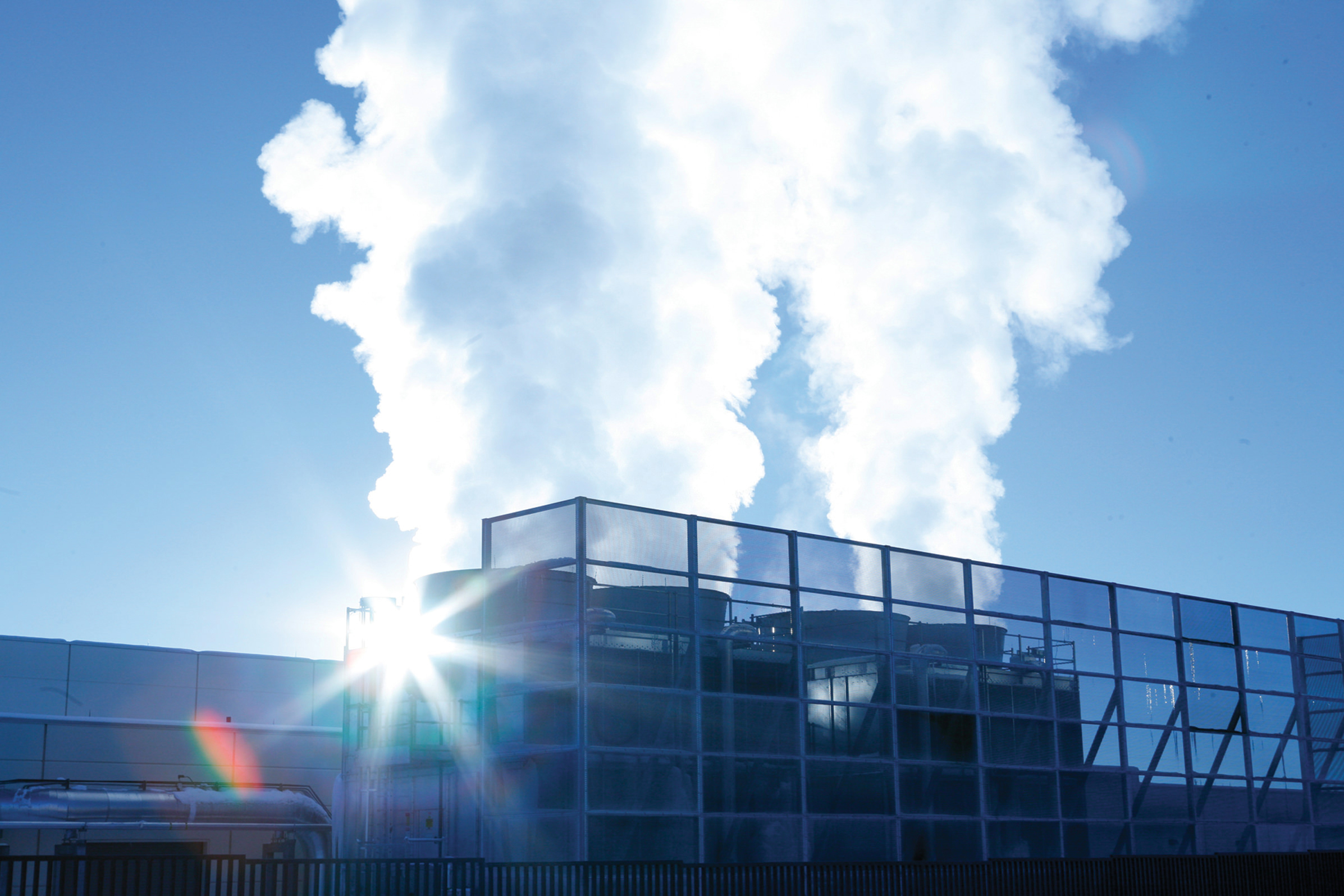
LANSCE is the major experimental science facility at LANL, underpinning the Laboratory as a world-class scientific institution.
Los Alamos Neutron Science Center (LANSCE) is a National User Facility with one of the nation’s most powerful linear accelerators (LINAC). LANSCE is unique because of the intensity and energy spectrum of the neutrons our LINAC produces. Our intense pulsed protons are used for proton radiography and to produce the wide energy spectrum of spallation neutrons needed to interrogate various materials. These investigations into materials help improve safety and security, advance nuclear technology, and have commercial applications.
We support three of the NNSA’s core scientific capabilities: hydrodynamics, weapons nuclear science, and materials science.
Our research is essential to understanding nuclear weapons performance, reliability, and safety. We specialize in work that validates predictive models of weapons performance and evaluates new materials and material models for stockpile modernization.
Hydrodynamics with Proton Radiography (pRad)
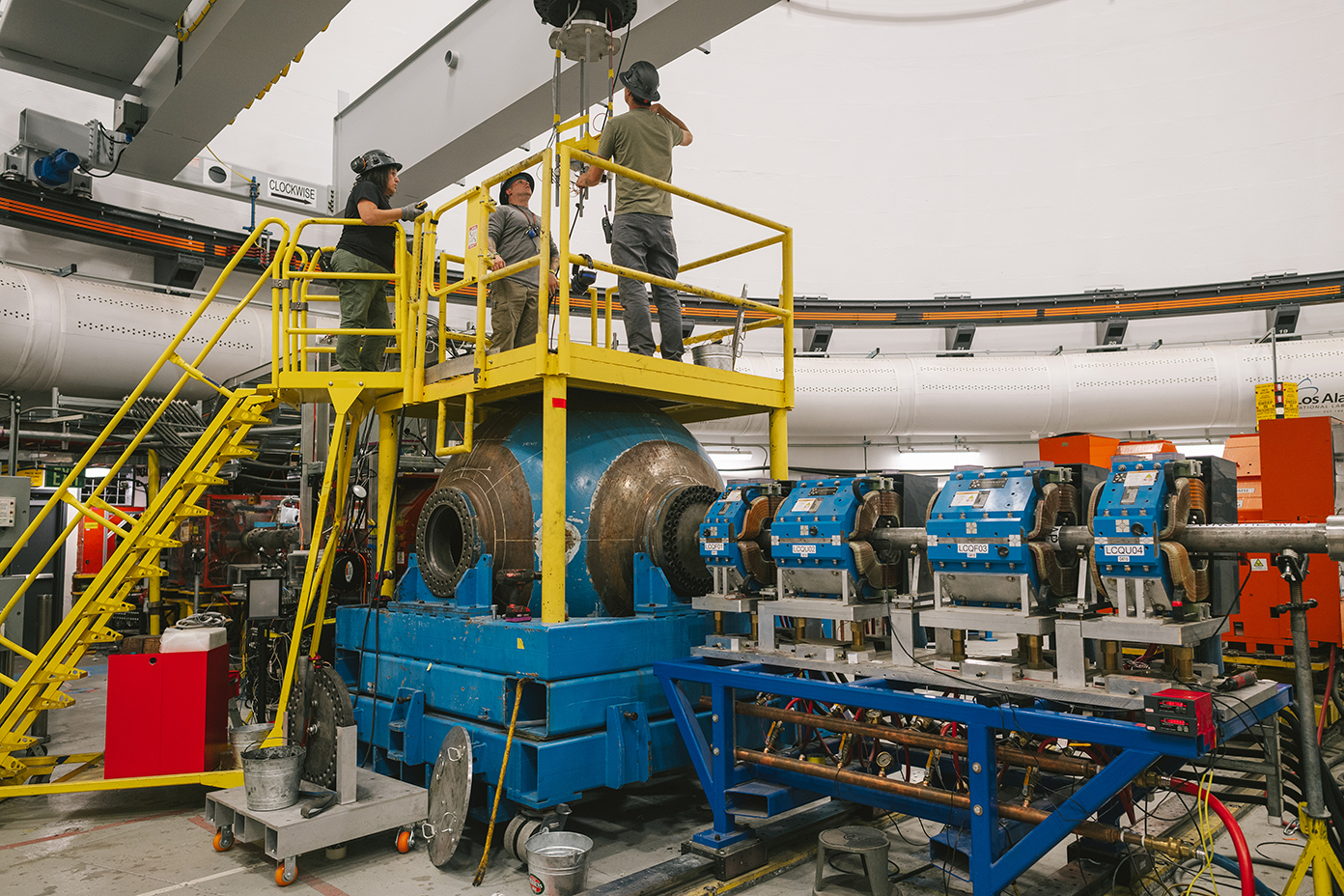
pRad is a unique facility that has the capability to probe the dynamic response of materials to shocks, the detonation characteristics of high explosives under a range of environmental conditions, and to make high-speed movies of their dynamic systems.
Weapons Neutron Research
Our nuclear measurements are key to the success of the National Boost Initiative and for doing accurate nuclear forensics. Precision measurements of fission cross-sections and fission neutron spectra in actinides are crucial for predicting and determining yield, and are required to accurately quantify the margins and uncertainties in weapons performance. We provide the NNSA the most efficient, cost-effective, and timely capabilities to meet mission requirements.
Materials Science for National Security
Our capabilities are specifically tailored to the materials and security requirements of stockpile modernization and national security research. We are the only facility equipped to carry out classified materials research on stockpile materials and components using a LINAC.
Energy Security
The quest for energy security requires R&D on a new class of nuclear reactors, fuels, and materials. Our research is important to the DOE’s Advanced Fuel Cycle Initiative (AFCI), focusing on developing a new class of safer and more proliferation resistant fuels—fuels the nation needs to provide energy security and independence, and to impede nuclear terrorism.
LANSCE History
Los Alamos Neutron Science Center is the major experimental science facility at Los Alamos National Laboratory, underpinning the Laboratory as a world-class scientific institution.
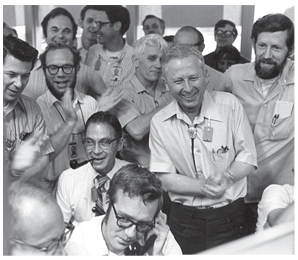
Scientists celebrate at Los Alamos Meson Physics Facility, as LANSCE was originally called.
1972
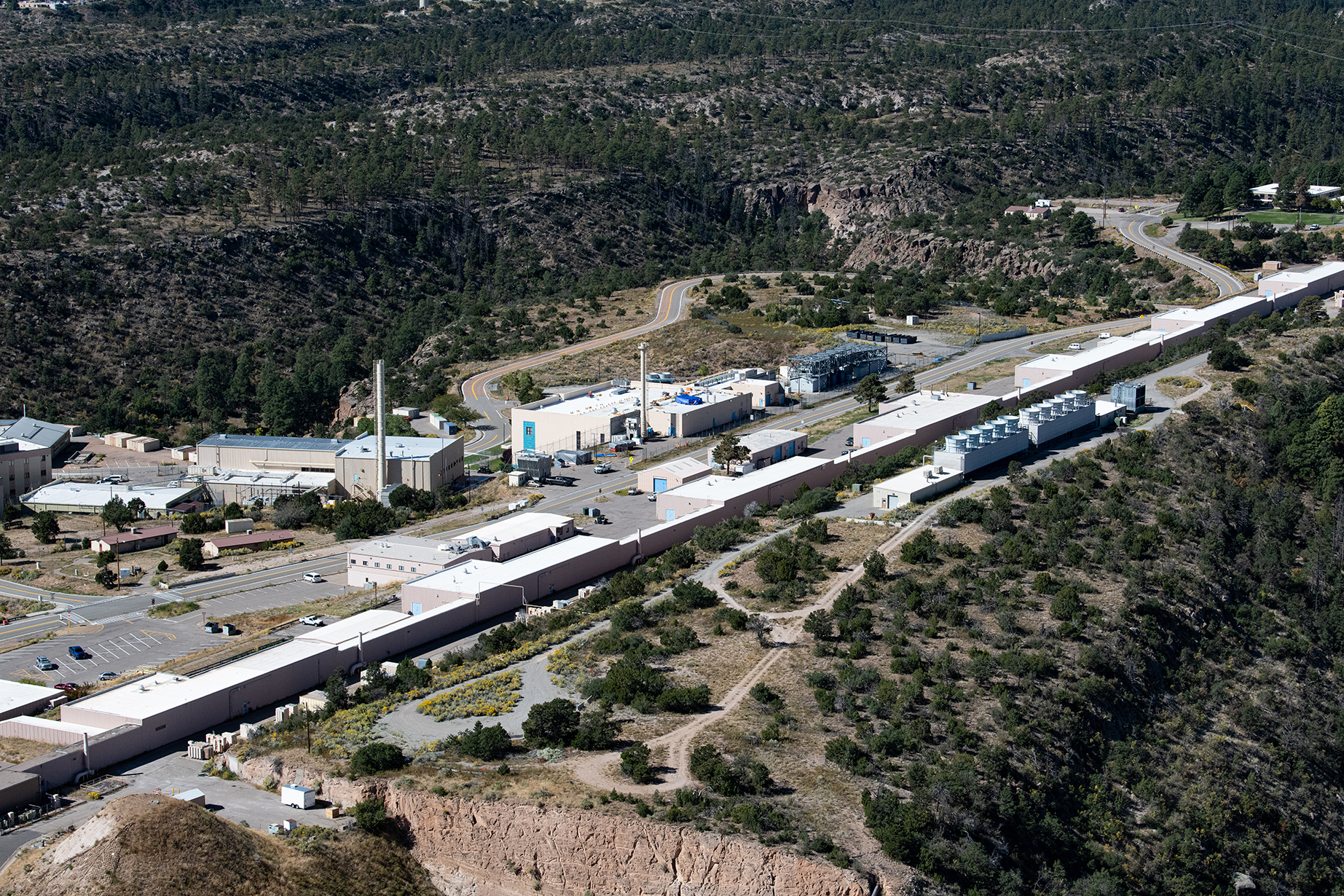
The Los Alamos Meson Physics Facility (LAMPF), as it was originally called, hosted about 1000 users per year to perform medium energy physics experiments. Since 1972, the 800-million-electron-volt (MeV) accelerator and its attendant facilities at Technical Area 53 (TA-53, often referred to as "the Mesa") at LANL have been a resource to a broad international community of scientific researchers.
1977
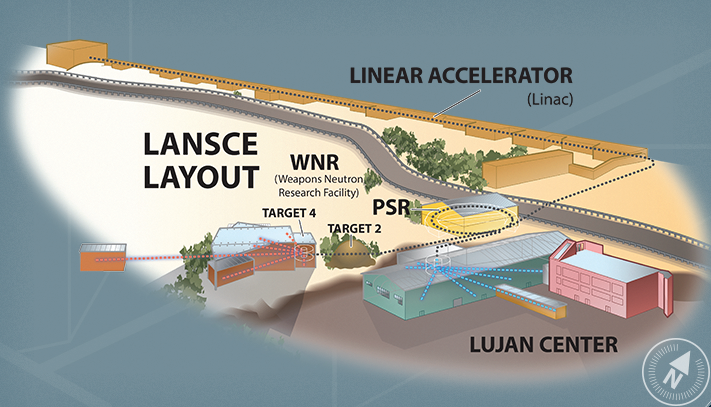
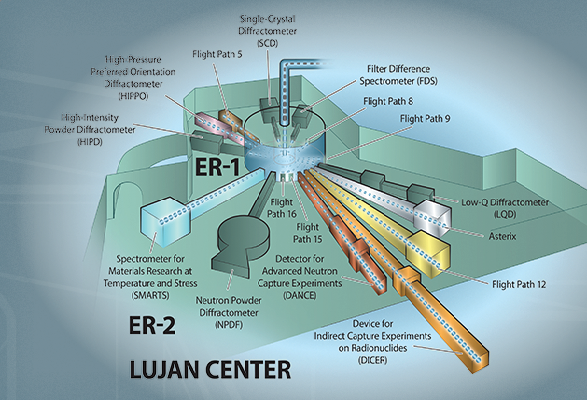
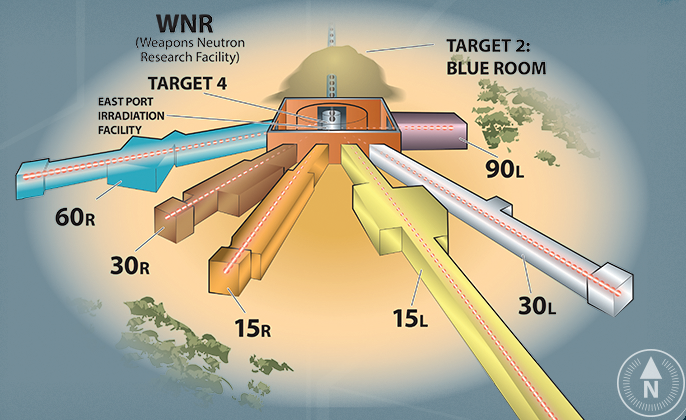
In 1977, a pulsed spallation neutron source was commissioned to supply moderated and unmoderated neutrons to time-of-flight experiments in the facility called the Weapons Neutron Research (WNR) Center. Neutron scattering experiments were started immediately and by 1983 the Department of Energy’s Office of Basic Energy Sciences was funding a formal user program. Beginning in 1985, with the completion of the Proton Storage Ring (PSR) that compresses proton pulses from 750 microseconds to a quarter of a microsecond, the Los Alamos Neutron Scattering Center, now known as the Lujan Center, was established while WNR was expanded to other spallation sources on the accelerator beam.
1995
In 1995 LAMPF was renamed the Los Alamos Neutron Science Center (LANSCE) to reflect the broad base of neutron research being conducted on behalf of the weapons program and basic research; the name of the BES neutron scattering facility was simultaneously changed from LANSCE to the Manuel Lujan Jr. Neutron Scattering Center. In 1996, a Memorandum of Understanding was established between the Department of Energy's Offices of Energy Research (ER) and Defense Programs (DP) to define the modernization of the facility and its experimental areas in the context of the new Scientific Stockpile Modernization Program. In 2001, the MOU was rewritten to include three branches of the Department of Energy (DOE)—the National Nuclear Security Administration Defense Program (DP), the Office of Science (SC), and the Office of Nuclear Energy (NE)—and the Laboratory officially designated LANSCE as an approved user facility.
Recent History
Several key events have occurred during the last 20 years that have fostered the growth of the user programs at LANSCE. In 1968 through 1995, the DOE Office of Energy Research (ER) funded LAMPF as a user facility for medium energy physics and a user group was incorporated in 1972. Beginning approximately in 1977, Office of Basic Energy Sciences has provided funding of a new experimental area completed in 1990, including office space, the LANSCE became a Designated National User Facility. In 2011, this status was extended to WNR, pRad, and the Los Alamos Neutron Science Center.
LANSCE Leadership
Thomas Mattsson
LANSCE User Facility Director
Thomas Mattsson is a research and development leader at Sandia National Laboratories with more than two decades of experience advancing science and engineering for national security missions. He currently serves as Senior Manager for Structural Mechanics Research and Applications, leading an organization with staff, postdocs, students, and five managers who deliver structural mechanics, structural dynamics, environmental specification, and advanced material-modeling capabilities central to Sandia’s nuclear deterrence mission.
Previously, Thomas served as Senior Manager for High Energy Density Material Physics, where he led experimental facilities and integrated theory, simulation, and experimental teams delivering unique data and analysis for NNSA and DOE missions. He was Deputy Executive for Assessment Science, leading a national-scale research portfolio central to weapon design, assessment, and certification in close partnership with Los Alamos and Lawrence Livermore national laboratories. His leadership responsibilities included cultivating scientific capabilities, managing operations of gas-gun and pulsed-power facilities, developing future technical leaders, and delivering high-quality results across materials science, hydrodynamics, thermonuclear burn, x-ray sources, opacity, and radiation transport.
A Fellow of the American Physical Society, Thomas has authored numerous publications in leading journals including Science, Nature Geoscience, Physical Review Letters, Physical Review B, and Physics of Plasmas. He holds a MS in Engineering Physics and a PhD in Theoretical Physics from Chalmers University of Technology and brings deep expertise in computational physics, materials modeling, experimental integration, and mission-focused R&D leadership. His career reflects a sustained record of building high-performing teams, developing strategic research capabilities, and delivering impactful science and engineering in service of national laboratory missions.
Outside work, Thomas enjoys skiing, bicycling, and hiking in the Taos mountains.