Proton radiography uses a high-energy proton beam to image material properties and behavior during dynamic experiments.
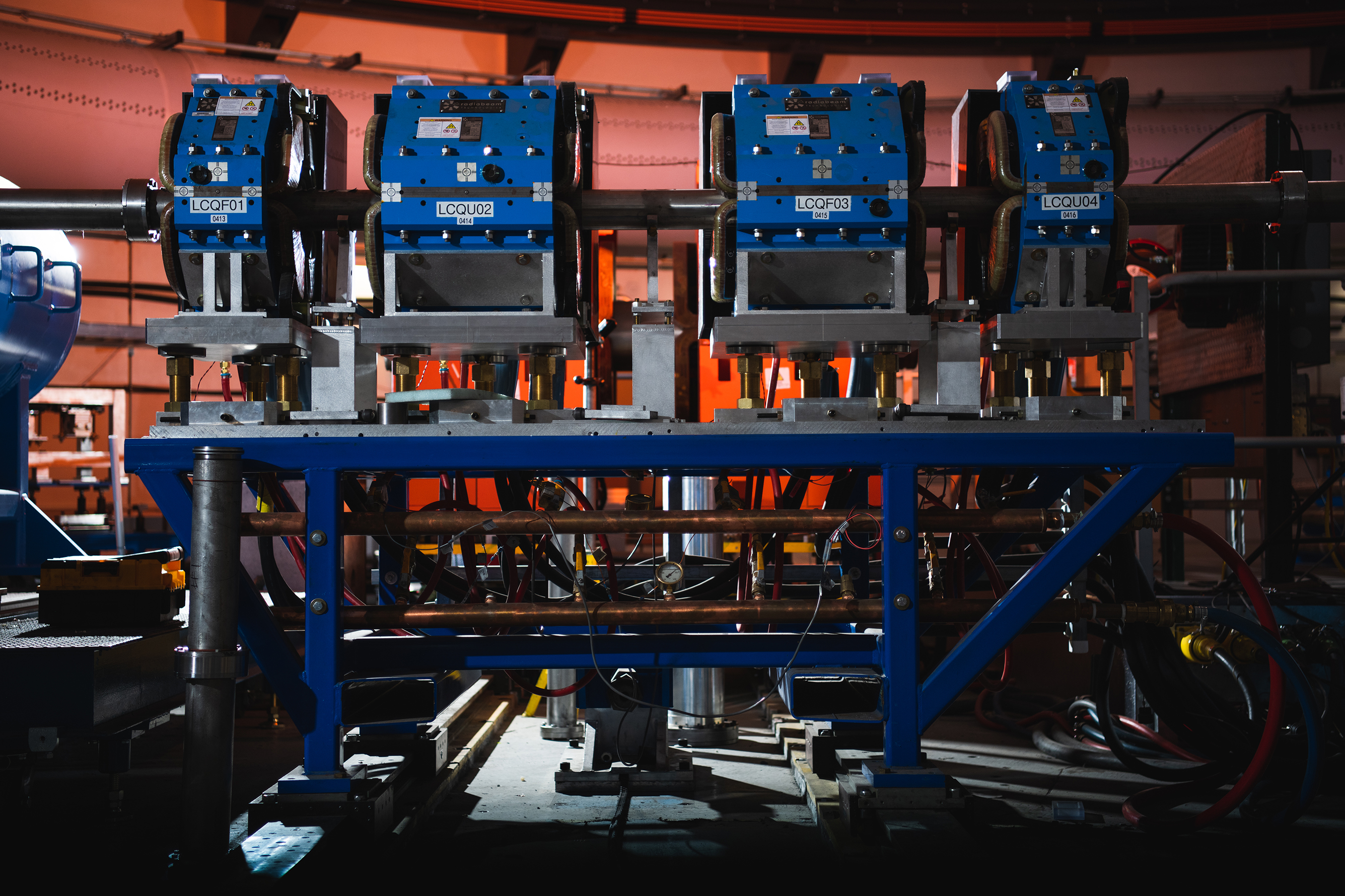
pRad produces quantitative, time-resolved measurements of dynamic systems measurements that cannot be obtained using other radiographic techniques.by combining high-energy proton beams, advanced magnetic optics, and ultrafast imaging systems. These capabilities support scientific discovery, materials research, and national security missions requiring a detailed understanding of material behavior under extreme conditions.
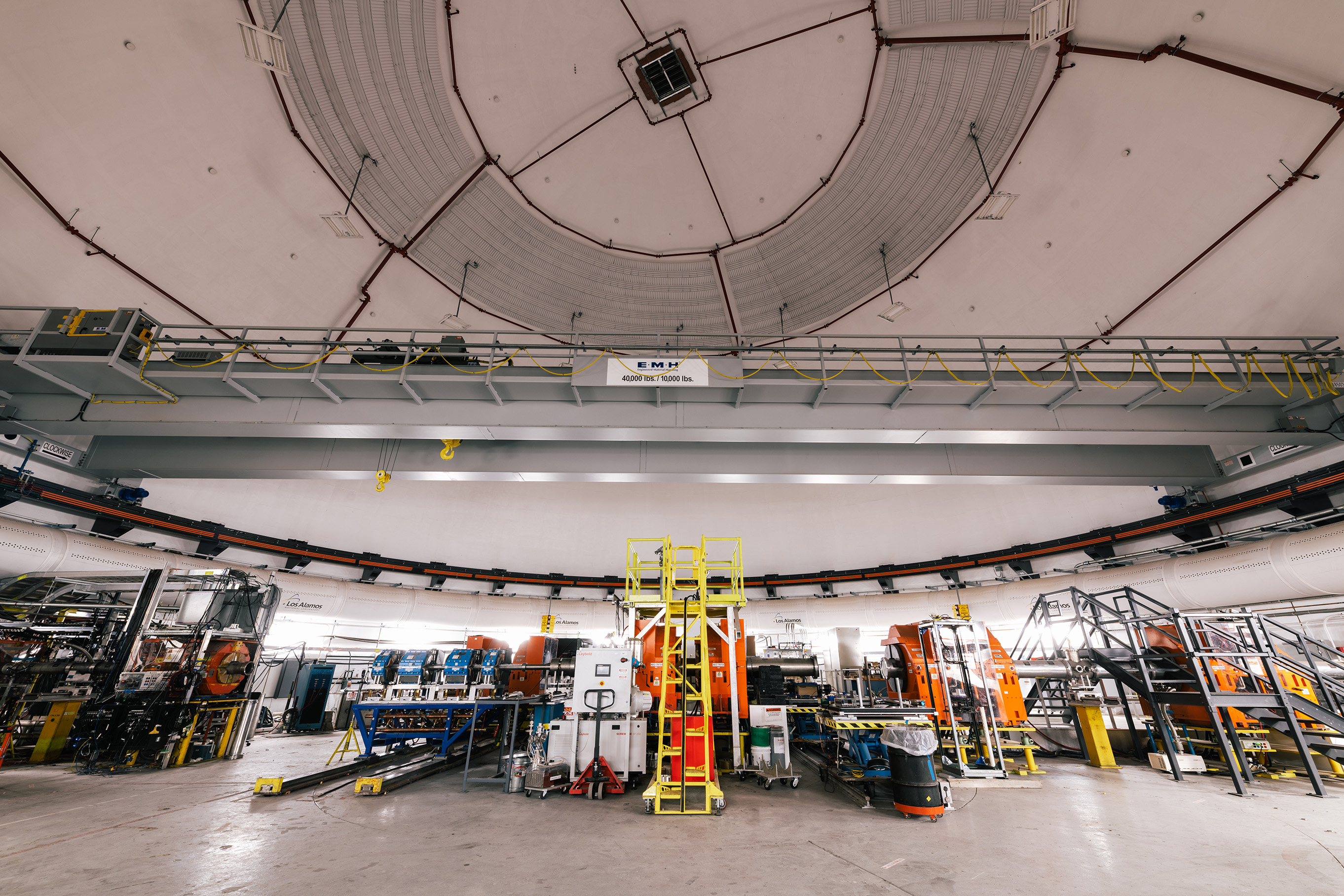
pRad uses 800 MeV protons from the LANSCE accelerator to create time-resolved radiographic “movies” of rapidly changing systems. By recording multiple images within a single experiment, pRad provides quantitative, high-speed measurements of density, material motion, and shock behavior in dynamic loading conditions. .
Because protons penetrate dense objects with minimal attenuation, they provide clear measurements of internal structure even during rapid dynamic events events. Their charge also allows the beam to be guided and focused using magnetic optics, giving proton radiography unique advantages over traditional radiographic techniques.
A key strength of pRad is its ability to produce a rapid series of proton pulses during a single experiment. When combined with multiple high-speed optical imaging systems, these pulses enable the creation of time-resolved radiographic movies containing up to 21 frames. This capability allows researchers to observe shock waves, material deformation, detonation processes, and other fast phenomena in unprecedented detail.
The development of imaging proton radiography is the result of collaboration between national security programs and basic science research at Los Alamos. Today, pRad continues to support the Laboratory’s national security science mission while also enabling advances in fundamental materials science and high-energy-density physics.
The pRad facility has operated as a user facility since 2003 and is now one of three designated DOE user facilities at LANSCE. Each year, a call for proposals invites researchers to design and conduct experiments using the 800-MeV proton beamline. The facility supports both unclassified and classified experiments, depending on program needs.