For a video game enthusiast, it’s a relatable problem. You buy a new game console, but now the games you have for your old console aren’t compatible with your new system. Fortunately for you, game developers have found ways to adapt their games to run on different systems. The process is called porting—translating the software for a new system. The result: You can buy a new version of the game that will run on your new console. The new version of your old game could even have better graphics and more bells and whistles than the old one.
But what if instead of talking about video games, we’re discussing high-performance computer codes used for carrying out specific computational tasks related to national security? Scientists at Los Alamos and Lawrence Livermore national laboratories use the labs’ shared supercomputers to run computer codes that simulate the behavior of nuclear weapons. And, just like game developers, scientists have developed codes to run on specific supercomputer systems. So, when these national labs get new supercomputers, scientists must adapt each code.
“Los Alamos recently launched a focused effort to modernize our weapons codes by adapting them to run on different computer architectures,” says Jimmy Fung, the Lab’s Integrated Physics Codes director.
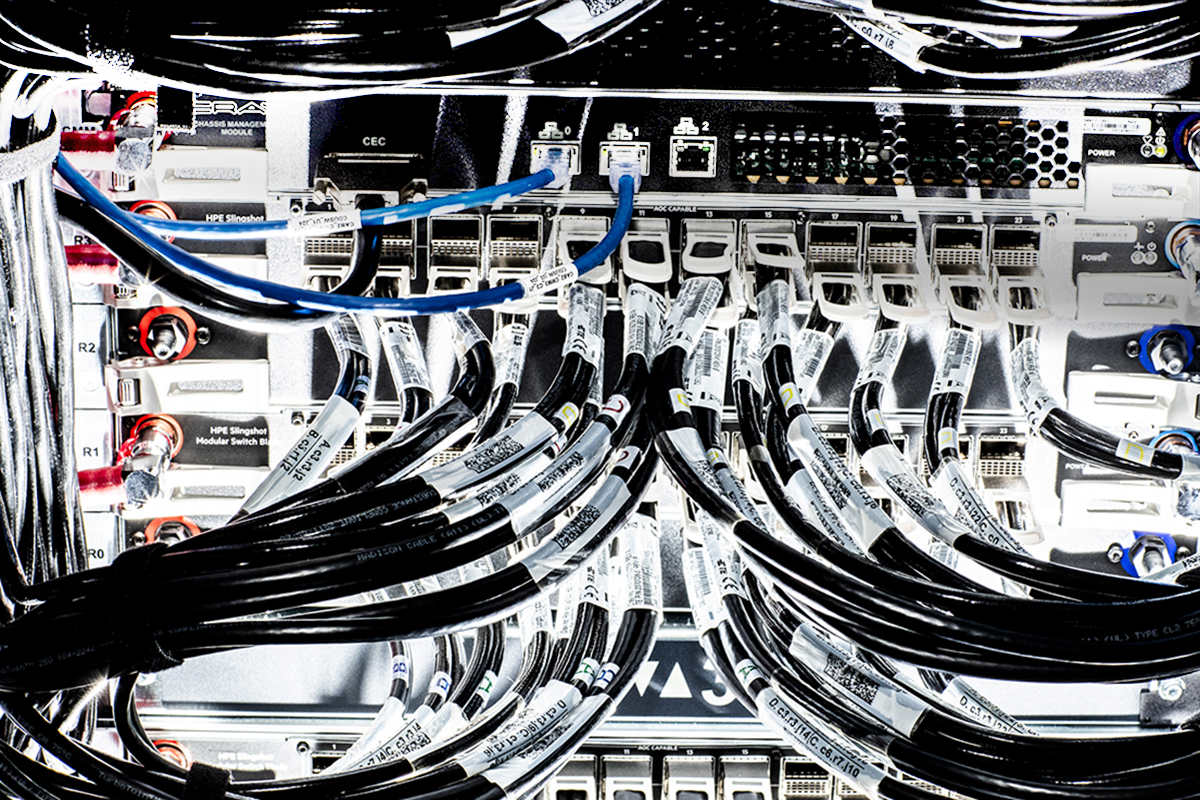
Most of Los Alamos’ weapons codes were originally written for computers with central processing unit (CPU) architectures. But many newer computers, including Los Alamos’ newest supercomputer, Venado, and Livermore’s new exascale computer, El Capitan, use graphics processing units (GPUs). GPUs are specialized processors optimized for parallel data processing. But because CPU and GPU architectures are different, they “speak” different instruction languages—if you try to run a CPU-only program on a GPU, it won’t work; the GPU simply won’t understand, which prompted the need to port the codes to work on GPUs.
“Over the years, these codes have been ported consistently from one supercomputer to another,” says Alan Harrison, Los Alamos Lagrangian Applications Code project leader. “However, the switch to El Capitan is more challenging than most of the previous transitions because El Capitan derives most of its processing power from GPUs.” El Capitan is the fastest supercomputer in the world and can perform a billion billion (quintillion) calculations a second. Using a tool developed at Sandia National Laboratories called Kokkos, Los Alamos scientists are rewriting their codes to take advantage of that speed.
“We have significant development work ahead of us, but we are at a stage where we are starting to see the various pieces come together, and this is an exciting time as we prepare to demonstrate 3D stockpile stewardship simulations on the El Capitan,” says C. J. Solomon, the Eulerian Applications Code project leader at Los Alamos.
The scientists say this work is paving the way for greater flexibility in the future. “Going forward, we must ask ourselves what runs best where and develop codes with modern techniques that are computer architecture agnostic,” Fung says. In the meantime, Fung notes that the modernization efforts will also make it possible to explore artificial intelligence applications with codes and code development. “The bottom line is the Lab’s national security mission. Ensuring that our codes run well on new machines is an important part of that.” ★