Knowledge is one of Los Alamos National Laboratory’s most valuable assets. Protecting that knowledge in all its forms—documents, software, databases, equipment, and more—requires numerous people and processes. Here are just a few of the ways the Laboratory ensures knowledge stays safe.
Classification
Classified material is information that requires a specific degree of protection for reasons of national security. Much of the information at Los Alamos, particularly that related to nuclear weapons, is classified. Derivative classifiers and classification analysts are Lab employees who have been trained to identify and categorize classified information, although protecting classified information is the responsibility of all employees with security clearances. “The Office of Classification and Controlled Information works to ensure that all Lab employees protect information that our adversaries could use to compromise our national security,” says Classification Officer Maria Peña. “We work to review Los Alamos generated documents to prevent disclosure of protected information to unauthorized persons.”
Countersubversion
Subversion refers to deliberate acts of disruption to manufacturing processes, the supply chain, or logistical systems. Countersubversion is the process of monitoring for and detecting possible threats.
“Here at Los Alamos, our countersubversion experts continually have their eyes on our designs, components, and systems, from the earliest design stages all the way through to production, deployment, and retirement,” explains David Dooley, associate Laboratory director for Weapons Production.
At the Lab, the Nuclear Enterprise Assurance (NEA) team uses detection systems to monitor for tampering. As design and manufacturing moves forward, machine operators, inspectors, quality professionals, and managers are trained to detect anomalies and evaluate conditions for potential subversions. The NEA also works with vendors, warehousing, and transportation companies and continually evaluates cyber and technology systems for signs of subversion.
Cyber Assurance
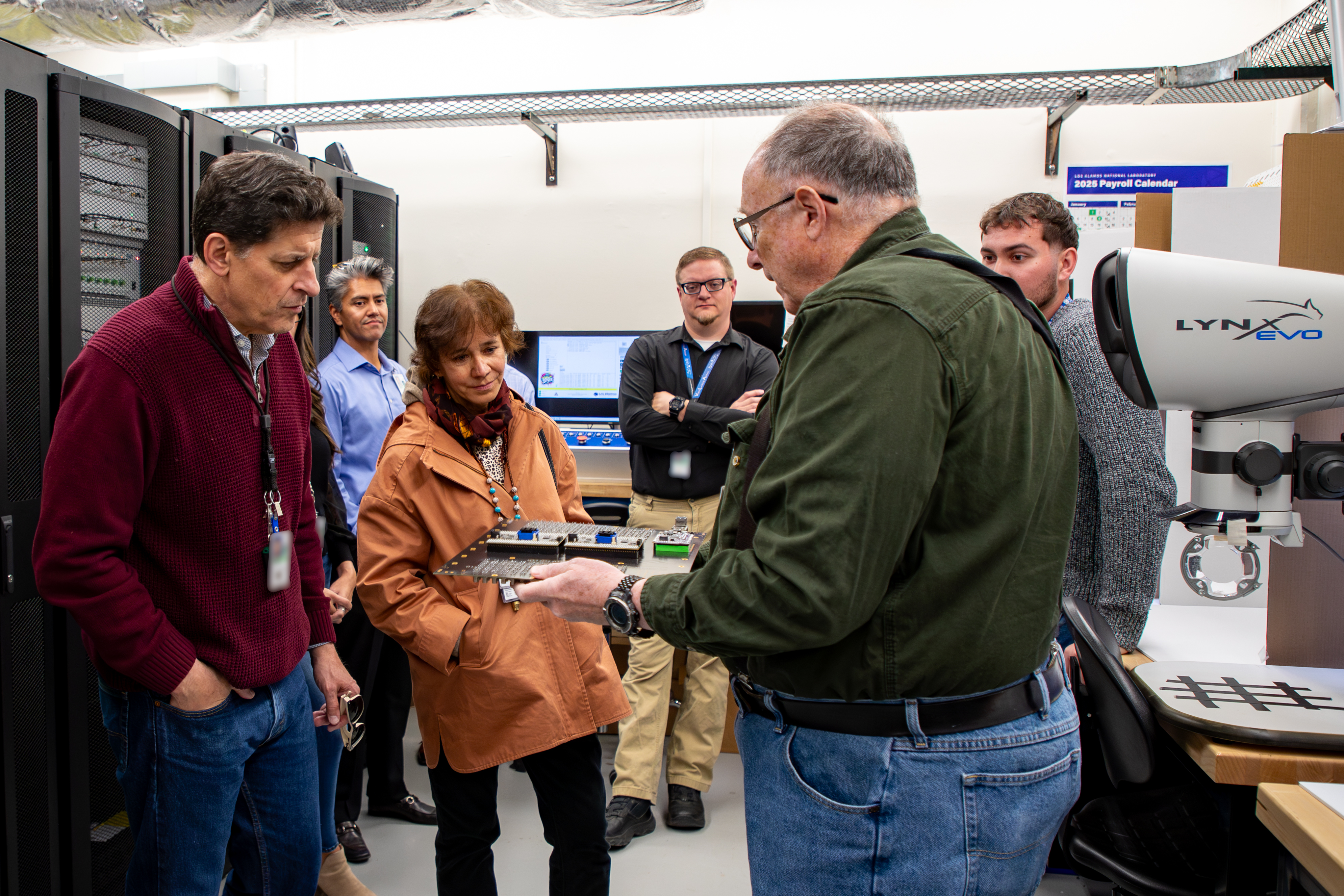
The term cyber assurance refers to monitoring the software tools related to countersubversion. Working in collaboration with the NEA, the Los Alamos Nuclear Weapons Cyber Assurance Laboratory (NWCAL) assesses technology and software used in manufacturing equipment and engineering software tools for potential vulnerabilities.
NWCAL addresses technological and programmatic risks and strengthens the design, engineering, and manufacturing capabilities of the nuclear weapons design, testing, and production infrastructure by identifying and mitigating risks.“This work is critical to the U.S. weapons program because it ensures the integrity, reliability, and security of the digital and physical systems that underpin nuclear deterrence,” says Rich Taylor, leader of the the Weapons Research Services division Secure Networks and Assurance group. “As adversaries develop increasingly sophisticated cyber capabilities, even subtle manipulations of operational technology or engineering software could compromise weapon design fidelity, degrade production quality, or disrupt critical test outcomes. By proactively identifying and mitigating these cyber-physical vulnerabilities, NWCAL plays a vital role in safeguarding the end-to-end lifecycle of nuclear weapons—from concept to deployment, thereby reinforcing strategic stability and national security.” ★