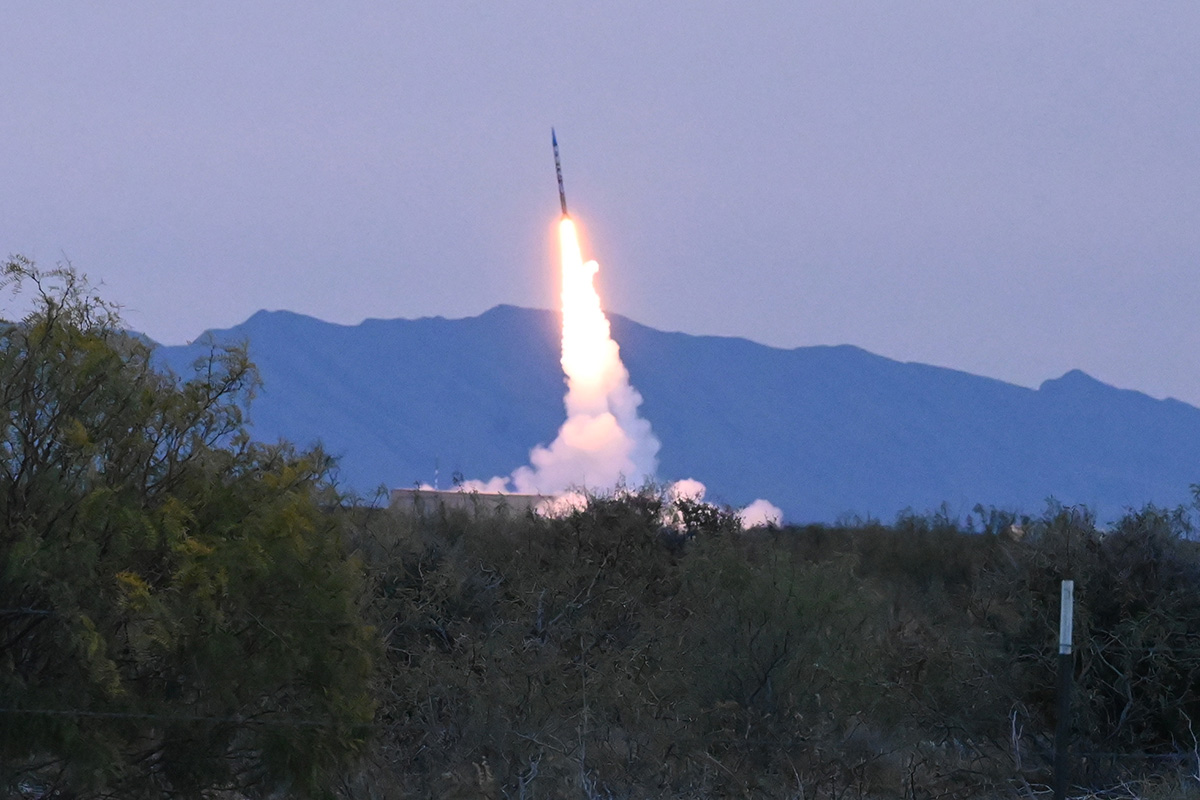
Los Alamos National Laboratory scientists are examining data from a successful suborbital rocket launch. On November 19, 2025, the Laboratory, in conjunction with commercial partner Up Aerospace, conducted the launch at Spaceport America in southern New Mexico. The goal was to test the performance of a new aeroshell featuring a deployable heat shield developed in collaboration with another commercial partner, Redwire Space, assisted by the NASA Ames Research Center, which develops technologies for NASA missions.
The aeroshell is a heat-shield structure designed to protect the payload—the systems and components within the shell—from excessive reentry heating. During ascent, the aeroshell is released from the rocket and deploys its experimental heat shield. After apogee is reached (the highest point in the flight’s trajectory), the systems start their descent back to Earth. The heat shield slows the descent of the deployed payload by using a folded metal structure that opens like an umbrella. This ensures that the payload can survive the drop, which can reach speeds greater than 2,000 miles per hour.
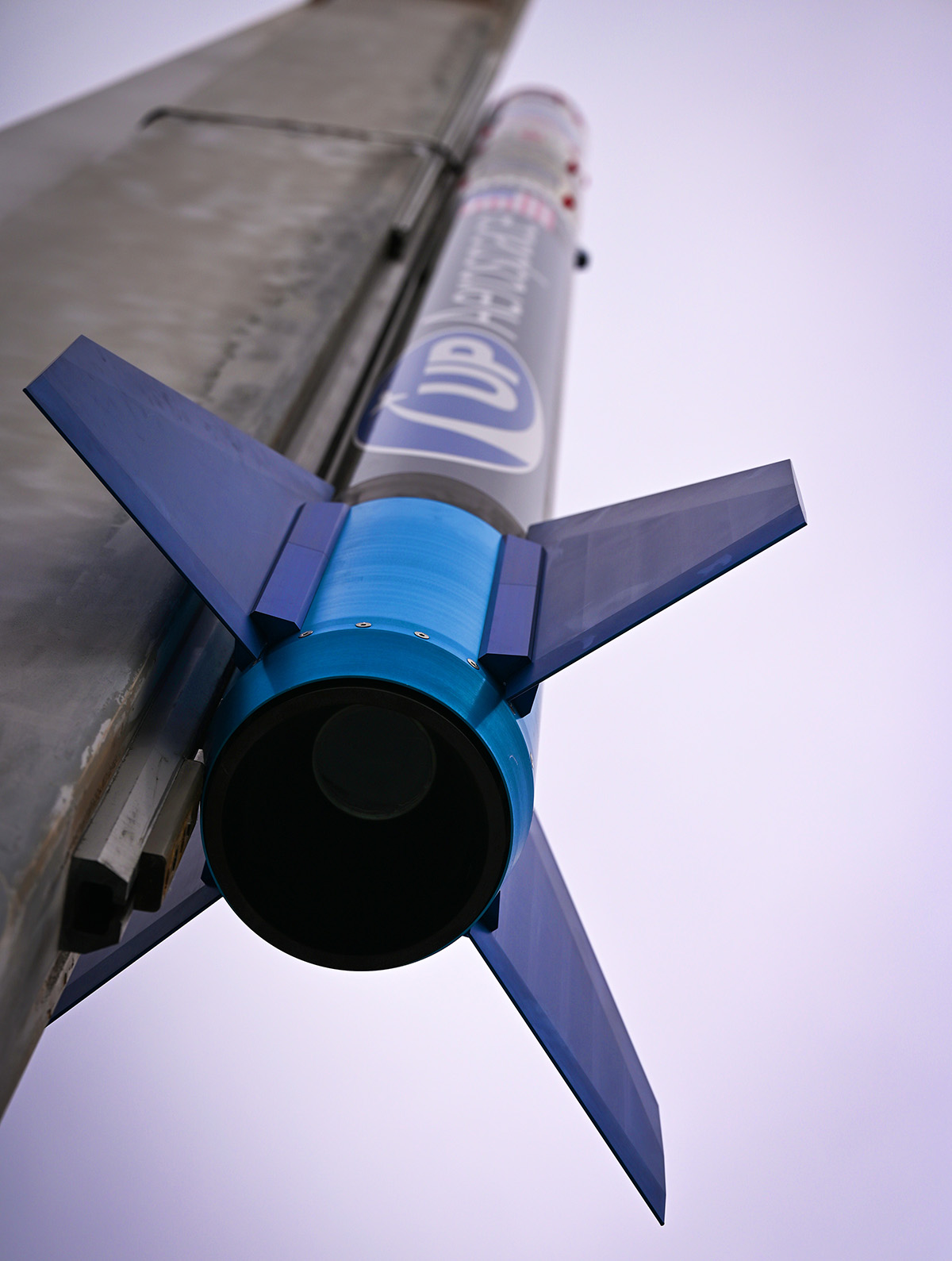
Up Aerospace developed the rocket that transported the experimental heat shield into space. The SpaceLoft-XL 18 rocket is a suborbital research rocket designed to carry scientific instruments or experimental payloads into the upper atmosphere or near space for a short-duration mission—typically just a few minutes—before returning to Earth. During the November launch, the rocket soared to a height of approximately 72 miles above the Earth. Cameras and monitoring systems on the heat shield captured data during the 11-minute flight.
Approximately 200 people witnessed the launch, and then the recovery team departed to retrieve the aeroshell and the pieces of the rocket from White Sands Missile Range. Scientists say the recovered aeroshell did not have significant damage, thanks to its slowed descent from the folded origami-inspired design.
This launch represents the sixth flight test in a series of launches conducted in New Mexico since 2021. “We’re able to test sensors and new experiments with these rapid launches that can take place approximately every six months instead of traditional rocket launches, which are much more expensive and can only be conducted once every few years,” says project lead Jim Wren.
Los Alamos engineer Justin McGlown praised the many partners that made the launch possible. “All the things that are required to survive the actual flight environment are hard to recreate without a flight environment. Now that we have these commercial rocket companies providing us frequent affordable flights, it's just much faster to build something, instrument it, fly it, and test it, and then iterate and improve.”
Spaceport America, where the launch took place, is a state-owned, commercial launch and flight-testing facility that enables both private spaceflight (like Virgin Galactic’s tourism missions), federally sponsored rocket testing, aerospace research, and other industry and government testing. Up Aerospace maintains a launch complex and payload processing center at the Spaceport.
“New Mexico is a great place to launch rockets,” says engineer Jordan Shoemaker. “It’s great to be able to just drive a few hours down from Los Alamos to Spaceport America and White Sands Missile Range. These launches provide a fantastic economic opportunity for our state while reducing testing costs and increasing how rapidly we can execute these experiments.” ★