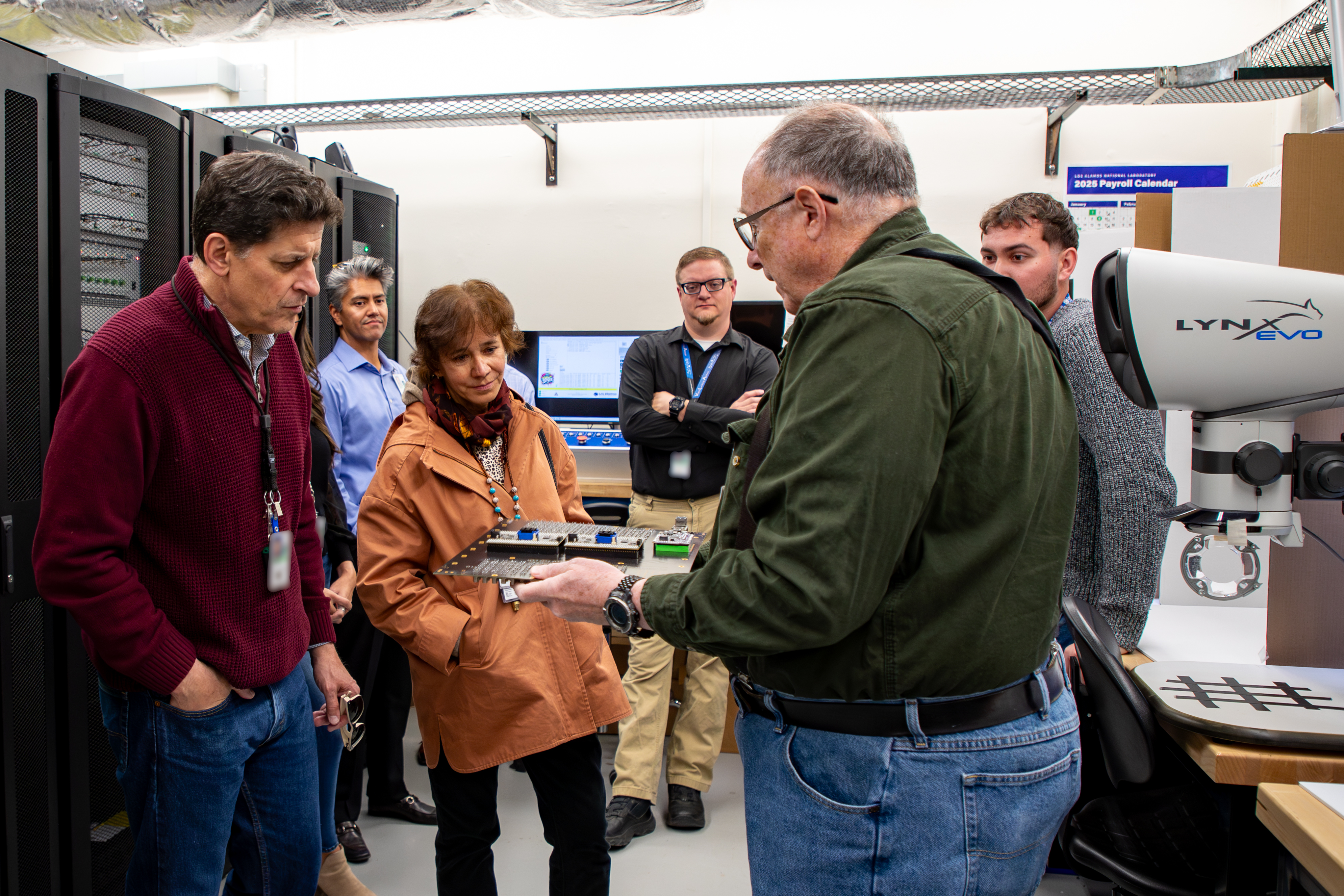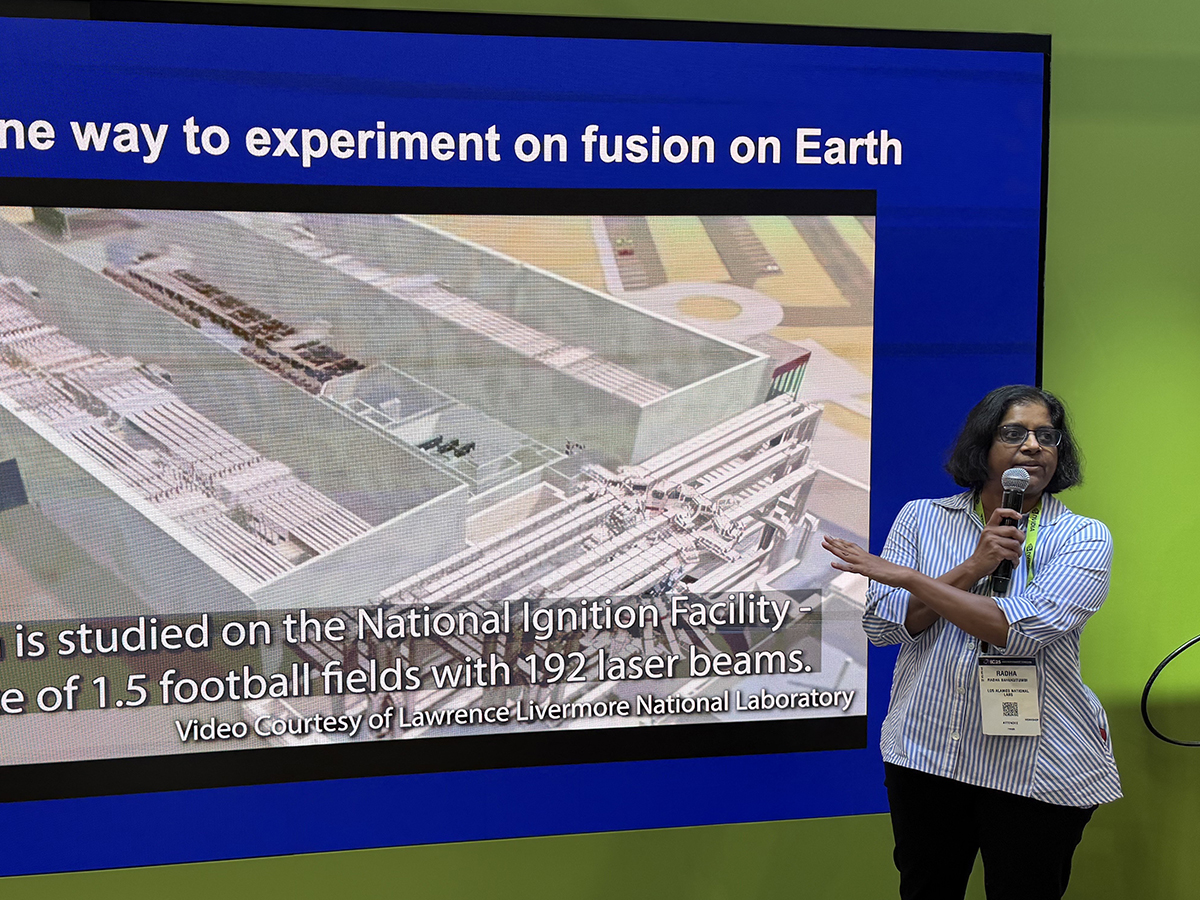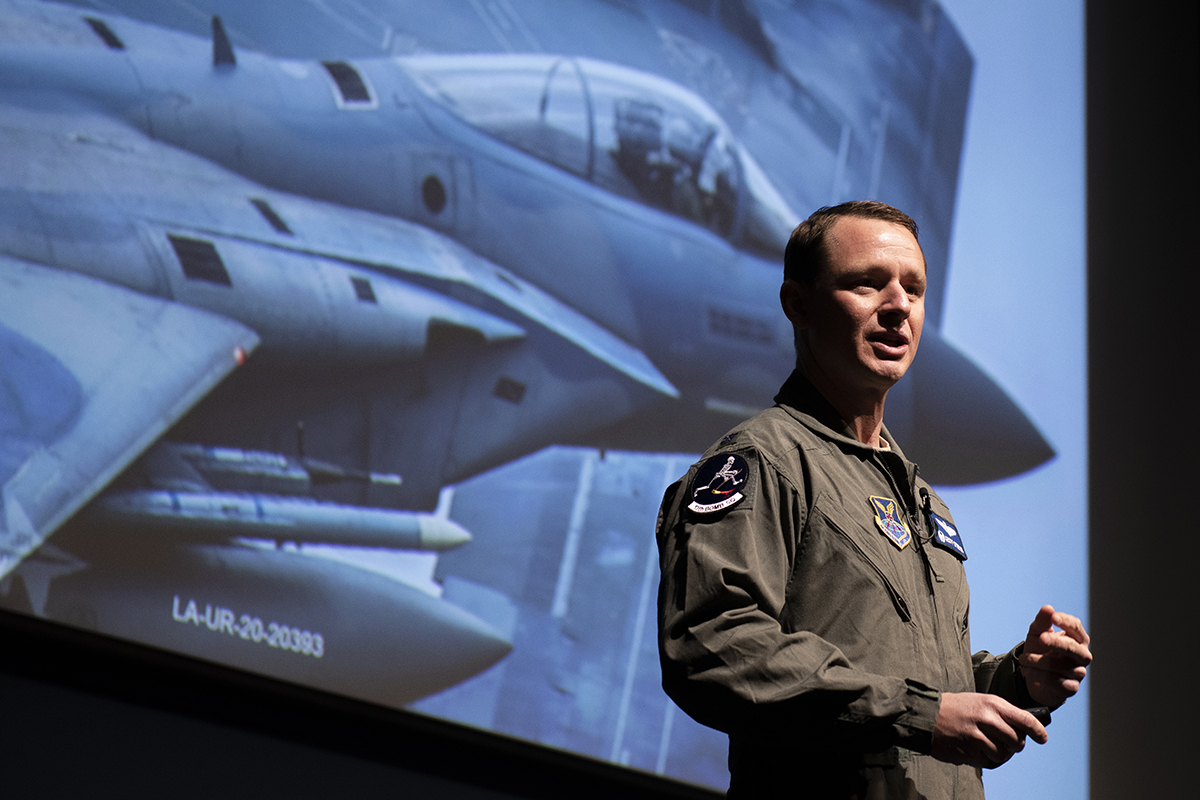
Every year since 2004, Los Alamos National Laboratory has hosted one or two members of the U.S. Air Force for yearlong fellowships. The Air Force Fellow program is a chance for mid-career officers, many of whom work in roles related to nuclear weapons, to learn from the scientists and engineers who design and maintain these weapons.
But what do fellows do after their time at Los Alamos ends? Sometimes, they return to work at the Laboratory, as former Air Force fellows Mike Port and Geoff Steeves have.
Port first came to Los Alamos as the senior Air Force Fellow from 2010 to 2011. At the time, he was a lieutenant colonel who served as a missile launch and nuclear operations officer. “Everybody was so welcoming and inquisitive about what I did in the Air Force and what the Air Force was like,” Port recalls. “I looked forward to coming to work every single day because I knew I was going to learn something new and also because I was working among the smartest people on the planet, and they were all so down to Earth.”
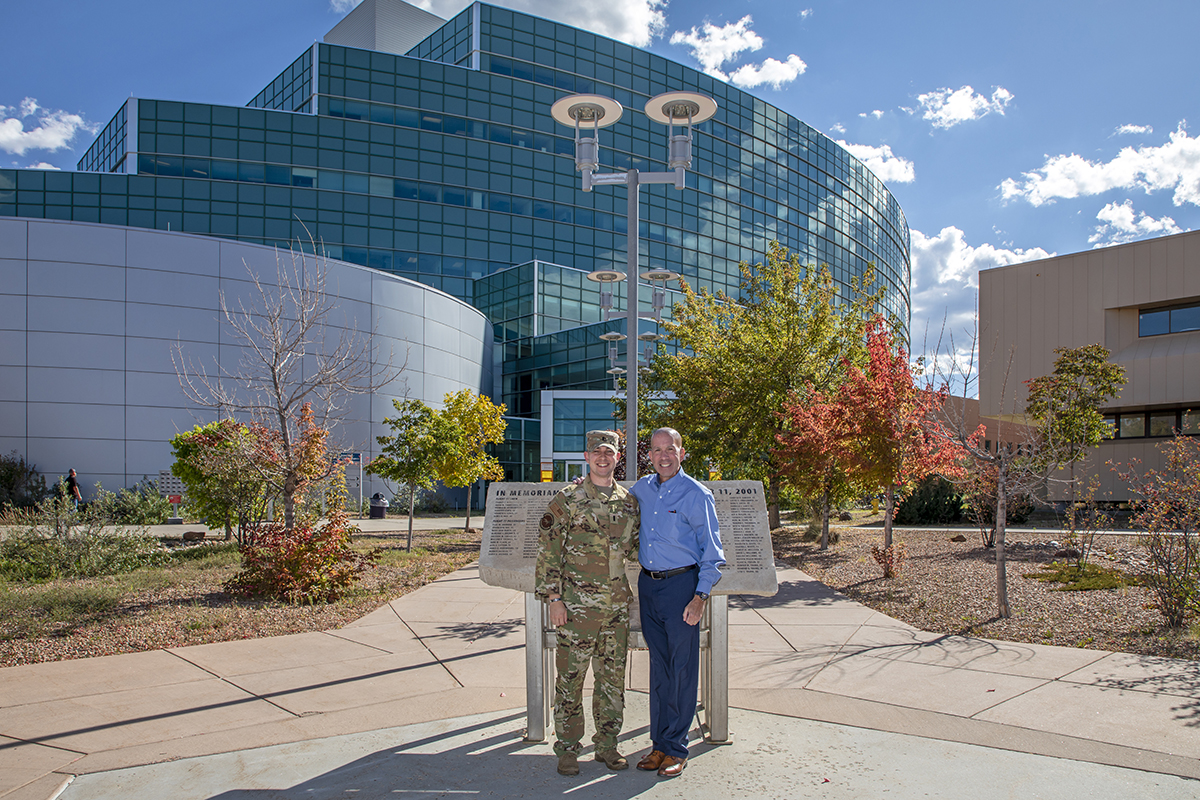
After his fellowship, Port relocated to Albuquerque, New Mexico, where he led a team in the Air Force Inspection Agency, which provides, among other things, an independent perspective on aspects of the Air Force’s readiness. He later accepted a position at Barksdale Air Force Base in Louisiana and served as a leader in intercontinental ballistic missile operations and in cyber and nuclear command and control.
Port retired from the Air Force at the rank of colonel and spent two years as a high school Junior Reserve Officer Training Corps instructor before being recruited by Los Alamos to work in the Weapons program. Today, Port has returned to Barksdale not as an airman but as a Los Alamos employee, representing the Laboratory as its liaison to Air Force Global Strike Command, which is responsible for the Air Force’s nuclear deterrent.
Steeves was an Air Force Fellow at Los Alamos from 2019 to 2020. Prior to coming to the Laboratory as a lieutenant colonel, Steeves had served in both operational roles (as a B-2 pilot and instructor) and as a leader (he was deputy division chief of the United States Forces Korea in Seoul and commander of the 13th Bomb Squadron at Whiteman Air Force Base in Missouri, among other positions).
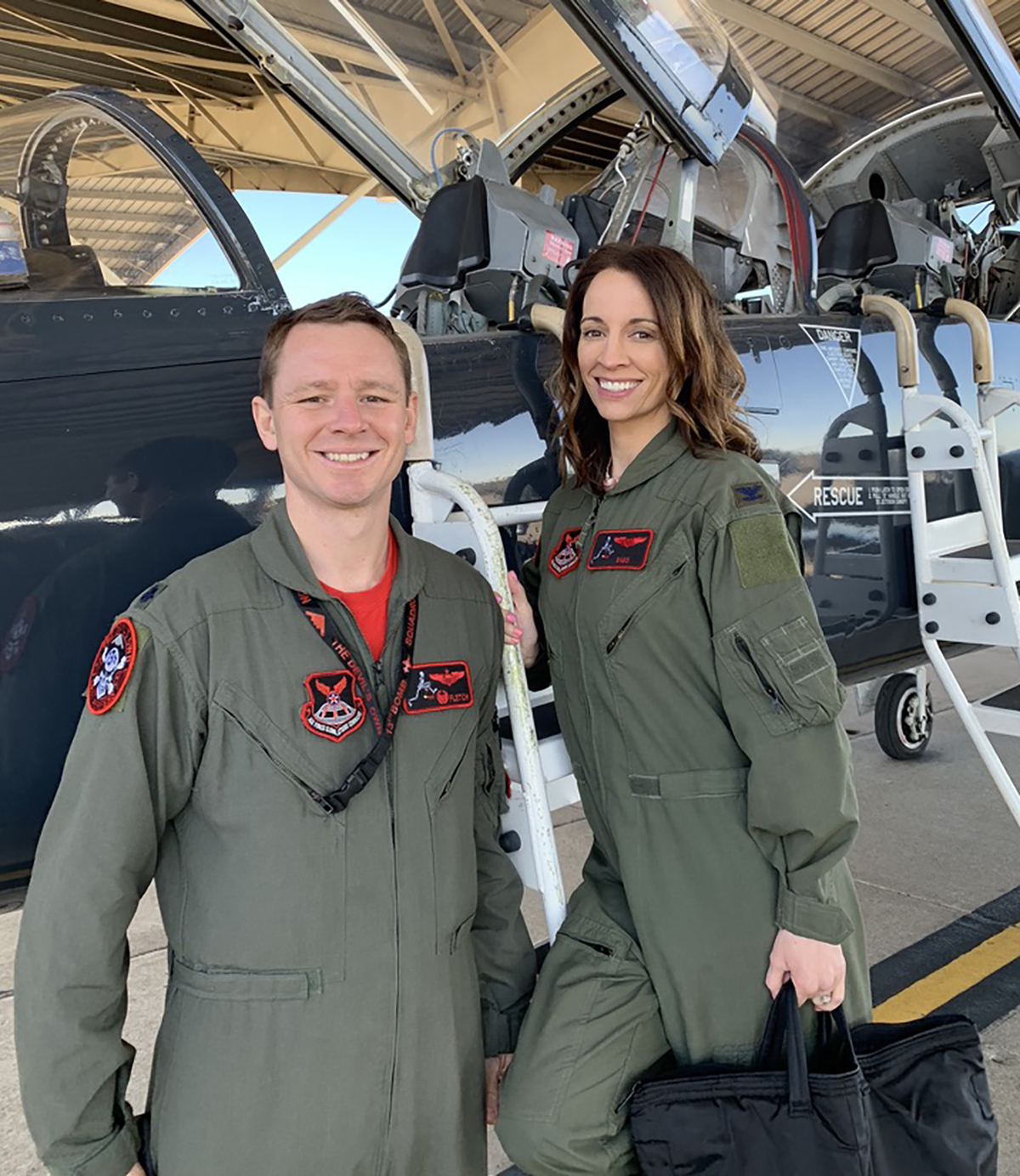
After his fellowship, Steeves held several leadership roles in the Air Force, including as leader of a team tasked with advancing aspects of the Air Force’s long-term strategy at the Pentagon, deputy director of the Air Force’s COVID response team, and commander of the B-2 bomber’s 509th Operations Group. “The things I learned during my year as a fellow were extremely valuable,” Steeves says. “I was able to return to the Air Force and remind airmen of the partnership between the departments of Defense and Energy. A vast team of talented people in Los Alamos are uniquely devoted to making sure that our warfighters are successful.”
On leaving the Air Force in 2024 at the rank of colonel, Steeves returned to Los Alamos as an executive advisor in the Center for National Security and International Studies. In this role, he advises Laboratory leadership on the policy implications of world events and educates members of the military on Los Alamos’ work. “The key point I emphasize to our military partners is that Los Alamos is not only a nuclear laboratory, but a comprehensive laboratory with a broad mission,” he says. “The Laboratory touches nearly all aspects of national security.”
Steeves and Port both cite their exposure to the breadth of the Laboratory’s work as vital to the trajectory of their careers. “What I tell new Air Force Fellows is, definitely learn about weapons systems and what the Lab’s Weapons Program does,” Port says. “But I also say, expand your horizons. Don’t stay in your office. Get out and meet people and learn about different programs, because trust me, you’ll use that knowledge later in your career”—perhaps even in returning to Los Alamos one day. ★