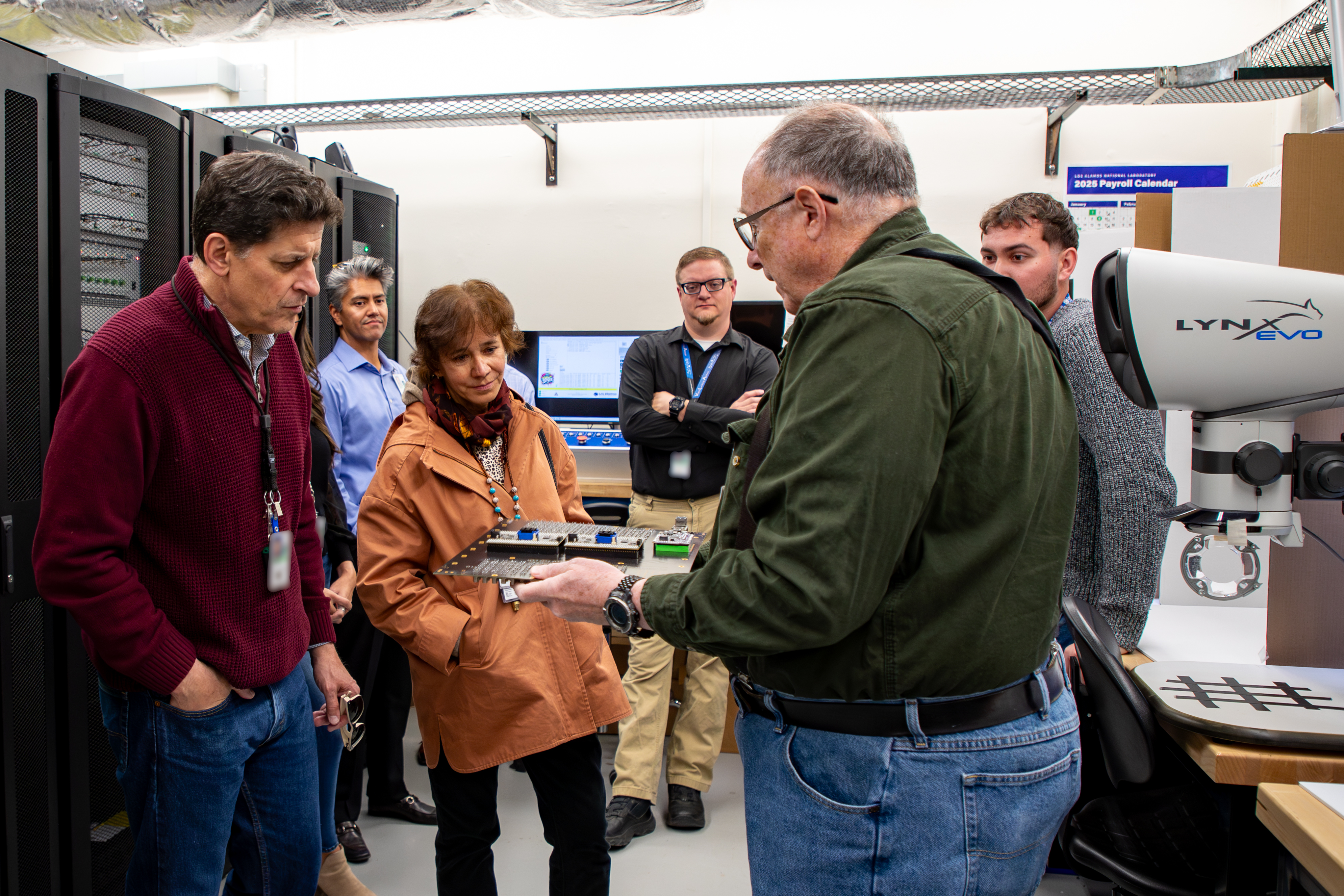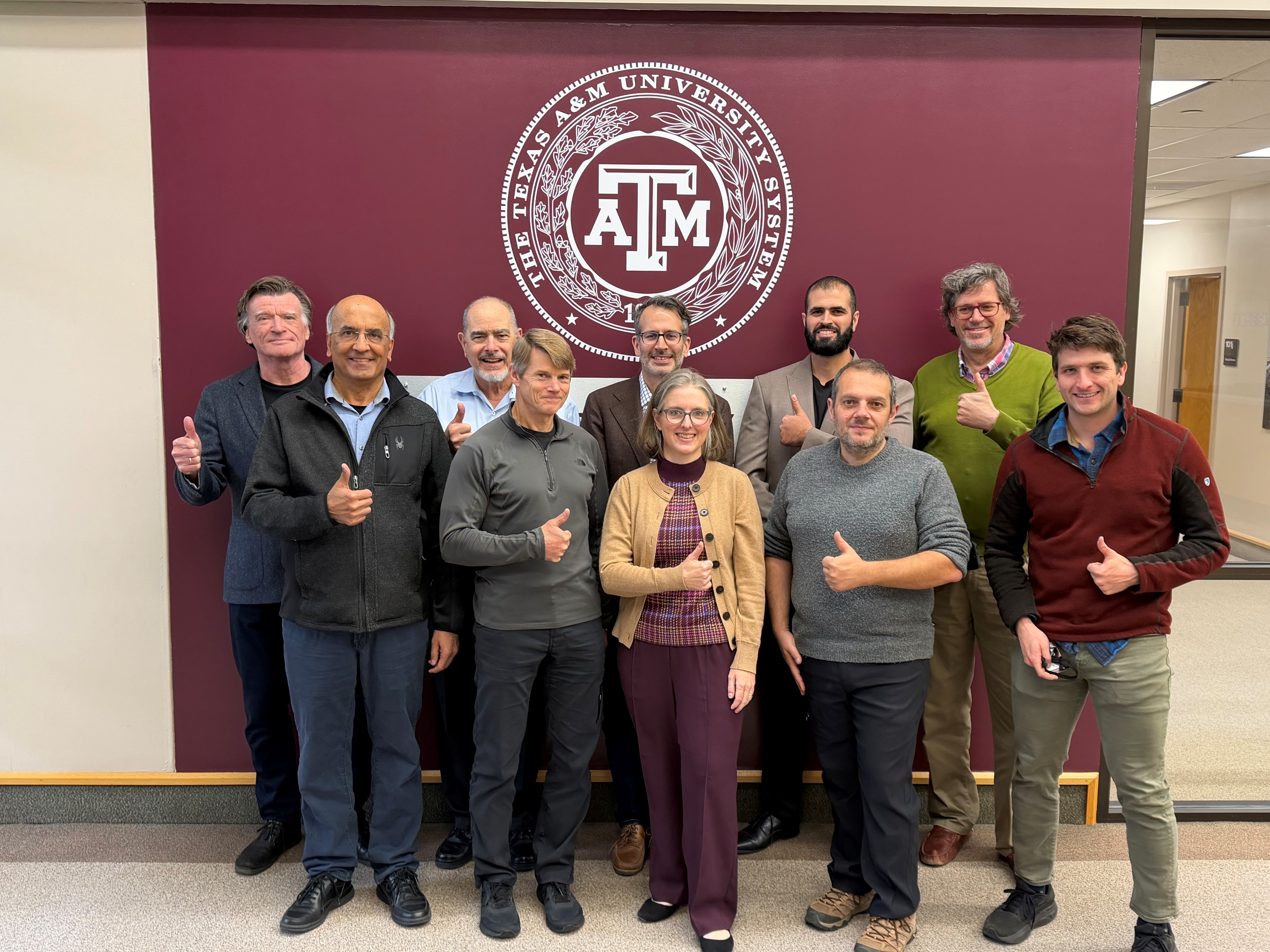
The saying goes that “two heads are better than one.” By that logic, many heads working together can address some of the world’s most complex challenges. That’s the idea behind the Joint Center for Resilient National Security (JCRNS), which was founded in November 2020.
A collaboration between Los Alamos National Laboratory and the Texas A&M University System, JCRNS develops teams of university faculty—known as JCRNS Fellows—and Los Alamos researchers to collaboratively build capabilities for addressing rapidly evolving global threats. The center’s mission is to cultivate, among select U.S. university faculty, capabilities that have high impact on national security; to enhance and transfer that knowledge within the nuclear security enterprise; and to apply it in support of Los Alamos’ broader national security missions.
To date, JCRNS Fellows represent Texas A&M, the University of Michigan, North Carolina State University, West Virginia University, and the University of New Mexico. “JCRNS Fellows are sought out across the United States for their specific relevant and significant expertise and for their desire to work on nuclear security–related problems,” explains JCRNS co-chair Jim Morel. “Being a JCRNS Fellow is a title granted with the expectation that the Fellows will continue to contribute, as appropriate, on problems requiring their specific expertise as long as they are willing and able to do so.”
Each Fellow participates in high-quality, publishable research relevant to stockpile stewardship. Research topics have included high-energy-density laboratory physics, radiation hydrodynamics, time-dependent neutronics, and shock physics. Recent topics, such as hypersonics and high explosives, reflect the evolving needs of the mission. “Fellows work closely with key Los Alamos staff, forming teams with the unique expertise required to address these problems,” Morel says. “This collective expertise does not exist in either academia or at Los Alamos alone, so collaboration is essential.”
So far, the collaboration is yielding results. “Through previous and ongoing research,” Morel notes, “JCRNS is already impacting national security decision-making, and thus nuclear security policy.” ★