In the critical hours after a nuclear accident, first responders face high-stakes decisions—and without fast, accurate radiation detection tools, rapidly identifying the nature of radiation hazards remains a serious challenge. Whereas many non-actinide isotopes can be best identified using portable gamma and beta spectrometers (e.g., fission products such as iodine-131 and cesium-137), there is no comparable method available for detecting the alpha signatures of actinides in the field. Actinides such as uranium, plutonium, americium, and curium are primarily alpha emitters, and their alpha emission signatures are fingerprints of each actinide isotope.
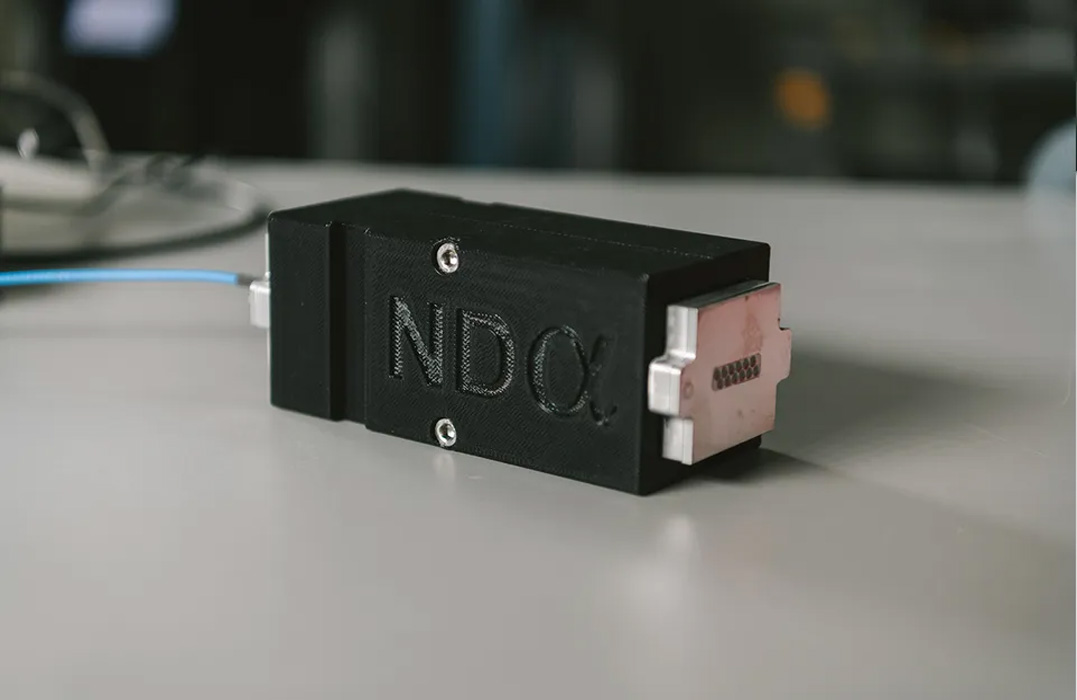
Although alpha spectroscopy is a very sensitive technique—capable of detecting sources at the nanogram scale—it has traditionally been confined to a laboratory environment due to its sample preparation requirements. Los Alamos National Laboratory scientists decided to reevaluate this approach—with the aim of producing a compact, lightweight instrument and eliminating sample preparation, they recently developed the Nondestructive Alpha (ND-Alpha) spectrometer, the world’s first alpha spectrometer for “point and shoot” use (Fig. 1).
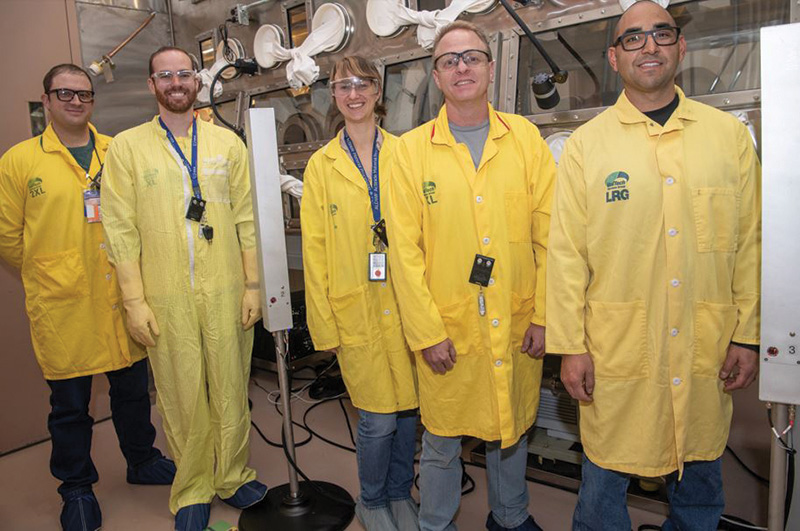
The ND-Alpha team consists of Mark Croce (PI), Katherine Schreiber, Daniel McNeel, Rico Schoenemann, Emily Stark, Jacob Ward, Matthew Carpenter, Istvan Robel, and Hye Young Lee. Croce explains how they developed the instrument: “I think the breakthrough came when we considered the problem of alpha spectroscopy from a different angle. So, the scientific question we had was: How do we make the most of an alpha spectroscopy signature from unprepared materials?”
These “unprepared materials” could include complex mixtures of in situ nuclear waste or fallout debris from a nuclear accident. Croce continues, “A lot of the work in alpha spectroscopy has been about making really nice samples. Essentially, to make a field-deployable instrument, folks have tried to make a laboratory in a box where you can do some of the same techniques and make high quality samples, which is hard to do in real-world conditions.”
“I think the breakthrough came when we considered the problem of alpha spectroscopy from a different angle.” – Mark Croce, NEN-1.
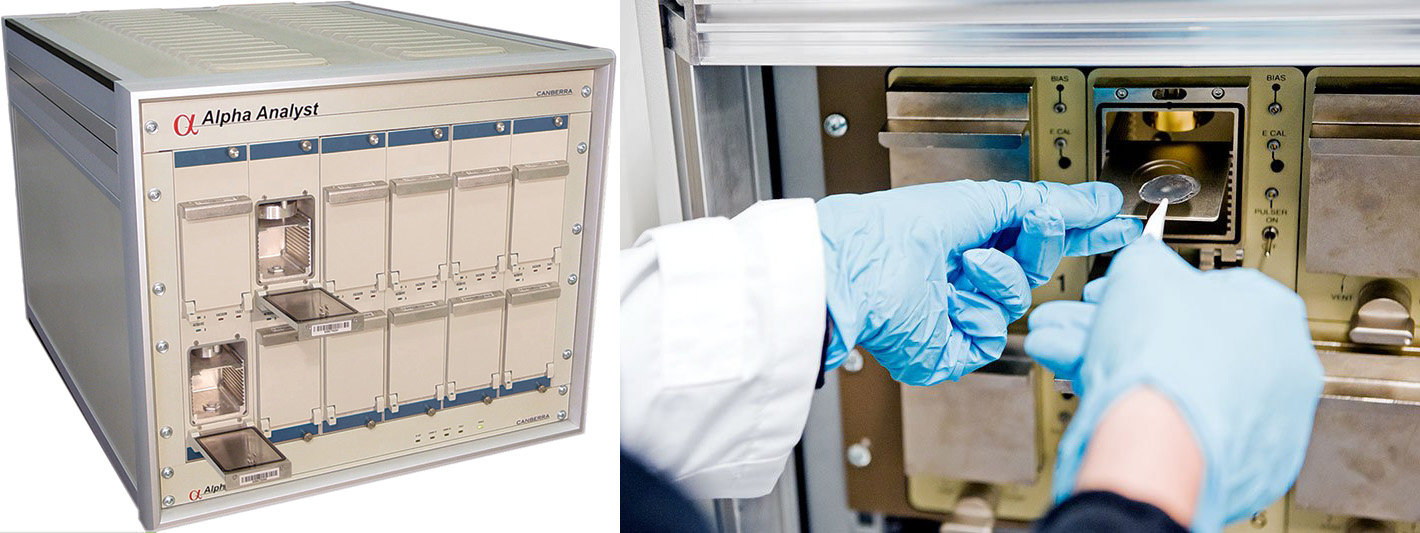
Because alpha particles have a short penetration range, samples often need to be prepared as a thin layer to minimize energy loss and allow precise measurements (Fig. 2: a traditional benchtop alpha spectrometer works by measuring the alpha emission spectrum from a prepared sample placed in a vacuum chamber). Croce says, “We considered the problem the other way, where you just accept that you have terrible alpha samples: they're dirty, they're thick. So, they attenuate the alpha radiation—but what can you do with that?”
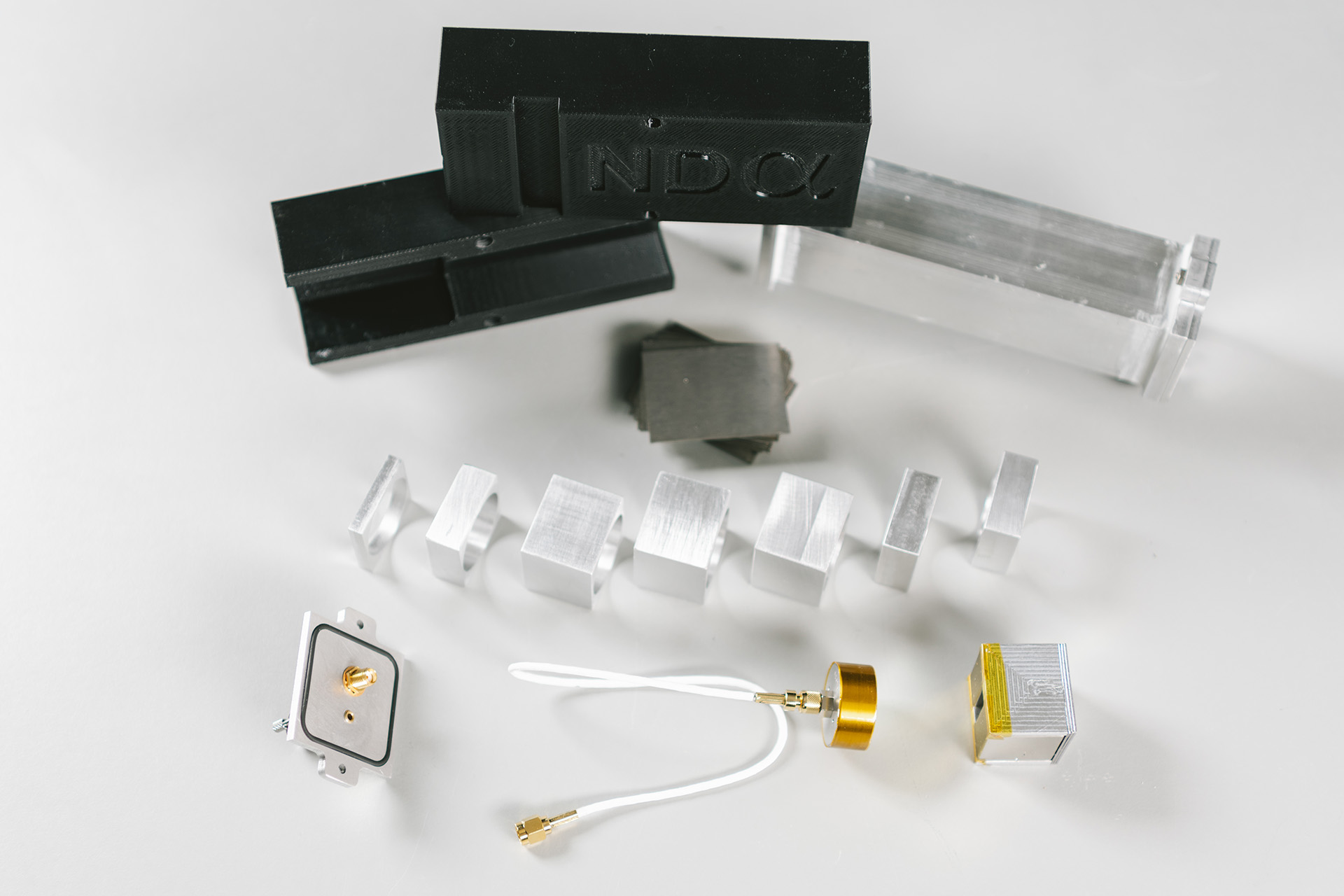
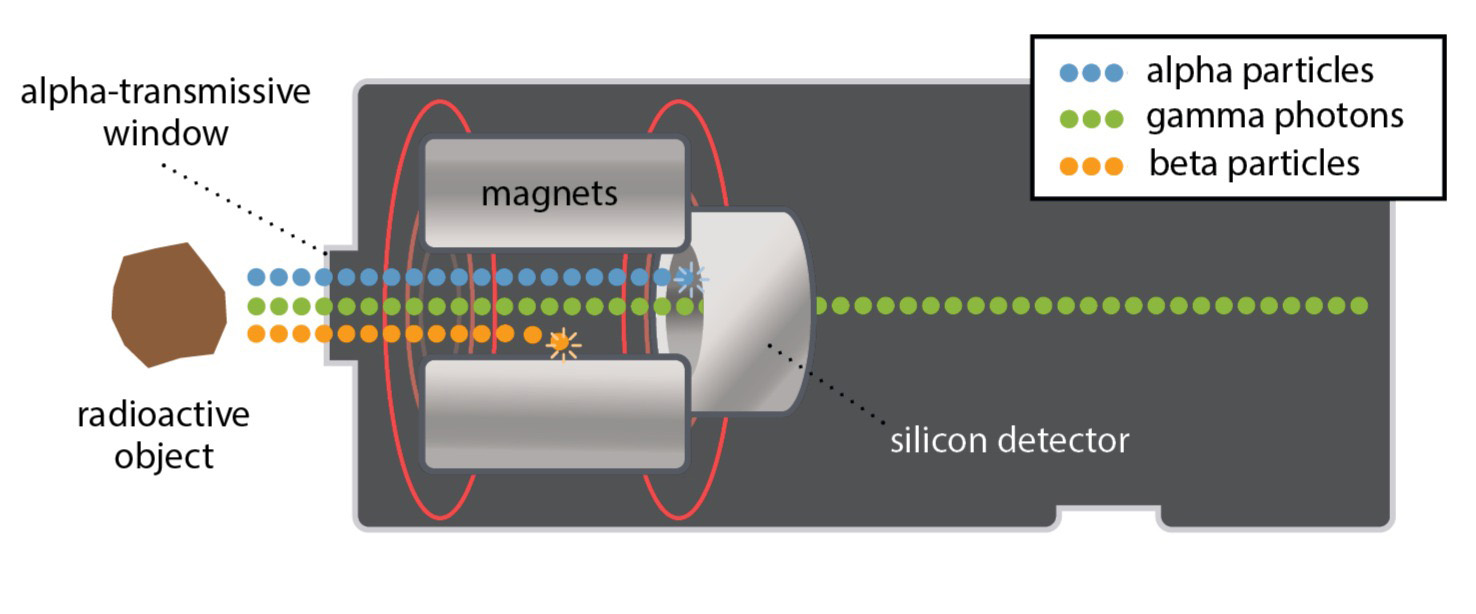
What the team did was build an instrument with three key components (Fig. 3):
- A thin alpha-transmissive window that allowed them to keep the sample outside of the vacuum detection chamber, making contactless detection possible, essential for contaminated or hazardous samples (the sample still needs to be within 2 mm, however). The window is approximately 2.5 µm thick (about 1/20th the thickness of a single human hair), enough to maintain vacuum around the sensitive detector while also permitting alpha particles to pass through with minimal energy loss—only about 300 keV for a 5 MeV alpha particle, preserving most of the particle's original energy.
- A magnetic filter which enables the instrument to be pointed directly at something as intensely radioactive as spent nuclear fuel, containing mixtures of fission products that emit beta radiation. The magnetic field traps beta radiation, which could otherwise swamp the detector. Filtering of gamma radiation meanwhile occurs naturally because of the inherent insensitivity of the thin silicon detector to gamma rays.
- Algorithms, known as alpha endpoint analysis, which allow calculation of characteristic alpha energy maxima (“endpoints”) and filtering of background noise. This innovation is essential for handling low-quality alpha samples—such as those that are thick, uneven, or affected by variable attenuation from air, dust, or protective films—which can broaden spectral features or obscure alpha peaks.
With this pragmatic design, Croce says that “We're not trying to get nice peaks. We're just trying to determine the maximum energy associated with an alpha particle.” This works because accurately measured maxima give enough vital information to identify actinides uranium, plutonium, americium, and curium.
Most current field instruments for actinides are based on gamma-ray spectroscopy, which has significantly lower sensitivity to alpha-emitting radionuclides. For example, with plutonium-239, 100% of decays emit alpha particles but only 0.006% emit the 129 keV gamma ray. As a result, gamma spectrometers are much less effective for detecting actinides unless gamma emissions are abundant (e.g., with large volumes of radioactive material or in select gamma-emitting isotopes such as americium-241). Although portable alpha-beta contamination monitors are available commercially, they are designed to give a general measurement of radiation levels but are not spectroscopic and do not distinguish uranium from plutonium. The handheld ND-Alpha instrument—a 2024 R&D 100 winner—meanwhile operates in a “point-and-shoot” mode, ideal for rapid surveys in field operations such as in nuclear emergency-response scenarios. All of the components are either commercially available or inexpensive and simple to produce, and the team currently has a provisional patent in progress.
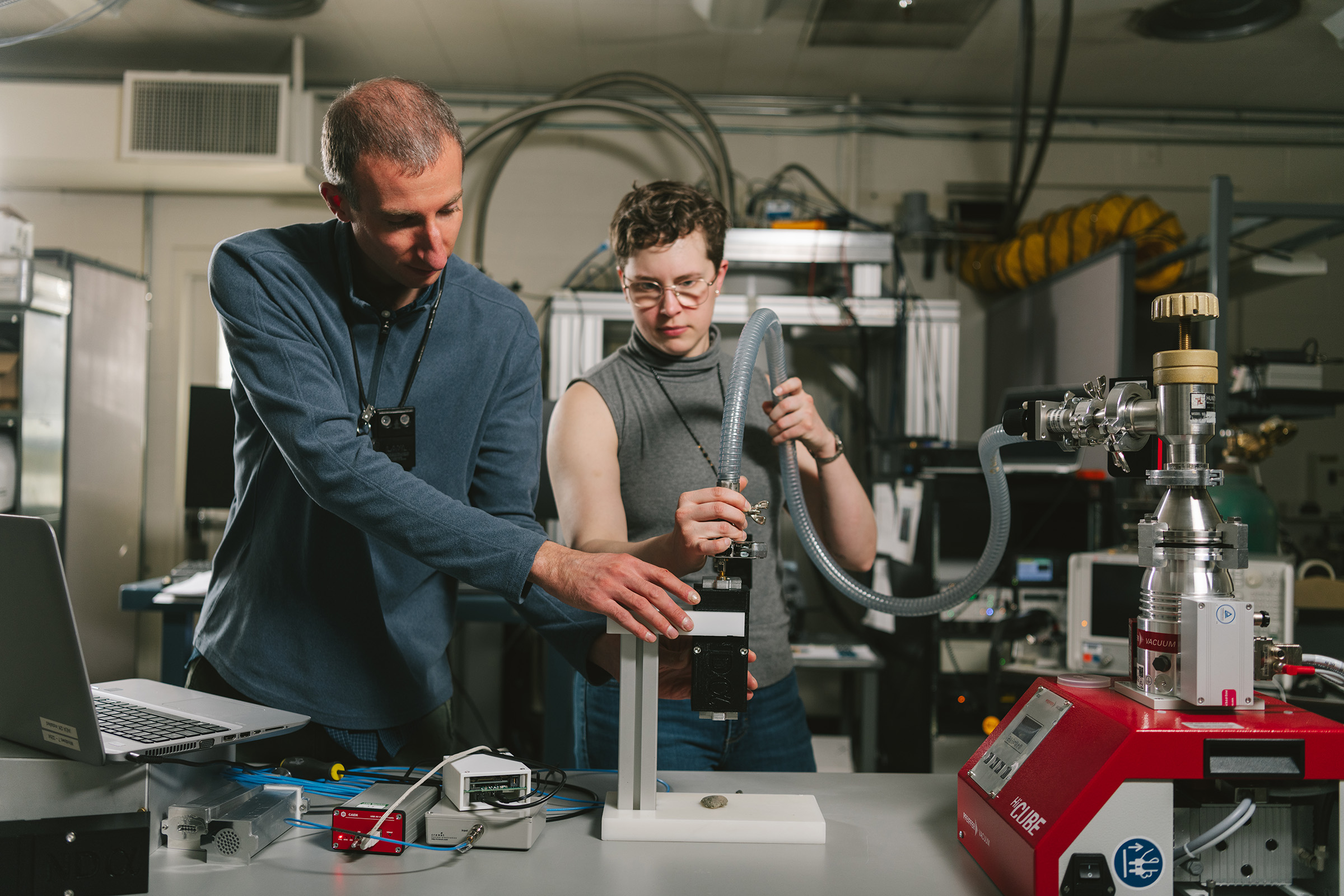
Croce says that they are now looking to extend ND-Alpha to other applications: “We've considered molten salt reactor safeguards, and this could actually be used as an inspection tool. A sample of a fuel salt could be extracted and put in front of the detector to verify the fissile material content of the fuel.” Actinides present in these salts could include thorium, uranium, and plutonium along with minor species neptunium, americium, and curium. Croce adds, “I don't know of any other passive nondestructive technique that would be so easily implemented and give you that sensitivity to the fissile content—which is really the safeguards concern.”
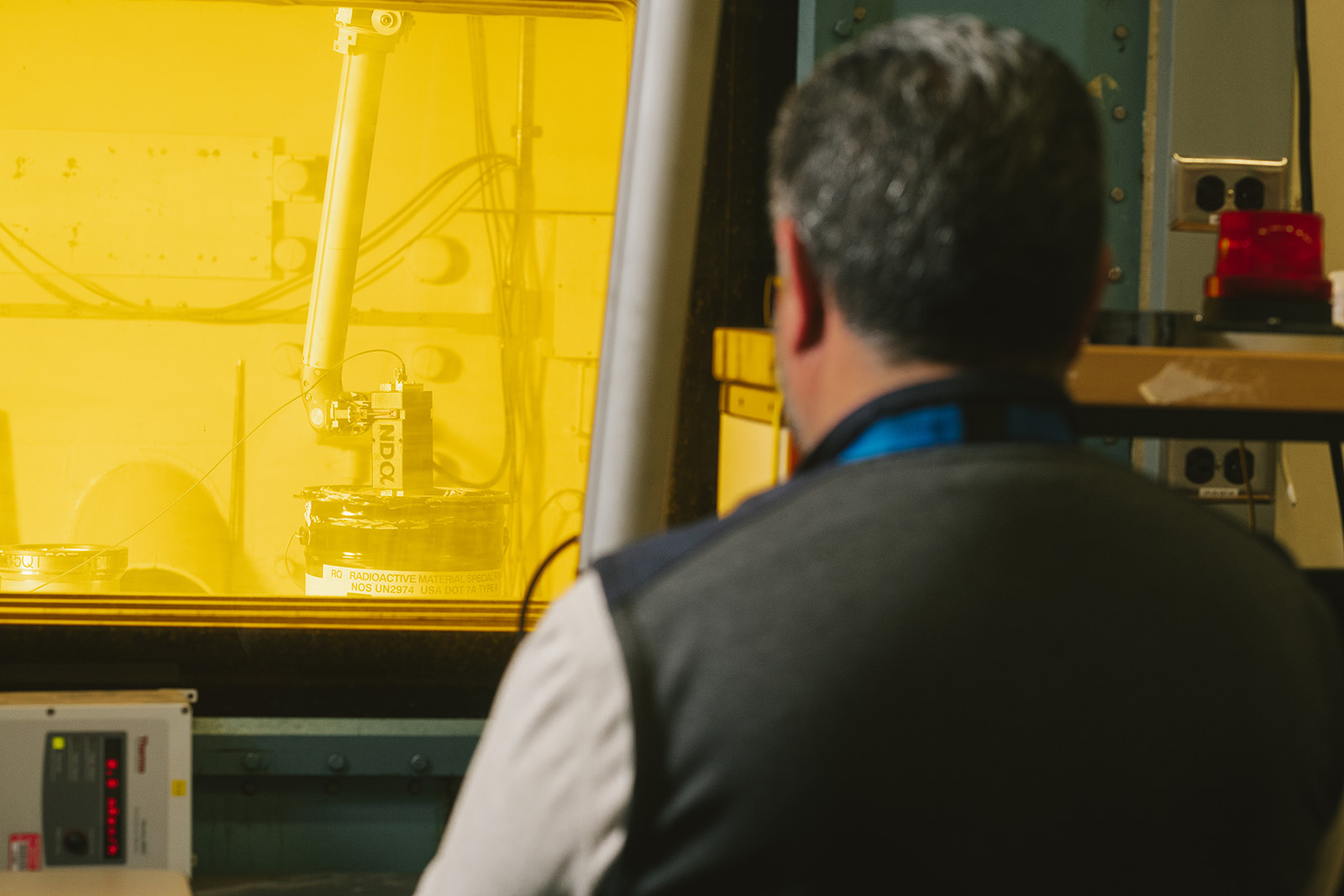
Preliminary testing has demonstrated ND-Alpha’s capability to detect and analyze alpha emissions from spent nuclear fuel and other actinide-containing materials, even with high beta-gamma radiation backgrounds. The instrument's design also allows for remote operation, for instance attached to a robot, an essential feature for use in highly contaminated radiation zones (Fig. 6). With its pragmatic approach to identifying actinide signatures, ND-Alpha fills a long-standing gap in field-ready instrumentation for alpha-emitting materials, marking a shift from lab-bound techniques to practical tools without the need for pristine samples or controlled environments.