DOE/LANL Jurisdiction Fire Danger Rating:
  1. LANL Home
  2. Media
  3. Newsletters
  4. STE Highlights
September 29, 2026

When magnetism becomes superconductivity's ally

In nickelates, superconductivity vanishes — then reappears — as the magnetic field grows stronger

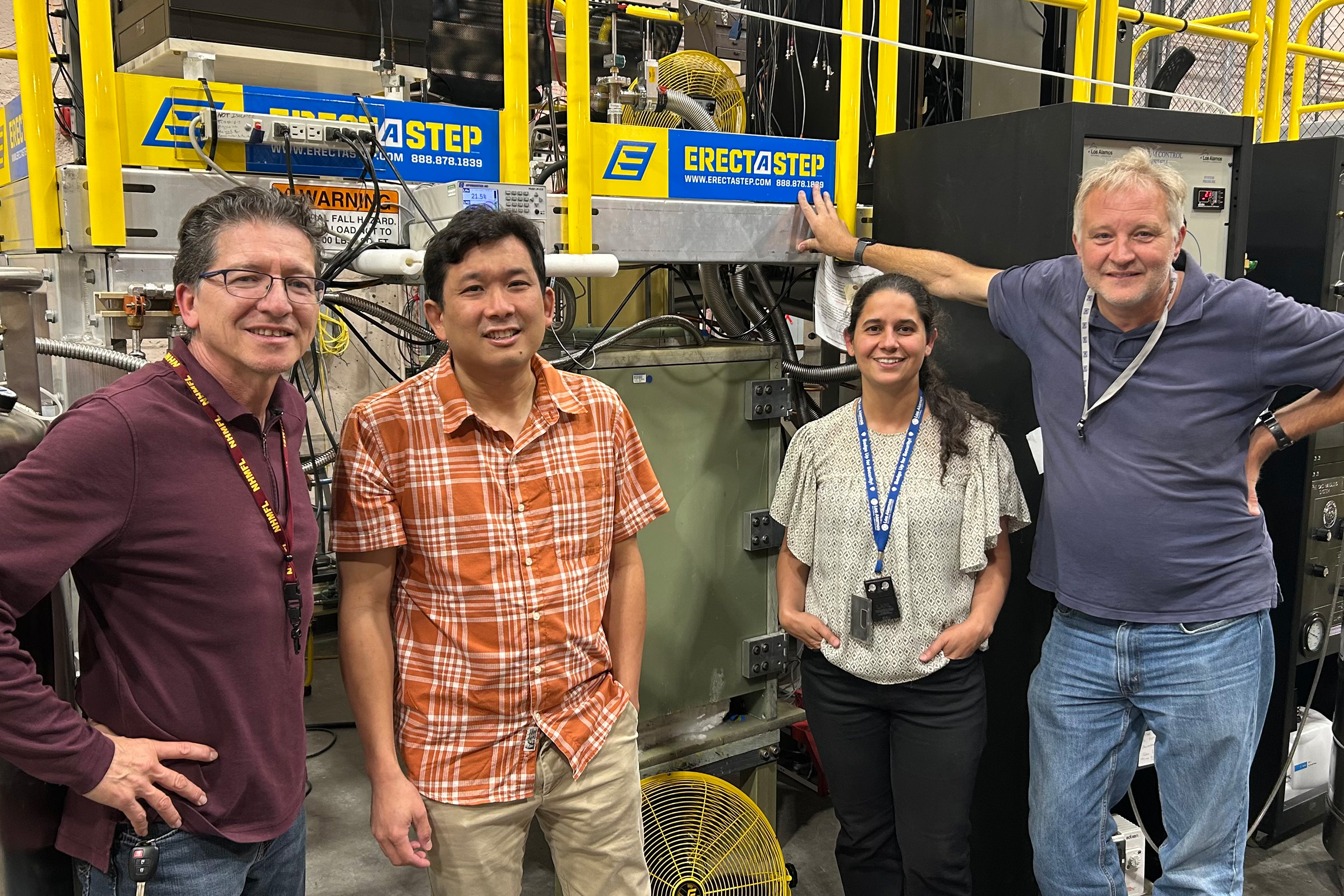
Research team members Km Rubi, Oscar E. Ayala Valenzuela, Mun K. Chan and Neil Harrison used powerful magnets to measure the electrical resistance and other properties of nickelate thin films at temperatures close to absolute zero, leading to the discovery of high-magnetic-field-stabilized superconductivity in nickelates. The magnet lab at Los Alamos allowed them to uncover material behavior that cannot be accessed under conventional laboratory conditions. Credit to: Los Alamos National Laboratory

Superconductors can carry electrical current without resistance, making them important for technologies such as energy-efficient electronics and powerful magnets. But there’s a catch: strong magnetic fields usually destroy superconductivity. 
 
But what if something remarkable could change this limitation? In a Nature Communications paper, Los Alamos researchers and collaborators studying nickelate materials at the National High Magnetic Field Laboratory's Pulsed Field Facility recount their discovery.

Read the paper

What they learned: The research team found that in some nickelate samples, superconductivity disappears as the magnetic field increases — but then comes back at even higher fields. In samples that superconduct at higher temperatures, superconductivity persists to at least 65 tesla, more than 20 times the magnetic field of a typical hospital MRI scanner.
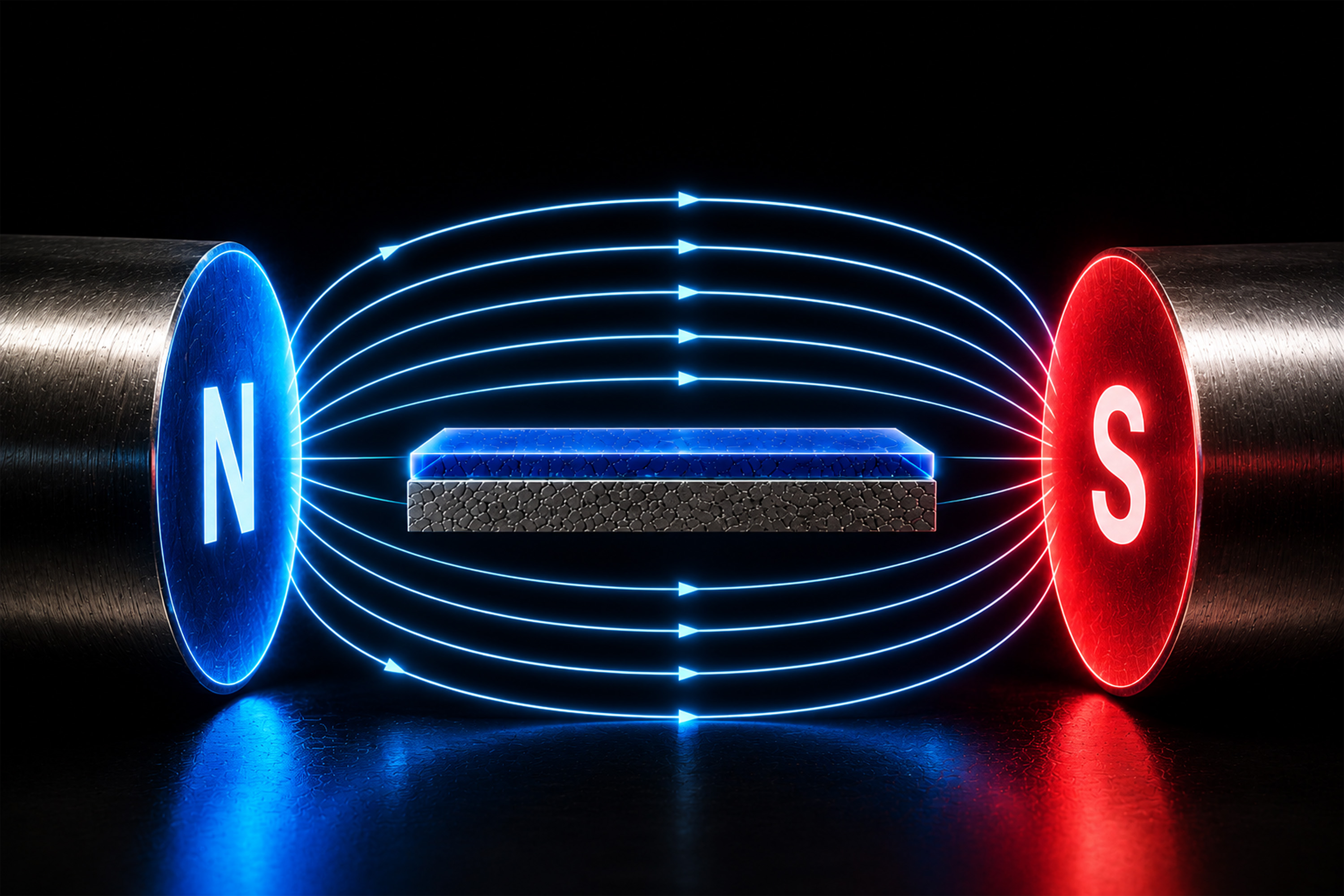
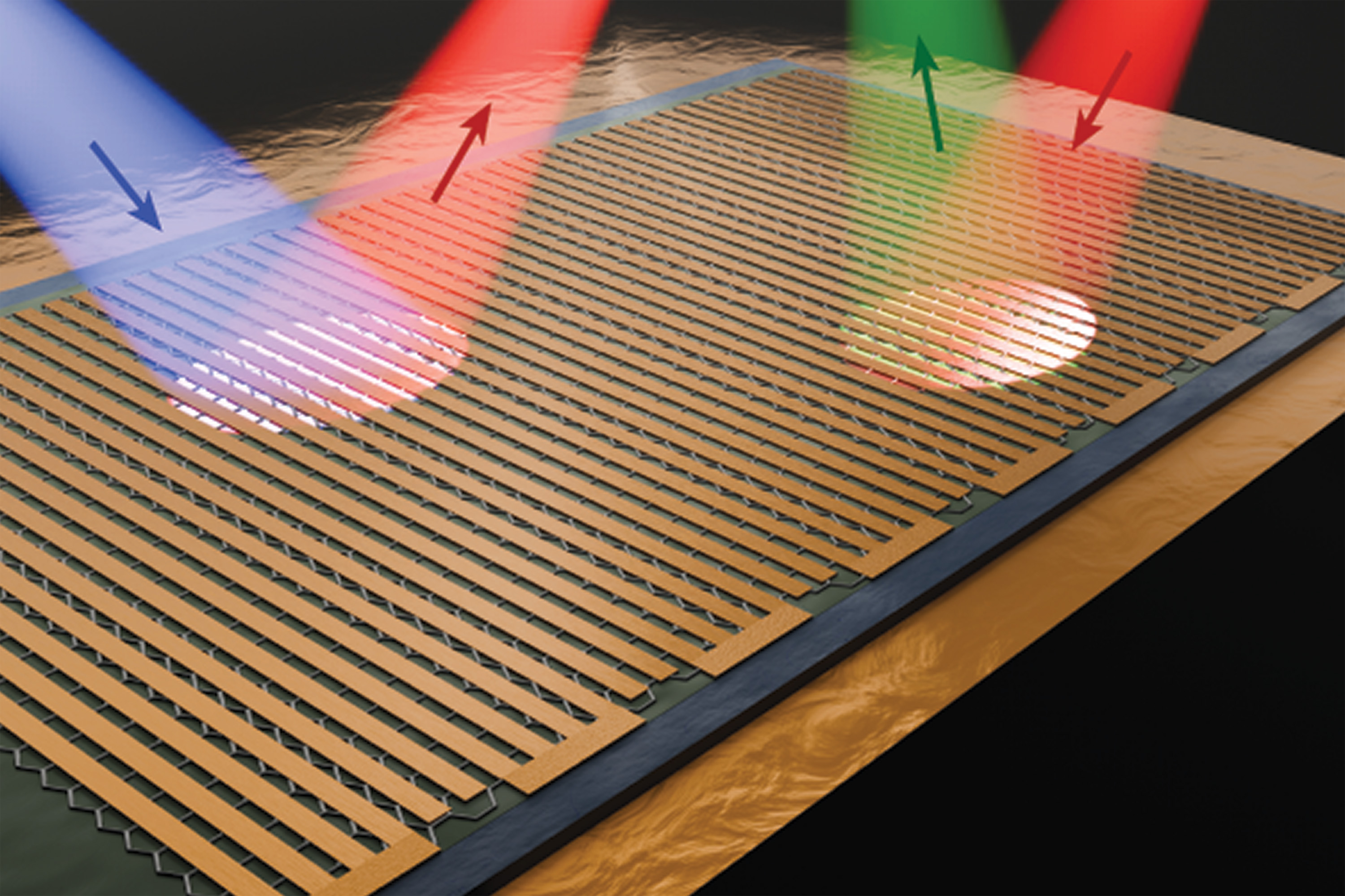
nickelate superconductor
A nickelate superconductor is cooled to very low temperatures and exposed to extremely strong magnetic fields. Under these extreme conditions, the material can remain superconducting — and in some cases regain superconductivity — pointing toward new ways to design quantum materials for stronger superconducting magnets. Credit: ChatGPT

How it works: 
  • Magnetic europium atoms in the samples create an internal magnetic effect that partially opposes the applied external field.
  • Under the right conditions, increasing the magnetic field can help protect superconductivity rather than destroy it. 

Why this matters: Instead of simply making superconductors resist stronger fields, this work suggests that researchers may be able to engineer magnetism inside nickelates to help protect superconductivity. If this principle can be extended and optimized, it could eventually enable superconducting magnets, sensors and quantum devices that operate in much stronger magnetic fields.
 
What’s next: The team now wants to understand why the effect is so strong and whether it can be deliberately optimized by changing the material's composition, thickness or other properties.
 
Funding: “Science of 100 Tesla” under the U.S. Department of Energy's Basic Energy Sciences program supported this work. Researchers performed experiments at the National High Magnetic Field Laboratory’s Pulsed Field Facility, which is funded by the National Science Foundation, Florida State University and DOE.

LA-UR-26-27766 
Share

  • mail
Stay up to date
Subscribe to Stay Informed of Recent Science, Technology and Engineering Highlights from LANL
Subscribe Now

More STE Highlights Stories

STE Highlights Homearrow_forward

A surprising use for distorted data to glean hidden laws

Los Alamos scientists explore the use of metastable data for machine learning

Making tiny glass parts? Try printing them

Los Alamos method builds small glass components layer by layer

Valley fever’s far-flung travels captured by machine learning

Los Alamos scientists study the genomes of fungi in complex environments to understand their impact

Society of Petroleum Engineers honors Los Alamos scientist for high-volume peer reviews

Meng is associate editor of 2 journals

Proton radiography team receives NNSA Defense Programs Award of Excellence

Plutonium experiments support the nation’s nuclear weapons program

Plague can kill: Los Alamos scientists found a rapid way to test people and pets

Accuracy increased when scientists used fat molecules to detect illness-causing bacteria

Los Alamos National Laboratory

P.O. Box 1663

Los Alamos, NM 87545

(505) 667-5061

At The Lab

  • Business Opportunities
  • Jobs
  • Organizations
  • Research Library
  • User Facilities

Information

  • Emergency
  • Ombuds
  • Reading Room
  • Resources
  • Science Museum

For Employees

  • AskIT
  • LANLInside
  • MyMail
  • Training
DOE White Seal
  • Terms of Use/Privacy

Managed by Triad National Security, LLC for the U.S. Dept. of Energy’s NNSA

Copyright 2026 Triad National Security, LLC. All Rights Reserved.

Learn about the Department of Energy’s Vulnerability Disclosure Program