Two newly developed machine learning-based methods, PRIME and SurfGraphPro, are helping Los Alamos National Laboratory scientists understand protein function. Like a lock and key, pathogens and other threats use protein molecules to gain entry into a host cell. Predicting the impacts of viral mutation and binding sites of proteins can help researchers develop methods to detect threat agents and to make countermeasures to mitigate their impacts.
- Read the article about PRIME.
- Read the Lab's tech snapshot about SurfGraphPro, which is available for licensing and featured in an article on the BioRxiv.
Why this matters: Metaphorically speaking, a pathogen has a “key-shaped” protein on its surface, and the human cell has a “lock-shaped” protein on its surface. As a pathogen mutates, its surface proteins might gain improvements in its ability to bind to the host protein.
- Predicting how mutations can change the biochemical properties of proteins helps scientists anticipate which pathogens might become more infectious.
- Accurate protein binding site prediction also helps scientists develop targets for detection schemes and countermeasures.
What they did:
- The Los Alamos team developed two methods to more thoroughly understand the connections between mutations and changes to protein functions, which could lead to improved biosurveillance, threat identification/detection and countermeasure development.
- Protein Representation Inference for Mutation Evaluation (PRIME) uses neural networks and clustering to improve protein mutation impact prediction.
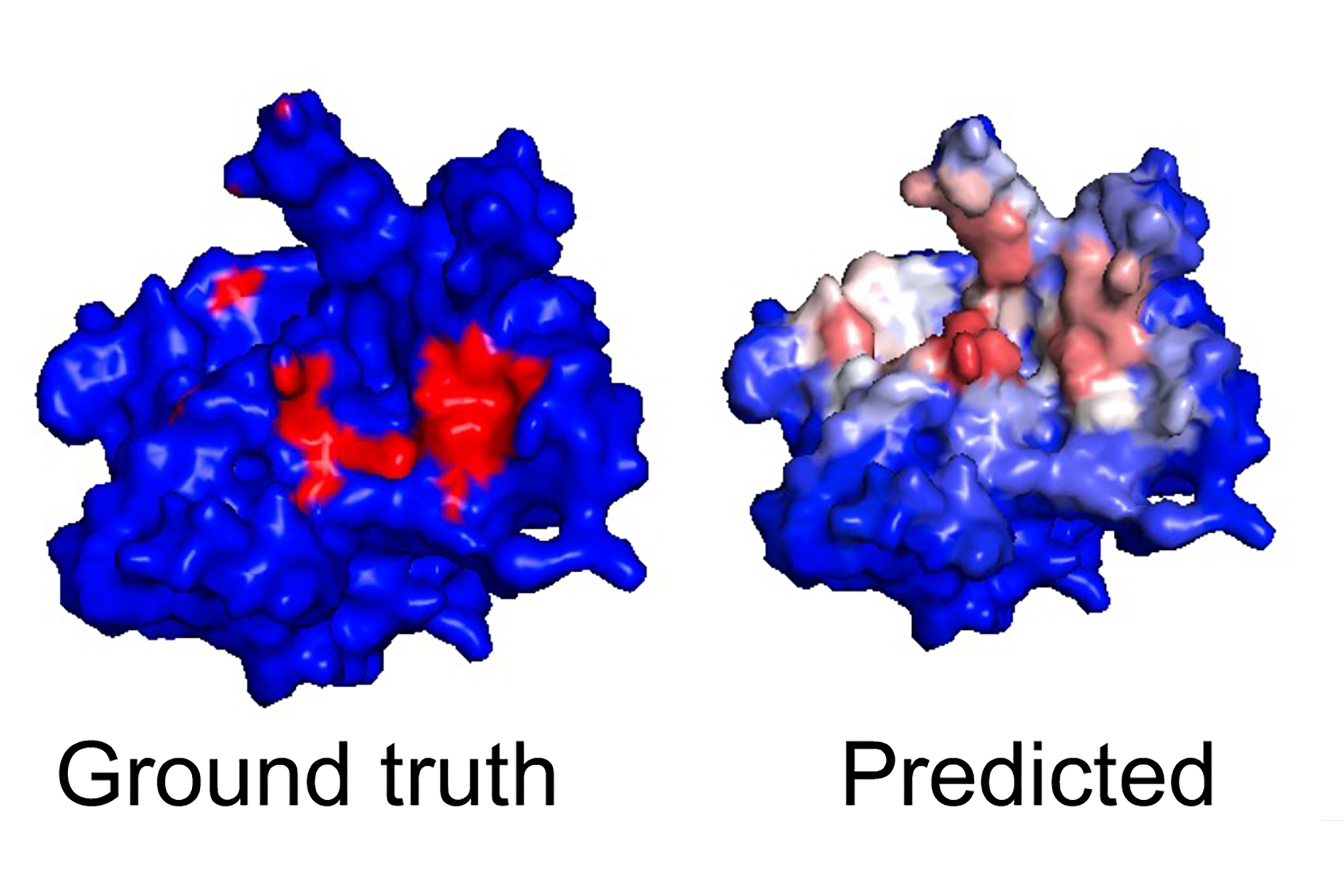
- SurfGraphPro utilizes protein structure data combined with sequence information from protein language models to predict protein binding sites with greater speed and scalability.
Funding: Laboratory Directed Research and Development program at Los Alamos National Laboratory.
LA-UR-26-29657