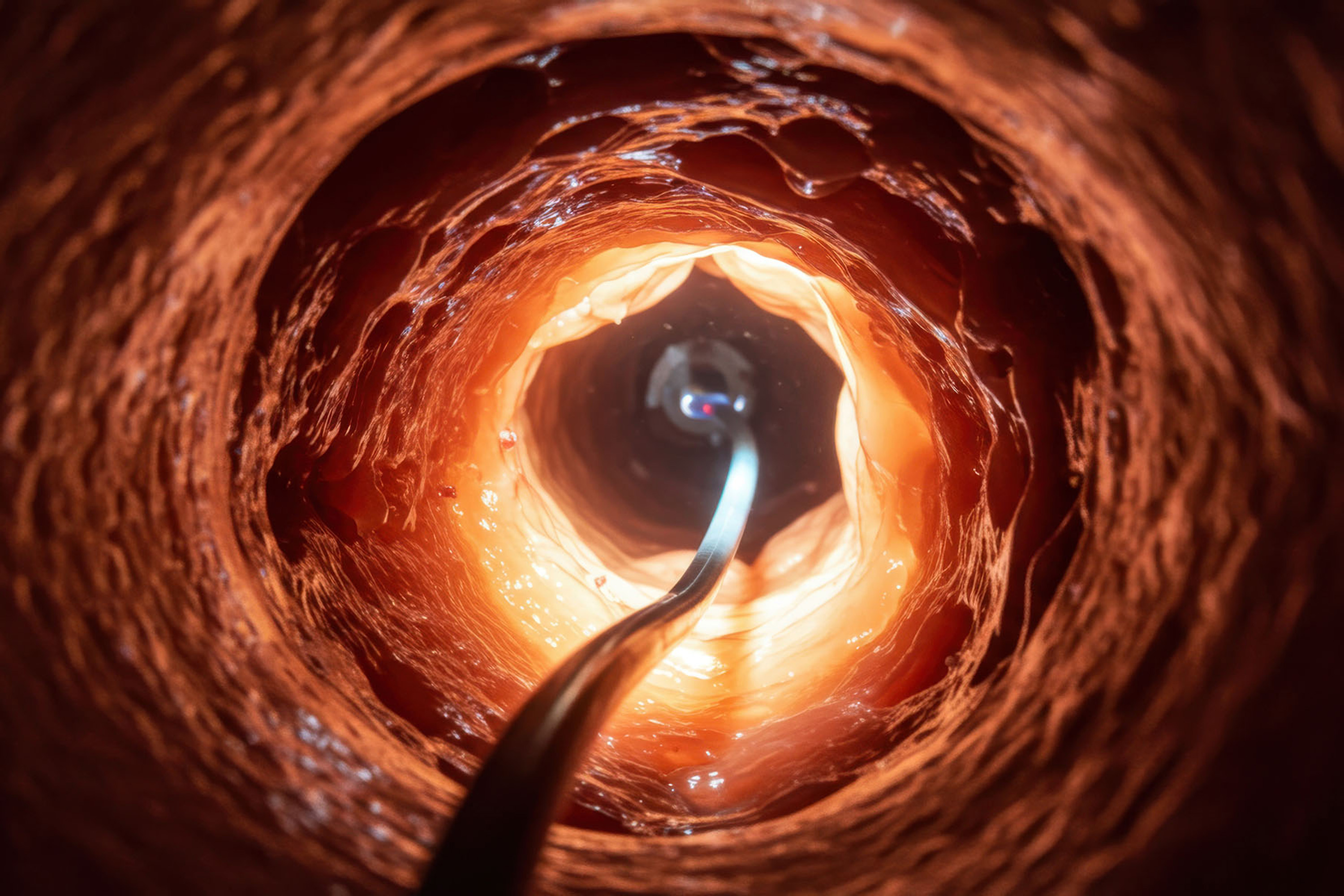
When mud, sediment or other murky fluids block the view, conventional cameras can leave operators guessing about what’s hiding beneath the surface. Los Alamos National Laboratory’s patented Acoustic Camera uses sound instead of light to create detailed 3D images of submerged objects in near real time — without having to clear away the surrounding fluid.
Why this matters: Whether equipment is lost in an oil well or needs to be inspected in other murky environments, figuring out what’s beneath the surface can be difficult when conventional cameras can’t see through the surrounding fluid. The Acoustic Camera can reveal an object’s shape and orientation on the first pass, helping operators make faster decisions, reduce downtime and lower the risk of unsuccessful recovery attempts.
How it works:
- Sends high-frequency ultrasonic pulses through drilling mud and other optically opaque fluids toward an object.
- Captures the returning sound waves with a two-dimensional acoustic receiver array.
- Uses digital signal processing to turn those echoes into a detailed 3D image in near real time.
- Achieves depth resolution below 1 millimeter at working distances of up to approximately 2 feet in drilling mud.
Where it could be used:
- Finding and recovering lost equipment in drilled wells.
- Inspecting submerged infrastructure and industrial equipment.
- Supporting oil and gas, mining and geotechnical operations.
- Imaging equipment in enhanced geothermal systems and other energy infrastructure.
- Expanding inspection capabilities in other environments where fluids make optical cameras ineffective.
Technology status: Prototypes of the Acoustic Camera have been tested in a controlled environment, and the technology is associated with U.S. Patent No. 10,054,676-B2.
About licensing opportunities: Through the Richard P. Feynman Center for Innovation, the Laboratory licenses its inventions, technologies, software and research tools to companies and organizations that can turn them into products and services that benefit society.
AI tools were used to develop this content with human oversight and review.