DOE/LANL Jurisdiction Fire Danger Rating:
  1. LANL Home
  2. Media
  3. Newsletters
  4. STE Highlights
July 28, 2026

Bouabid earns Springer Thesis Prize for neutrino studies

Award recognizes research conducted in part at Los Alamos

Bouabid Ryan
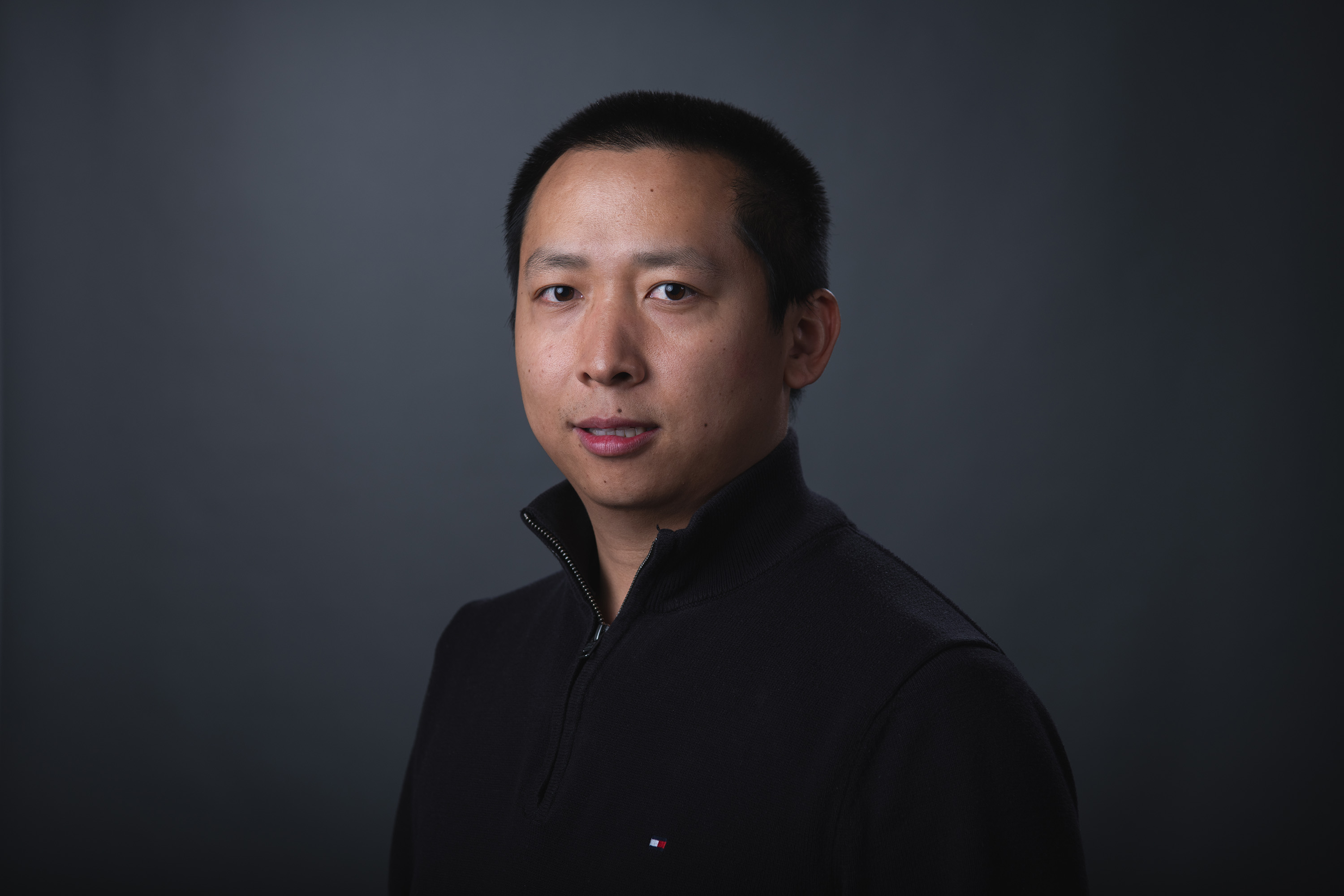
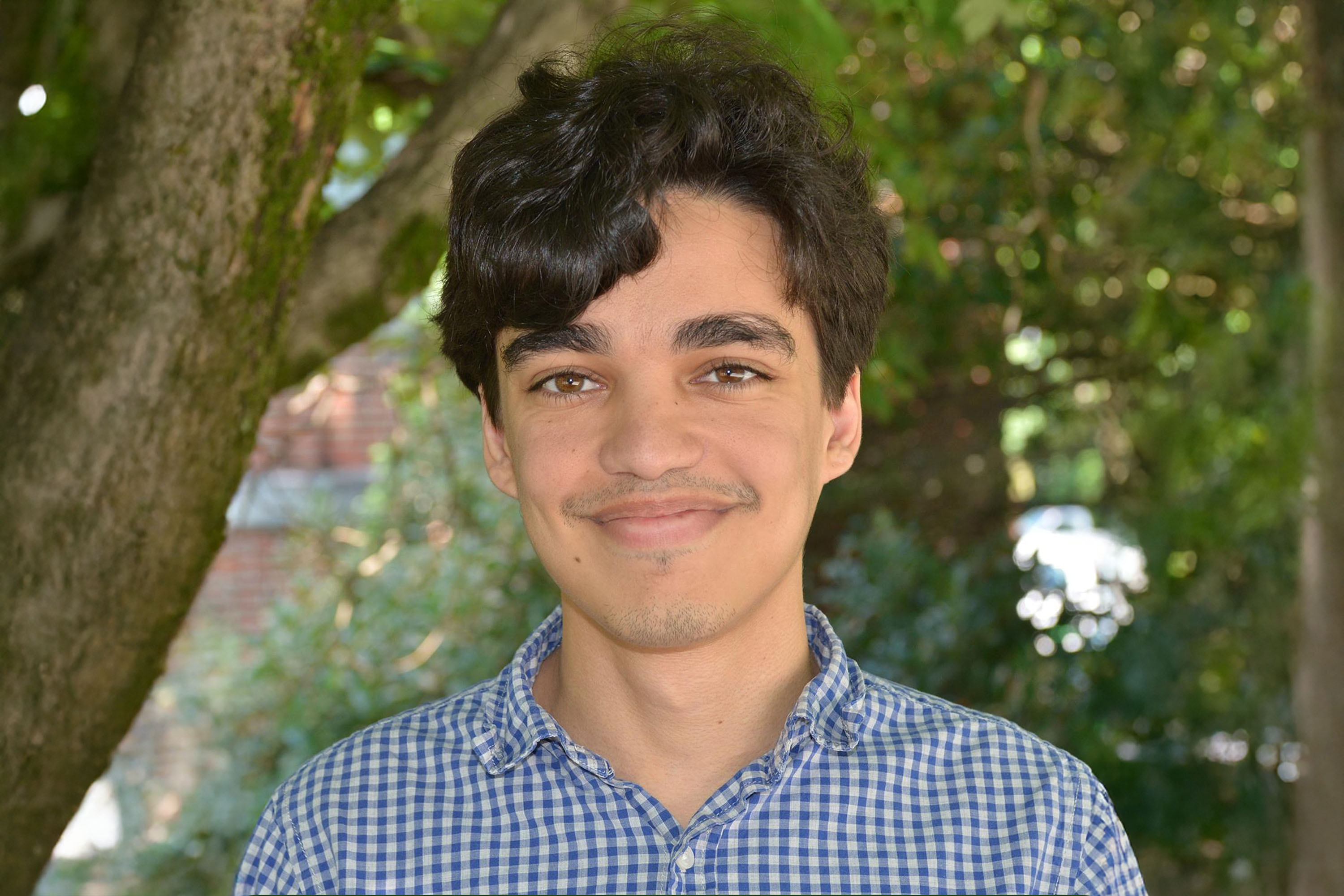
Physicist Ryan Bouabid studies the properties of neutrinos — particles from the sun that mysteriously pass through our bodies unnoticed. He helped build "the world’s smallest neutrino detector,” which he used to make measurements for his dissertation. Credit to: Los Alamos National Laboratory

Ryan Bouabid of Los Alamos National Laboratory’s Physics division received the Springer Thesis Prize for outstanding doctoral research in the physical sciences. He conducted part of his dissertation research at Los Alamos through the Department of Energy's Office of Science Graduate Student Research program and earned his doctorate from Duke University.
 
Bouabid’s dissertation, “Tests of the effective weak interaction with the world’s smallest neutrino detector,” will be published in the Springer Theses book series. Particles called neutrinos are produced by the sun, fission reactors, particle accelerators and even bananas, but because of their neutrality and low mass, neutrinos very rarely interact with other particles. 

This kind of research can reveal new physics beyond the standard model and improve scientists’ understanding of fundamental particle behavior relevant to nuclear and particle science missions.
 
What he did: Neutrinos are famously elusive particles, but Bouabid helped develop the world’s smallest neutrino detector (each one is a germanium crystal that looks like a stout cylindrical candle that's only a few inches tall), which he then used to study how these subatomic particles interact with matter and to probe fundamental physics beyond the standard model. For some of the work that appeared in his thesis, Bouabid collaborated with Los Alamos scientists from Theoretical and Physics divisions. 
 
What’s next: Now a postdoctoral research associate at Los Alamos, Bouabid has joined the Weak Interactions team in Physics division’s Dynamic Imaging and Radiography group to study neutrino properties, via neutrinoless double-beta decay, as a member of the LEGEND collaboration.
 
Editor’s note: Nobel laureate Frederick Reines was inspired to hunt for neutrinos at Los Alamos in the 1950s and proved the particles’ existence with colleague Clyde Cowan.

LA-UR-26-25205
Share

Stay up to date
Subscribe to Stay Informed of Recent Science, Technology and Engineering Highlights from LANL
Subscribe Now

More STE Highlights Stories

STE Highlights Home
D Wave Chip

Physicists use D-Wave chip to study quantum effects

How quantum tunneling helps magnets choose a state

Cunningham

Cunningham named to ASME’s 2026 Mechanical Engineering Watch List

Los Alamos grad student uses research, humor and outreach to make nuclear science approachable

AI Acoustics

It’s boiling over! Acoustic AI hears what cameras can’t see

A new method uses sound to predict unsafe conditions

Neptunium Oxide

First-ever measurements unlock hidden properties of neptunium oxide

New insights could improve prediction and management of long-lived radioactive materials

Metal Failure

No longer a shot in the dark: Predicting metal failure under stress

The design and safety of defense systems could benefit from this model

Scacs Engineers Card

From atoms to devices: This tool closes a scale gap in materials simulation

Los Alamos scientists demonstrate what it could do for engineers

Los Alamos National Laboratory

P.O. Box 1663

Los Alamos, NM 87545

(505) 667-5061

At The Lab

  • Business Opportunities
  • Jobs
  • Organizations
  • Research Library
  • User Facilities

Information

  • Emergency
  • Ombuds
  • Reading Room
  • Resources
  • Science Museum

For Employees

  • AskIT
  • LANLInside
  • MyMail
  • Training
DOE White Seal
  • Terms of Use/Privacy

Managed by Triad National Security, LLC for the U.S. Dept. of Energy’s NNSA

Copyright 2026 Triad National Security, LLC. All Rights Reserved.

Learn about the Department of Energy’s Vulnerability Disclosure Program