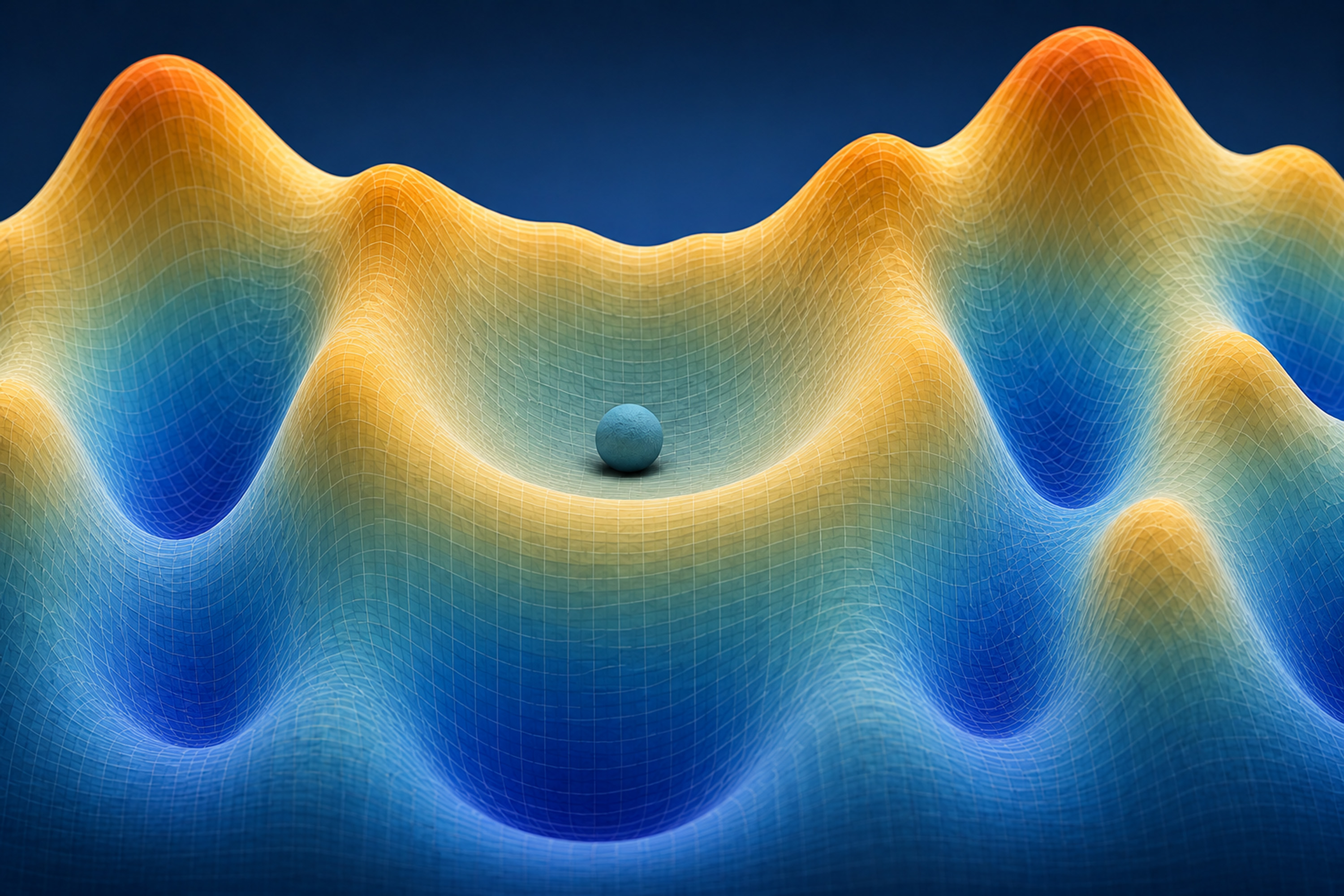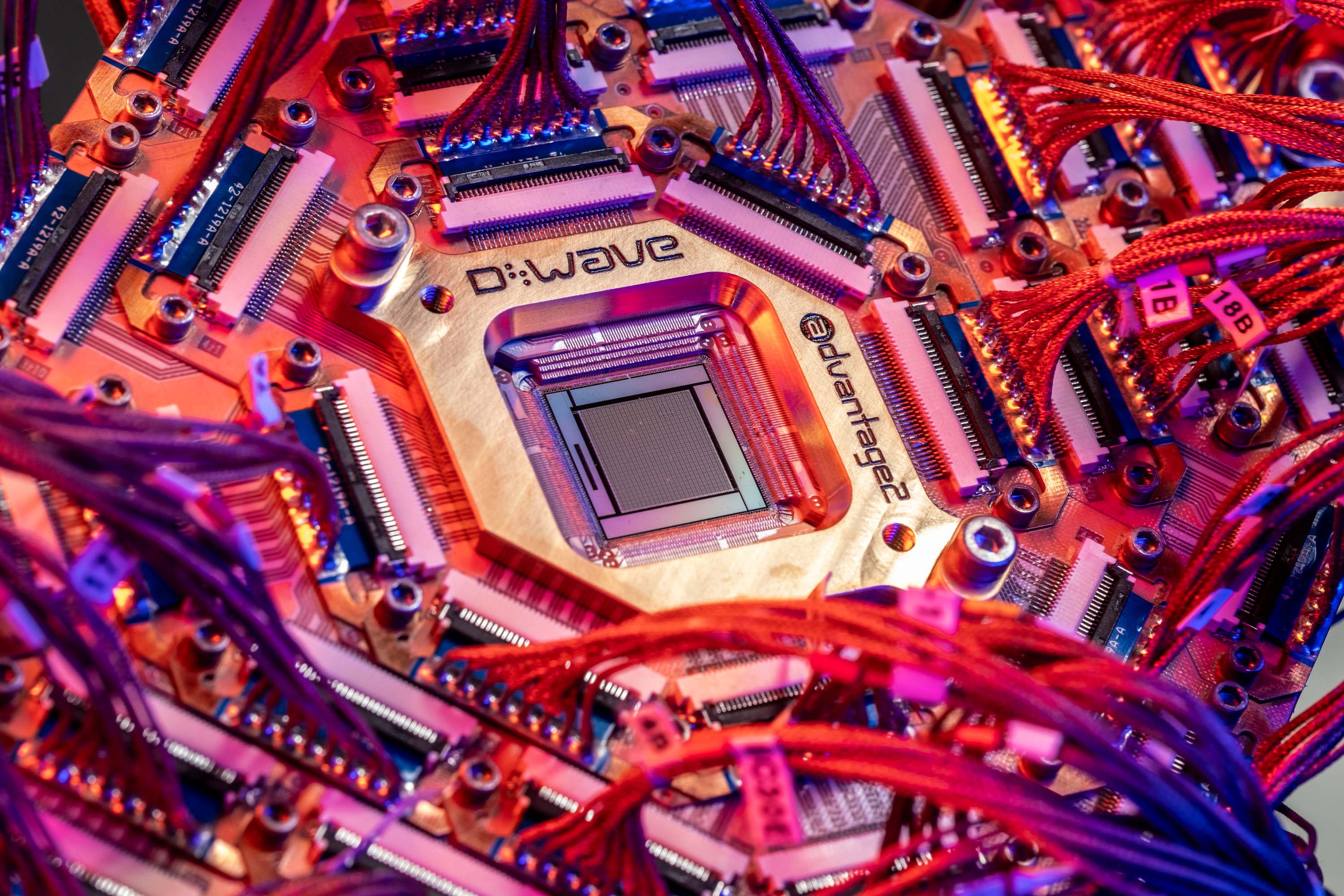
D-Wave’s quantum computing platform is often used to find the best solution to a problem with a large landscape of possibilities. But a joint team formed by Alejandro Lopez-Bezanilla of Los Alamos National Laboratory's Theoretical division and D-Wave scientists used it for something different: observing quantum mechanics in action.
In their work, published in EPJ Quantum Technology, they focused on one of the machine’s key features — quantum tunneling, a quantum-mechanical phenomenon by which two particles can switch positions across an energy barrier that would be forbidden in classical physics.
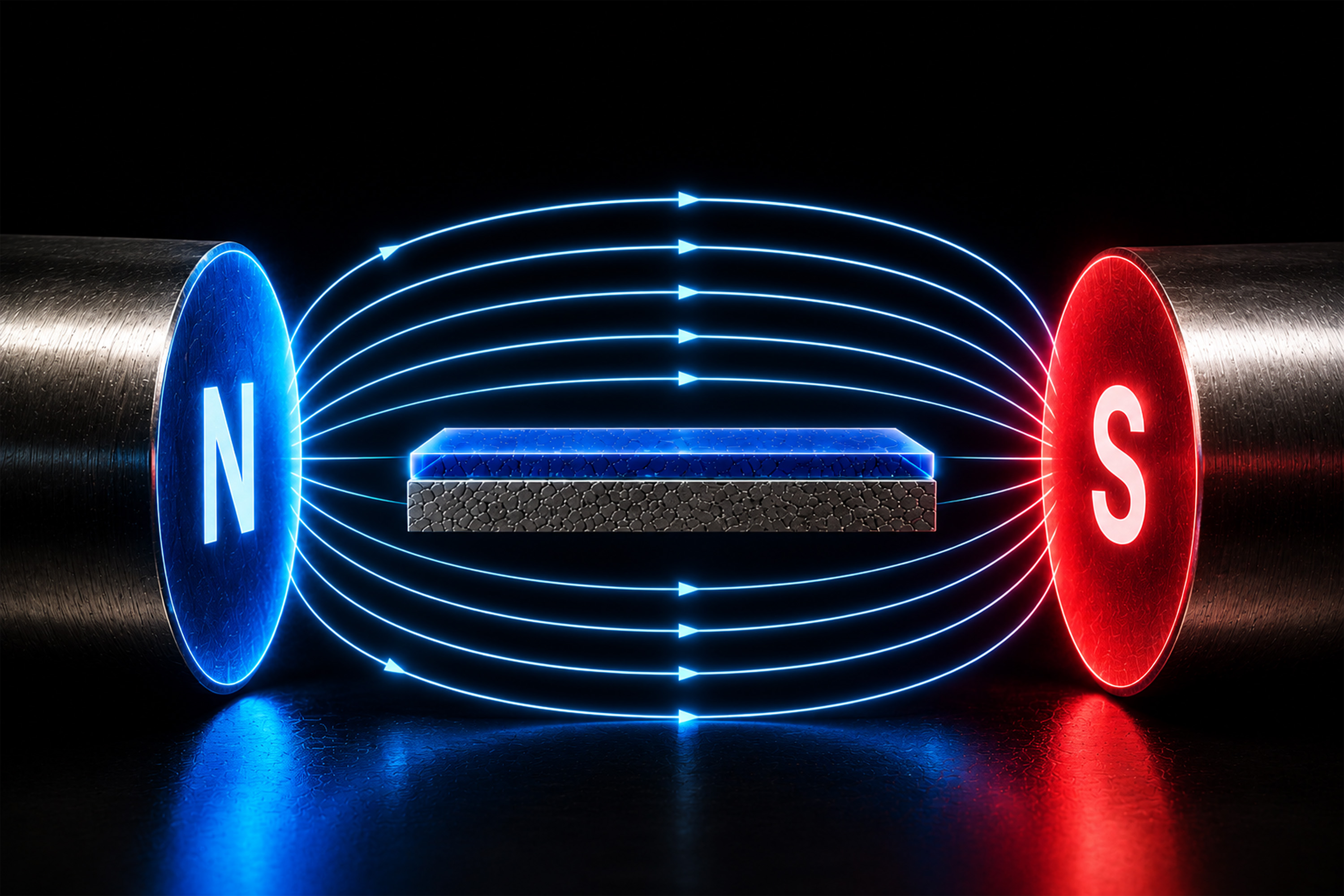
How it works: In a frustrated magnet, the spins cannot all be put together so that everyone is energetically happy with its neighbor — hence the frustration. That leaves many spin configurations with the same lowest energy, known by physicists as the “ground-state manifold.”
- Quantum tunneling acts like a tiebreaker. It lets the spins try out different arrangements, then favors the ones where neighboring pairs can flip together without adding energy.
- By observing which spin arrangements the D-Wave annealer favored in this study, the researchers verified that quantum mechanics selects spin configurations that would be difficult to observe directly in ordinary materials.
Why this matters: The D-Wave quantum annealer gave the researchers a controlled way to explore millions of possible magnetic arrangements and identify in a fraction of a second which ones were favored by quantum effects.
- Using classical algorithms, they also demonstrated that the little D-Wave chip was able to reproduce what the supercluster Frontier machine in Oak Ridge National Laboratory did with conventional calculations.
Funding: This study used supercomputing resources at Oak Ridge National Laboratory, and it used a quantum processing unit owned by D-Wave at Burnaby, Canada.
LA-UR-26-26562