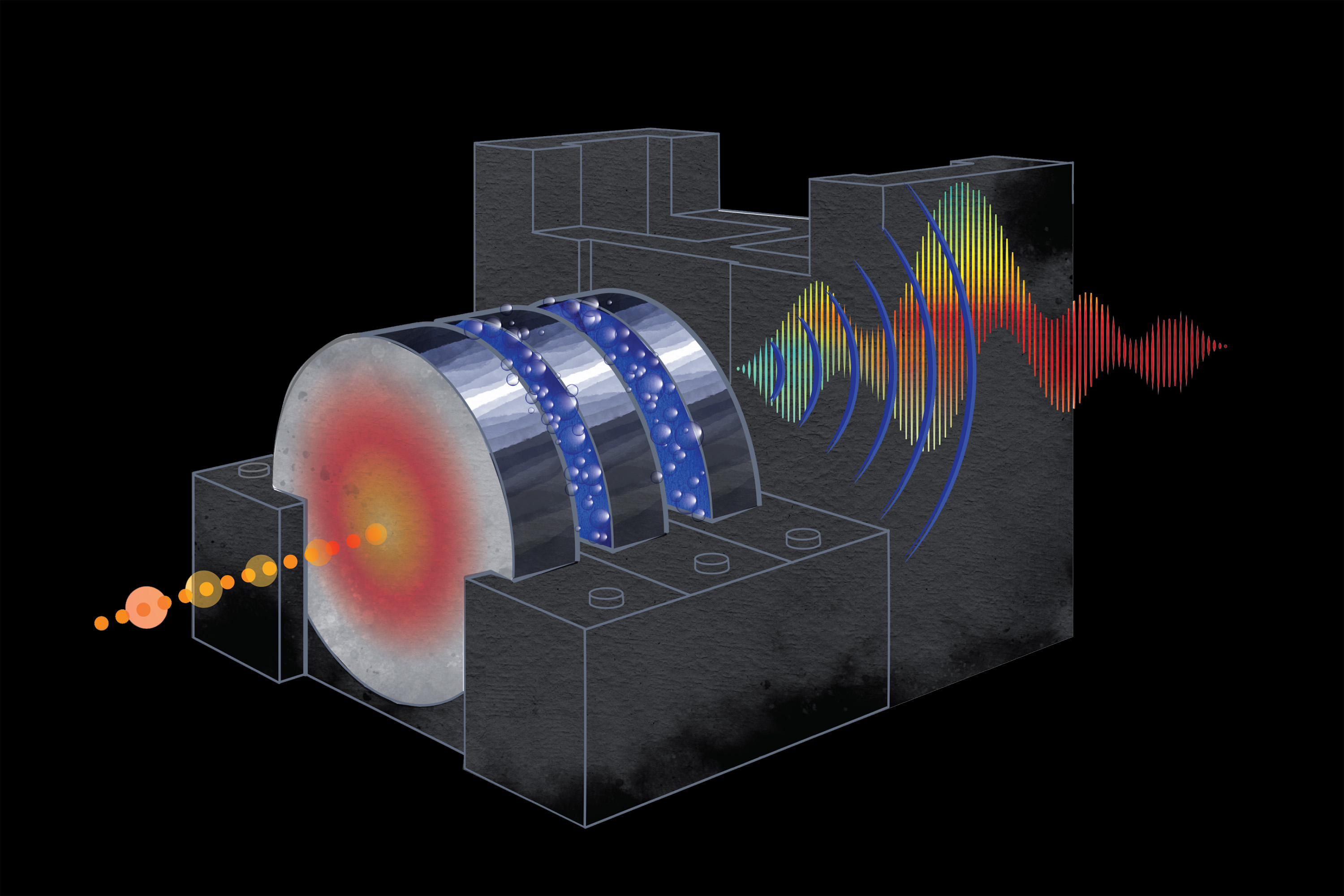
In a Nature Scientific Reports study, Los Alamos researchers showed they can “listen” to boiling sounds with underwater microphones and use AI to estimate what’s happening at a heated surface. The new method could be broadly applied to nuclear reactors, particle accelerators and other high-power thermal technologies where conventional monitoring techniques such as cameras are constrained.
Why this matters: If conditions get too extreme, water used to cool systems can suddenly stop carrying heat away effectively, leading to rapid damage. Better real-time boiling diagnostics would help protect high-power targets and other heat-loaded systems from critical heat flux events by giving operators a radiation-tolerant way to spot unsafe thermal conditions before damage occurs.
What they did:
- Turned boiling sounds into visual patterns a computer could read, then used AI to estimate how intense the boiling was and how the bubbles were behaving.
- Plugged those results into a physics-based simulation and showed the method still worked even with background noise and modest changes in operating conditions.
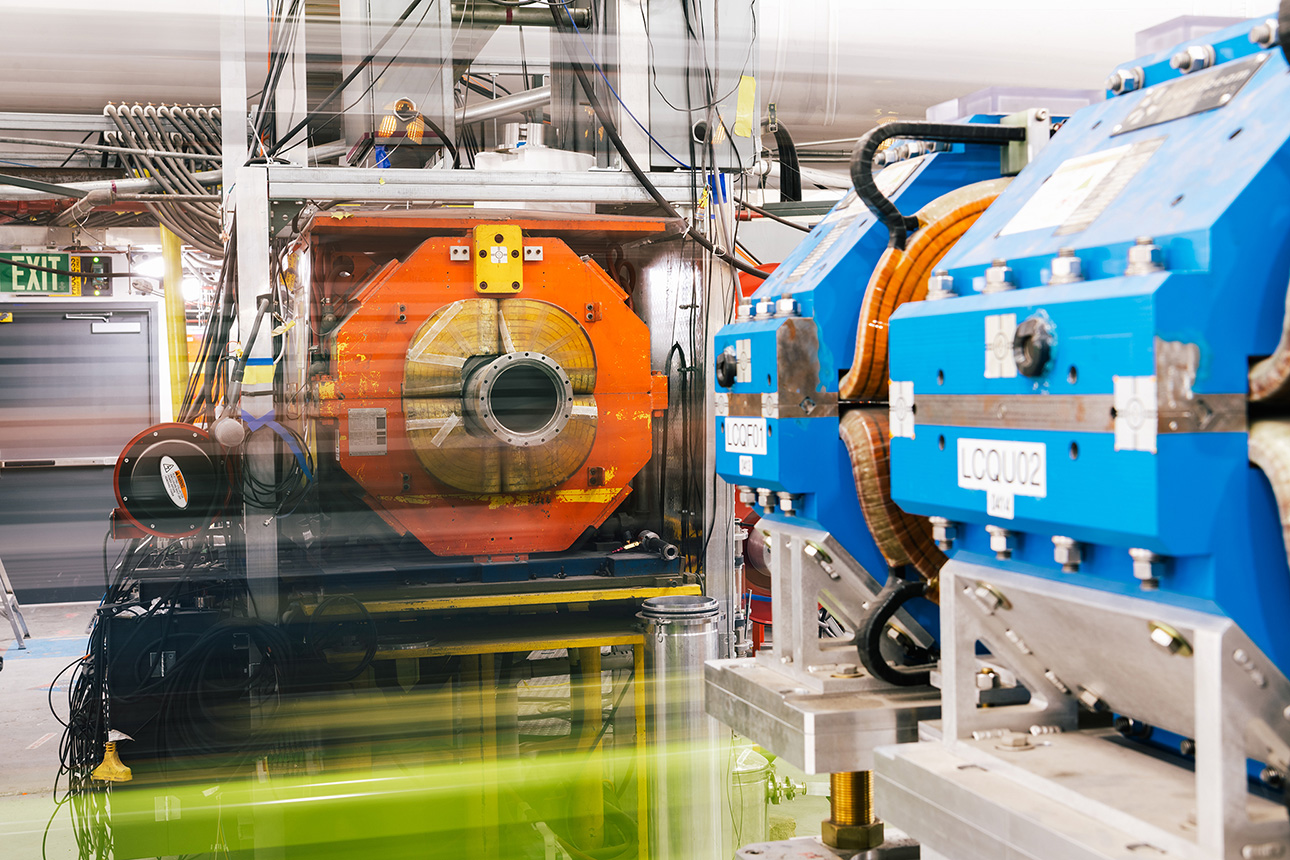
- Tested their method in an experimental facility where radiation levels prevent the use of cameras and other monitoring techniques.
What’s next:
- The team plans to test this method in the Los Alamos Neutron Science Center's Isotope Production Facility, where they will first measure the boiling sound signals and then use AI to predict thermal and boiling bubble behaviors.
- After integrating these predictions into a physics-based simulation, they will validate the approach by comparing the AI-predicted thermal characteristics with simulation results.
Funding: U.S. Department of Energy Isotope Program, managed by the Office of Science for Isotope R&D and Production.
AI tools were used to develop this content with human oversight and review.
LA-UR-26-25205