DOE/LANL Jurisdiction Fire Danger Rating:
  1. LANL Home
  2. Media
  3. Newsletters
  4. STE Highlights
June 25, 2026

Unexpected, enhanced magnetism discovered in uranium monolayer alloy

Actinide materials study advances quantum science

Beta Uranium Tritelluride Feat
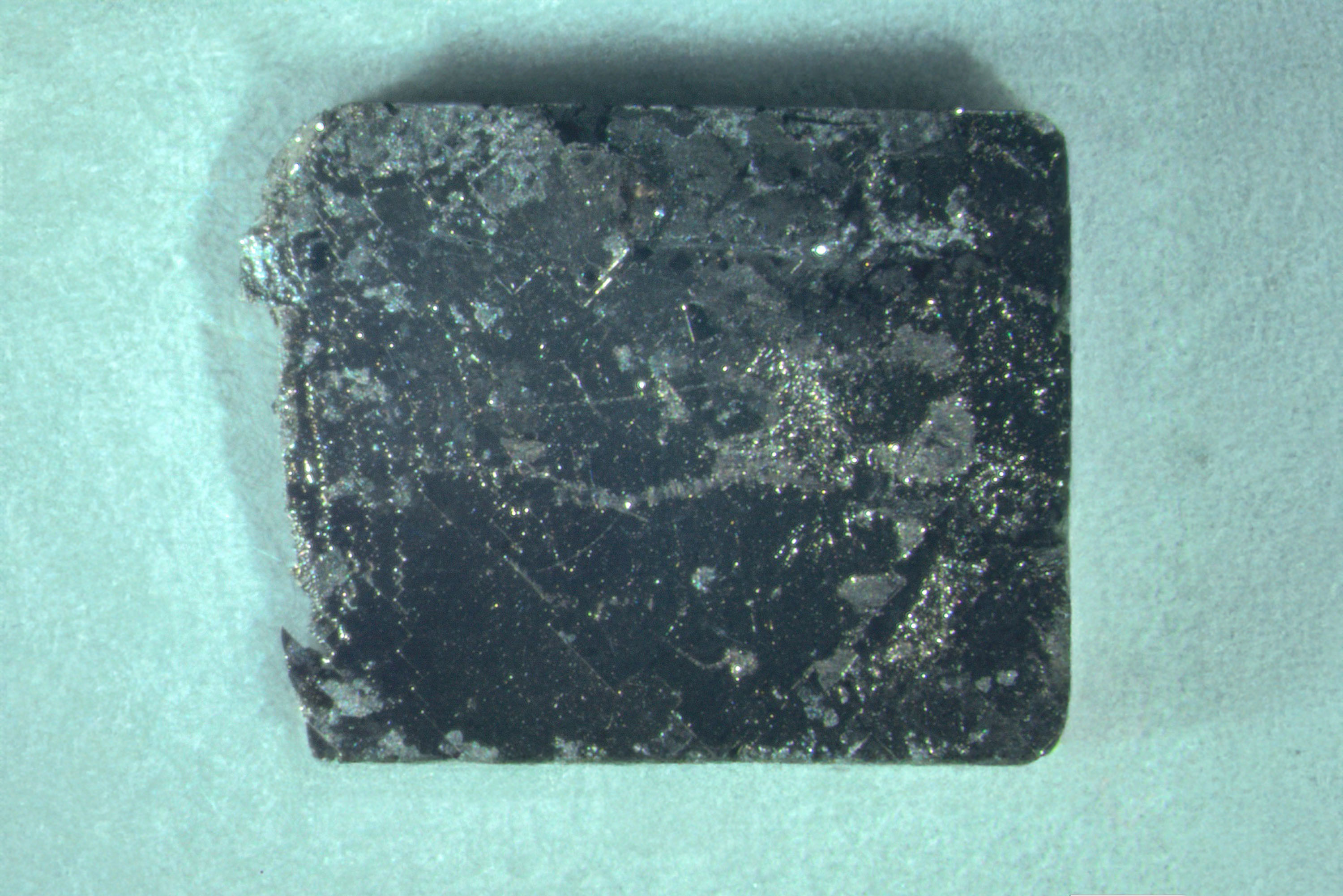
A picture of a bulk crystal of beta-uranium tritelluride before exfoliation. Credit to: CC BY 4.0

Los Alamos National Laboratory scientists and collaborators have stripped a magnetic material called beta-uranium tritelluride (β-UTe3) down to a single thin layer, a step toward a platform for controlling quantum phases and creating microscopic models of strongly correlated materials.
 
As the material was thinned, they were surprised to see a doubling of its magnetic ordering temperature, whereas in almost all other thinned materials the ordering temperature is suppressed. This mysterious result was published in the journal Science Advances.
 
Read the paper
 
Why this matters: Two-dimensional materials have unleashed a new era in quantum science research, and this is the first example of a 5f correlated material that can be exfoliated to the monolayer limit. This new discovery establishes β-UTe3 as a novel materials platform for investigating and modeling correlated behavior in the monolayer limit, opening avenues for quantum control and providing new insights into the electronic behavior of actinides in general. 
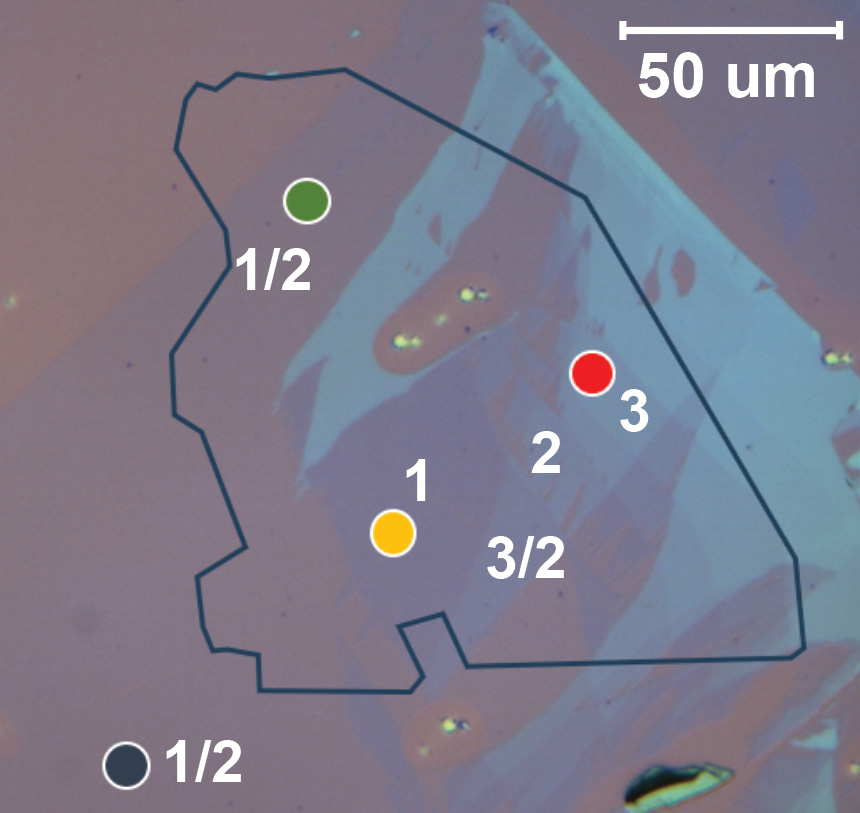
Optical image of exfoliated UTe3 flakes of different thicknesses
Optical image of exfoliated UTe3 flakes of different thicknesses. Credit: CC BY 4.0

What they did: The team discovered the ideal material that can be chiseled down to the monolayer limit, which is key to unlocking its scientific and technological potential. Spatially resolved optical measurements revealed the enhanced magnetism in the monolayer limit.
 
What they know so far: Based on heat capacity measurements, they know the f-electrons are playing a role in the low-energy electronic structure of this material. 
 
Funding: The U.S. Department of Energy, Office of Basic Energy Sciences, Division of Materials Sciences and Engineering; the Los Alamos Laboratory Directed Research and Development program; and the Lab’s Glenn T. Seaborg Institute for Transactinium Science. Microscopy measurements were supported by the Center for Integrated Nanotechnologies, an Office of Science user facility.

LA-UR-26-25205
Share

Stay up to date
Subscribe to Stay Informed of Recent Science, Technology and Engineering Highlights from LANL
Subscribe Now

More STE Highlights Stories

STE Highlights Home
Scacs Engineers Card

From atoms to devices: This tool closes a scale gap in materials simulation

Los Alamos scientists demonstrate what it could do for engineers

Jacsat.2026.148.issue 14 Card

A ‘radical’ approach to americium chemistry

Separating this nuisance element is key to nuclear industry processes and waste management

Robot Close Card

Los Alamos scientists recognized for nuclear waste management solutions

International conference spotlights young chemist, ‘superior’ papers

Nseshadri Card

Los Alamos National Laboratory student intern awarded Hertz Fellowship

Plans to pursue a doctorate in chemistry after dabbling in quantum materials research

Nuclear Power Card

How Los Alamos software helps you staff a nuclear reactor project

ReactorCast can control costs, prevent schedule delays

Wildfire

How to improve wildfire prediction and response with Los Alamos models

Five platforms available for licensing

Los Alamos National Laboratory

P.O. Box 1663

Los Alamos, NM 87545

(505) 667-5061

At The Lab

  • Business Opportunities
  • Jobs
  • Organizations
  • Research Library
  • User Facilities

Information

  • Emergency
  • Ombuds
  • Reading Room
  • Resources
  • Science Museum

For Employees

  • AskIT
  • LANLInside
  • MyMail
  • Training
DOE White Seal
  • Terms of Use/Privacy

Managed by Triad National Security, LLC for the U.S. Dept. of Energy’s NNSA

Copyright 2026 Triad National Security, LLC. All Rights Reserved.

Learn about the Department of Energy’s Vulnerability Disclosure Program