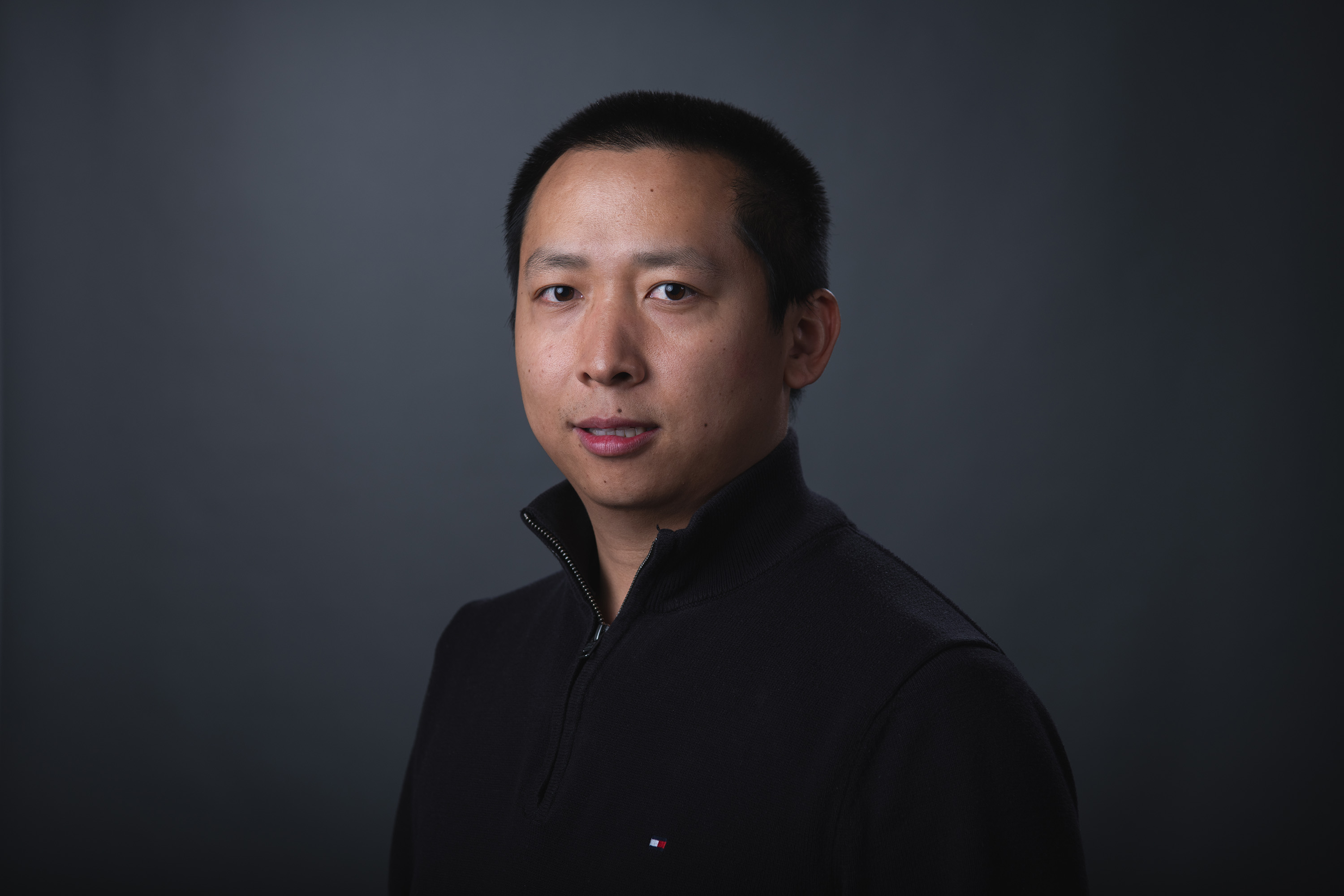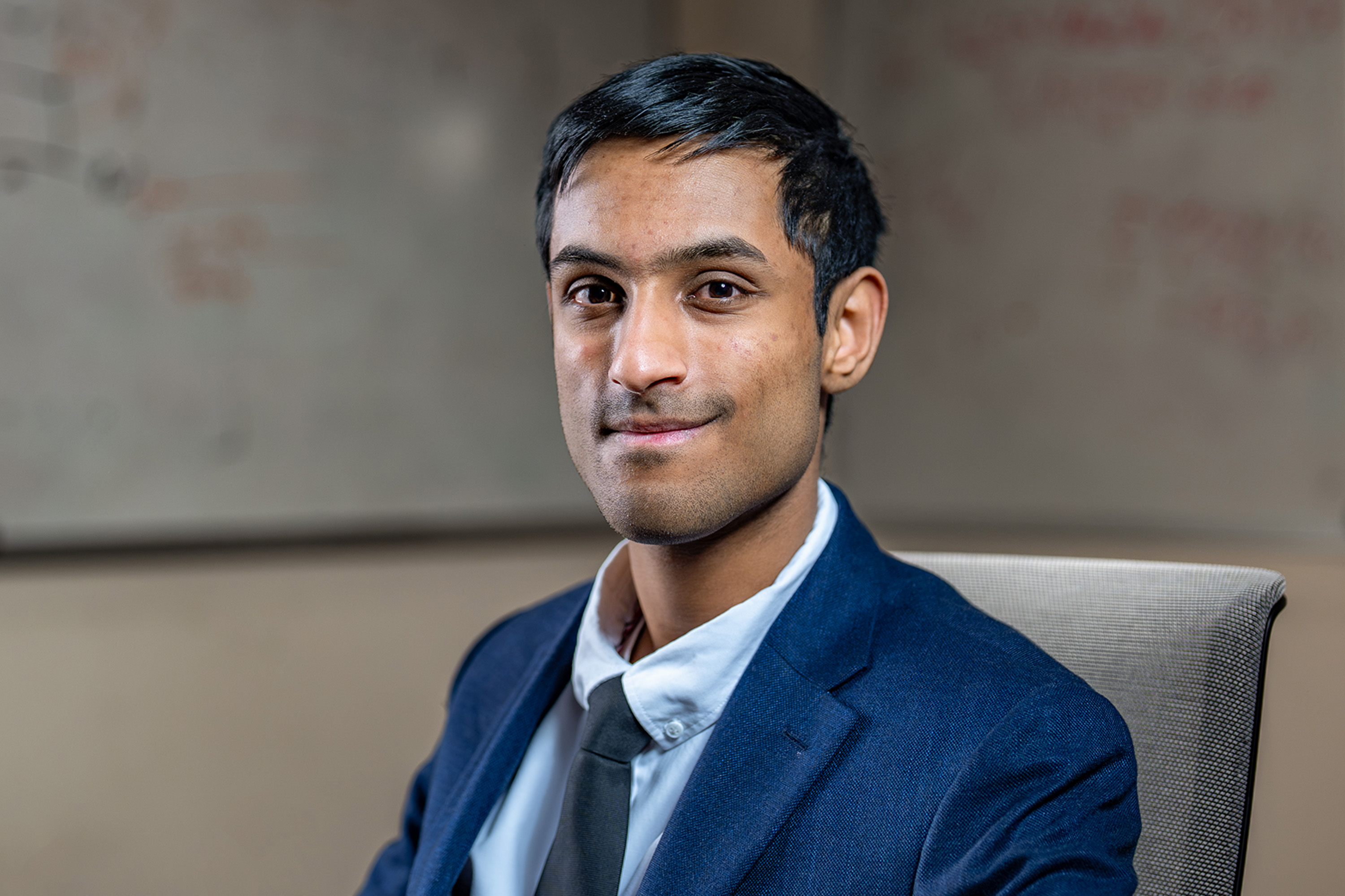
Student intern Nikhil Seshadri was studying the properties of quantum materials with a mentor in Los Alamos National Laboratory’s Theoretical division when he received the news that he had won the coveted 2026 Hertz Fellowship.
The doctoral fellowship will help finance his studies in chemistry starting this fall at the California Institute of Technology, where he plans to apply first-principles approaches and rigorous mathematical methods to fundamental problems in theoretical chemistry, chemical physics and the physics and chemistry of materials.
What he’s doing now: After Seshadri received a bachelor’s degree from Harvard University with a double concentration in chemistry and physics (chemical physics) and computer science, with a secondary in mathematical sciences in 2025, he began an internship with Los Alamos staff scientist Yu Zhang.
- His research focuses on cavity quantum electrodynamics, specifically extending the Gutzwiller wavefunction method to account for nonlocal electron–electron and electron–photon interactions.
- This work aims to provide a unified framework for studying the interplay among these interactions and how they can be tuned to discover new quantum phases and control properties of materials.
About the fellowship: Through the Fannie and John Hertz Foundation, doctoral students in applied science, engineering and mathematics receive up to five years of financial support (a stipend and full tuition equivalent). This year, Seshadri was one of 19 recipients nationwide.
LA-UR-26-25205