DOE/LANL Jurisdiction Fire Danger Rating:
  1. LANL Home
  2. Media
  3. Newsletters
  4. STE Highlights
June 25, 2026

A ‘radical’ approach to americium chemistry

Separating this nuisance element is key to nuclear industry processes and waste management

Nuclear Fuel Storage Pond Feat
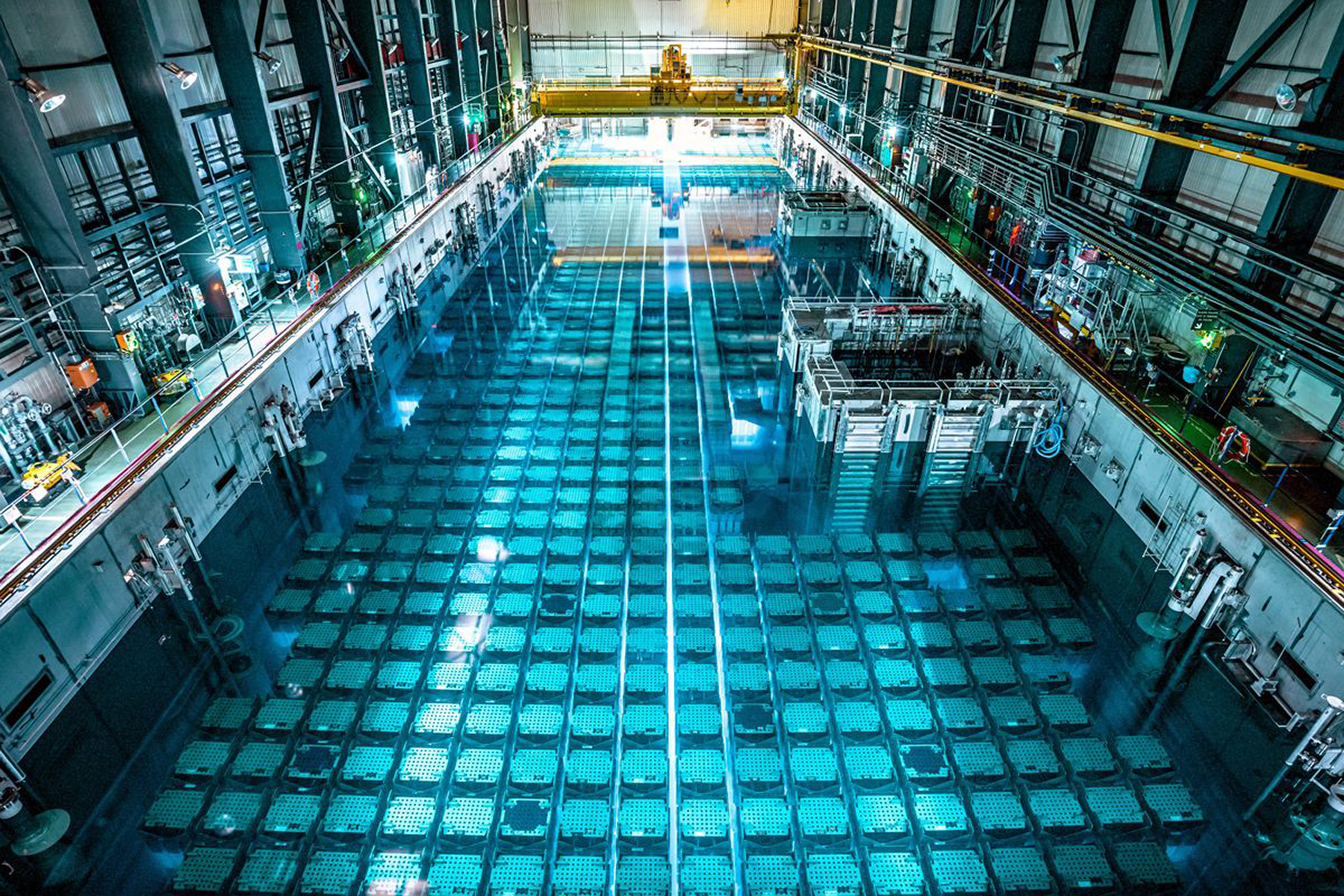
Nuclear fuel that’s been used to generate electricity contains a complex mixture of highly radioactive elements. Sometimes used fuel ends up in a storage pond, as pictured. Advances in fundamental chemistry have potential to guide future strategies for separating americium from less hazardous fission products, such as chemically similar lanthanides. Such advances would help power plant operators minimize waste and reduce the timescale needed for safe storage. Credit to: Orano

Scientists at Los Alamos National Laboratory brought together experimental and theory capabilities to isolate and characterize the first example of a compound in which americium (Am) is bonded to a molecule containing an unpaired electron called a “radical ligand.”

Molecules with unpaired electrons are extremely reactive, making the task of isolating them especially challenging when scientists are working on very small scales (approximately 5 milligrams of americium). Despite this drawback, the unpaired electrons enable new types of chemical bonding and reactions that would otherwise be impossible.

Importantly, the americium compound bonds differently than similar lanthanide compounds ­— a rare and noteworthy finding published in the Journal of the American Chemical Society. Fundamental studies that uncover subtle differences in bonding, reactivity and electronic structure, as this paper does, can enable future advances in chemical separation technology.

Read the paper

Why this matters: The nuclear industry could cut down on waste volume and storage timescales — plus optimize fuel recycling — if it had more effective ways to separate americium from chemically similar lanthanides in used fuel.

  • In used fuel, americium decays slowly compared to most of the fission products.
  • Americium is a significant contributor to long-term waste storage hazards, and proposed processes to “burn-up” (transmute) americium into elements/isotopes that pose less long-term hazards are hampered by the neutron-poisoning nature of lanthanides.
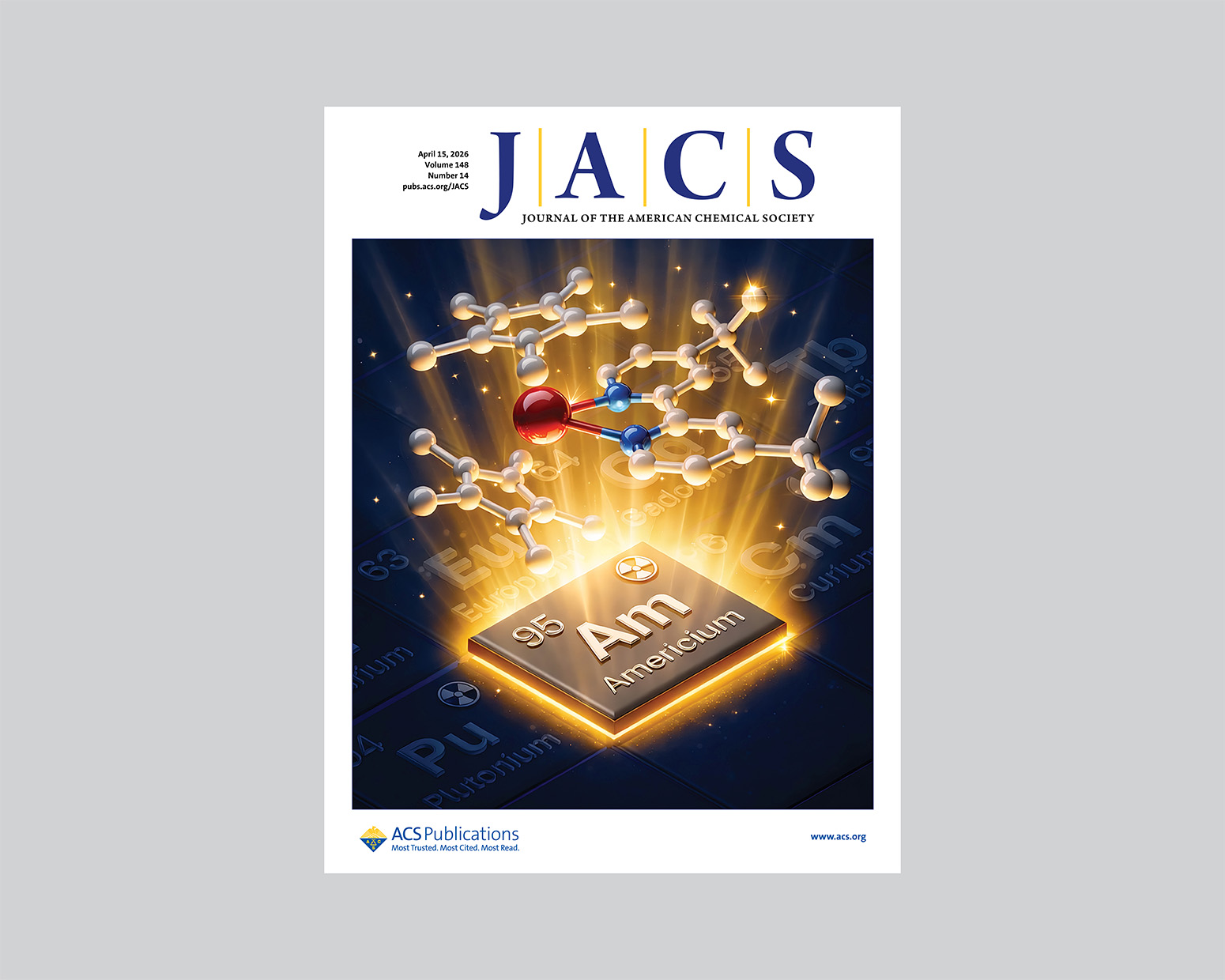
 

Jacsat cover
A graphic depicting the first authenticated example of an americium complex with a radical ligand was featured on a Journal of the American Chemical Society supplementary cover. Credit to: Maria Beltrán-Leiva and Daniel Lussier, Los Alamos National Laboratory.


What they did:  

  • In work led by postdoctoral researchers Maria Beltrán-Leiva and Daniel Lussier, the team characterized the bonding interactions in these compounds experimentally by X-ray crystallography, various forms of spectroscopy and electrochemistry, as well as through quantum chemical calculations. 
  • The studies revealed that americium binds to that radical molecule more tightly than its lanthanide counterparts, proving that radical ligands can amplify subtle electron differences between otherwise similar metals (americium and lanthanides). Such molecules could provide new strategies for selectively binding specific elements. 

Funding: U.S. Department of Energy, Office of Basic Energy Sciences, Heavy Element Chemistry Program; and the Laboratory’s Glenn T. Seaborg Institute (postdoctoral fellowships).

LA-UR-26-25205

Share

Stay up to date
Subscribe to Stay Informed of Recent Science, Technology and Engineering Highlights from LANL
Subscribe Now

More STE Highlights Stories

STE Highlights Home
Scacs Engineers Card

From atoms to devices: This tool closes a scale gap in materials simulation

Los Alamos scientists demonstrate what it could do for engineers

Robot Close Card

Los Alamos scientists recognized for nuclear waste management solutions

International conference spotlights young chemist, ‘superior’ papers

Nseshadri Card

Los Alamos National Laboratory student intern awarded Hertz Fellowship

Plans to pursue a doctorate in chemistry after dabbling in quantum materials research

Nuclear Power Card

How Los Alamos software helps you staff a nuclear reactor project

ReactorCast can control costs, prevent schedule delays

Beta Uranium Tritelluride Card

Unexpected, enhanced magnetism discovered in uranium monolayer alloy

Actinide materials study advances quantum science

Wildfire

How to improve wildfire prediction and response with Los Alamos models

Five platforms available for licensing

Los Alamos National Laboratory

P.O. Box 1663

Los Alamos, NM 87545

(505) 667-5061

At The Lab

  • Business Opportunities
  • Jobs
  • Organizations
  • Research Library
  • User Facilities

Information

  • Emergency
  • Ombuds
  • Reading Room
  • Resources
  • Science Museum

For Employees

  • AskIT
  • LANLInside
  • MyMail
  • Training
DOE White Seal
  • Terms of Use/Privacy

Managed by Triad National Security, LLC for the U.S. Dept. of Energy’s NNSA

Copyright 2026 Triad National Security, LLC. All Rights Reserved.

Learn about the Department of Energy’s Vulnerability Disclosure Program