A celebrity received a threatening note and radioactive material. The FBI sent the suspicious samples to Los Alamos National Laboratory for examination.
While meeting the demands of this mock scenario under a crisis response deadline, a Los Alamos team demonstrated material characterization capabilities and delivered state-of-the-art data to answer questions about the samples. In this drill, scientists worked alongside law enforcement and federal partners to help decision‑makers determine the source of the nuclear material and the appropriate legal or security response.
Why it matters: The Nuclear Forensics International Technical Working Group (ITWG) organizes exercises to strengthen technical capabilities and advance nuclear forensic science. The Lab’s participation in the largest-ever Collaborative Materials Exercise (CMX-8), which involved collaboration across the federal government, furthers those goals and supports the Lab’s global security mission.
Inside the drill:
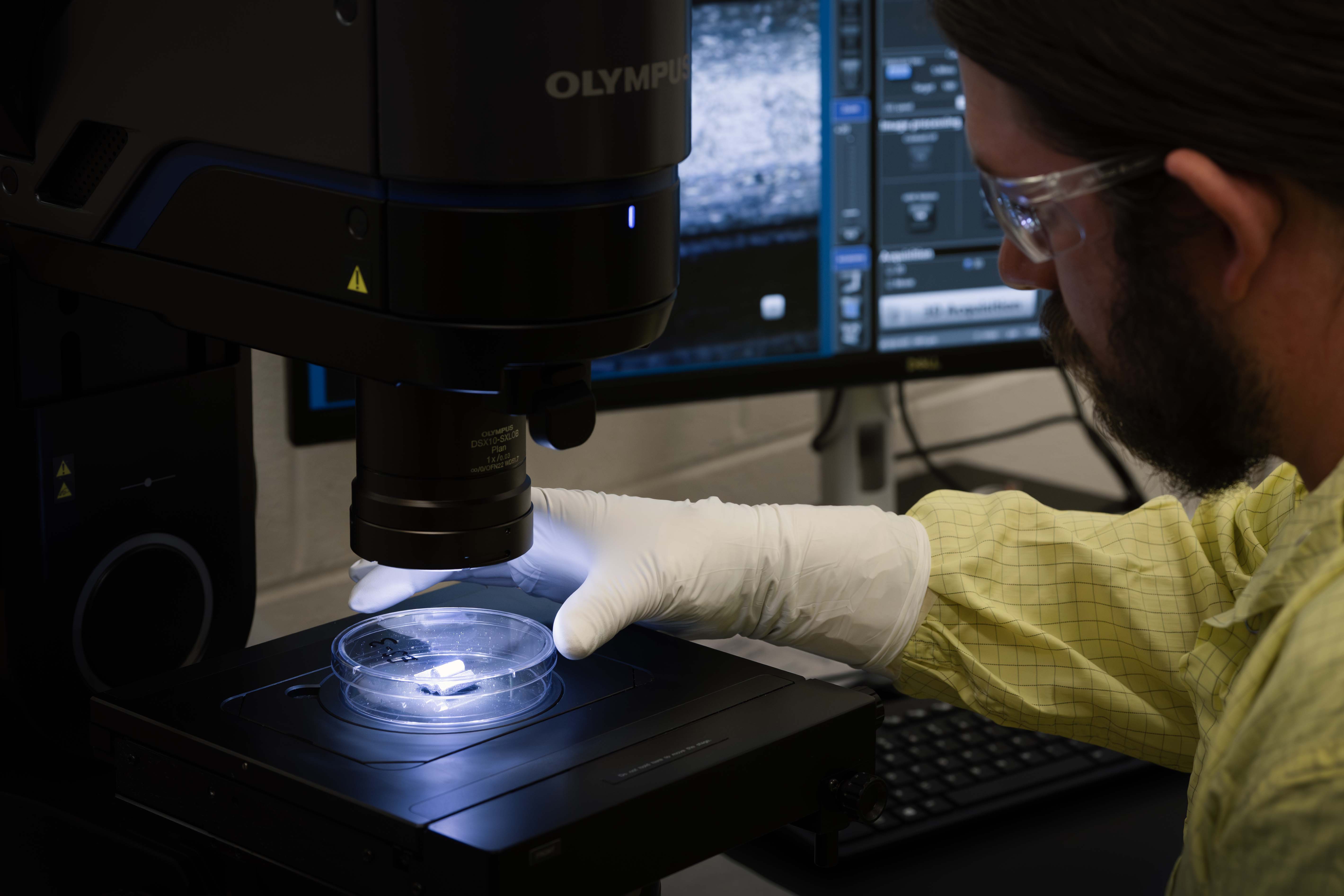
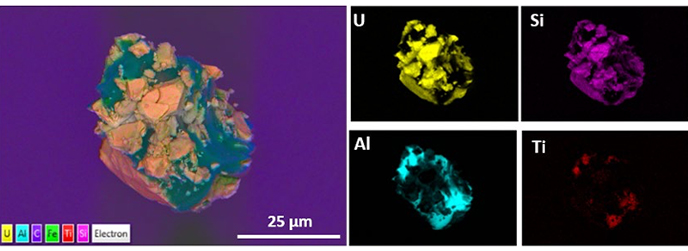
- The Los Alamos team conducted a broad array of preliminary analyses — microscopy, spectroscopy, pycnometry, gamma spectrometry and autoradiography — and delivered an initial forensic report within 24 hours.
- Within two months, the team completed a full destructive analysis of the nuclear material, which in a real-world scenario would assist prosecutors in building a case and investigators in assessing the material’s provenance.
- The exercise highlighted the Lab’s unique predetonation technical nuclear forensics capabilities, specifically focused on material characterization expertise that spans from attogram to kilogram scales.
- Los Alamos results were analyzed along with those from 28 countries.
Key players: The team’s expertise spanned a wide range of material characterization capabilities from the Lab's Chemistry, Materials Physics and Applications, and Sigma divisions.
- Matt Sanborn, the exercise coordinator, and Nikki DiBlasi, the site technical analysis manager, coordinated the effort and reported analysis plans and data to the federal leads.
- Anne Galyean, deputy program manager of the Nuclear Technical Forensics Program office that oversees the Lab’s pre-detonation material analysis capability, communicated with sponsors and interagency stakeholders.
- Steve LaMont, who helped design the CMX‑8 drill as part of the ITWG team, also served as a controller for U.S. participation.
Funding: This work was supported by the Material Analysis Program under the National Nuclear Security Administration’s Office of Nuclear Forensics.
LA-UR-26-24242