Sixty years ago, physicist Robert Keepin established a pioneering nuclear safeguards R&D program at Los Alamos National Laboratory, the first of its kind in the world. This work, which today supports both the International Atomic Energy Agency (IAEA) and other partner organizations, established Los Alamos as a leader in safeguards technology — driving advances in nuclear detection, material accounting and international treaty verification while training future experts.
What has made the safeguards program at Los Alamos so successful? And how can it rise to meet the evolving challenges facing nuclear science today?
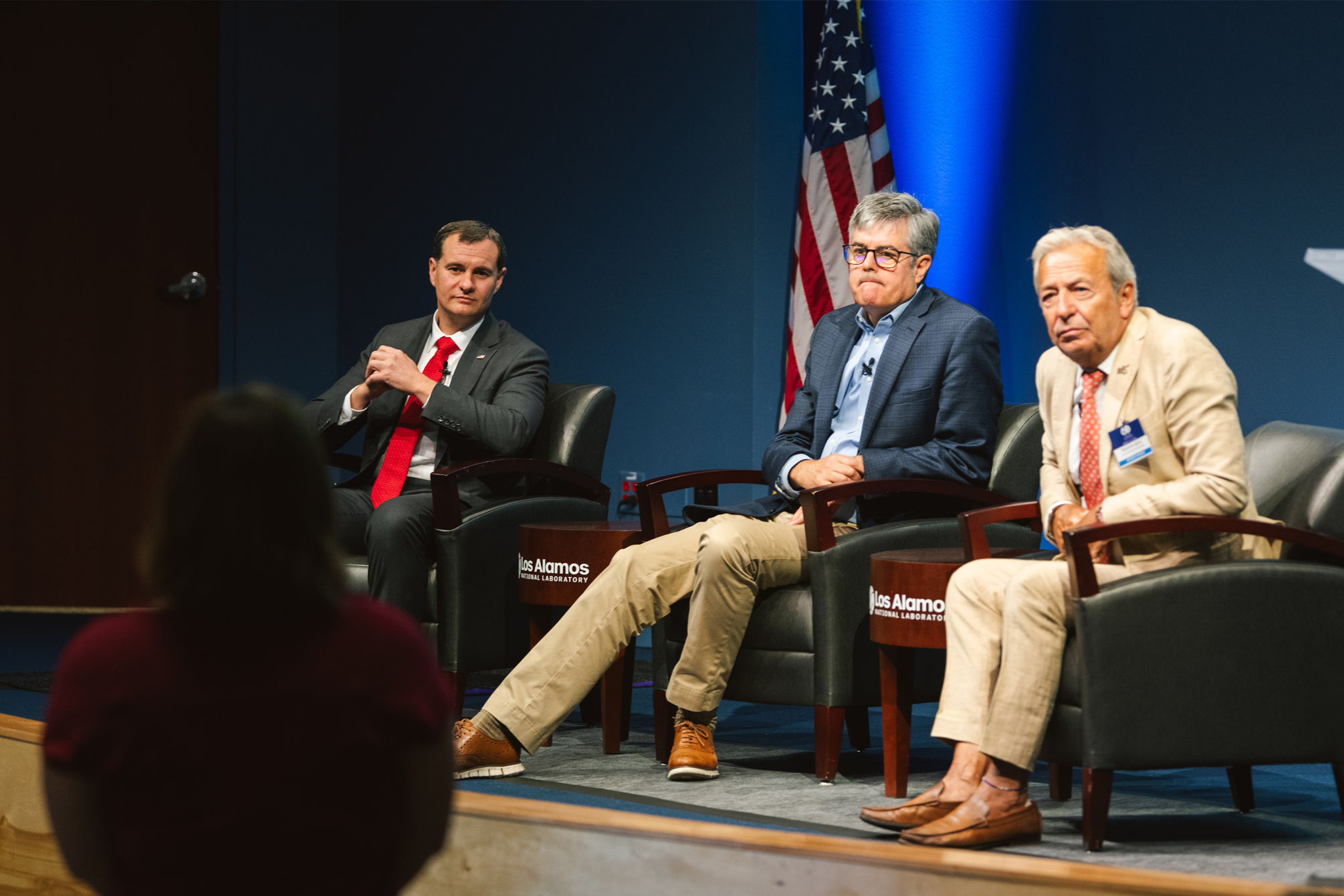
These questions were at the heart of Sixty Years of Safeguards at Los Alamos, a two-day anniversary symposium held Aug. 11-12. Through talks and discussions, members of the Los Alamos safeguards program joined prominent leaders from across the Laboratory, federal agencies and the international nuclear security community.
“There's some parallels with today and where we were at 60 years ago,” said Laboratory Director Thom Mason in his opening keynote. He remarked that surging nuclear energy investment, driven by global electricity demand, will increase proliferation risks that the IAEA must manage. These risks are complicated by new, untested reactor technologies, unconventional fuel forms and non-civilian applications such as naval nuclear propulsion — all requiring safeguards.
These challenges also present opportunities to strengthen the global safeguards system. As Matthew Napoli, deputy administrator for defense nuclear nonproliferation at the National Nuclear Security Administration, emphasized: “Effective safeguards do not prevent innovation; they enable it.” He also made it clear that the goals in nonproliferation directly enforce strategic deterrence — the two go hand in hand.
Building on Keepin's foundational contributions, Los Alamos has pioneered much of the instrumentation IAEA inspectors use in the field today. This tradition of innovation remains robust, exemplified by several recent R&D 100 award recipients including SOFIA, FABIA and ND-Alpha, which tackle modern safeguards challenges in support of both the IAEA’s mandate and partner entities, including Japan Nuclear Fuels Ltd. and Urenco UK.
Another success highlighted was Los Alamos’s globally renowned safeguards training program. Christopher Yeaw, assistant secretary of state for Arms Control and Nonproliferation at the U.S. Department of State, noted that over the past 60 years, Los Alamos has educated approximately 7,000 safeguards professionals who now work at the IAEA, national regulatory agencies and nuclear facilities worldwide. He praised the Lab’s practice of sending its “best and brightest” scientists to Vienna to share expertise with the IAEA as “profound institutional generosity.” But the emerging nuclear energy renaissance is creating urgent new demands.
“If this goes forward, we're going to have to ask Los Alamos not to train 7,000 people over 60 years … but more like 7,000 over a decade,” said Peter Santi of Los Alamos’ Nuclear Engineering and Nonproliferation Division.
During the symposium, many pointed to AI as one tool to help with innovation, with most agreeing it would have an impact on safeguards but no clear consensus on how much. While Massimo Aparo, IAEA deputy director general and head of safeguards, sees significant promise in using AI to process and analyze the IAEA’s extensive datasets, he was emphatic that “the conclusion is always drawn by a human.”
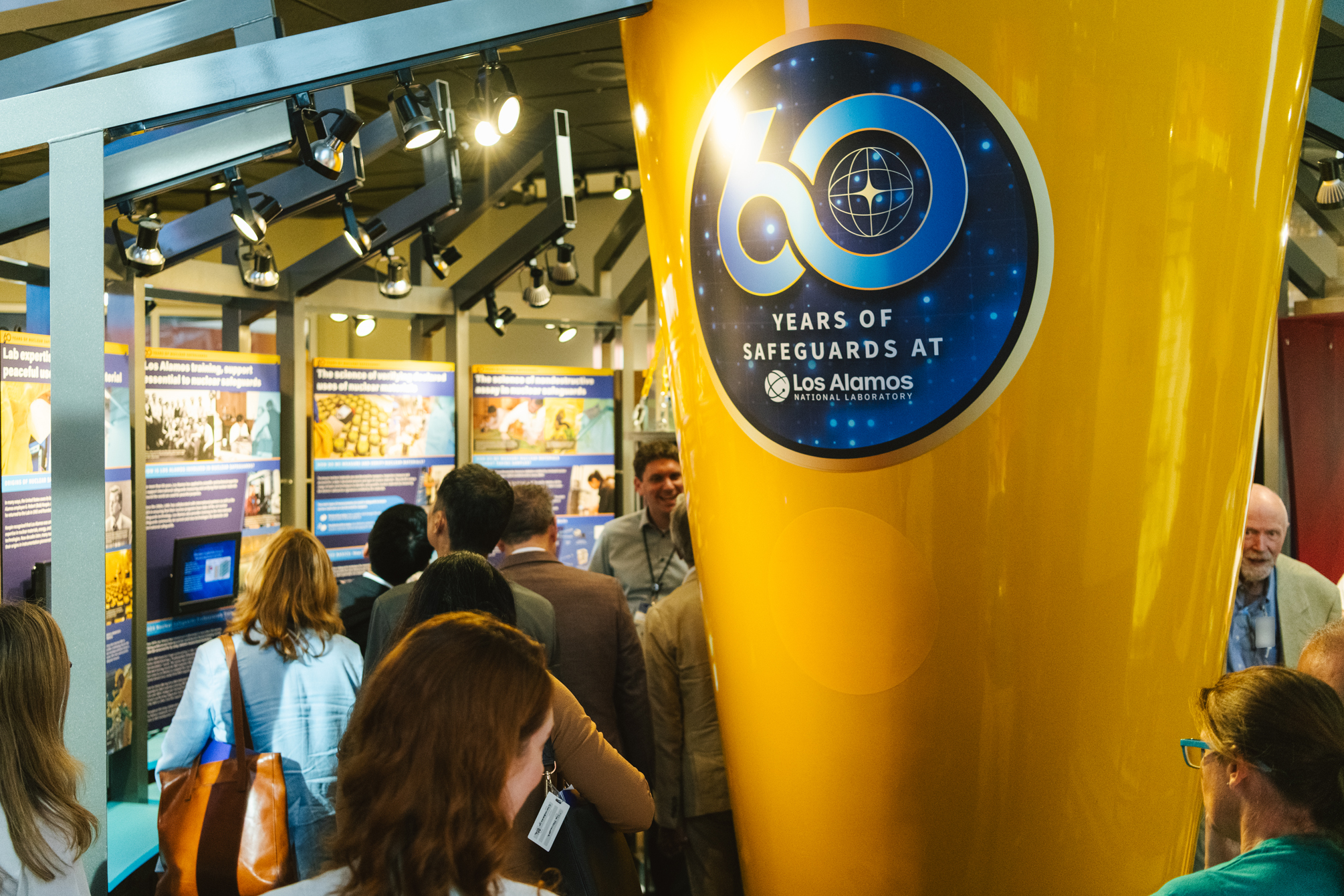
Throughout the symposium, the convivial atmosphere reflected decades of close collaborations — one participant described the event not as a conference, but more like a family reunion. Drawing on his formative training at Los Alamos in the 1980s, Aparo underscored the enduring partnership between his agency and the Lab: “In a changing world, safeguards is a shared responsibility. ... We need Los Alamos’ support to follow through on our mandate.” He concluded, “In Italy, we have a saying, ‘Non c’è miglior specchio dell’amico vecchio,’ which translates to ‘There is no better mirror than an old friend.’ In that respect, Los Alamos is our oldest friend.”
LA-UR-26-27736