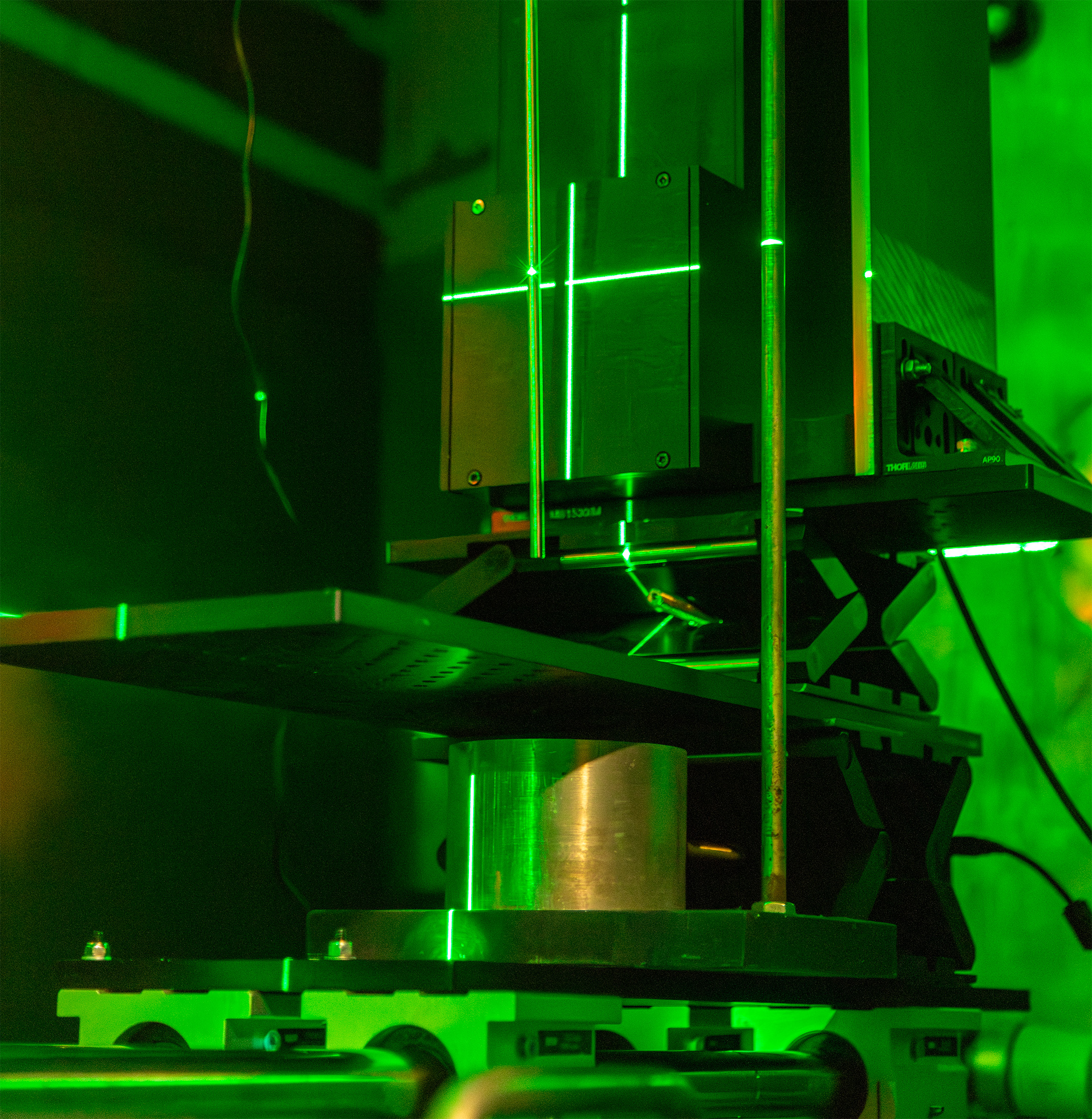
ERNI provides neutrons for nuclear physics measurements and energy-resolved neutron imaging.
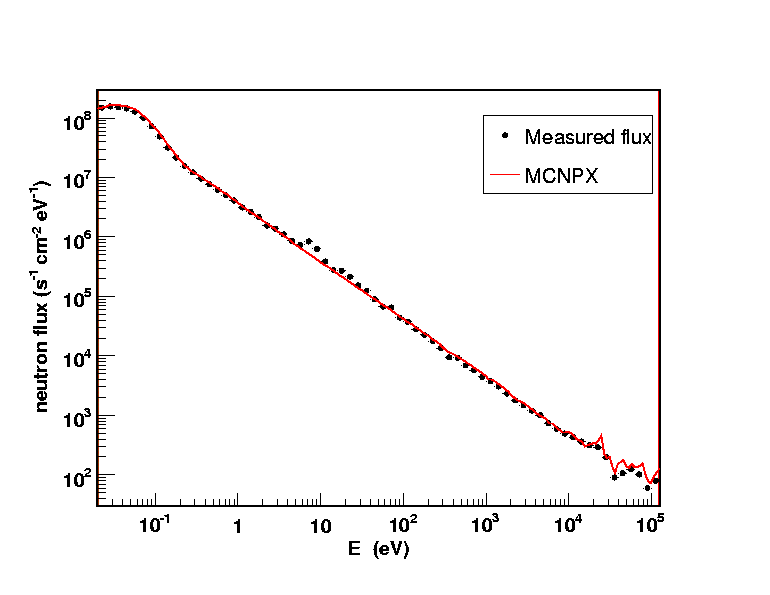
ERNI, at Flight Path 5, utilizes thermal neutrons from the 1L target, providing neutrons from 1 meV to 1 keV for nuclear physics measurements and ~10 meV to 100 eV for energy-resolved neutron imaging. Flight paths from 6 meters to 60 meters are available and allow a variety of experiments, e.g. imaging with beam spot sizes from 1mm to ~1m in diameter.
The flight path is primarily used for neutron imaging/tomography, especially in energy-resolved mode, but can also be used for detector development. Many samples characterized by energy-resolved neutron tomography on flight path 5 are also characterized with neutron diffraction on SMARTS or HIPPO.
Together with cold neutron imaging at Asterix, ERNI complements the proton radiography at LANSCE and high energy x-ray radiography offered by AET-6, providing LANL with a complete and unique set of CT and radiography capabilities.
Instrument specifications
ERNI has two experimental locations: A cave in ER1 of the Lujan Center, covering source-detector distances from ~6.5 m to 11m, and a station accessible by a silo for source-detector distances of 58-62m. The two stations are connected by an evacuated 45m long pipe through the volcanic rock.
Variable collimation allows beam spots from mm to several cm in the cave to almost 1m in the silo. Energy-resolved neutron imaging cameras developed by A. Tremsin (UC Berkeley) and A. Losko (FRM2) are available. The ability to record thousands of neutron radiographs, each at a different neutron energy, allows imaging contrast across neutron energies from cold to epi-thermal - equivalent to recording a neutron transmission for each pixel.
For isotopes with neutron absorption resonances between 1 and 100 eV, 3D isotope distribution or isotope density can be measured non-destructively.
All of this can be done with materials in containers, i.e. nuclear fuels or weapons materials. Using radiographs recorded at neutron energies where materials with high thermal neutron absorption are transparent, energy-resolved neutron imaging also allows to characterize materials opaque to thermal neutrons such as plutonium specimen.
The imaging capability is also applied to study fossils for which X-ray CT methods can not be applied, e.g. larger specimen or fossils with iron rich minerals. Studies of water-uptake in plants utilize the large contrast that hydrogen atoms in water provide for neutron radiography.