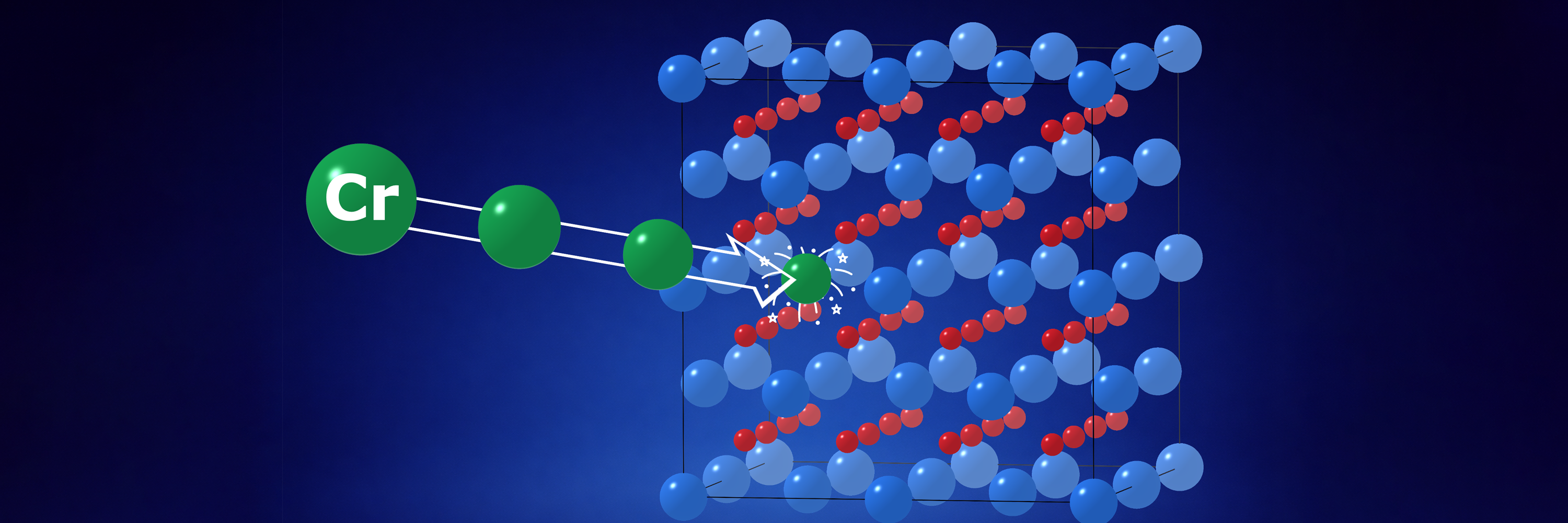
Nuclear fuel manufacturers add tiny amounts of other elements, called “dopants,” to uranium dioxide nuclear fuel to improve its performance, but exactly how these additions work has not been fully understood. Chromium, the most commonly used dopant, is known to help fuel grains grow larger, yet scientists have long debated where chromium resides in the material and how it influences fuel structure.
In the Journal of Physical Chemistry C, researchers from Los Alamos National Laboratory’s Materials Science and Technology division identify a mechanism that explains how chromium at grain boundaries drives grain growth in UO2 fuel.
Why this matters: Doping allows engineers to tune nuclear fuel to improve performance, safety and economics without changing reactor designs. A better understanding of how dopants produce these effects will enable manufacturers to fully realize their benefits.
What they did: The team combined large-scale atomistic simulations, run on the Laboratory’s high-performance computing resources, with thermochemical modeling to study how chromium incorporates into UO2 under conditions relevant to fuel manufacturing and previous experiments.
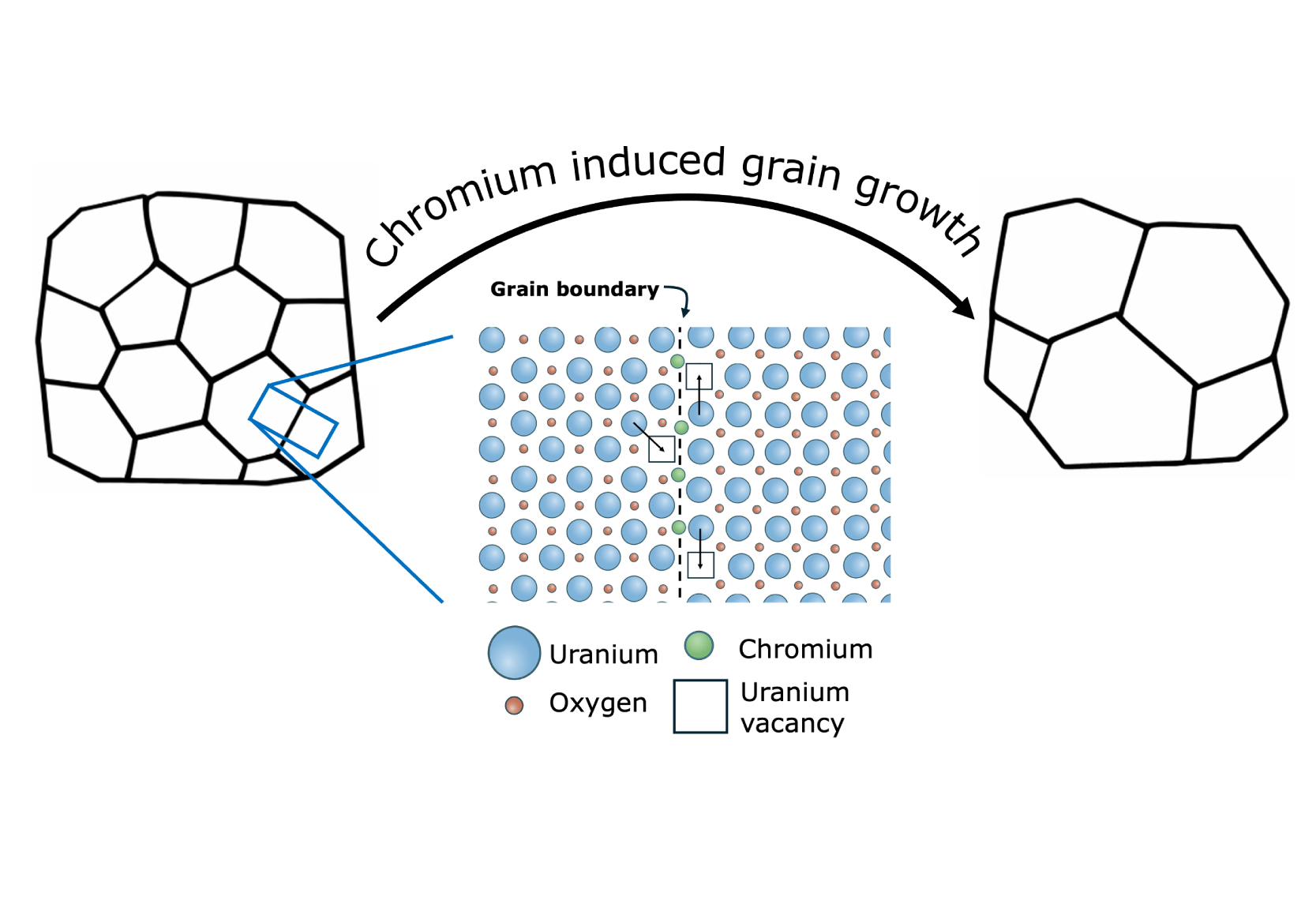
- The researchers found that, under certain conditions, chromium collects at the boundaries between fuel grains and carries a positive charge. This changes how atoms move in the fuel, making it easier for grains to grow by increasing atomic mobility along these boundaries.
- The conditions where this process occurs match the specific oxygen conditions that experiments have shown are needed for improved grain growth during uranium dioxide fuel manufacturing.
- More broadly, the results help explain how small dopant additions influence oxide materials and offer guidance for adjusting manufacturing conditions to get the most benefit from dopants.
Funding: U.S. Department of Energy, Office of Science, Basic Energy Sciences, Materials Sciences and Engineering Division.
LA-UR-26-21283