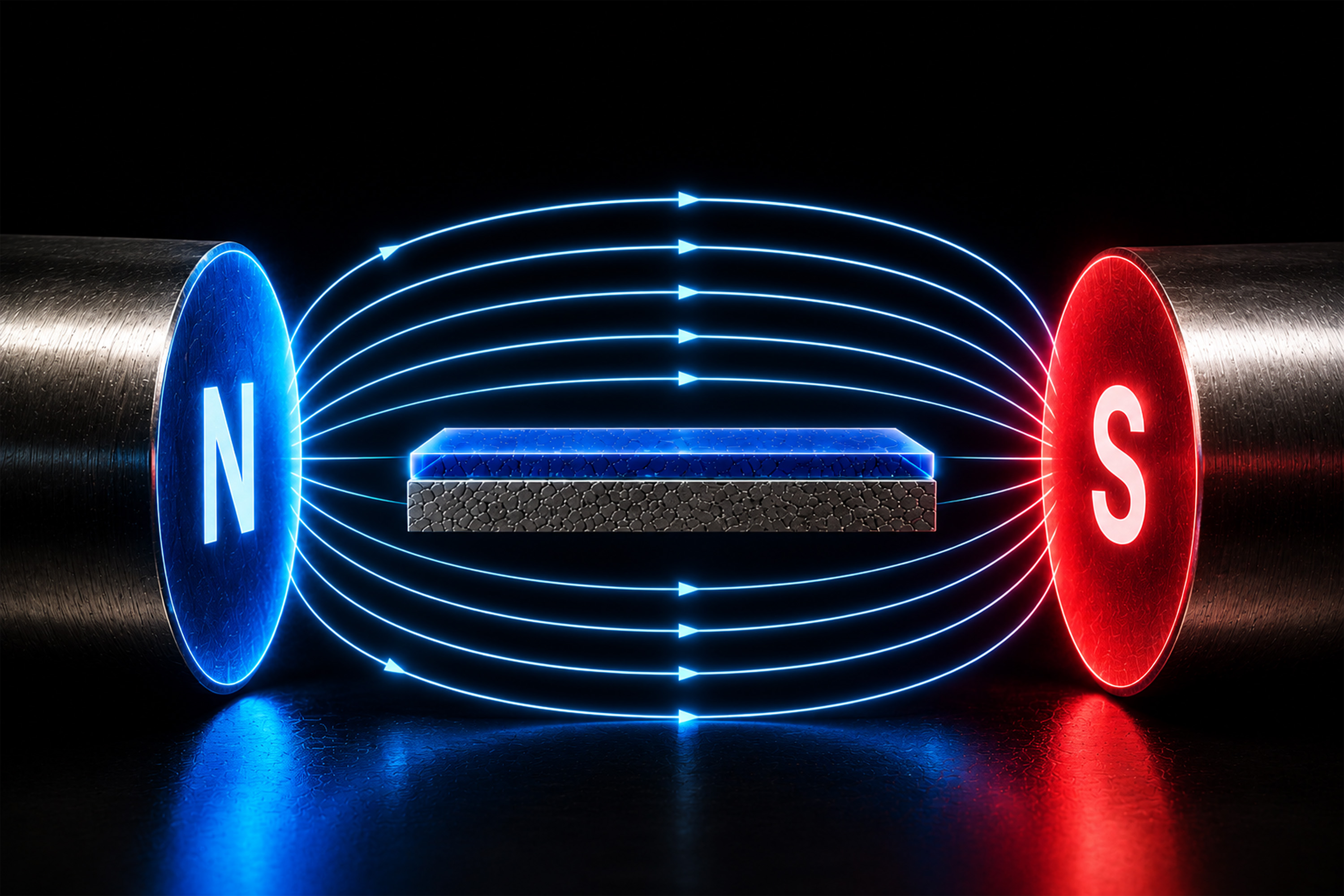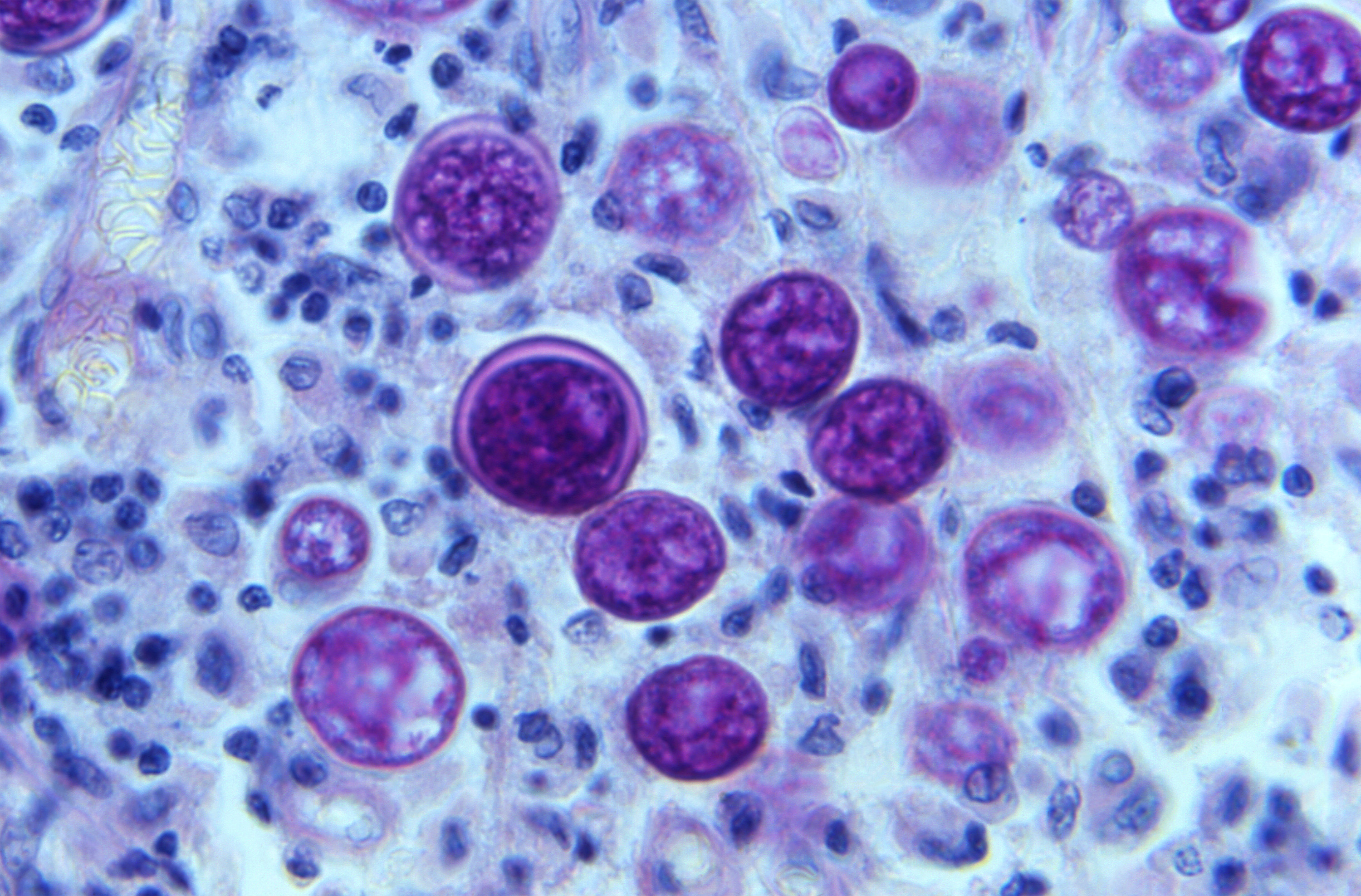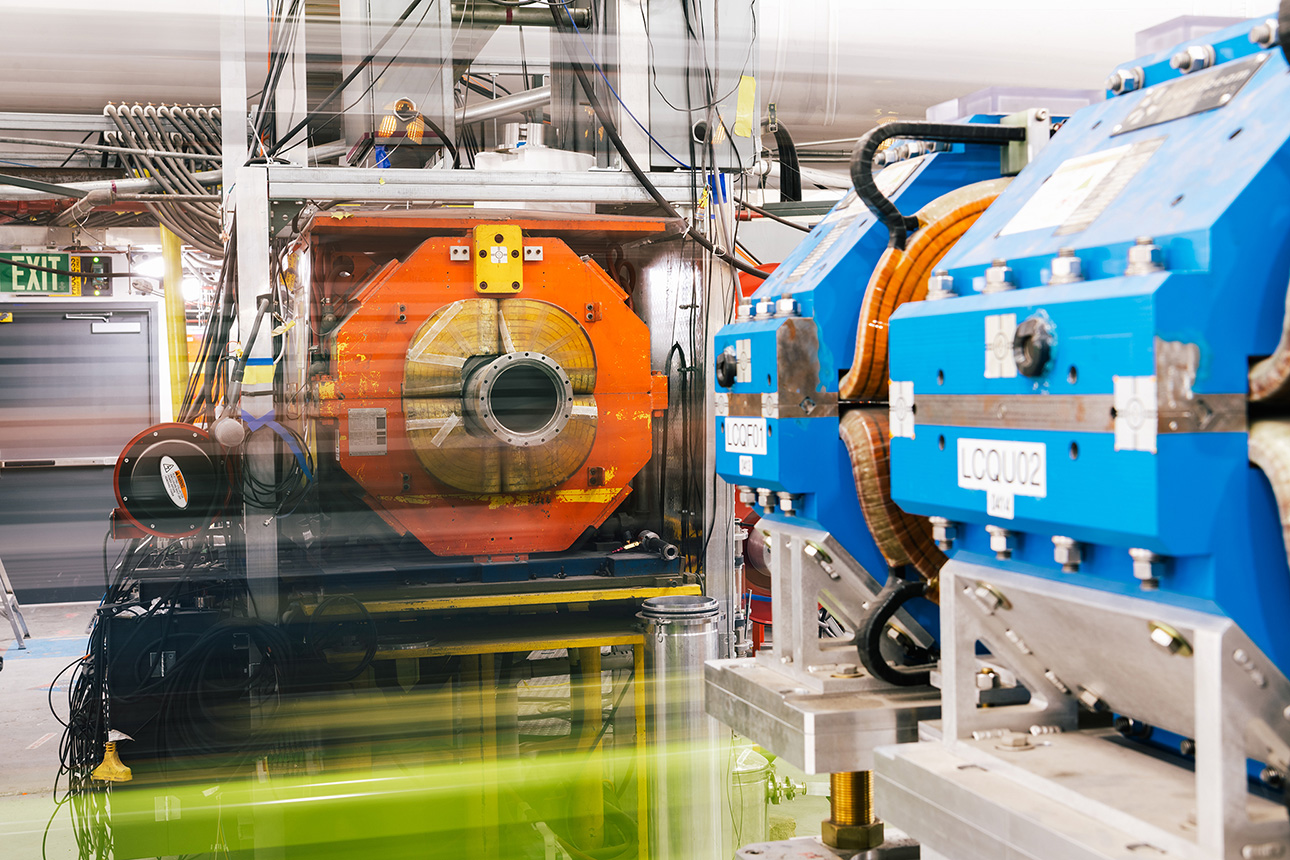
Picture a handheld device connected to a laptop in a backpack worn by postal workers charged with thwarting the fentanyl health crisis and breaking the supply chain of this synthetic opioid to the United States. Powered by nuclear quadrupole resonance (NQR), the technology displays either a red light, meaning fentanyl was detected in an unopened package, or a green light, indicating it was not. But the reliability factor could dip if the NQR signals are extremely weak or buried in noise.
In Los Alamos National Laboratory-led work published in the journal Data Science in Science, a team tackles this concern, showing that modern machine-learning methods can clean up NQR signals far better than traditional techniques.
Why this matters: New instruments are needed to better probe the content of packages for illicit materials. The same NQR method used to detect explosives buried underground could be adapted to help the U.S. Postal Service sniff out the nitrogen-14 chemical core of any type of fentanyl.
What they did: By using neural networks designed to handle complex NQR signals, the team significantly improved the reliability of fentanyl detection, even under difficult conditions. These results point to a promising new path for more robust NQR-based detection of fentanyl and related substances.
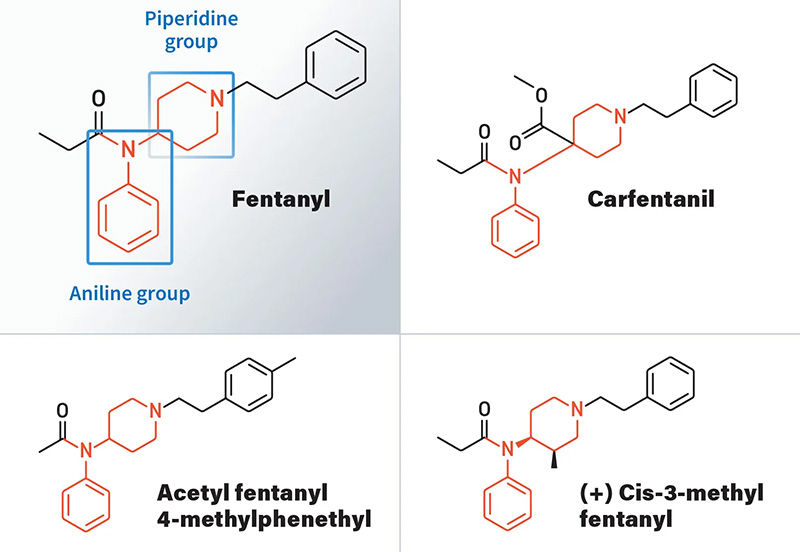
The big picture: A Los Alamos project is building the first NQR detector of fentanyl.
- Given the multitude of fentanyl derivatives, the entire signature space needs to be measured to help stop fentanyl from being shipped by postal services.
- The effort includes assembling a chemical library of synthetic opioids for testing and database development.
- A searchable database is being developed for researchers and law enforcement to access synthesis and spectral data.
Funding: Laboratory Directed Research and Development program at Los Alamos National Laboratory.
LA-UR-26-21283