DOE/LANL Jurisdiction Fire Danger Rating:
  1. LANL Home
  2. Media
  3. Newsletters
  4. STE Highlights
December 18, 2025

Laboratory Fellows present 80 years of science and engineering discovery

New visual project spotlights 20 major Los Alamos discoveries

Discoveries Feature 2
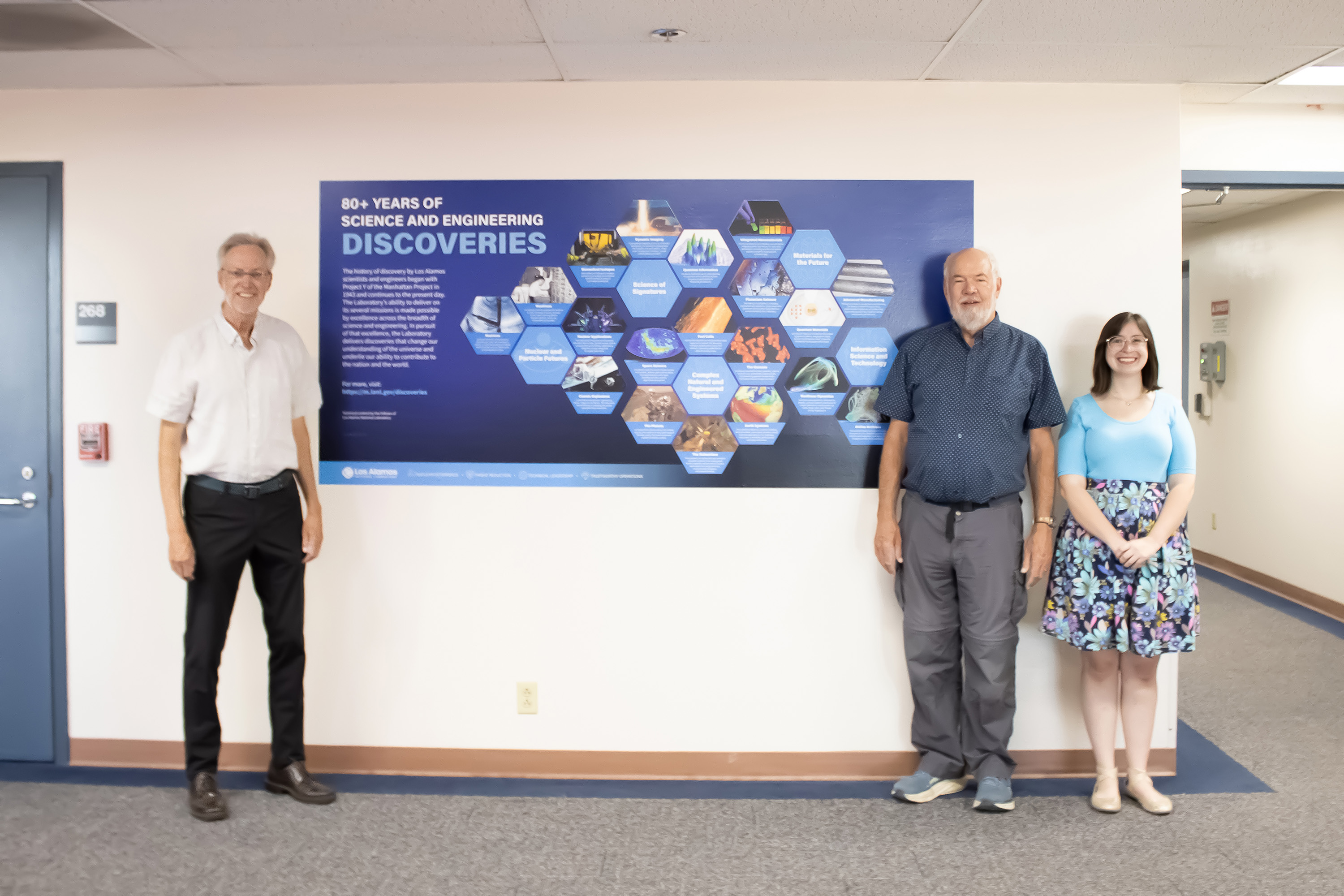
Mark Chadwick (left), then acting deputy director for Science, Technology and Engineering (DDSTE), tapped Laboratory Fellows to nominate some of the most significant advances that define the history of innovation at Los Alamos. Laboratory Fellow William Priedhorsky directed the project, and Gabriella Smith designed the displays. Credit to: Los Alamos National Laboratory

Breakthroughs and inventions made by Los Alamos researchers in nuclear science, materials, computing and algorithms, quantum, life sciences, space and more have been thoughtfully curated on a new public webpage and poster. Laboratory Fellows reviewed an extensive list of science and engineering achievements to select 20 major discoveries across eight decades.

Visit the webpage

Why this matters: The Laboratory Fellows hope that accomplishments of the past will inspire future scientists and engineers to contribute even greater accomplishments in the coming decades. 

Four big things: Here’s a quick preview of some of the Lab’s innovation history.

  • Plutonium science: The history of Los Alamos is intertwined with plutonium. Every advance in plutonium science either happened here or was inspired by this Laboratory.
  • Neutrinos: Los Alamos scientists detected the neutrino in 1956. Subsequent studies revealed its tiny mass and its oscillation between electron, muon, tau and possible sterile states.
  • Dynamic imaging: High-speed photography and X-ray and proton radiography are essential to looking deep into weapons-relevant systems. These tools, invented at Los Alamos, include the Dual-Axis Radiographic Hydrodynamic Test (DARHT) Facility and the Proton Radiography (pRad) Facility at the Los Alamos Neutron Science Center (LANSCE).
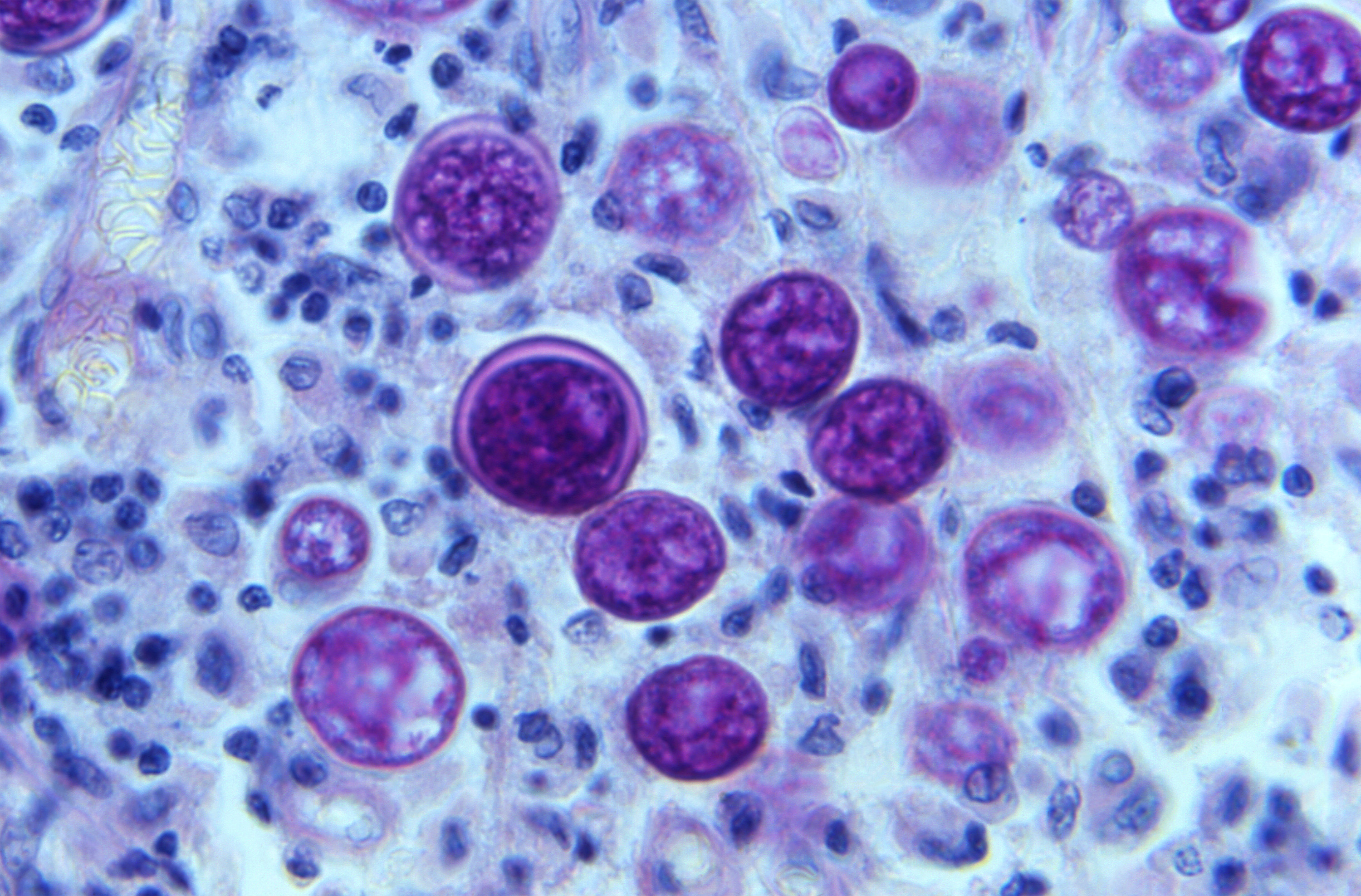
  • The genome: Los Alamos invented the flow cytometer, a device to count, sort and identify individual cells. The Lab’s pioneering genome libraries led to the Human Genome Project and more.

LA-UR-25-32001

Share

Stay up to date
Subscribe to Stay Informed of Recent Science, Technology and Engineering Highlights from LANL
Subscribe Now

More STE Highlights Stories

STE Highlights Home
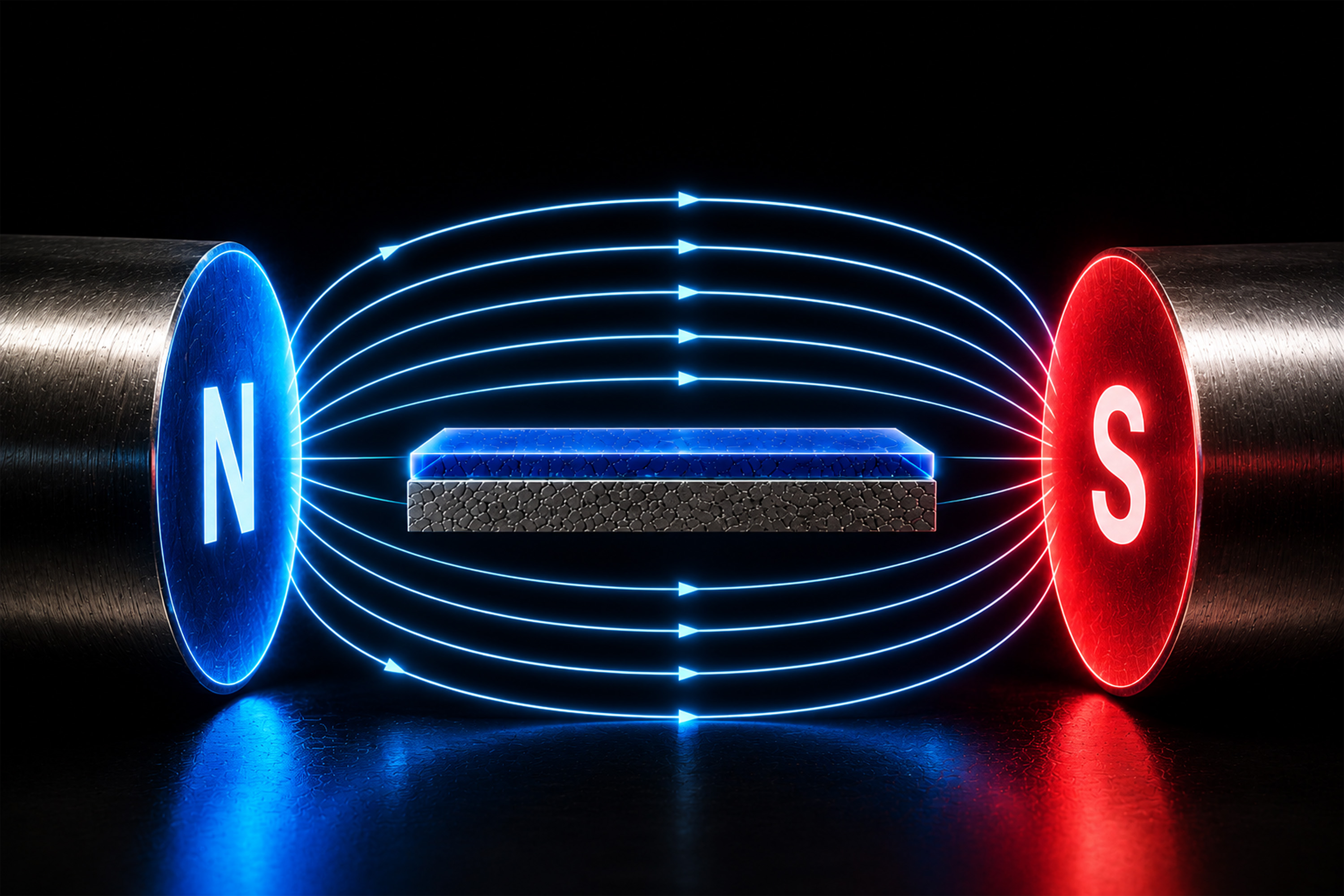
D Wave Chip

Physicists use D-Wave chip to study quantum effects

How quantum tunneling helps magnets choose a state

Cunningham

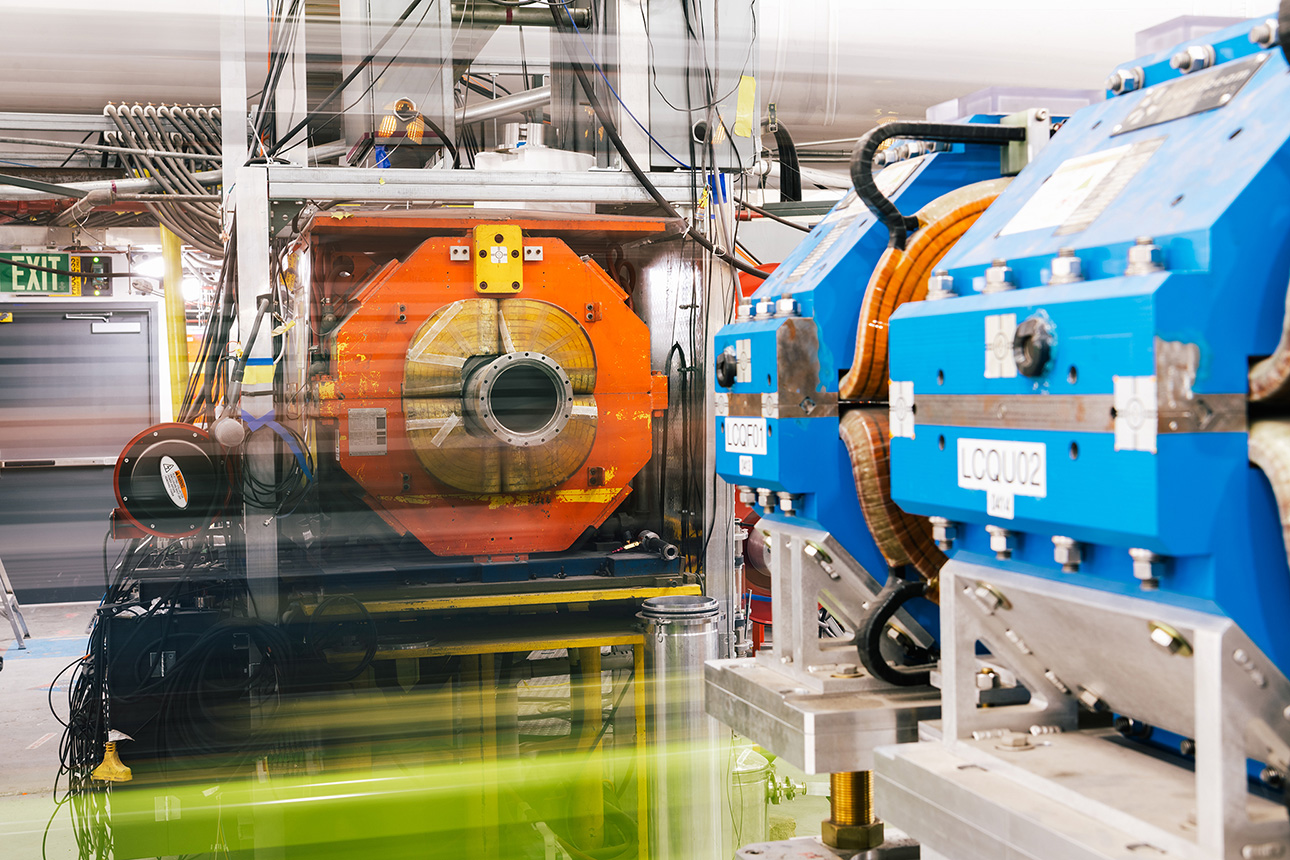
Cunningham named to ASME’s 2026 Mechanical Engineering Watch List

Los Alamos grad student uses research, humor and outreach to make nuclear science approachable

Bouabid Ryan

Bouabid earns Springer Thesis Prize for neutrino studies

Award recognizes research conducted in part at Los Alamos

AI Acoustics

It’s boiling over! Acoustic AI hears what cameras can’t see

A new method uses sound to predict unsafe conditions

Neptunium Oxide

First-ever measurements unlock hidden properties of neptunium oxide

New insights could improve prediction and management of long-lived radioactive materials

Metal Failure

No longer a shot in the dark: Predicting metal failure under stress

The design and safety of defense systems could benefit from this model

Los Alamos National Laboratory

P.O. Box 1663

Los Alamos, NM 87545

(505) 667-5061

At The Lab

  • Business Opportunities
  • Jobs
  • Organizations
  • Research Library
  • User Facilities

Information

  • Emergency
  • Ombuds
  • Reading Room
  • Resources
  • Science Museum

For Employees

  • AskIT
  • LANLInside
  • MyMail
  • Training
DOE White Seal
  • Terms of Use/Privacy

Managed by Triad National Security, LLC for the U.S. Dept. of Energy’s NNSA

Copyright 2026 Triad National Security, LLC. All Rights Reserved.

Learn about the Department of Energy’s Vulnerability Disclosure Program