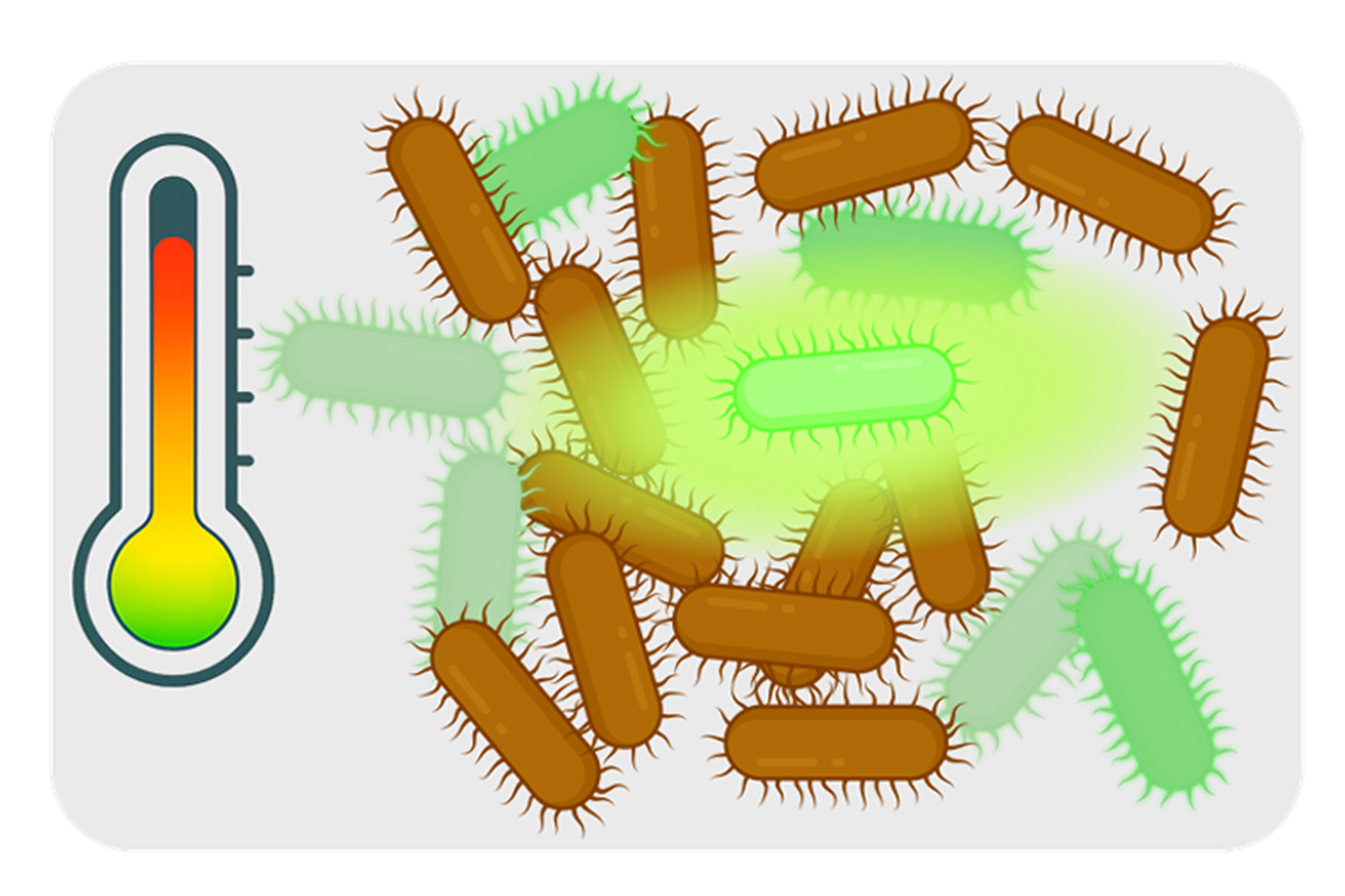
Scientists at Los Alamos National Laboratory engineered a “fluorogenic reporter” protein that works at high temperatures such as 70 degrees Celsius (158 degrees Fahrenheit) and signals its function by emitting a green glow. Researchers can evaluate the stability or function of enzymes by tagging them with this green-glowing reporter.
The reporter makes it easy to screen large libraries of proteins quickly for specific, industry-relevant characteristics such as a long shelf life or retained activity at high temperatures. The team took advantage of thermophilic microbes — microorganisms that naturally thrive in hot environments — as hosts to produce these proteins.
Read the paper
Why this matters: Proteins have a wide range of biotechnological applications. They can be used as therapeutic agents, antibodies, reagents for research and diagnostics, and as functional catalysts for biomanufacturing.
- The challenge is that many proteins need cold storage and can also rapidly lose function at the high temperatures needed for certain industrial processes.
- Some proteins naturally function at high temperatures, but finding and studying them requires working with a host organism that can also survive at high temperatures conditions.
What they did: The Los Alamos team computationally designed libraries of variants of a low temperature fluorogenic reporter, Y-FAST, with thermostability in mind and directly screened the variants in a thermophilic microbial host that thrives in extreme heat.
- Through this process, the team developed a fluorogenic protein called hsFAST.
- hsFAST can now be used as a “fluorescent tag” to screen thermostable variants of other industrial proteins for biological applications.
- hsFAST is also useful a tag to report other conditions inside a microbial host cell.
What they learned: Contrary to some other thermostable fluorescent reporters such as TGP (thermal green protein, also developed at the Lab), the new reporter hsFAST can function in an oxygen-free environment, a characteristic highly relevant for applications in thermophiles, which mostly exist in anaerobic conditions.
Funding: This work was supported by the U.S. Department of Energy’s BOTTLE (for Bio-Optimized Technologies to keep Thermoplastics out of Landfills and the Environment) and Agile BioFoundry consortia as well as the Laboratory Directed Research and Development program at Los Alamos.
LA-UR-25-32001