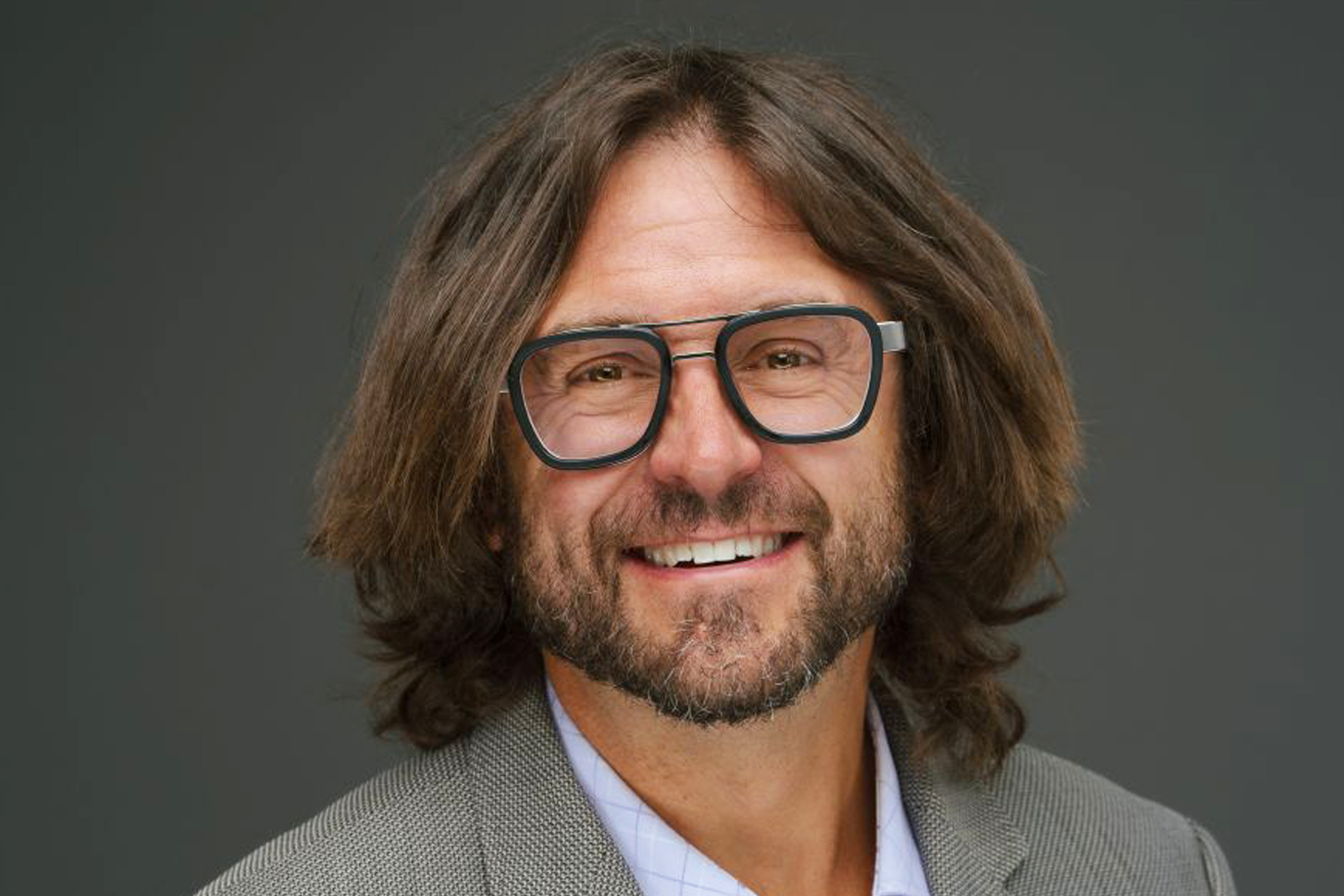
Brian Bell, a scientist in Los Alamos National Laboratory’s Advanced Research in Cyber Systems group, has been selected to participate in the prestigious Heidelberg Laureate Forum. This distinction recognizes his exceptional technical abilities, innovative research contributions, and leadership within the fields of cybersecurity and artificial intelligence.
“Brian’s selection for the Heidelberg Laureate Forum reflects the significance of his contributions to some of the most challenging problems in artificial intelligence and cybersecurity,” said Nancy Jo Nicholas, Associate Laboratory Director for Global Security. “His work continues to strengthen the Laboratory’s leadership in AI research while advancing the broader scientific community’s understanding of secure and robust machine learning systems."
Bell’s research has directly supported the Laboratory’s efforts to develop secure, trustworthy AI systems. He provided critical expertise and made key technical contributions to pioneering work in the formal verification of neural networks and the integration of cryptographic functionality into AI models, advancing the state of the art in AI security and reliability.
His research builds upon and extends the work of three Heidelberg Laureates. Most recently, he advanced Laureate Shafi Goldwasser’s foundational research on cryptographic properties in neural networks by addressing key practical limitations in an original framework she proposed through novel geometric techniques developed in his doctoral research. His work also extends concepts related to adversarial robustness introduced by Laureate Adi Shamir and builds upon foundational ideas from Laureate Yoshua Bengio. Collectively, these contributions address one of the field’s most fundamental challenges: understanding and controlling the geometric properties of neural networks. This work has broad implications for AI security, robustness, and the foundational understanding of machine learning systems.
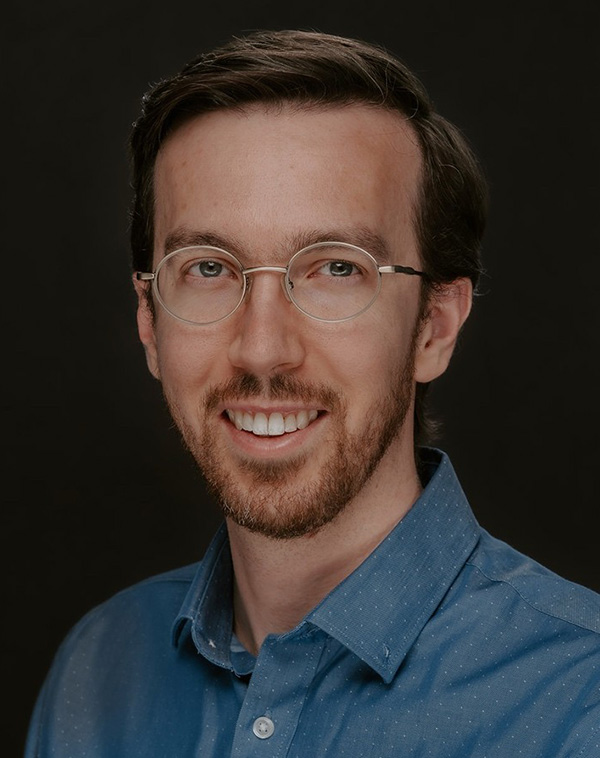
“I am honored to have been selected to participate in this year’s Heidelberg Laureate Forum and to represent Los Alamos National Laboratory,” said Bell. “This forum offers a unique opportunity to learn from distinguished researchers about tackling challenging problems, identifying impactful research directions, and building long-term scientific programs. I am especially excited to engage with scholars whose work has influenced my interests in learning theory, cryptography, and trustworthy computation. The opportunity to exchange ideas with leaders in these fields is both inspiring and invaluable.”
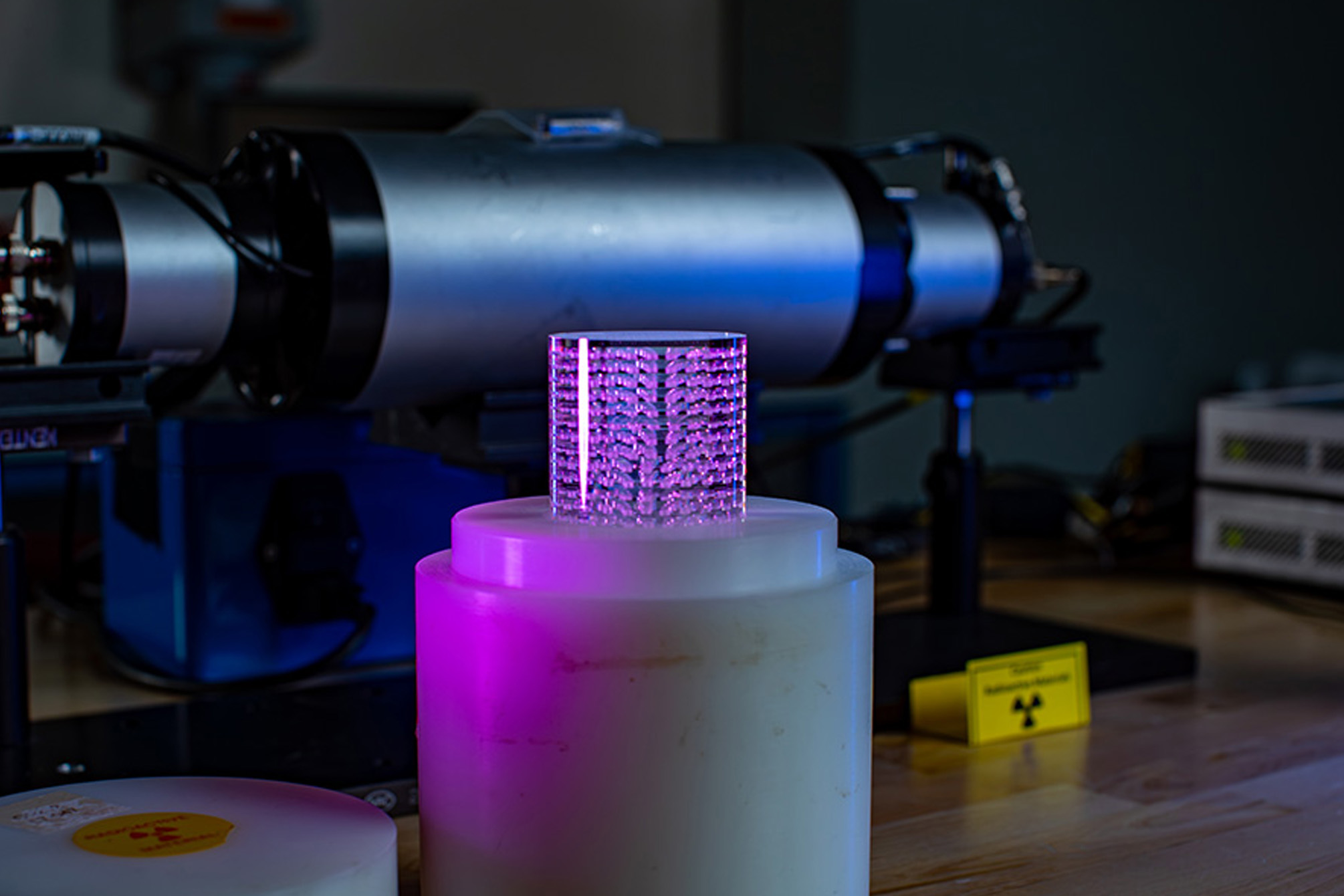
Beyond his expertise in adversarial machine learning, Bell has demonstrated a remarkable ability to address complex, multidisciplinary challenges. Bell is advancing AI for Los Alamos’ missions by identifying and preserving the mathematical properties required for scientific legitimacy, enabling data-driven models to replace costly legacy computations without sacrificing rigor. For example, he is leading efforts in the development and application of Implicit Neural Representation models for multi-probe radiographic reconstruction, an emerging technology with the potential to transform 3D scene representation and enable significant advances in experimental science and robotics. In addition to driving the technical development of these capabilities, Bell has established strategic collaborations with leading academic researchers to accelerate innovation and impact.
Brian earned his Ph.D. in Applied Mathematics from the University of Arizona, where he developed a rigorous mathematical framework for analyzing the robustness of neural networks against adversarial attacks. He also holds a master’s degree in computational and applied mathematics from the University of Arizona and a bachelor’s degree in mathematics from Arizona State University, where he graduated summa cum laude.
About the Heidelberg Laureate Forum
Established in 2013, the Heidelberg Laureate Forum is a networking conference where 200 carefully selected young researchers in mathematics and computer science from around the globe spend a week interacting with the laureates of the disciplines: recipients of the Abel Prize, ACM A.M. Turing Award, ACM Prize in Computing, Fields Medal, IMU Abacus Medal and Nevanlinna Prize. This year the 2026 Heidelberg Laureate Forum will be held in Heidelberg, Germany, in September and offers researchers the opportunity to network with the foremost luminaries of their fields in a mix of scientific and social program elements.
LA-UR-26-25697