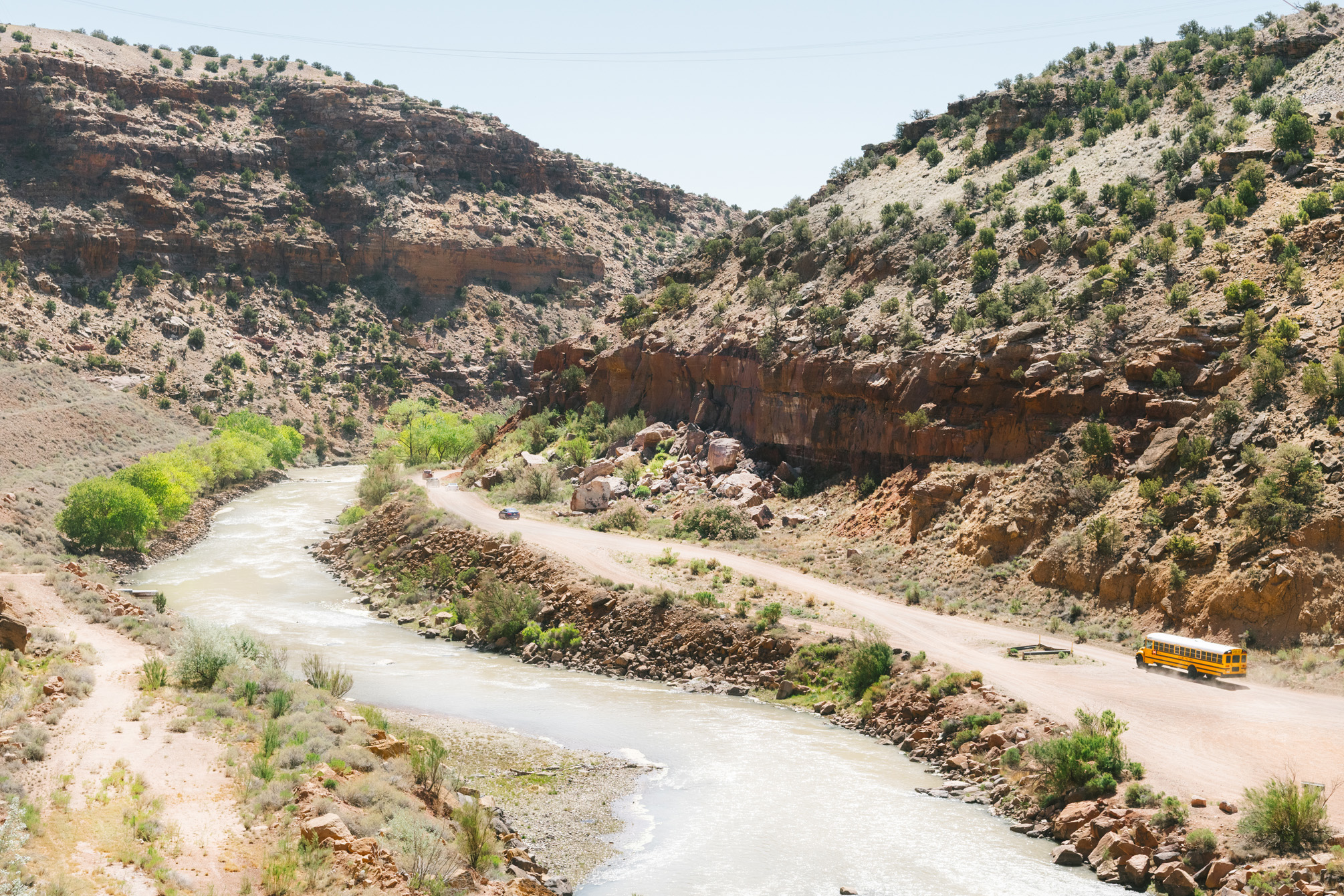
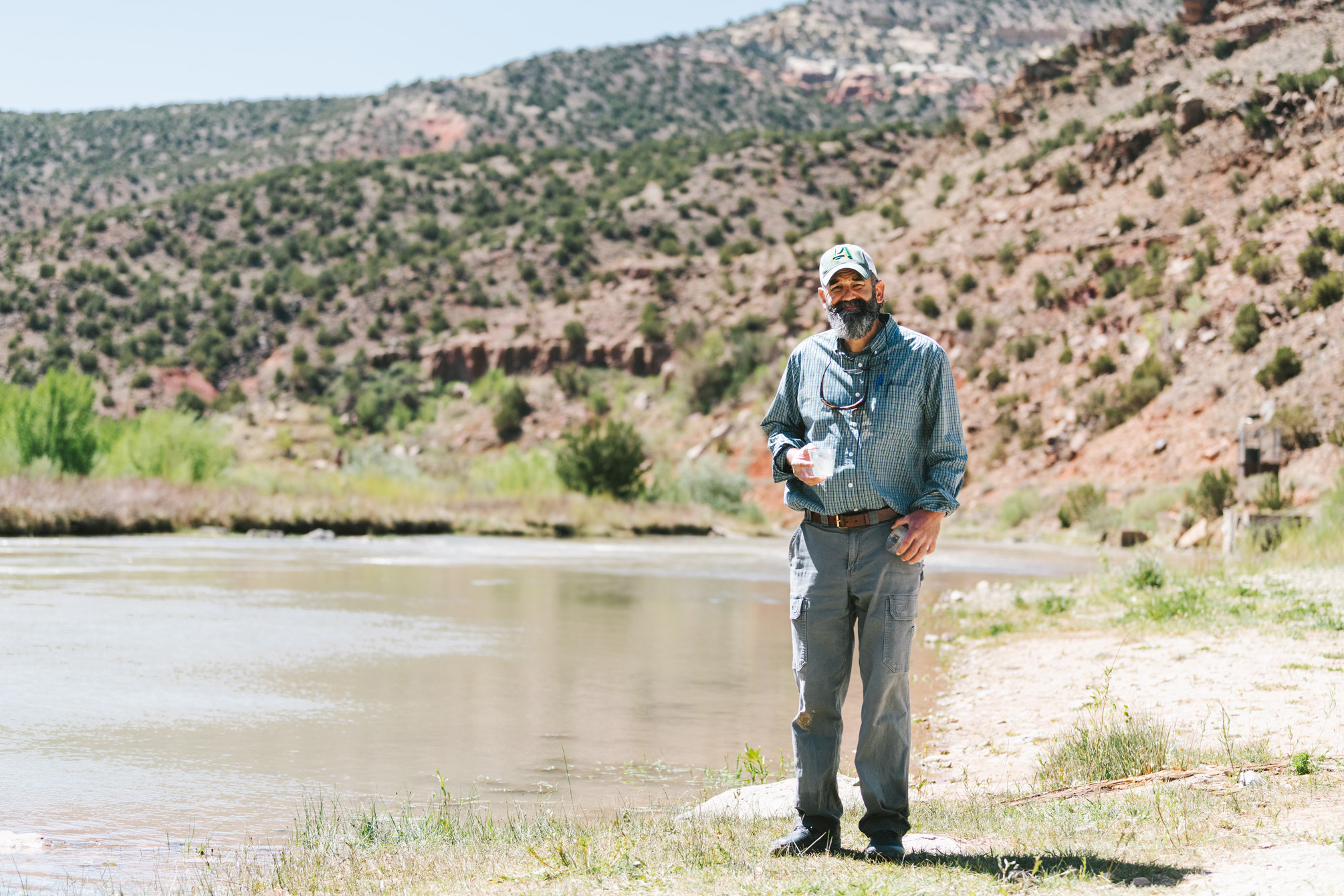
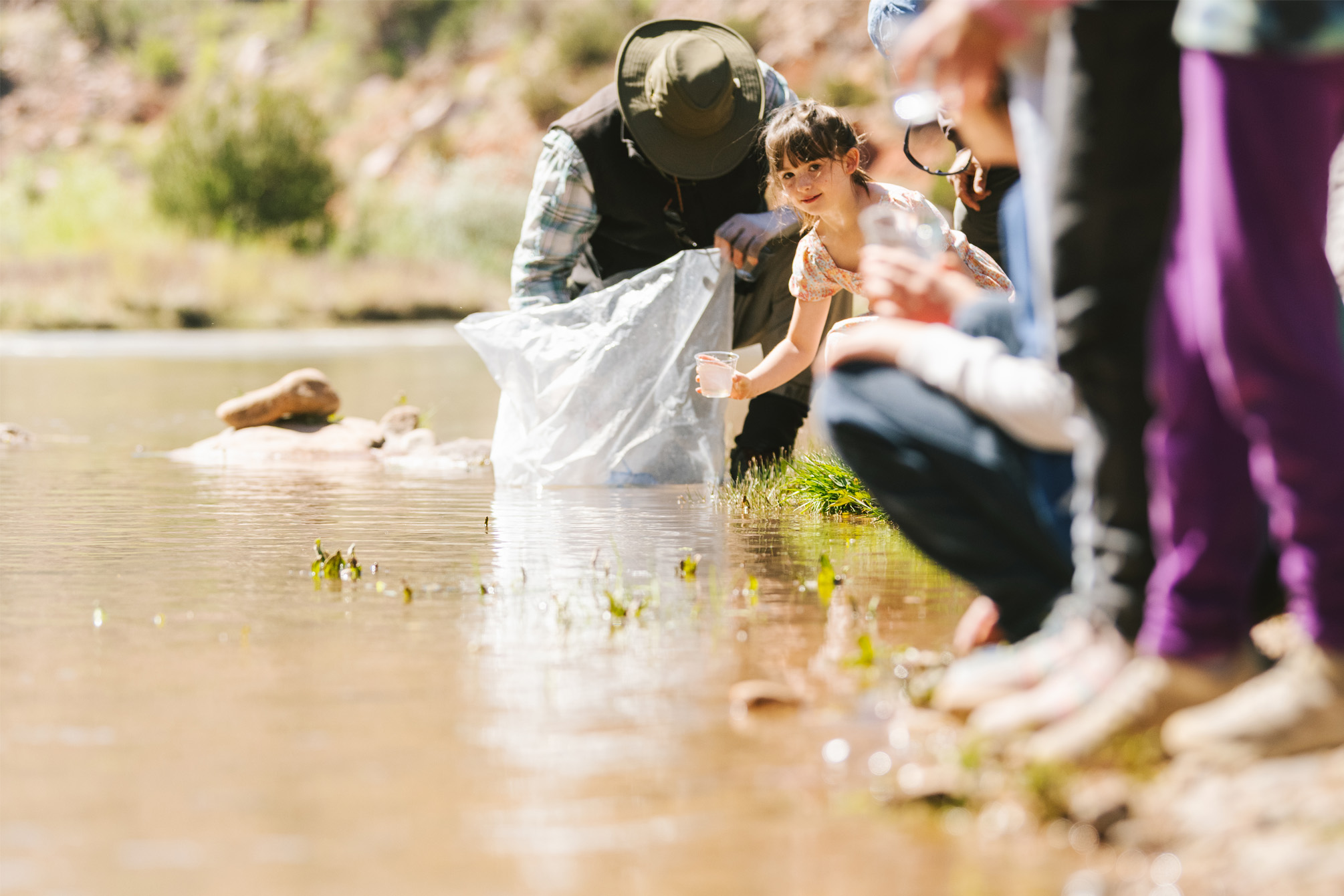
Along the banks of the Rio Chama just north of Abiquiu, with the sandstone canyon walls rising high above the muddied water, Aaron Dailey, environmental manager for water quality at Los Alamos National Laboratory, and second graders from Barranca Mesa Elementary waved goodbye to a few dozen juvenile rainbow trout.
It was a bittersweet separation. Just four months prior, the students began raising the fish from eggs in their classroom aquarium. They’d grown attached to their cold-water companions, but they also learned about the trout’s lifecycle and how they’d need a natural habitat someday soon — one the students would need to protect through a commitment to conservation.
Aaron is just one of hundreds of Lab employees volunteering in schools or educational enrichment programs in the seven counties surrounding the Laboratory: Los Alamos, Mora, Rio Arriba, Sandoval, San Miguel, Santa Fe and Taos. In 2025, 370 LANL employees provided 4,446 service hours to nonprofit and educational organizations in Northern New Mexico, supporting 119 STEM and non-STEM activities impacting an estimated 2,440 students, teachers, and community members.
Partnership schools kids on stewarding resources
Provided by the New Mexico Department of Game and Fish, the trout eggs were delivered to Barranca Mesa Elementary through the nonprofit New Mexico Trout Unlimited. The organization helps conserve the state’s habitat for wild and native trout through stream restoration, policy advocacy and community outreach.
Aaron has been a member since the 1990s, and about seven years ago, when he moved to Los Alamos from Farmington, he began volunteering with the local chapter. It’s an extension, of sorts, to his work leading the Lab’s Water Quality team, where he helps ensure permitted wastewater discharges don’t carry contaminants harmful to humans or the environment.
Through Trout in the Classroom, which partners with schools statewide, including those on pueblo and tribal land, Aaron and his cohorts provide fish eggs, food, an aquarium and other provisions so students can successfully raise a crop of rainbow trout. In upper-level grades, volunteers explain that the trout are triploid, which means they’ve been bred with three sets of chromosomes instead of two, resulting in sterility.
Without the ability to reproduce, they don’t breed with other species that dilute New Mexico’s already declining population of native Rio Grande cutthroat trout. They simply aid in a lesson on species conservation.
“When you release a non-sterile rainbow trout, which has the same spawning season as the Rio Grande cutthroat, our official state fish, they can breed and make a hybrid species called a cutbow, which weakens the cutthroat’s genetic strain and can outcompete them for food and other resources,” Aaron said. “The cool thing about triploids is they dedicate themselves to just growing instead of reproducing. They’re like a mule that way — they just get big and don’t mess with genetics.
“We try to throw these details into our Trout in the Classroom visits because if we want to maintain native populations of fish” — an indicator of a healthy, diverse ecosystem — “it’s important to acknowledge biological facts and educate people.”
Childhood fishing roots
Aaron first noticed a decline in Rio Grande cutthroat at the creek he grew up fishing near his parents’ cabin in the Santa Fe National Forest’s Coyote Ranger District. When he was a kid, the creek was chock-full of native fish. But over time, during visits home from college and military service, there’d be fewer of them. In their place, non-native brown trout — introduced by the Europeans in the 1880s — had flourished. That’s when Aaron got keen on Trout Unlimited and the work they do to protect cold-water habitat for the Rio Grande cutthroat.
“In New Mexico, it’s in these high-mountain streams that our native fish live, and those streams are subject to a lot of fluctuation in water levels, like this year with the drought,” Aaron said. “In comparison, brown trout can live easier in low-water, high-temperature situations. They’re problematic because they spawn in the fall — a different time as the rainbow and cutthroat, which spawn in early spring and then eat the cutthroat trout minnows and eggs.”
It’s a combination of this competition from aggressive non-native brown trout, plus the hybridization factor with the non-sterile rainbows, that have pushed the Rio Grande cutthroat to the brink. Changing weather patterns have also played a role.
From classroom to the New Mexico wild
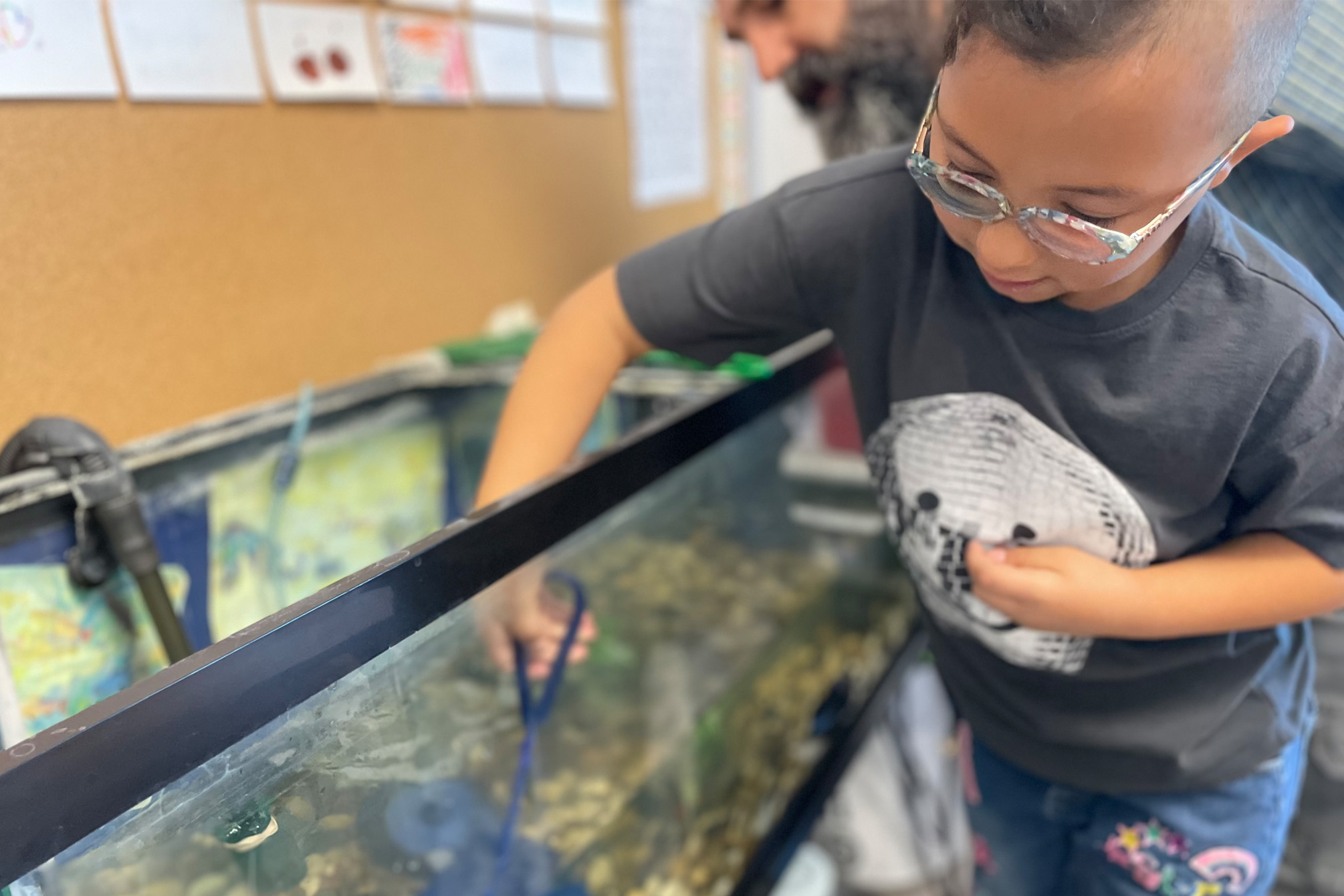
At Barranca Mesa, the first school in Los Alamos to participate in Trout in the Classroom, second grade teacher Sarah Grace Yingst incorporated the triploid trout project into her curriculum on an animal’s life cycle. The fish added a unique hands-on component.
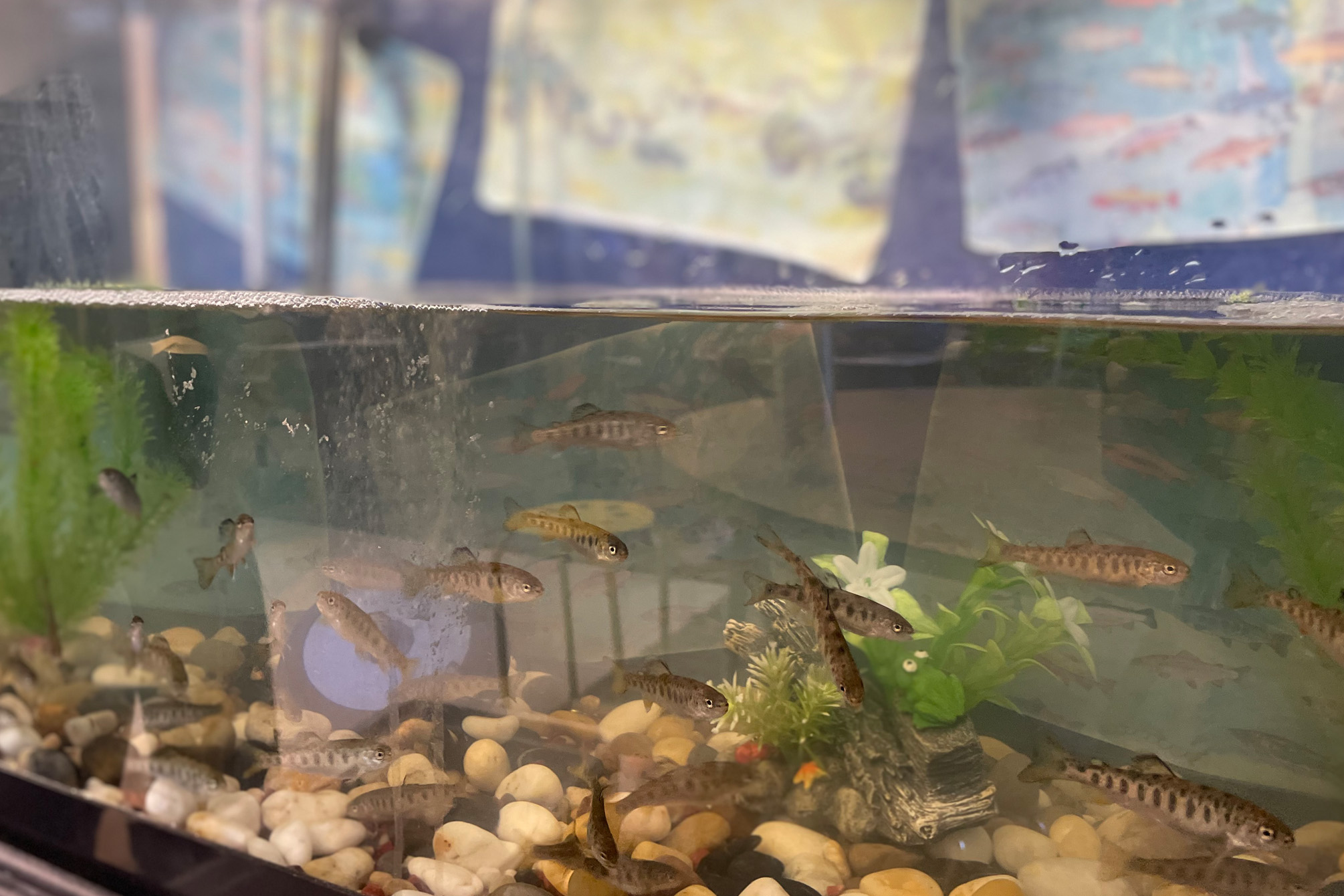
Deposited onto the rock bed of the aquarium, students watched the eggs hatch into alevin, then live off the yolk sacs attached to their bellies for nutrition. Once the alevin fully absorbed that yolk sac, they grew into fry and students fed them the powdered food they’d been provided.
They also tested and monitored the pH levels of the water, adding a balancing solution when necessary and cleaning the tank to remove any accumulation of organic waste.
Finally, once beefed up to juvenile stage, the fish were ready for release.
With mixed emotions from the students, Aaron arrived in their classroom the morning of April 28 to help retrieve the fish. Once netted and placed in a cooler lined with plastic, filled with aquarium water — plus ice packs and an aeration device to keep things cool — the kids loaded onto the bus for the river with Aaron close behind.
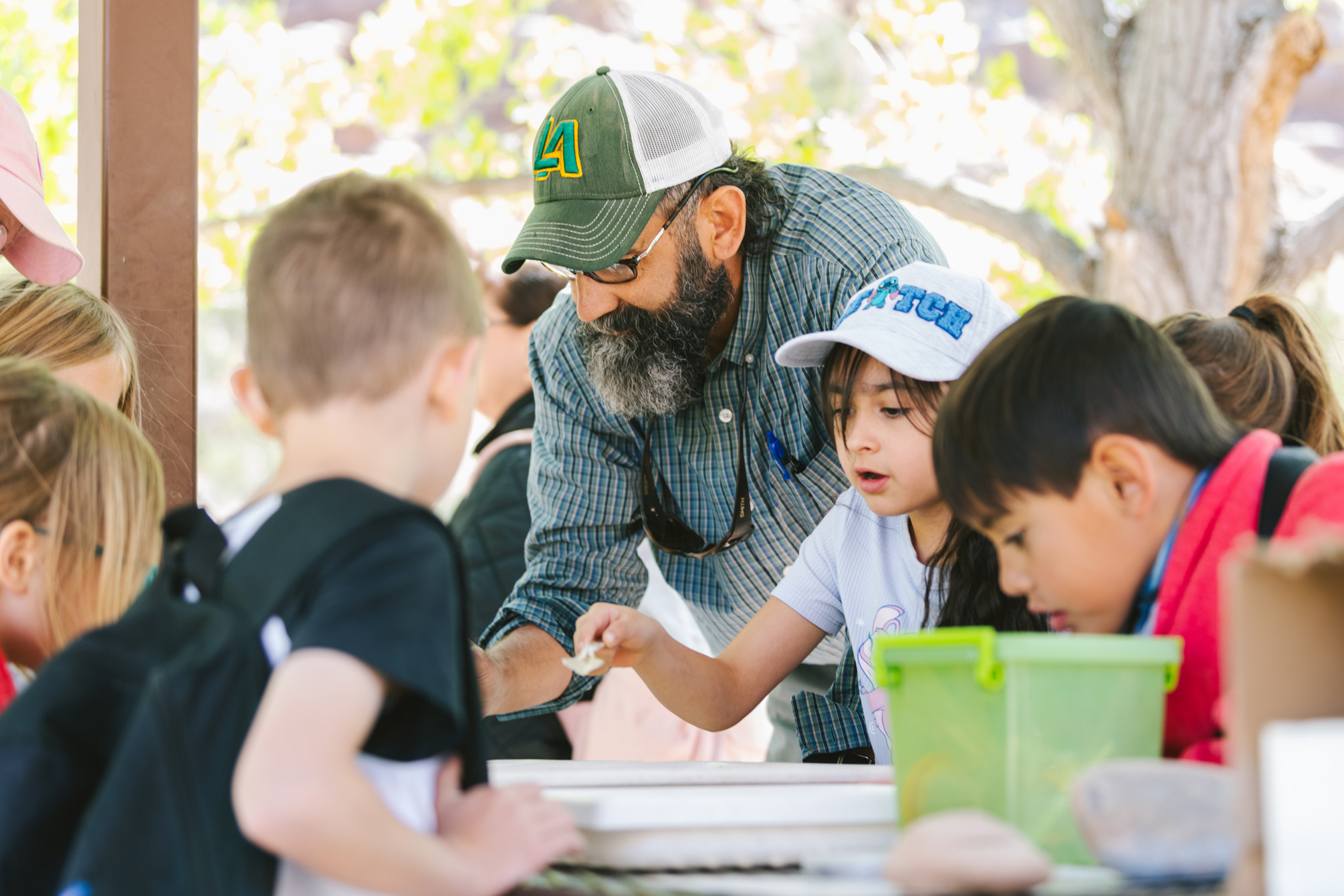
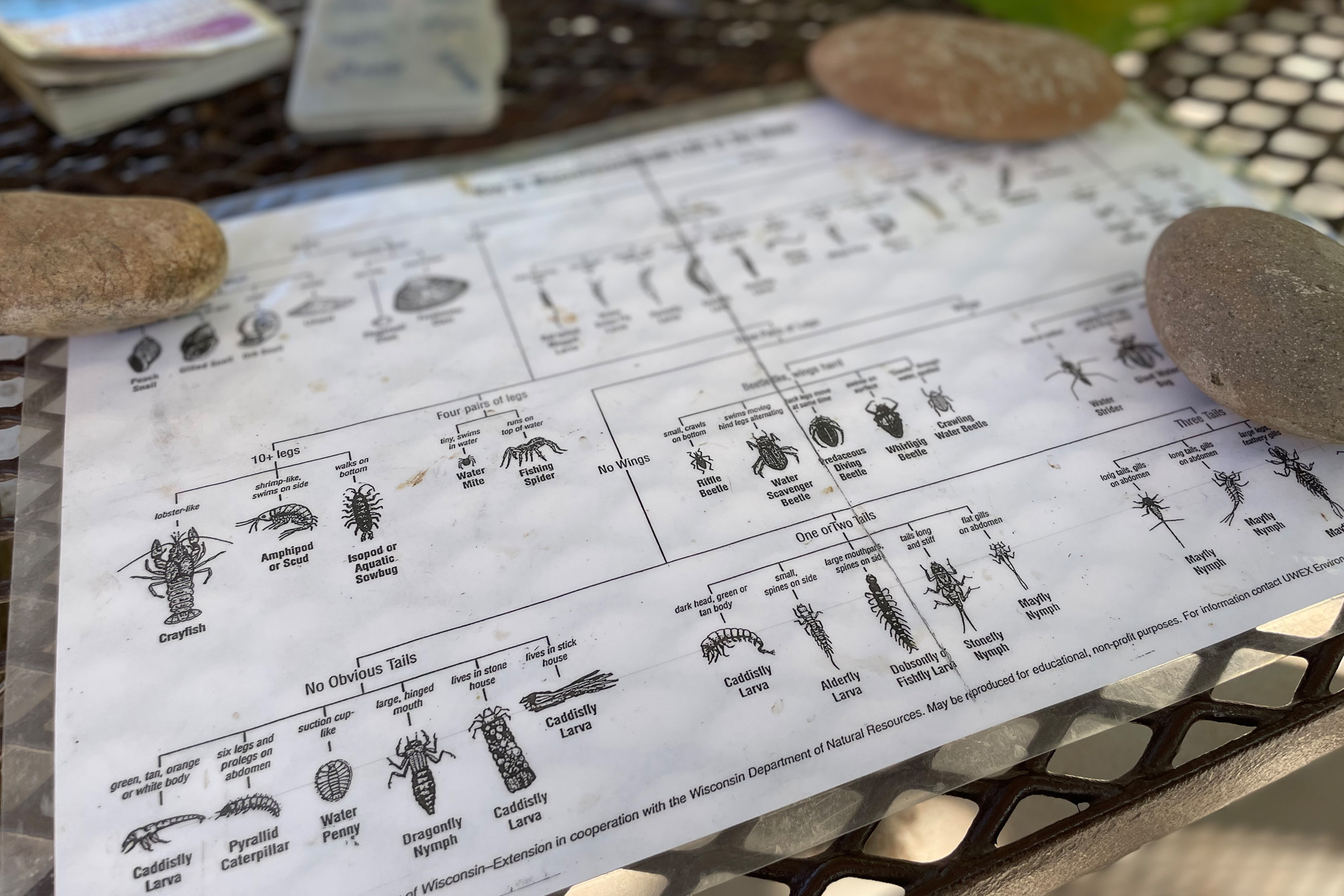
Trout Unlimited volunteers Mike Jozwiakowski and Terry Martinson were already at the river, flipping over stones to find samples of aquatic macroinvertebrates, or insects in their nymph and larvae stage, that had attached themselves to river rocks. They’d show the students the fish’s new food chain and how the insects are an indicator of water quality.
“A lot of people geek out knowing the names of everything, myself included,” Aaron said. “But just knowing these insects are there, that it’s a whole interconnected food web — that’s what we try to teach the kids. We want them to understand that New Mexico has some really cool but fragile water systems that we need to take care of.”
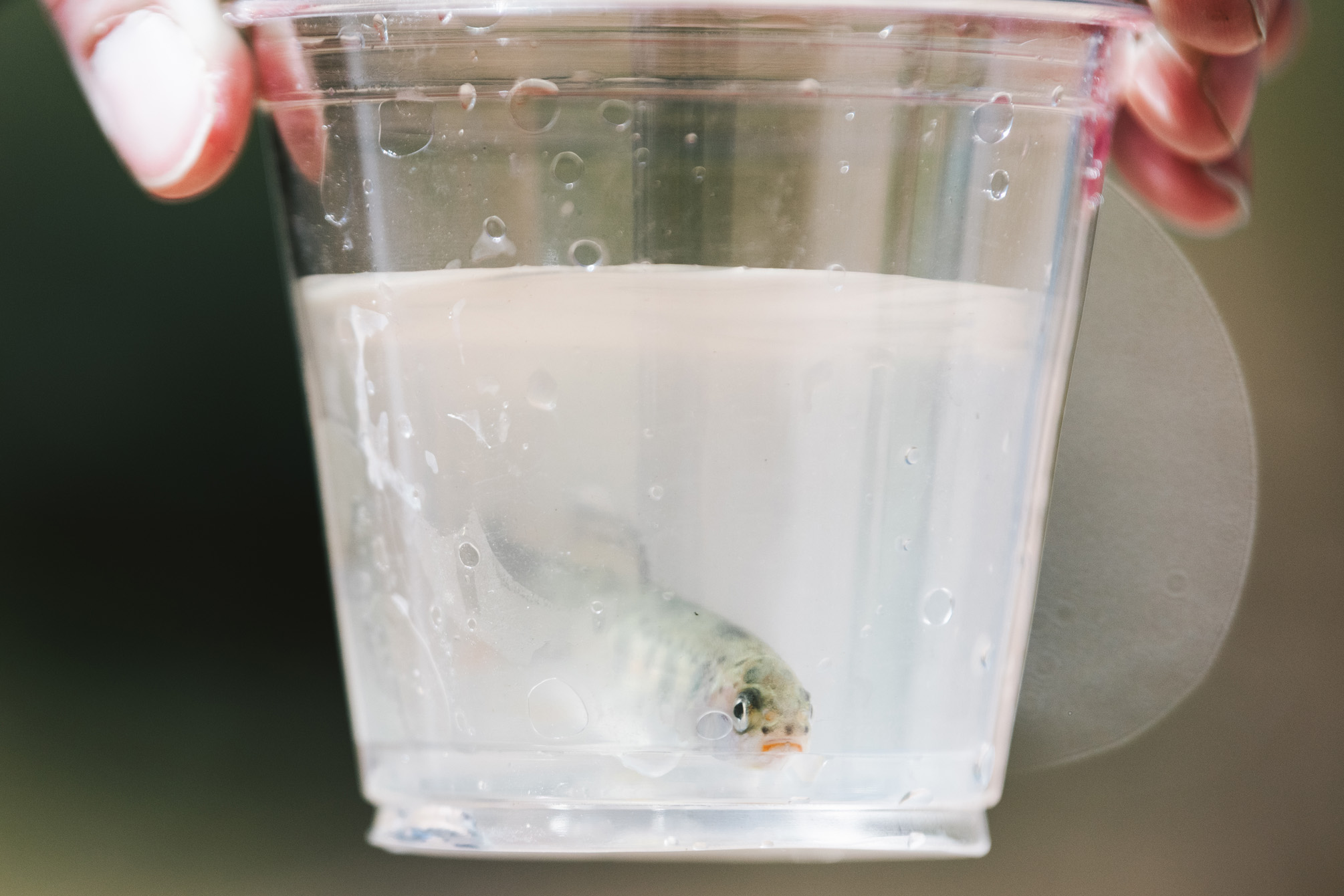
Moments later, when the kids descended on the river, they scooped the fish from the cooler using transparent cups. Then they let them go.
One small trout circled back to a student standing on the shore. It was likely disoriented in its new surroundings, but the student seemed to think the fish was reciprocating a goodbye — a moment that will no doubt last and, if Aaron has his way, influence her commitment to protecting New Mexico’s natural resources.
Future ambitions
In the future, Aaron wants to do the same student project with Rio Grande cutthroat to bolster that species’ population. He’d also like to move the program into more rural areas.
“It’s that hands-on learning approach and getting kids out into their native state to explore that’s so cool,” Aaron said. “Then maybe they feel more connected to the water.”
In the meantime, Aaron continues working with Trout Unlimited’s existing programs, and in his other free time, he tunes skis and snowboards, gunsmiths and ties flies to use on fishing trips. He also continues his steadfast commitment to upholding the Lab’s environmental stewardship commitments.
“We have a lot of folks here who love the outdoors, care about the environment and want to protect it for our children and generations beyond that,” Aaron said. “Included in that group is a dedicated team that conducts water sampling to ensure compliance with a multitude of permits required to operate here at the Laboratory. Those standards are very stringent, and we have the best of the best professionals to ensure we meet them.
“We don’t have a whole bunch of cold-water habitats here in New Mexico, and a lot of what we do have is on federal, public or tribal land. It’s something we need to be responsible for as citizens to try and protect — and to teach folks the importance of taking care of that resource.”
LA-UR-26-24795