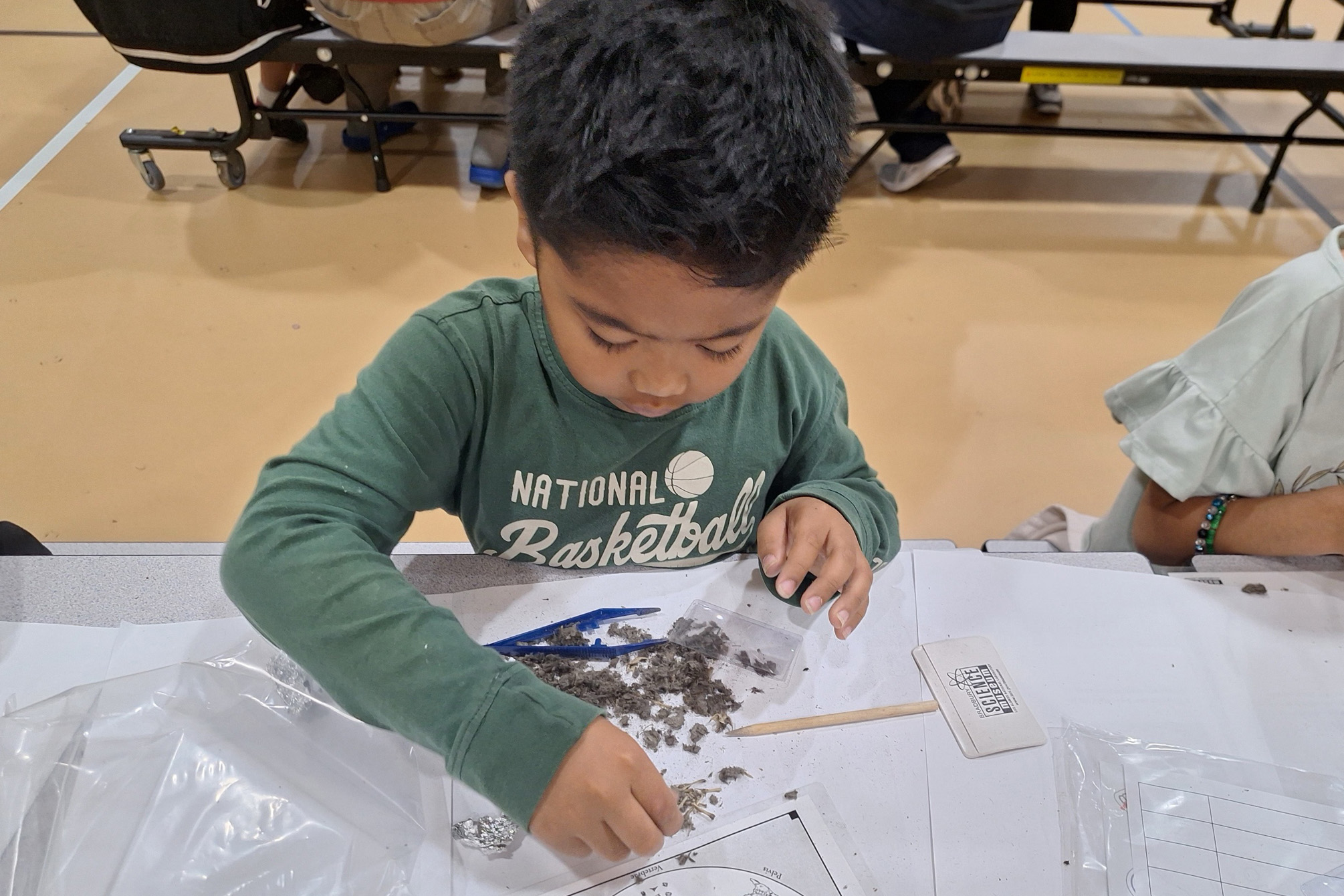
Imagine you're a high schooler who's spent the previous two weeks learning about a range of science topics and working on your multi-day project. It's the last day of camp and you're getting ready for the final presentations to parents, the volunteers who have helped during the camp and other guests.
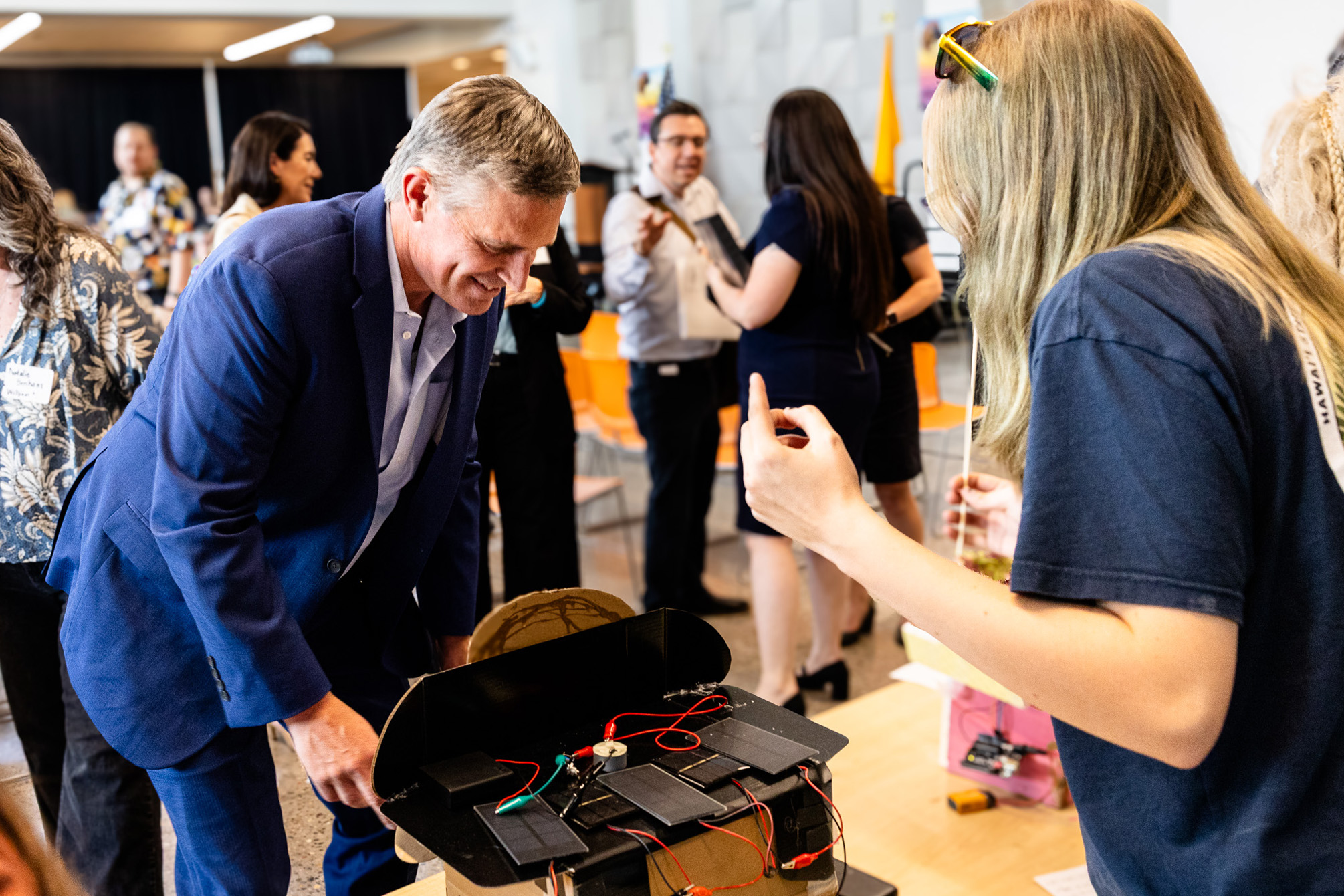
Then you learn that among the attendees are a U.S. senator and the director of Los Alamos National Laboratory. No pressure, right?
That was the experience for the students at the 10th annual Summer Physics Camp June 8-19 at the New Mexico School for the Arts in Santa Fe, providing an immersive STEM experience for middle and high school students from across New Mexico.
Created 10 years ago by Laboratory physicist Anna Llobet, the camp is staffed by more than 130 volunteers from Los Alamos and Sandia national laboratories and elsewhere and funded by the nonprofit STEM Santa Fe.
This year, the students rose to the challenge of their VIP guests, discussing what they'd learned during the camp and answering questions about the projects they'd been working on: building remotely operated robotic hands or model solar-powered houses with proximity sensors, lights and fans.
Highlighting STEM careers
The free two-week camp aims to inspire students to pursue higher education and empower them to explore careers in science, technology, engineering and mathematics (STEM), with the hope that they will one day contribute to making the world a better and safer place for everyone.
Thirty-four attendees from 12 New Mexico counties explored the science of the unseen forces that underpin our world, from electricity and gravitational waves to the quantum realm and the microscopic machinery of life.
A residential option allowed 14 students from outside Santa Fe to attend, expanding access to attendees from more rural parts of the state.
"This was my first year serving as a co-leader with Anna at the camp," said postdoctoral research associate Dylan Tharp Eralie. "It was amazing to see the growth in the students over the two weeks. They all worked so hard to learn and improve, and I just can't wait to watch their careers take off in whatever fields they choose!"
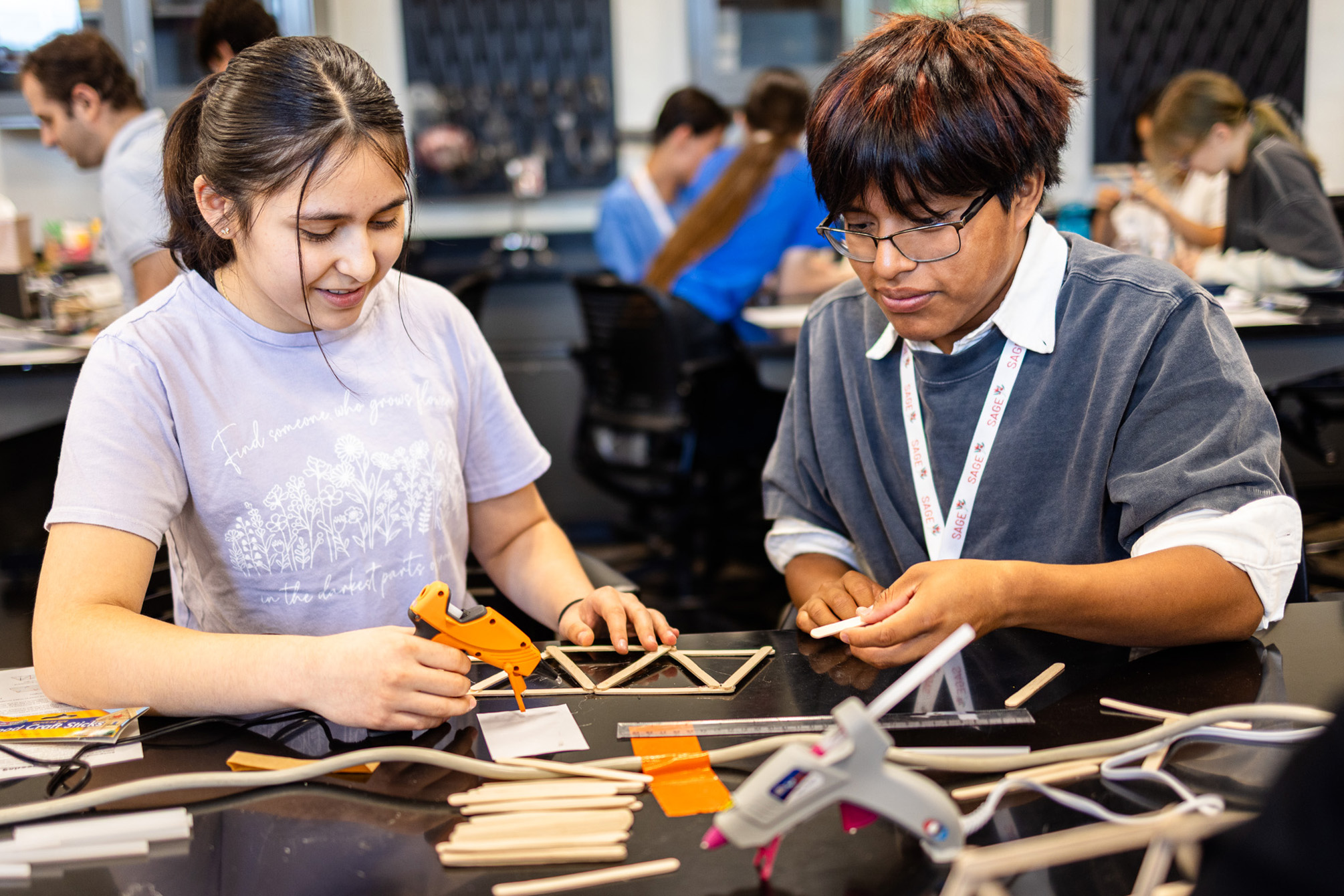
The students enjoyed intensive sessions covering a range of areas including physics, computer science, radiation, astrophysics, robotics, engineering and machine learning, led by role models who help students identify career pathways the students may not have been exposed to before.
As volunteers introduced the science topics and hands-on activities, they also discussed their career journeys, explaining the range of challenges, experiences and opportunities that had led them to their current positions.
When asked the main lesson he would take away from camp, Efrain Juarez (ninth grader at The Master's Program in Santa Fe) said, "To embrace struggle, since through our failures we learn how to do better next time. It is how I imagine science is most of the time: your experiments may fail many times until you finally get it right."
Powered by volunteers
With the help of more than 130 volunteer scientists, engineers and other professionals, the camp gave students a chance to boost their understanding of how STEM impacts and improves the world through hands-on activities, demonstrations, tours, talks and the final engineering project.
"Volunteers from across the many disciplines that support the national laboratories' missions are the driving force behind the success of this camp," Llobet said. "Their dedication reflects our workforce's deep commitment to Los Alamos National Laboratory's mission of being a force for good by inspiring the next generation of scientists, engineers and innovators across New Mexico."
Through institutional support and the Lab's Community Involvement and Outreach Time program, employees can request paid time to participate in STEM outreach activities like the camp. In 2025, 370 Laboratory employees provided 4,446 service hours to nonprofit and educational organizations in Northern New Mexico, supporting 119 STEM and non-STEM activities impacting an estimated 2,440 students, teachers and community members.
Volunteers also staffed professional development sessions on how students can discover their personality strengths, write a resume, perform well in interviews and apply for internships. Students explored future opportunities at a college fair attended by representatives from University of New Mexico, New Mexico State University and Los Alamos National Laboratory student programs. They also heard from a former camp participant and current Lab intern who shared their journey to a military college, involvement in ROTC and success in securing national STEM-focused scholarships.
Four educators ensured the camp was varied, educationally sound and provided students the educational support they needed.
Tours and projects
The first week of camp included a tour of Los Alamos National Laboratory, where students visited the Los Alamos Neutron Science Center linear accelerator (LANSCE) and the National High Magnetic Field Laboratory to see how some of the scientific concepts they were exploring are used in cutting-edge research.
As part of the second week, students put their new knowledge and skills into action, working on their final projects.
"From day one when they first built a working DC motor to the final day where they are sharing their incredibly creative houses and robotic hands, you can see not only the improvement in their technical skills but also their confidence," Tharp Eralie said.
During his remarks at the final presentations event, Sen. Heinrich described his own engineering background and how it has helped him in his professional and legislative life, particularly around conservation and energy issues.
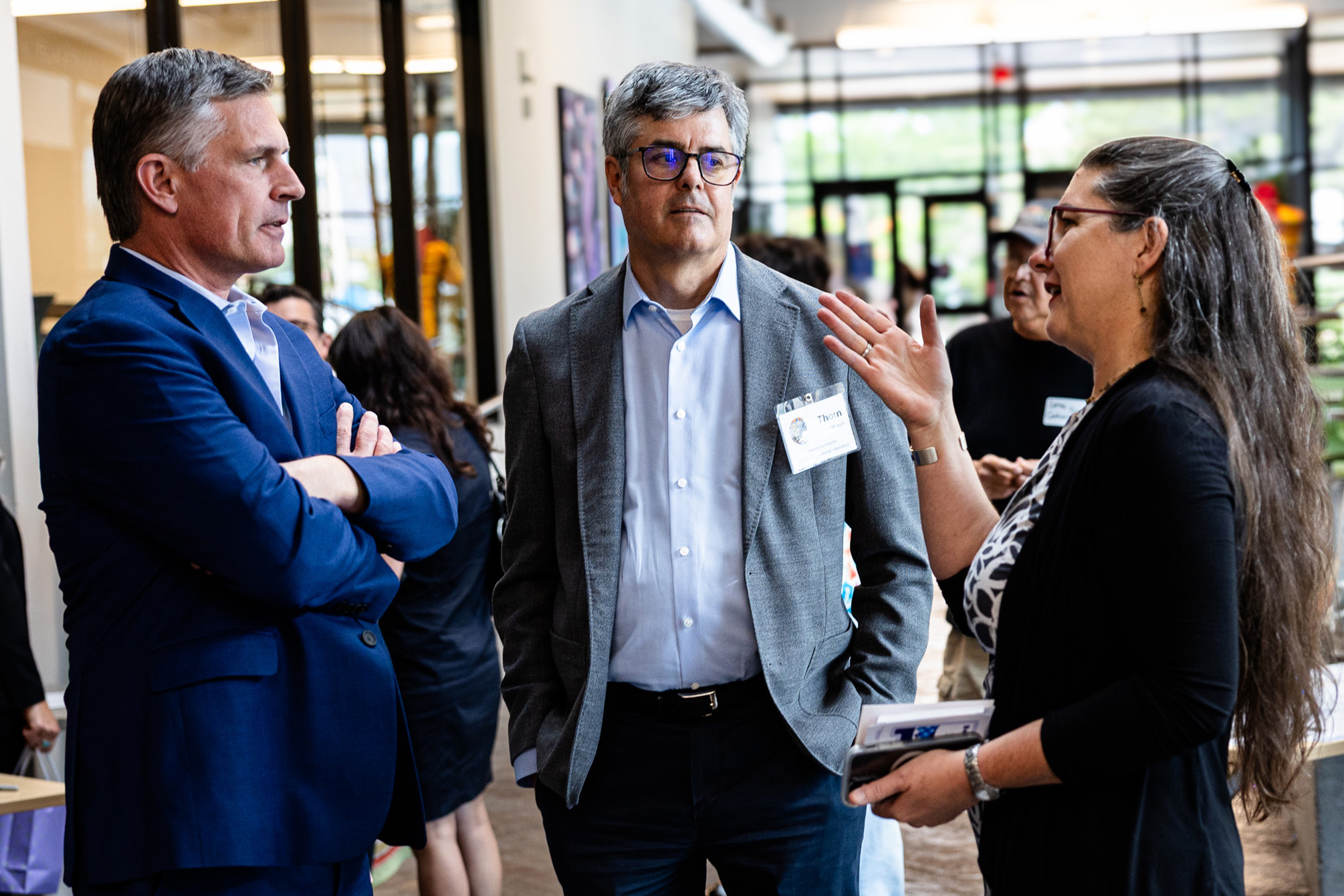
Lab Director Thom Mason asked the campers to raise their hands if their experiments worked the first time. Only one hand went up.
“Science requires you to try and try again,” he stated, underlining that the committed and curious camp attendees were exactly the sort of young people the Laboratory is looking to hire.
The Summer Physics Camp has already proven to be a pipeline for future STEM leaders, with at least two former attendees now working at Los Alamos and 19 other alumni from previous years pursuing Laboratory internships in 2026 at the high school, undergraduate and graduate levels.
This year's camp was supported by Los Alamos National Laboratory, Triad National Security, Sandia National Laboratories, STEM Santa Fe, New Mexico Consortium, Delle Foundation, N3B, Pueblo Alliance LLC, Herrera Coaches Inc, SAGE, Hawaii Science & Technology Museum, Hawai'i State Department of Education, Institute of Electrical and Electronics Engineers, American Society of Mechanical Engineers, American Chemical Society, American Physical Society Four Corners, New Mexico School for the Arts, J. Robert Oppenheimer Memorial Committee, NM Network for Women in Science and Engineering, Los Alamos Women in Science, STEMArts Lab, and private individuals.
LA-UR-26-25698