Los Alamos National Laboratory researchers published a new study in Nature Communications that provides the most up-to-date information about how drought will impact food security on a global scale. The study used a process-based crop model that includes CO₂ effects and other factors such as fertilization and irrigation practices to create a more accurate estimation of the future impact of drought on food security.
Scientists expect that global food demand will increase by as much as 62% by 2050, but anticipated increases in drought conditions around the world will create more pressure on agricultural resources.
“Most studies so far have done the analysis statistically, which is much easier and could be subjected to biases,” said Chonggang Xu, scientist and senior corresponding author of the paper. “Using a combination of process-based model and separate simulations under drought versus non-drought scenarios allows us to attribute the direct impact of drought on major staple crops much more accurately and consider the interacting effect of key environmental factors, such as temperature, precipitation and CO₂.”
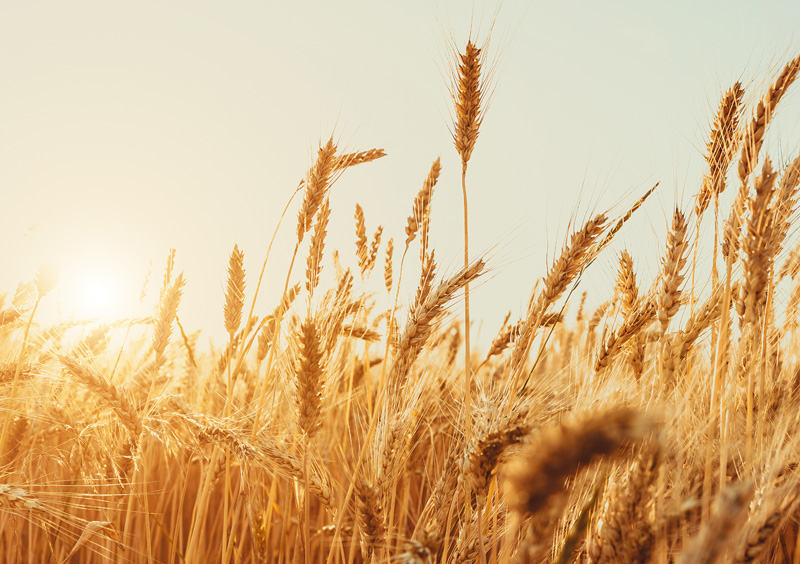
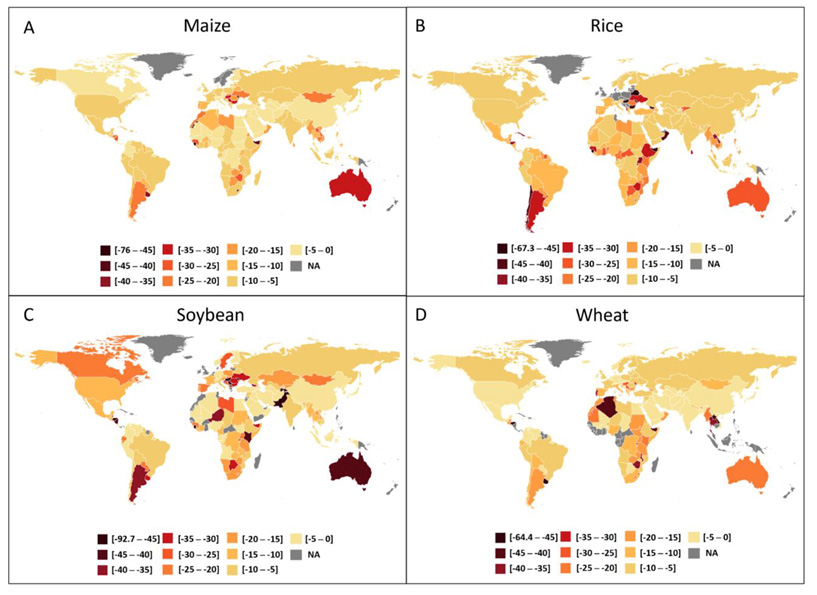
The study focused on the four most widely produced crops — maize, rice, soybeans and wheat — which provide the majority of caloric needs for many nations. The study is based on the CLM5 model for simulation, CMIP6 climate projections, and a country level socio-economic vulnerability score that was calculated using data such as population and GDP per capita.
The results of this study will help set up future research to find potential solutions to food insecurity. While this research found that global production for the four key crops will reduce by less than 2% globally, 62 countries are expected to see production losses over 10%, and 24 additional countries are projected to lose over 20% of their production.
“The next step is really to build drought-resistant crops with genetic modification and develop smart irrigation technology to increase agricultural water-use efficiency,” Xu said. “We are currently working on developing a smart irrigation system that integrates the advanced plant hydrodynamic model with ground measurements to tell the farmer when, where and how much to irrigate.”
This research will advance the understanding of factors impacting future food insecurity to help ensure that food production can remain as high as possible despite drought concerns.
The paper: “Impact of Drought on Global Food Security by 2050.” Nature Communications. doi.org/10.1038/s41467-025-67862-7
The funding: Laboratory Directed Research and Development program at Los Alamos National Laboratory
LA-UR-26-20156