DOE/LANL Jurisdiction Fire Danger Rating:
Dense Matter Theory Banner
  1. LANL Home
  2. Engage with LANL
  3. Lab Organizations
  4. X Computational Physics
  5. XCP-5: Materials and Physical Data
  6. dense matter theory
  7. types of dense matter

Strongly Coupled Dense Plasma in the Lab

Exploring Dense Plasma Systems

Dusty, Ultracold, Nonneutral, and Sonoluminescent Plasmas

Experimentalists use ingenious devices to create strongly coupling Coulomb systems with excellent diagnostic access and controllability, and at much smaller cost than conventional dense plasma experiments at large facilities.
Dusty Plasmas

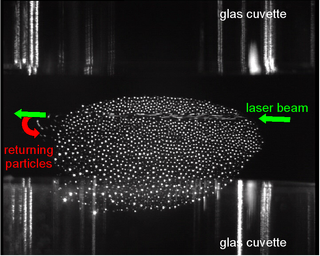
Diagram of Dusty Plasmas

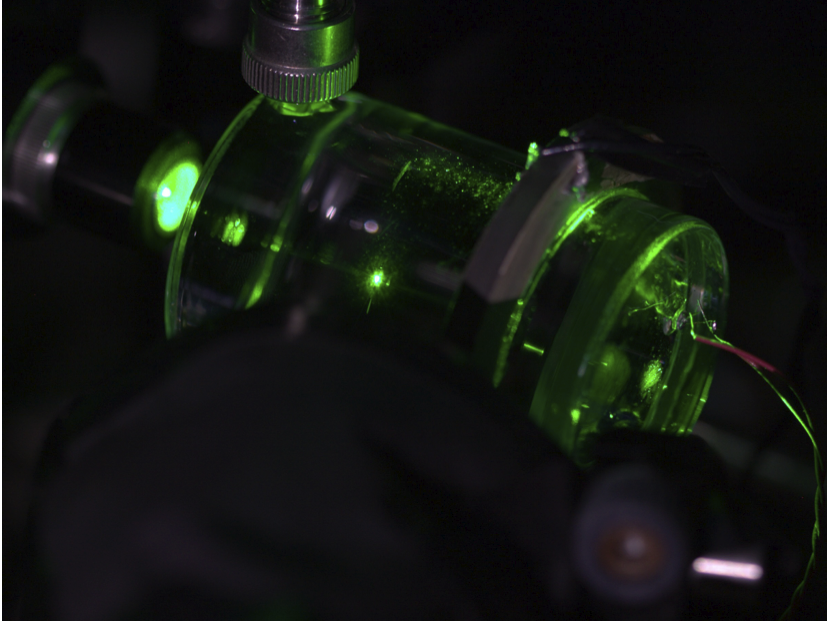
A dusty plasma is a plasma containing millimeter- to nanometer-sized particles suspended in it. In the plasma, the dust particles acquire high negative charges of hundreds or thousands of elementary charges due to the inflow of electrons and ions.

Then, the Coulomb interaction of neighboring particles by far exceeds their thermal energy: the system is strongly coupled. The spatial and time scales of the particle motion allow easy observation by video microscopy. For more information, see Complex plasmas: An interdisciplinary research field.

Ultracold Plasmas


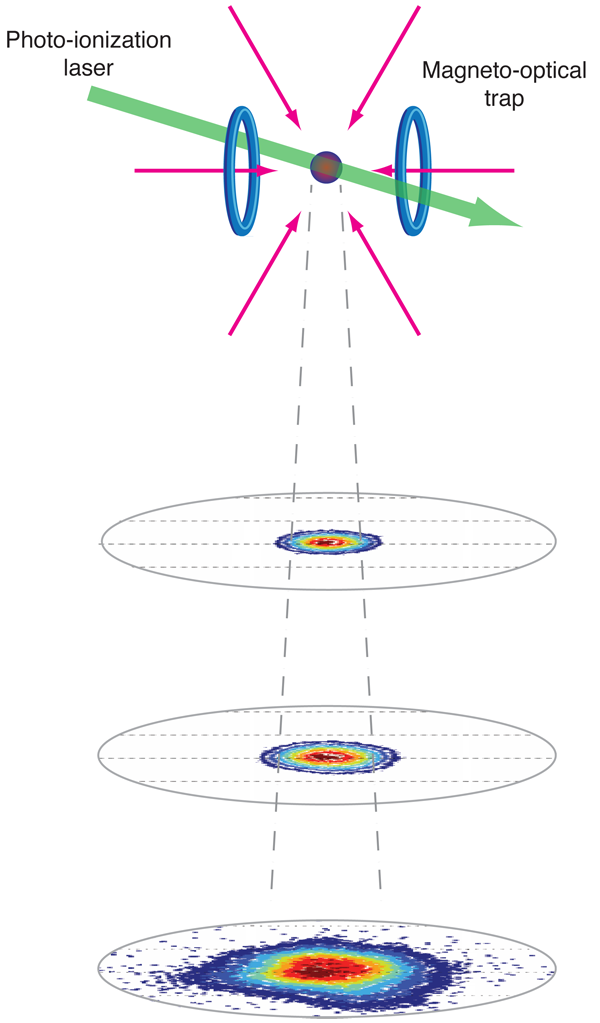
Diagram of Ultracold Plasmas


Using techniques of laser cooling, which originated in the atomic physics community, it is now possible to create ultracold neutral plasmas at temperatures as low as about 1 K. In a table-top apparatus, laser light traps and cools about 1 billion neutral atoms to a thousandth of a degree above absolute zero.

A second laser illuminates the cloud with photons with barely enough energy to ionize the atoms and create the plasma. All the subsequent experiments in ultracold plasmas follow this same prescription—reduce the thermal energy of the neutral atoms with laser cooling and then photoionize near the ionization limit.

For more information, read this article on Ultraneutral Plasmas.

Non-Neutral Plasmas

Diagram of Trapped Ions in Nonneutral Plasmas

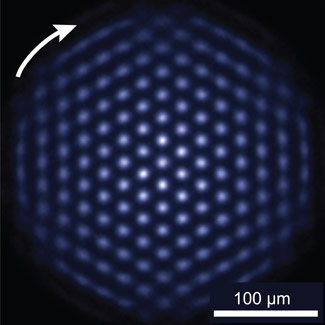
Plasmas consisting exclusively of particles with a single sign of charge (e.g., pure electron plasmas and pure ion plasmas) can be confined by static electric and magnetic fields (e.g., in a Penning-Malmberg trap) and can also be in a state of global thermal equilibrium.

Such nonneutral plasmas have proven to be excellent subjects for well-controlled studies of a wide variety of plasma phenomena over a wide range of parameters. For instance, these plasmas can be cooled to the cryogenic temperature range without any recombination, thereby providing experimental access to novel parameter regimes, such as the strong correlation exhibited by Coulomb crystals.

For more information, see Professor Dubin's page.

Sonoluminecent Plasmas

Diagram of Sonoluminescence Plasmas

The sonoluminescent plasma temperatures and densities range from 6,000K6,000K6,000K to 20,000K20,000K20,000K and 1−10×1021/cm31−10×10^{21}/cm^31−10×1021/cm3, respectively. Under these conditions, the plasmas are strongly coupled. For more information .

References

  • Ultracold neutral plasmas
  • Professor Dubin's Page
  • FOCUS Plasma Extremes Seen through Gas Bubble

Meet the Team

Los Alamos brings together experts from diverse backgrounds, including plasma physics, dynamic fluid flows, and computational sciences. Join us to tackle complex challenges in energy research, astrophysics, and inertial confinement fusion.

Meet the Team