DOE/LANL Jurisdiction Fire Danger Rating:
  1. LANL Home
  2. engage
  3. collaboration
  4. feynman center
  5. tech and capability search
  6. prt

Passive Radiative Thermostat (PRT)

An electricity-free coating that passively cools in heat and warms in cold for buildings, vehicles, and outdoor equipment.

technology Snapshot

Overview

The Passive Radiative Thermostat (PRT) is a smart, electricity-free coating technology that automatically regulates temperature by adjusting how it absorbs and emits heat based on ambient conditions. Using a thermochromic phase-change material combined with engineered thin-film layers that control solar and infrared radiation, the system cools surfaces on hot days by reflecting sunlight and releasing heat to the sky and warms them on cold days by absorbing sunlight and minimizing heat loss — all without sensors, controls or power input. Designed for integration into roofs, facades, windows, vehicles and outdoor equipment, the technology offers a scalable, low-maintenance pathway to reduce HVAC energy consumption, lower peak electrical loads, improve thermal comfort and support decarbonization goals across building, mobility and industrial markets.

Value Proposition

Passive Radiative Thermostat is an electricity-free coating that passively regulates temperature by cooling in heat and warming in cold, with applications across buildings, vehicles and outdoor equipment.
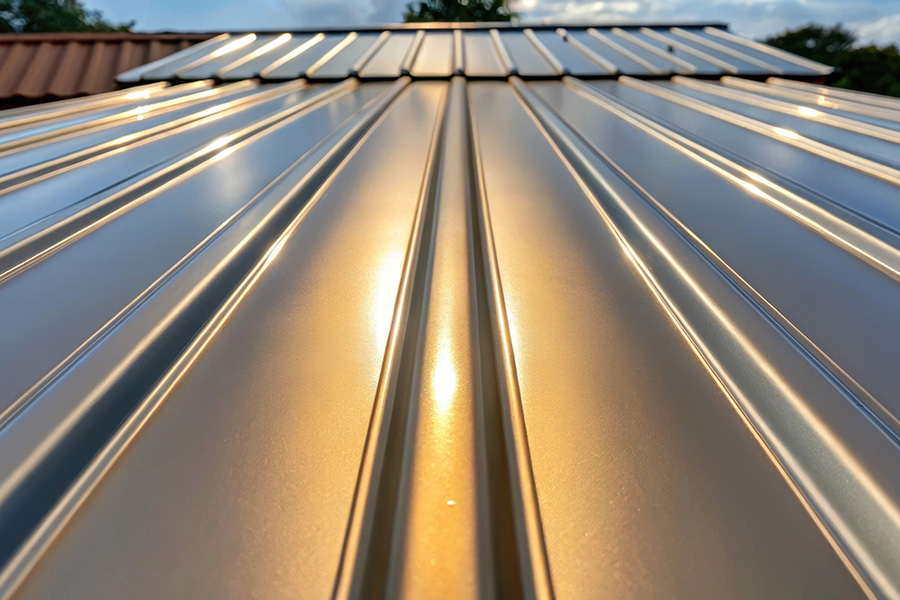
Adobe Stock photo for illustrairtion purposes only

Advantages

  • Automatic temperature regulation
  • No power required
  • Year-round performance
  • Energy savings potential
  • Thin-film compatibility
  • Scalable and low maintenance

Technology Description

Passive Radiative Thermostat is a temperature-responsive surface coating that automatically adjusts how it manages heat based on surrounding conditions. PRT incorporates a material that naturally changes its thermal behavior at a preset temperature, allowing the surface to release excess heat when it is hot and retain warmth when it is cold. By intelligently interacting with sunlight and infrared heat, the system stabilizes surface temperature without requiring electricity, sensors or moving parts. The result is a passive, self-regulating thermal control approach that improves temperature management.

Read the paper

Market Applications

  •  Building & Construction
  • Automotive & Transportation
  • Energy & Utilities 
  • Industrial & Manufacturing
  • Data Centers & Telecommunications
  • Consumer & Outdoor Products

On This Page

Overview

Advantages

Technology Description

Market Applications

Published: 2026-04-21

26-23177

Technology Readiness Level:

2 - Concept Formalized

IP Information

Patent Number: 11,359,839

S Number: S-133670

Contact

  • Licensing
  • Los Alamos National Laboratory
  • licensing@lanl.gov
Download PDF