Platinum-Free Hydrogen Catalyst
An Earth-abundant alternative to platinum-ruthenium in AEM water electrolyzers
technology Snapshot
Overview
This technology from Los Alamos National Laboratory enables high-performance hydrogen production using entirely earth-abundant, U.S.-accessible materials instead of scarce and expensive precious metals like platinum. By delivering performance comparable to platinum-based systems and improved durability in an anion-exchange membrane water electrolyzer, it offers a pathway to lower-cost, domestically scalable hydrogen generation for industrial manufacturing, energy storage, refining, ammonia production and other strategic sectors. Eliminating reliance on precious metals strengthens supply chain security, reduces exposure to foreign-controlled critical materials and supports U.S. manufacturing competitiveness. The result is a cost-effective, durable and commercially viable hydrogen production platform aligned with national priorities in energy independence, industrial resilience, and advanced materials innovation.
Value Proposition:
A Los Alamos-developed nickel–molybdenum–phosphide catalyst matches platinum–ruthenium performance and delivers 2.5× greater durability in anion-exchange membrane water electrolyzers, enabling lower-cost, domestically scalable hydrogen production from earth-abundant materials that strengthen U.S. supply chain security and manufacturing competitiveness.
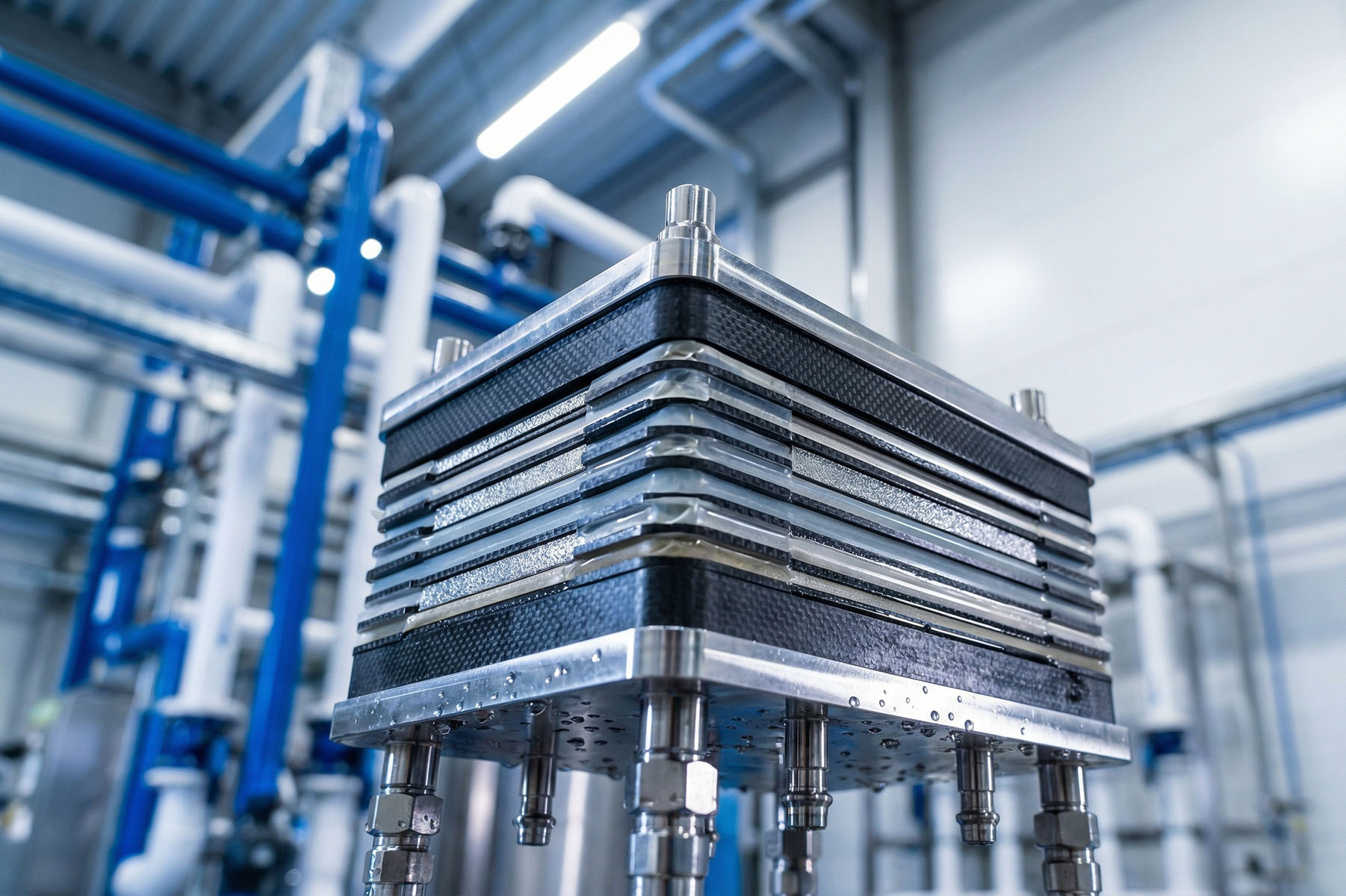
Advantages
- Precious-metal-free performance – Matches platinum–ruthenium cathode performance in AEM electrolyzers (3 A/cm² at 1.84 V)
- Enhanced durability – Demonstrates 2.5× longer life in 100-hour testing versus PtRu catalysts
- Lower cost – Replaces platinum with earth-abundant nickel and molybdenum.
- Supply chain advantage – Minimizes reliance on scarce, globally concentrated precious metals.
- OEM-compatible and scalable – PTL-supported architecture with controlled catalyst loading suitable for industrial AEMWE platforms.
Technology Description
Hydrogen production via water electrolysis through anion-exchange membrane water electrolyzer is gaining industrial momentum, but current high-performance systems depend heavily on precious metal catalysts such as platinum and platinum–ruthenium at the cathode. These materials are expensive, globally supply-constrained and subject to geopolitical and pricing volatility, creating cost and scaling barriers for electrolyzer manufacturers. At the same time, efforts to replace precious metals with earth-abundant alternatives have historically resulted in lower activity, reduced durability—preventing non-precious metal systems from matching platinum-level performance at industrially relevant current densities. The market needs a hydrogen evolution catalyst that eliminates precious metals without sacrificing efficiency, durability or manufacturability.
Platinum-Free Hydrogen Catalyst eliminates the need for precious metal cathode catalysts while delivering performance comparable to platinum–ruthenium systems in anion-exchange membrane water electrolyzers. By engineering a porous transport layer–supported nickel–molybdenum–phosphide (NiMoPx) catalyst with precise control over composition and loading, it closes the long-standing activity gap between earth-abundant and precious metal HER catalysts. The result is industrially relevant current density (3 A/cm² at 1.84 V), improved durability (2.5× longer in 100-hour testing) and consistent catalyst deposition compatible with scalable electrode fabrication. For electrolyzer manufacturers, this translates to reduced material costs, lower exposure to critical mineral supply risk and a viable pathway to high-performance, precious metal–free hydrogen production.
Market Applications
- Hydrogen Production & Industrial Gas Supply
- Energy & Power Generation
- Oil, Gas & Refining
- Chemical & Fertilizer Manufacturing
- Metals & Industrial Processing
- Transportation & Infrastructure