NanoFiber Engineered Therapeutics Platform (NanoFET) offers pharmaceutical and biodefense organizations a modular, adaptable scaffold for building next-generation immunotherapies. By merging self-assembling peptide nanofibers with interchangeable nanobody and peptide components, the platform enables rapid development of targeted treatments that bridge disease agents directly to the patient's own immune cells — an approach that can be reconfigured for new threats without redesigning the underlying architecture. This Los Alamos National Laboratory technology has demonstrated functional proof-of-concept across multiple applications, including dendritic cell activation, influenza targeting and T-cell engagement for cancer biology, positioning it as a versatile foundation for partners seeking to accelerate therapeutic pipelines against both known and emerging health threats.
NanoFET
NanoFiber Engineered Therapeutics Platform
technology Snapshot
Overview
Advantages
- Modular architecture allows rapid swapping of nanobodies and peptides to address new disease targets without redesigning the core platform
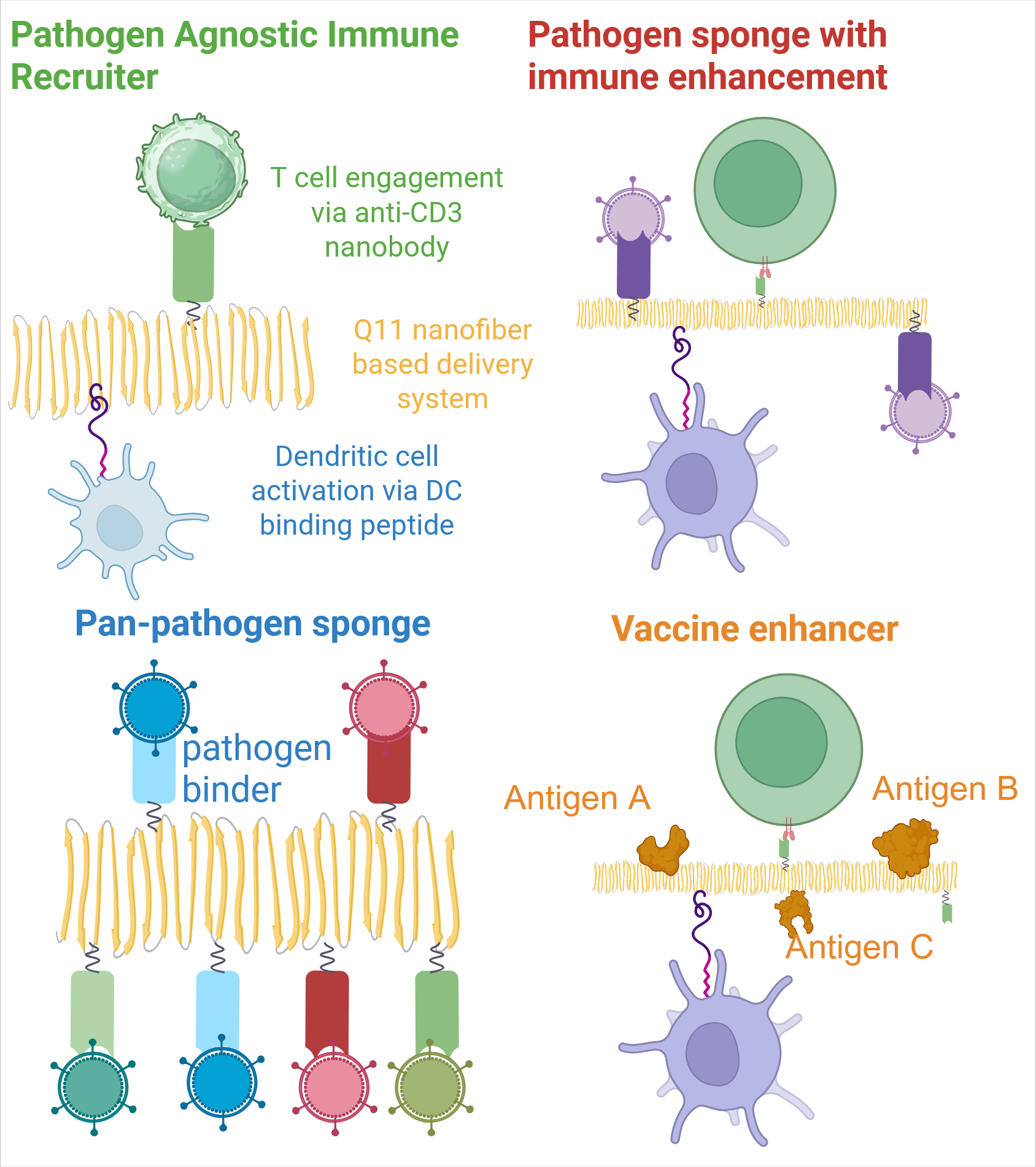
- Dual-function capability bridges disease agents directly to immune cells on a single construct, enabling both targeted and broad-spectrum responses
- Adjuvant-free immune activation through self-assembling nanofibers that inherently stimulate robust immune responses
- Small, stable targeting molecules (nanobodies) that are easier to produce and engineer than conventional full-size antibodies
- High-density multivalent display presents multiple antigens or functional components simultaneously, enhancing immune recognition
- Compatibility with external biologics enables partners to integrate their own AI-designed binders or proprietary targeting molecules onto the nanofiber scaffold
Technology Description
The Challenges
Infectious diseases and chronic conditions such as cancer continue to impose enormous public health and economic burdens worldwide. Conventional vaccines and biologics are typically designed against a single pathogen or target, leaving populations vulnerable when new or unknown threats emerge. For military personnel and first responders, the absence of broad-spectrum medical countermeasures means that exposure to an unidentified pathogen in the field can be met with little more than supportive care. In cancer immunotherapy, connecting tumor cells to the patient's own immune effector cells remains a formidable engineering challenge; current bispecific antibody formats are complex to manufacture, expensive and often limited in the number of targets they can engage simultaneously. Meanwhile, traditional antibody-based therapeutics are large molecules that can be difficult to produce at scale, may trigger unwanted immune reactions and lack the modularity needed for rapid adaptation to new disease targets. A platform capable of addressing multiple threats through a single reconfigurable architecture would represent a meaningful shift in how therapeutics are developed and deployed.
Problems Solved
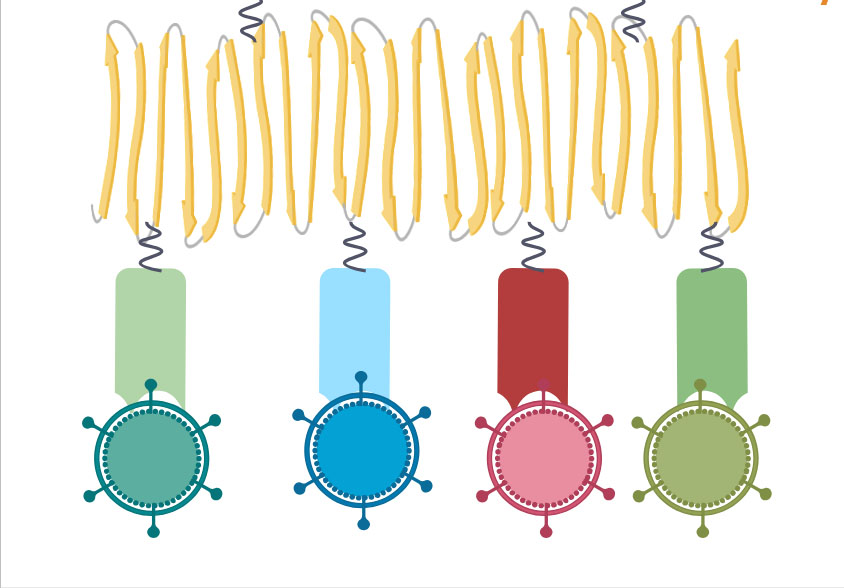
The NanoFET platform addresses these challenges through three complementary capabilities. First, nanobody-nanofiber chimeras (NNMs) can pair a pathogen-targeting nanobody with an immune-cell-engaging nanobody on the same nanofiber scaffold, physically bridging a disease agent to the immune cells best equipped to destroy it. One example is linking a pan-influenza nanobody to an anti-T-cell nanobody, or an anti-cancer nanobody to a T-cell activator. Second, a dendritic cell-recruiting peptide conjugated to the Q11 nanofiber (QDP) activates innate immune responses in a pathogen-agnostic manner, offering a broad-spectrum countermeasure that does not require advance knowledge of the specific threat. Third, the modular design allows high-density display of multiple functional components on a single nanofiber, enabling multiantigen vaccine configurations that can stimulate both innate and adaptive immunity simultaneously. Data confirms that QDP nanofibers are specifically internalized by dendritic cells and activate them, and that nanobody-nanofiber chimeras retain the binding functionality of the nanobody component as demonstrated by ELISA recognition of target proteins. Because the methodology is compatible with other small protein biologics — including AI-designed binders developed by external organizations — NanoFET can serve as a universal chassis onto which diverse targeting molecules are loaded, dramatically reducing the time and cost of developing new therapeutics against emerging threats.
Market Applications
- Oncology (bispecific T-cell engagers, tumor-targeted immunotherapies, combination immunotherapy platforms)
- Infectious Disease Therapeutics (pan-influenza treatments, broad-spectrum antiviral and antibacterial countermeasures, emerging pathogen response)
- Biodefense and Military Medicine (medical countermeasures for warfighters, rapid-response therapeutics for unknown biological threats, field-deployable immune enhancers)
- Vaccine Development (multiantigen vaccine platforms, adjuvant-free subunit vaccines, mucosal and systemic immunization)
- Pharmaceutical Biologics and Drug Delivery (nanobody-drug conjugate scaffolds, targeted immune cell delivery, modular biologic platforms)
Published: 2026-07-10
LA-UR-26-25007
Application Area
Sectors:Biotech, Life Sciences & Healthcare
Areas:Biochemistry
Industries:Life Sciences, Pharmaceutical
Markets:Drug Discovery, Defense
Technology Readiness Level:
3 - Component Prototypes Built and Proof-of-Concept Testing Completed
IP Information
Patent Number: Pending
S Number: S-194657
Contact
- Licensing
- Los Alamos National Laboratory
- licensing@lanl.gov

Connect With Our Innovators

Access Our Technical Expertise
