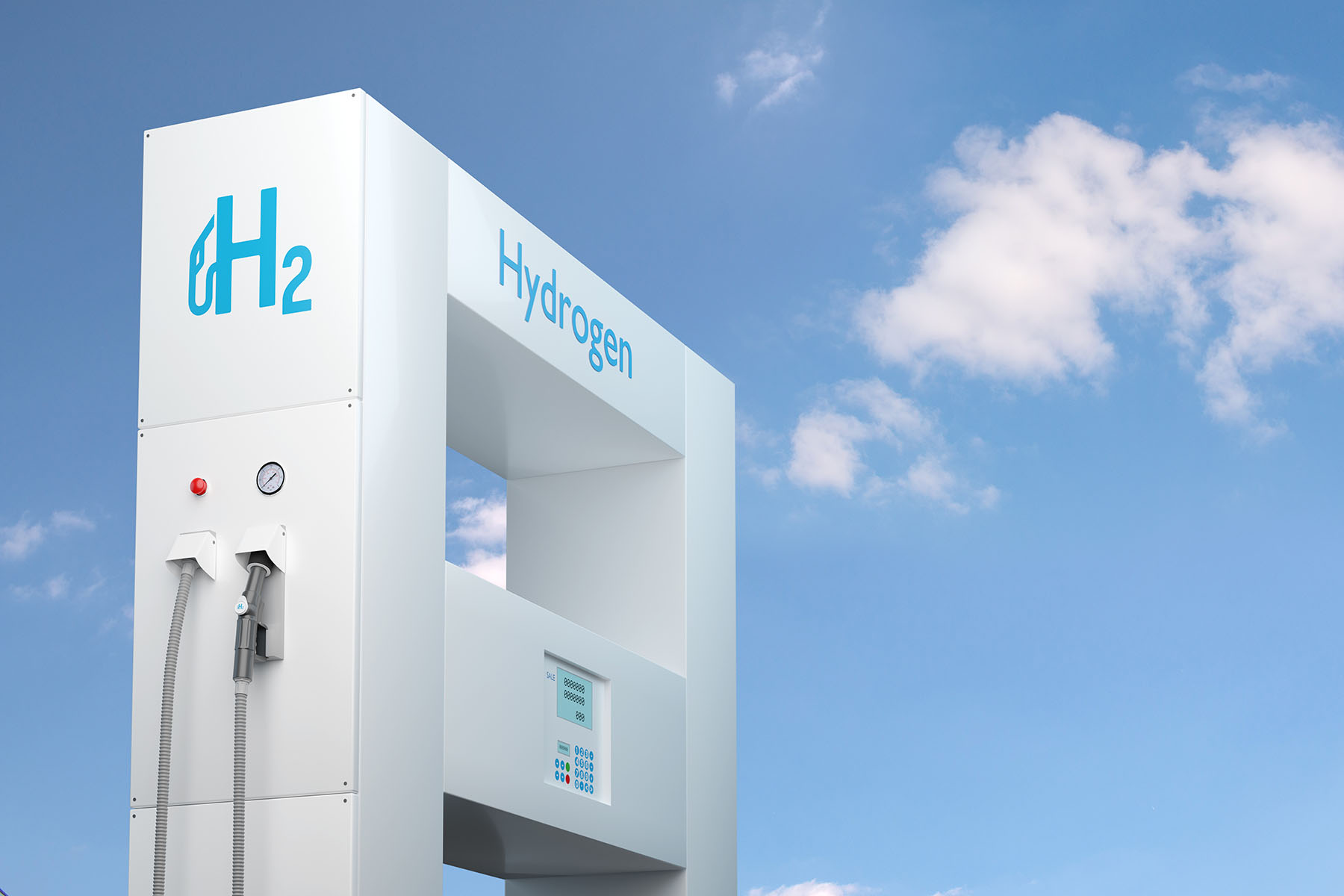
This invention by scientists at Los Alamos National Laboratory (LANL) introduces a new type of real-time hydrogen fuel contamination detector that can sense tiny amounts of harmful contaminants before they reach a fuel-cell vehicle. It works by using a special membrane that keeps itself properly hydrated using an internal water reservoir, allowing it to stay sensitive even when measuring completely dry hydrogen—a major challenge for existing sensors. Even small amounts of impurities can permanently damage a fuel-cell car’s power system, and today’s testing methods are slow, expensive, and often done only after problems occur. By enabling continuous, in-line monitoring at hydrogen fueling stations, this technology helps ensure that hydrogen is clean and safe, supporting the growth of a reliable and consumer-friendly hydrogen economy.
Hydrogen Contamination Detector
Catching Hydrogen Contaminants Before They Reach the Fuel Cell
technology Snapshot
Overview
Advantages
- True real-time monitoring: Detects contamination instantly for the 3 most severe fuel cell stack contaminants and does so before it reaches vehicles or equipment.
- Works with dry hydrogen: Eliminates the need to humidify the gas stream, enabling accurate measurement of all impurities—including water.
- Compatible with fueling infrastructure: Uses proven PEM fuel-cell components and can be installed directly in high-pressure hydrogen delivery lines.
- Protects fuel-cell investments: Prevents costly damage to fuel-cell stacks by catching impurities early.
- Enables the hydrogen economy: Provides the reliability and safety assurance required for widespread adoption of hydrogen vehicles and refueling stations.
Technology Description
The Challenge:
As hydrogen becomes a mainstream clean fuel, even tiny impurities—like CO, H₂S, or excess moisture—can permanently damage the sensitive fuel-cell systems that power vehicles and equipment. Yet today, hydrogen quality is typically verified using expensive, lab-based instruments that require expert operators and provide results only after the fact. This delay means a single contaminated batch can affect many vehicles before anyone realizes there’s a problem. Traditional sensor concepts have failed because they require adding moisture to the hydrogen stream, which interferes with detecting water contamination and violates emerging fuel standards. The industry needs a simple, real-time, in-line quality monitor that works with dry hydrogen and can be deployed directly at fueling stations.
The Solution:
The electrochemical Hydrogen Contamination Detector (HCD) is a low-cost device based on the very same materials and components that make up PEM fuel cells. It uses an ultra-low Pt-loaded sense electrode that is similar to a fuel cell electrode but hypersensitized to impurities by virtue of the greatly reduced catalyst loading. Impurities that bind to Pt catalysts inside the fuel cell and interfere with hydrogen absorption and dissociation will behave the same way to the low Pt-loaded HCD working electrode. The low loading makes the HCD even more susceptible to the effects of trace levels of high-impact impurities. The HCD can work in completely dry hydrogen because of LANL’s patented internal water reservoir and wicking mechanism. It can function at much higher sampling pressures than commercial analyzers because it is constructed with off-the-shelf single cell hardware that can easily handle pressures up to 250psi.
The HCD approach applies a voltage to electrochemically pump hydrogen gas through the HCD while sampling the dry hydrogen stream to be analyzed for fuel quality. If contaminants are present, the measured hydrogen pumping current will decrease. At well-defined intervals, a high voltage pulse is applied to electrochemically “clean” the ultra-low loaded Pt electrode that “resets” the HCD continuously. The HCD not only detects the impurity but also can track the impurity level in the sample gas as it rises and falls over time. By comparing the response to a certified ultra-high purity “zero-gas” hydrogen source and prior calibration with span gases, the station operator will be immediately informed if the hydrogen to be sold is contaminated and at near real time.
In the many baseline experiments performed over 18 months of testing, the HCD has a stable average baseline current demonstrating the efficacy of the approach.
Market Applications
- Hydrogen Production & Distribution
- Future concepts for Geological Storage of Hydrogen and Co-mingling of Fuels (e.g., hydrogen and methane/natural gas)
- Fueling Infrastructure
- Fuel-Cell Vehicle & Equipment Manufacturers
- Industrial Hydrogen Users
- Backup Power & Energy Systems
- Testing, Certification & Safety Organizations
Published: 2026-07-23
LA-UR-25-32317
Application Area
Sectors:Energy
Areas:Hydrogen Future, Hydrogen Production, Storage, and Utilization
Industries:Devices and Instruments, Hydrogen Storage, Power Generation
Markets:Fuel cells, Automotive, Underground Hydrogen Storage
Technology Readiness Level:
6 - Full System Prototype Built with Components Thoroughly Tested
IP Information
Patent Number: US Patent No. 10,490,833 B1
S Number: S-133399
Contact
- Licensing
- Los Alamos National Laboratory
- licensing@lanl.gov

Connect With Our Innovators

Access Our Technical Expertise
