RAPTER evaluates vaccine platforms relative to defined protection endpoints. The optimal platform may differ depending on whether the objective is preventing severe disease or preventing infection. This example illustrates how endpoint-specific evaluation can produce distinct comparative platform profiles and guide platform selection under different protection objectives.
Preventing Severe Disease
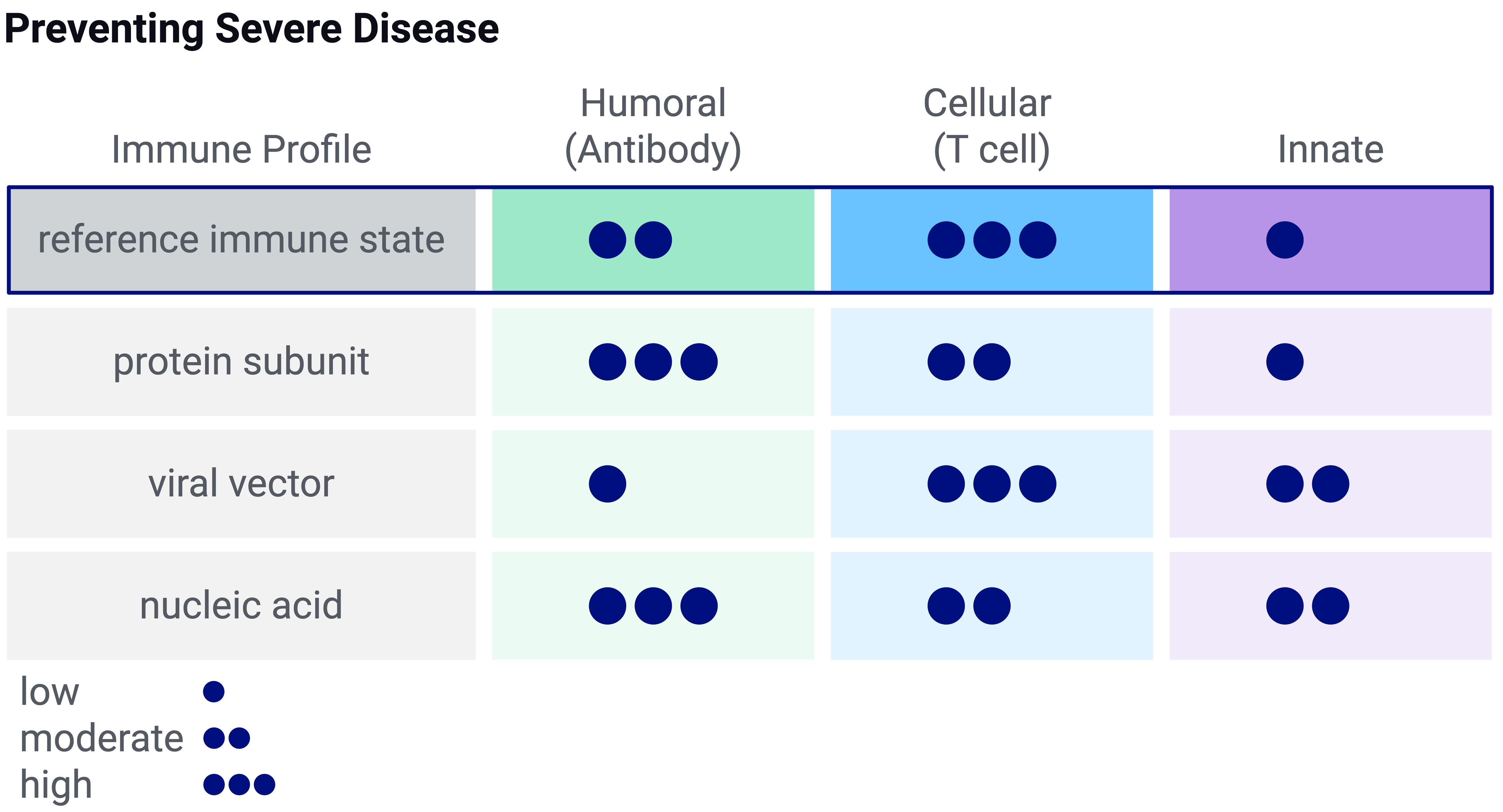
When the protection goal is reducing severe disease, RAPTER evaluates immune correlates associated with durable systemic immunity and protection from hospitalization. Platforms are ranked based on mechanistic fit and uncertainty-aware scoring relative to this endpoint.
Severe disease protection typically relies on durable systemic immunity, including strong cellular responses and sustained antibody levels.
Image created in BioRender.
Interpretation
The reference immune state emphasizes strong cellular immunity with durable humoral support. Protein subunit and nucleic acid platforms closely match this profile, while viral vectors emphasize cellular responses but may produce comparatively lower antibody responses.
Because different protection endpoints depend on different immune mechanisms, the optimal vaccine platform may change depending on the desired outcome.
Preventing Infection
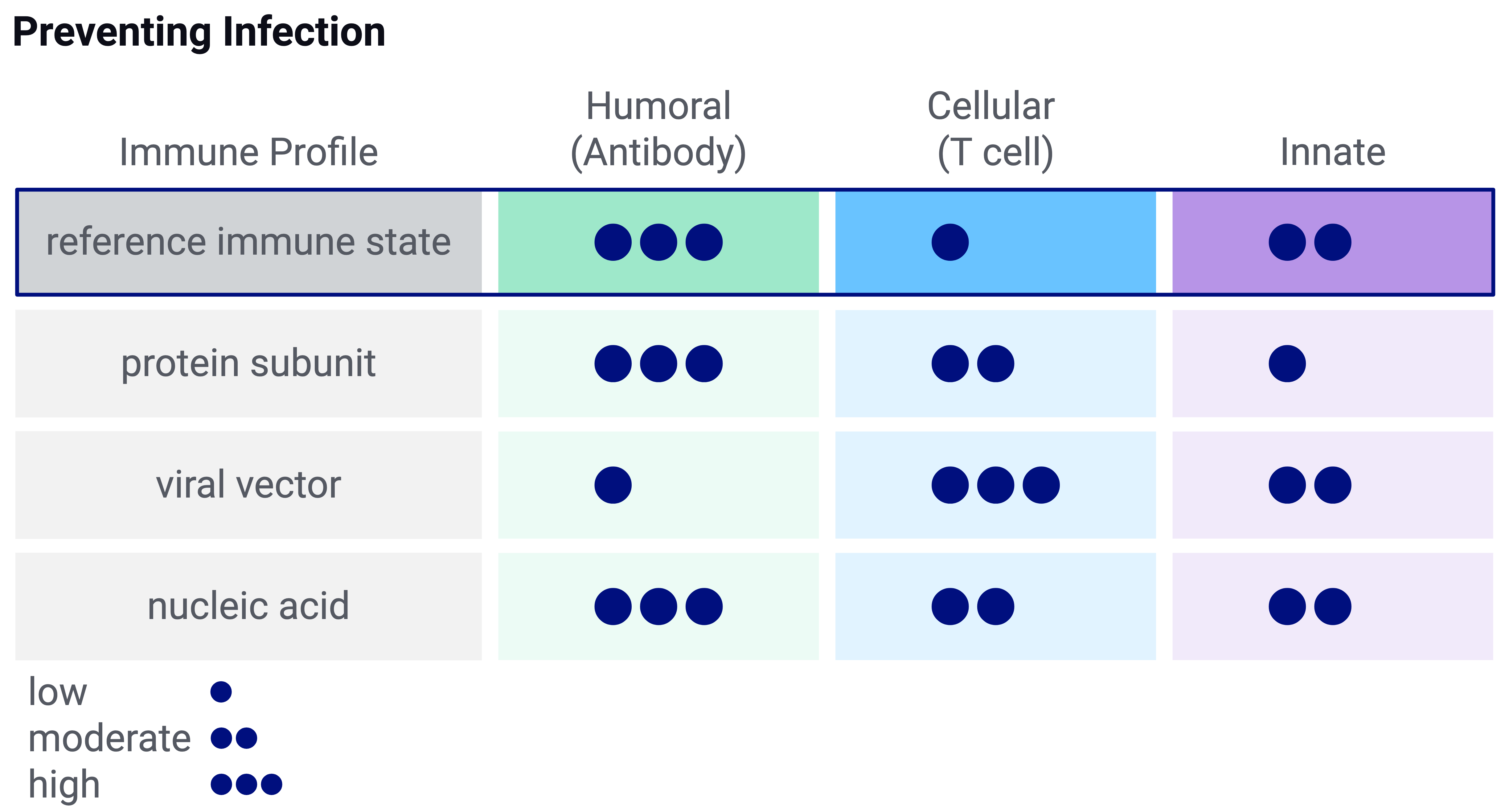
Preventing infection often requires rapid neutralizing antibody responses and early innate immune activation, which can favor different vaccine platform characteristics. RAPTER evaluates platforms against these endpoint-specific requirements, often producing distinct comparative profiles compared to severe disease prevention.
Preventing infection typically requires strong neutralizing antibody responses and rapid innate activation, with cellular responses playing a secondary role.
Image created in BioRender.
Interpretation
The infection-prevention reference state prioritizes strong humoral immunity and rapid innate responses. Nucleic acid platforms most closely match this profile, while protein subunit vaccines provide strong antibody responses but somewhat weaker innate activation.
Conceptual illustrations for explanatory purposes. Platform profiles and rankings shown here are illustrative. Detailed quantitative analyses will be reported in forthcoming peer-reviewed publications.
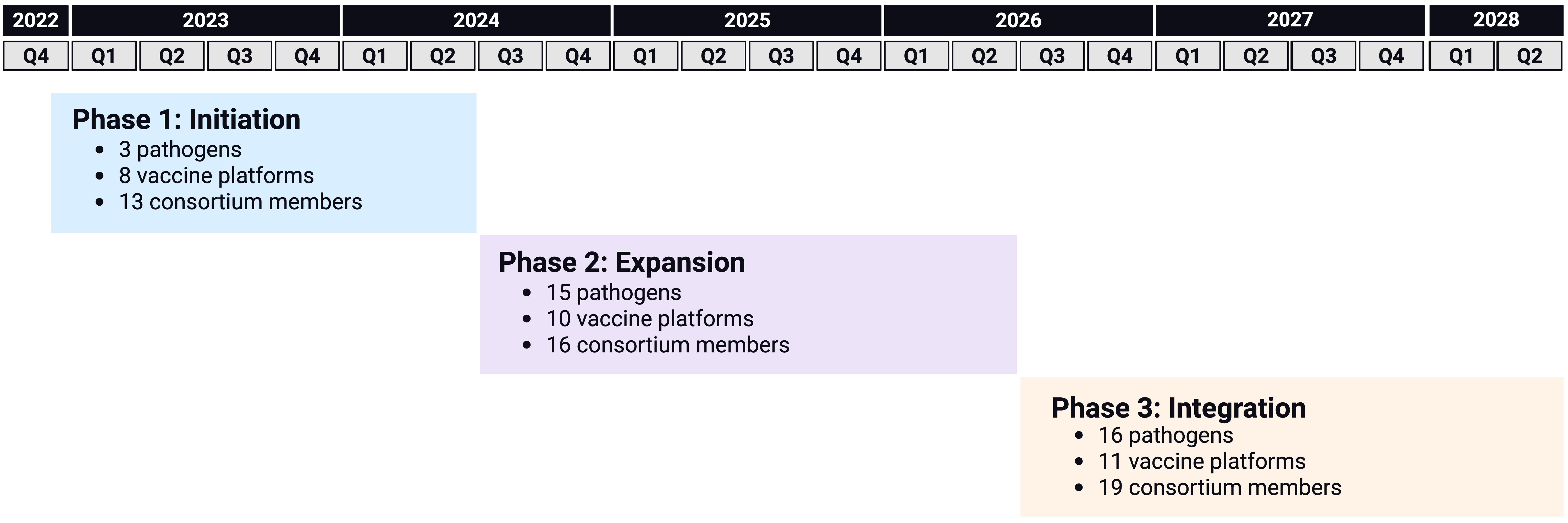
RAPTER has progressed from proof-of-concept to multi-pathogen integration. What began as an evaluation of 3 pathogens across 8 vaccine platforms has expanded into a framework encompassing 16 pathogens, 11 platforms, and a growing multi-institution consortium.