Working together to get the job done
On its 75th anniversary, Mission Support and Test Services President Roger Rocha leads the Nevada National Security Sites into the future in partnership with Los Alamos and others.
- Whitney Spivey, Editor

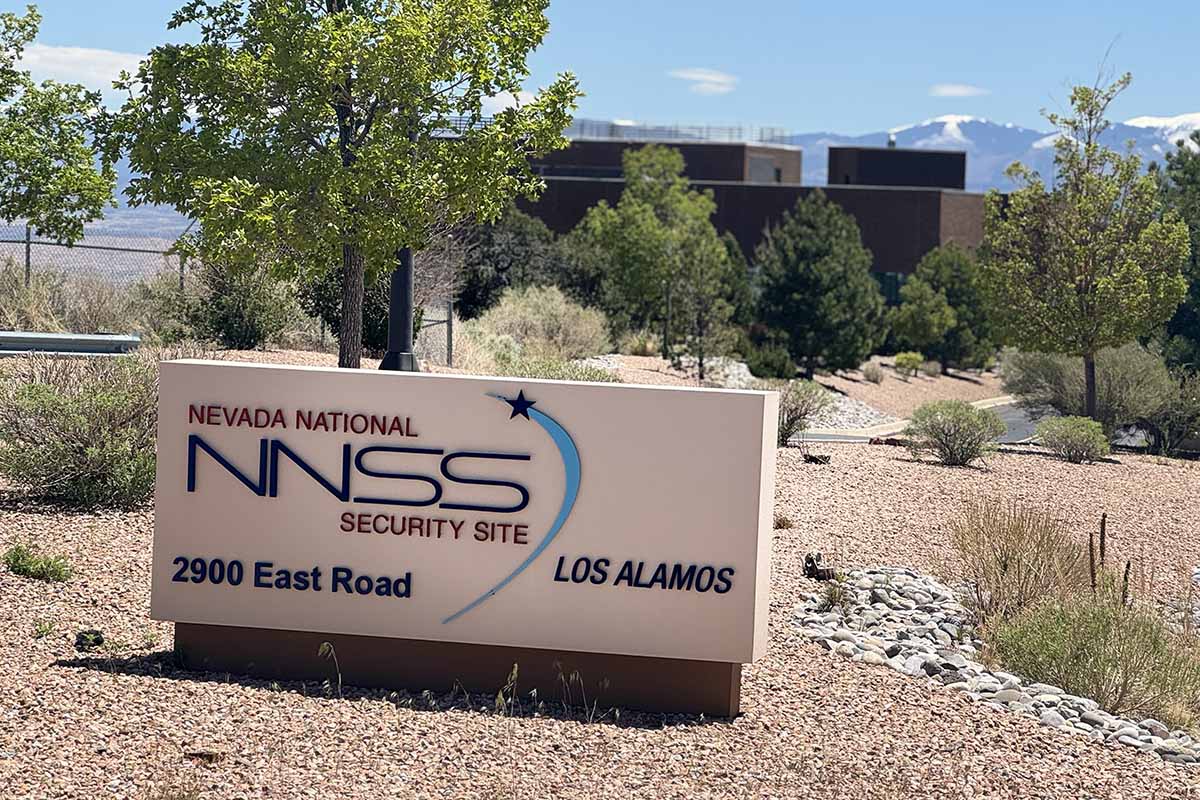
In December 2024, Roger Rocha became the president of Mission Support and Test Services (MSTS), the management and operating (M&O) contractor for the Nevada National Security Sites (NNSS). “MSTS was awarded the M&O contract in 2017, and we are proud to be part of the NNSS’ latest historic chapter in pioneering nuclear weapons science, global and homeland security, and environmental programs for our nation,” Rocha explains. “With leading professionals in STEM, craft, operations and business support, more than 3,400 MSTS employees champion our national security mission at our 10 locations spanning the United States.”
Rocha sat down with National Security Science to discuss his career, how NNSS partners with Los Alamos National Laboratory, and what’s on the horizon for NNSS, which celebrates its 75th anniversary this year.

How does Los Alamos interface with MSTS?
MSTS runs the NNSS as a user facility. Users are collectively referred to as Nevada Enterprise Partners, and Los Alamos is one of them. Los Alamos performs program execution—such as subcritical experiments and high-explosive operations—and MSTS leadership and technical staff work closely alongside our Los Alamos colleagues, participating in meetings and supporting scientific experiments at the Sites and at the Los Alamos campus. This partnership provides us with insight and understanding to support current Los Alamos stockpile stewardship program needs and anticipate future needs. MSTS also provides Los Alamos with a group that assists with all diagnostics associated with the program work.
You spent 25 years at Lawrence Livermore National Laboratory; how has your time at Livermore informed how you interface with the national labs today?
My time at Livermore provided me with a deep understanding of the mission, culture, and technical complexity that define the National Nuclear Security Administration (NNSA) and its national laboratory system. I learned a lot at Livermore, especially about high-hazard facilities and high-hazard operations, which both fell under my umbrella. I had the opportunity to work across a range of interdisciplinary teams, bridging science, engineering, and national security priorities. That experience helped me build a strong foundation in collaborative problem-solving, system-level thinking, and mission-focused innovation. It also taught me the value of execution—at the end of the day it’s about working together to get the job done for NNSA.
Like Los Alamos, Livermore is a high-performing environment that teaches the importance and value of building trust and partnerships. I’ve developed longstanding professional relationships with colleagues at Los Alamos and other labs, which have helped foster open communication and alignment on the shared goals of our NNSA mission.
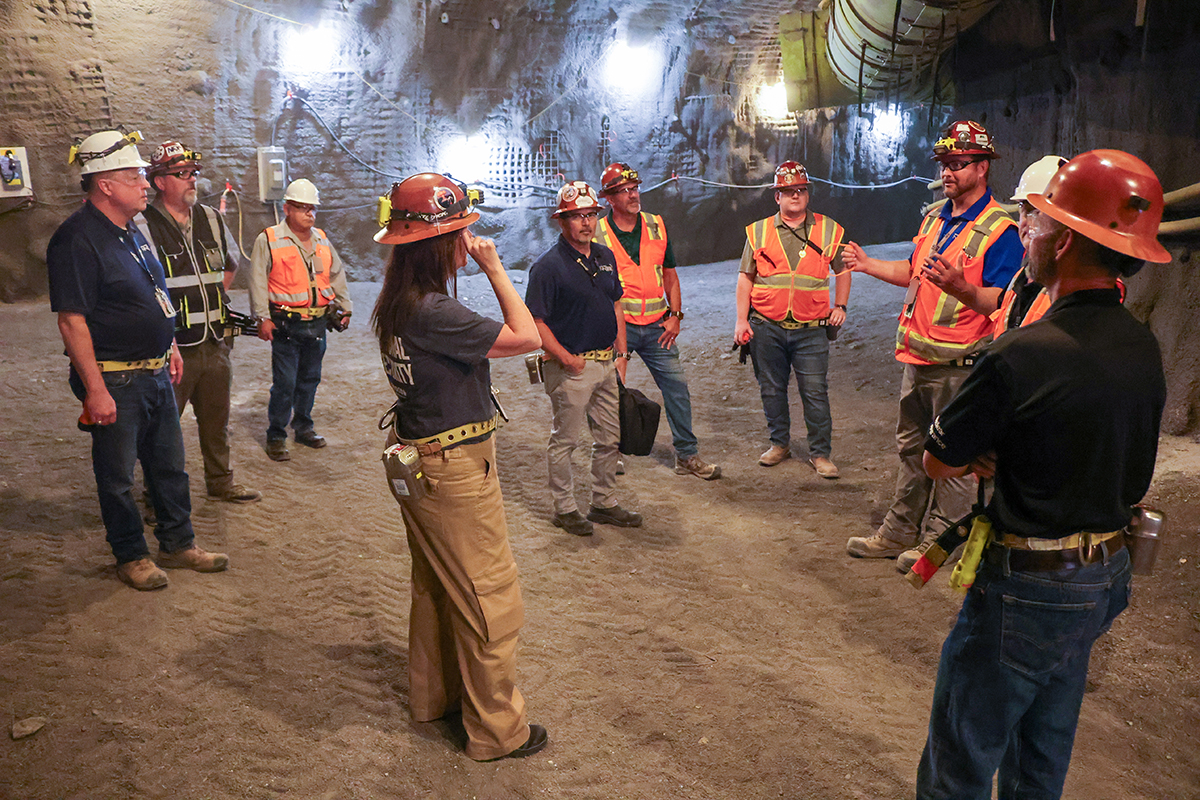
Ultimately, my lab experience was an excellent foundation for a career at NNSS, where I started working in 2020 as the chief operating officer and in the vice president role. In my current position, I continue to work closely and collaboratively with the national laboratories to build the stockpile stewardship program of the future with scientific excellence.
MSTS and Los Alamos collaborate in many ways, but what are some of the partnerships you are most proud of?
There have been many tremendously successful and insightful collaborations between NNSS and LANL, so many that it’s hard to choose just a few to highlight. NNSS’ science-based stockpile certification assets have enabled 30 years of stockpile certification without underground testing, and Los Alamos has partnered with us for so much of it: subcritical experiments at PULSE, programmatic nuclear materials studies and aging, nuclear materials testing, high-explosives testing at BEEF, and programmatic waste disposal. Some top-of-mind examples include data delivery for Los Alamos experiments at PULSE and the advancement of the understanding of ejecta diagnostics.
As we look to the future, what are some exciting collaboration opportunities between MSTS and Los Alamos?
Neutron-diagnosed subcritical experiments and the Scorpius accelerator are tremendous opportunities. I’m excited by both the scope of the collaboration required between NNSS and our partners at the national labs, as well as the science behind the projects themselves. The new subcritical experiment test beds we’re developing at PULSE will set the stage for the next 30 years of stockpile certification and enable a host of new experiments, from which we will gather new data, from which we will develop new experiments, and so on. The continuous technological innovation achieved through partnerships like the one we enjoy with Los Alamos helps us exceed stated mission needs and come up with new ideas and concepts that we translate into unique, mature diagnostic capabilities and data processing tools.
This year is our 75th anniversary, and the future of the NNSS is bright. I am very excited about the unique capabilities that the NNSS provides the NNSA, and we are positioned to deliver on our missions. ★
In 2023, National Security Science released a three-part podcast series about past, present, and future work at the Nevada National Security Sites. Listen here: