The Energized Watershed project was recently announced as a semifinalist in the Regional Innovation Engine competition through the National Science Foundation. With goals of increasing local water security and creating economic opportunities, the project would bring new vitality to the state of New Mexico, if selected.
“The whole purpose of the NSF Engines program is to build innovation and economic growth ecosystems in the areas that receive funding,” said Sanna Sevanto, scientist at Los Alamos National Laboratory and institutional lead for the project. “I expect economic opportunities to come in terms of new technology and possibly new startup companies, as well as new job opportunities in research, technology development and education.”
The University of New Mexico is leading the project, with several scientists from Los Alamos serving as technical leads and advisers for water resource modeling. The Engine selection process is very rigorous and is intended to foster projects that will result in maximal positive impacts in local communities. Seventy-one projects were invited to apply to the nationwide program, with only 29 being selected as semifinalists. The Energized Watershed is one of only two semifinalists in New Mexico.
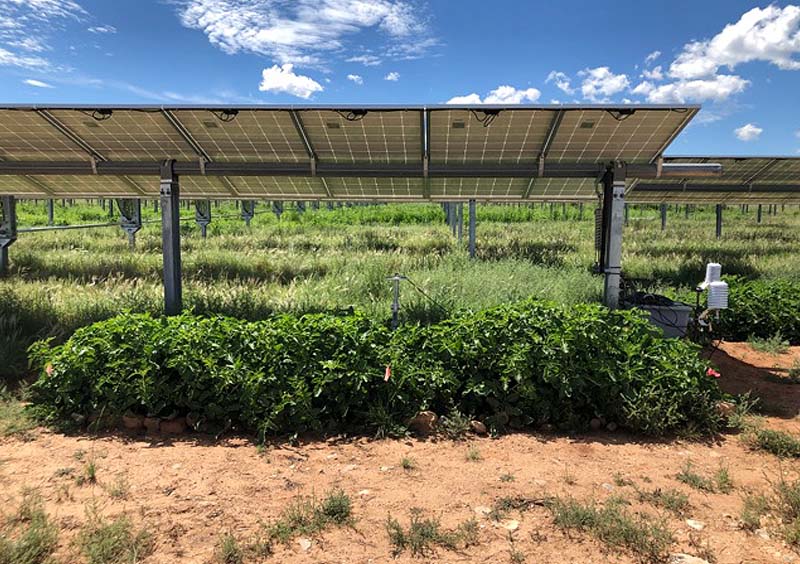
Sevanto, a plant physiologist, sees opportunities in agrivoltaics — agricultural production underneath or adjacent to solar panels — from this project. She was previously involved in a New Mexico Small Business Assistance project that helped to bring agrivoltaics to a company in El Rito.
“I think that agrivoltaics would be a good way to improve water-use efficiency and general economic viability of agriculture in New Mexico, where there is plenty of sun that overcomes significant challenges of agrivoltaics in other states,” Sevanto said.
Water resource modeling is another central aspect of the project. Los Alamos scientists Kurt Solander, Katrina Bennett and Jon Schwenk will provide the technical expertise for that portion of the project.
As a semifinalist, Energized Watershed has already received $1 million both from the National Science Foundation and from the state of New Mexico. The work will focus on the San Juan and Rio Grande watersheds due to the geographic spread, ecological importance and economic opportunities associated with the waterways.
Funding: Regional Innovation Engine, National Science Foundation
LA-UR-25-27953