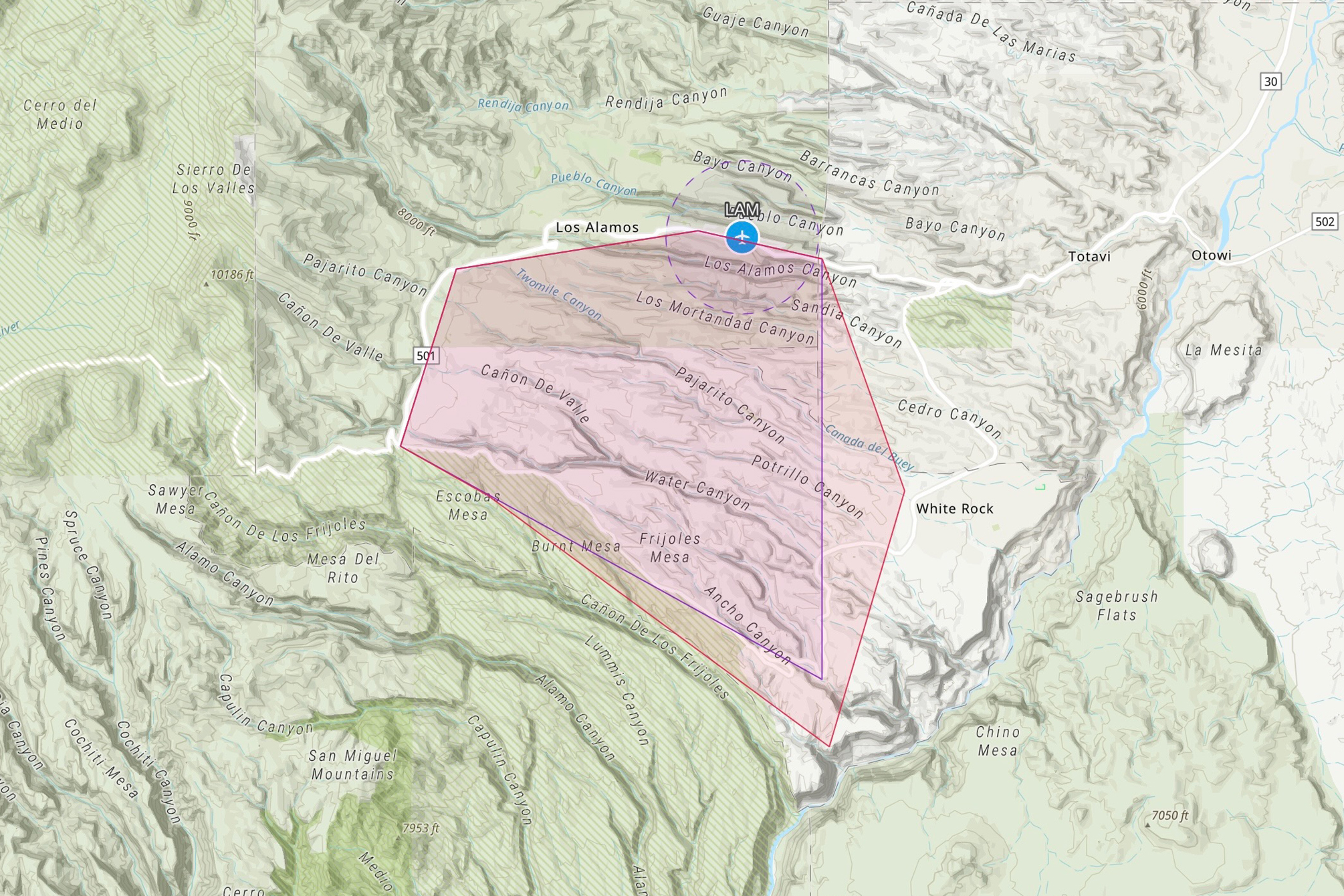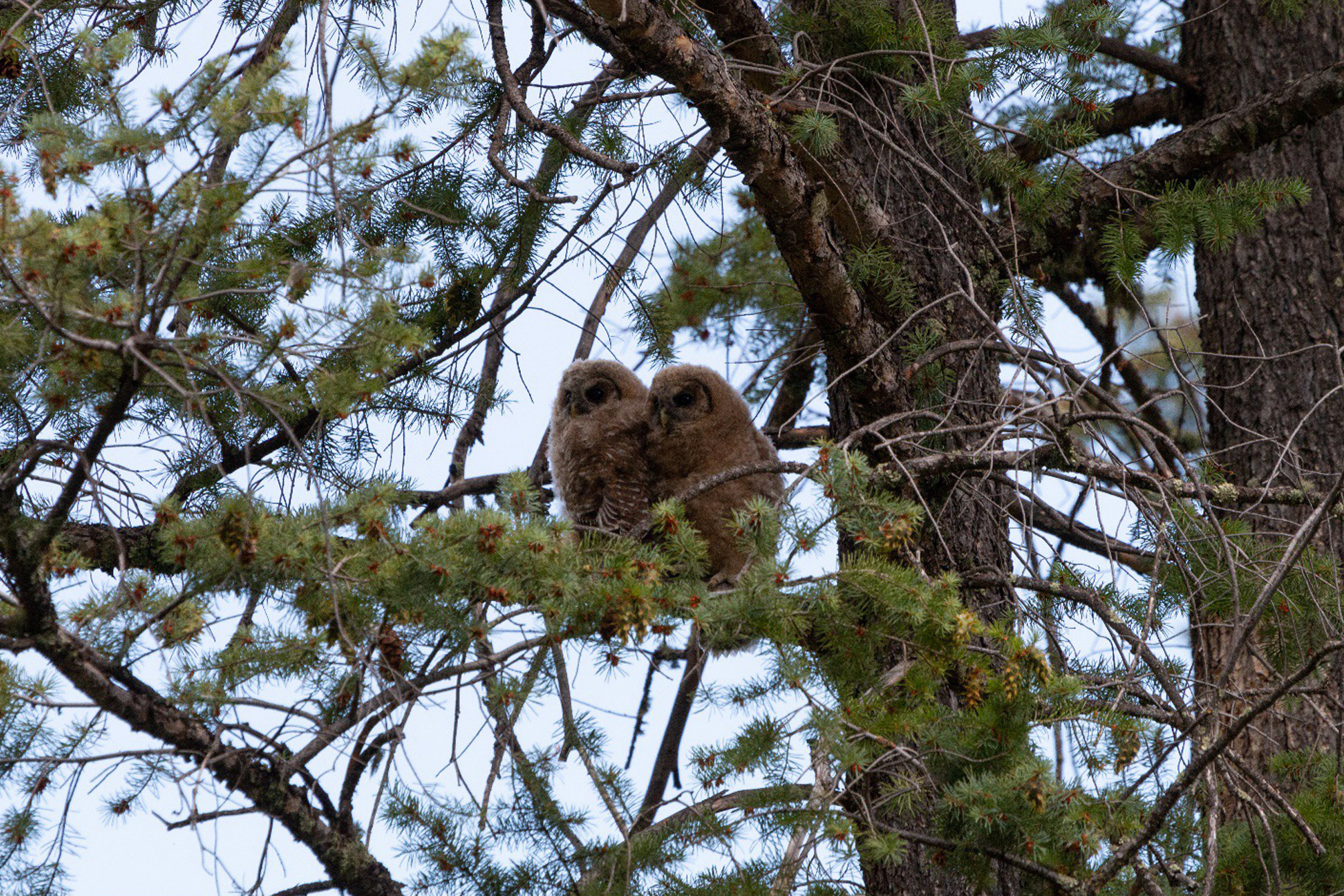
Los Alamos National Laboratory has implemented its annual protections for the Mexican spotted owl — a threatened species listed under the Endangered Species Act — in an ongoing effort to conserve wildlife and their habitat on the site.
During the owl’s breeding season, heavy equipment use and recreational- and work-related access are limited where Mexican spotted owl habitat exists. The goal is to protect the bird’s habitat from loss, alteration and disturbance while facilitating owl nesting behavior, reproductive success and long-term population stability.
The annual restrictions are part of the Lab's Habitat Management Plan, an agreement between the National Nuclear Security Administration and the U.S. Fish and Wildlife Service that allows the Lab to pursue its national security mission while actively managing threatened and endangered animals on Department of Energy property, as well as the habitats in which they are found. A threatened species is defined as one likely to become endangered in the foreseeable future throughout all or a significant portion of its range — with the potential to eventually become extinct.
Timeline for restrictions
Lab biologists will survey habitat and determine owl occupancy this spring to help enable operations and responsibly steward the land and resources we're entrusted to manage.
If owls are identified during surveys, restrictions in those areas remain in place through late August. If no owls are identified, restrictions are lifted once surveys are complete, typically in mid- to late May.
Biologists continue to evaluate work-related activities in owl habitat year-round to uphold the Laboratory’s commitment to responsible environmental stewardship and regulatory compliance.
Impact of the Habitat Management Plan
To evaluate the effectiveness of the Lab’s Habitat Management Plan for Mexican spotted owls, biologists recently analyzed survey data from 1994 to 2025, with an eye on how many young owls were successfully raised each year. Drought impacts also were considered, because dry spring conditions can reduce breeding success in birds.
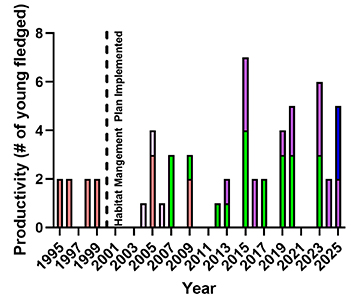
Data shows that since 2000, when the Habitat Management Plan was implemented, Mexican spotted owl productivity has not only remained stable, but there have been noticeable increases in successful fledglings.
While reproductive success continues to be strongly influenced by drought, with higher productivity in wetter years, the overall findings show that the Lab’s management plan has played a key role in helping a fragile species succeed.
LA-UR-26-23660